
How much does a trip to Japan cost, and how much do you need for each day you’re there? For two people sharing a mid-range room, two weeks comes to about ¥337,000 (£1,610) each, before flights. That’s roughly ¥22,700 (£109) a day, but this can vary depending on how you like to travel.
By the end of my guide, you’ll be able to put a realistic number on your own trip, whatever your dates and whoever’s coming with you.
Two weeks is what I’d recommend for a first trip, enough to see Tokyo, Kyoto and Osaka properly with some less obvious picks as well. Going on your own changes the total cost more than any hotel upgrade would. So does timing: the month you pick can more than double the price of a hotel.
More of my Japan guides to plan around your trip
- Kamakura day trip from Tokyo — One of the most rewarding trips from Tokyo
- Tokyo 3 day itinerary — A guide to the best sights all planned on a downloadable map.
- How many days in Osaka — A ready made itinerary for the best things to see in Osaka
- Kyoto in 2 Days — A guide to everything you will want to do in Kyoto
- Perfect Hakone Loop — What to do and how to get around when you are in Hakone
- Japan Two-Week Itinerary — All my tips to make the most of two weeks in Japan
Japan trip costs at a glance
These totals are per person. They leave out international flights, travel insurance, phone data and shopping, because those depend on where you live and how you travel. They’re based on:
- the classic first route of Tokyo, Kyoto and Osaka, with roughly the same number of nights in each
- single bullet train tickets between the cities and back to Tokyo, rather than a rail pass
- the train in and out of Haneda Airport
- each city’s hotel tax
- year-round average hotel prices, so a trip in a busy season will cost more
Mid-range and comfort assume two people sharing a room. Budget assumes a hostel or capsule bed, so it’s the same for solo travellers and couples.
| Travel style | 7 days | 10 days | 14 days |
|---|---|---|---|
| Budget | ¥95,000 (£450) | ¥125,000 (£600) | ¥164,000 (£790) |
| Mid-range | ¥179,000 (£860) | ¥247,000 (£1,180) | ¥337,000 (£1,610) |
| Comfort | ¥271,000 (£1,290) | ¥364,000 (£1,740) | ¥490,000 (£2,340) |
For a sense of what people spend on top, the Japan Tourism Agency’s visitor survey puts the average visitor’s spending in Japan at ¥229,000 (£1,100) for 2025, with 27% of that budget on shopping.
Travelling on your own? A mid-range trip costs more, because you pay for the whole room: about ¥481,000 (£2,300) for two weeks.
FREE GUIDE
Planning your trip to Japan?
I made a free 13-page guide that strips Japan planning down to the few decisions that matter.
No ads, instant download.
Disclaimer: This article may feature affiliate links. If you click these links, and choose to book with that hotel or company, I will earn a small commission at no extra cost to you. I appreciate the support that allows me to continue providing this information
Daily budget for Japan
If you’re building a Japan travel budget day by day, start here. Each figure is per person per day, averaged across the three cities, and includes your share of the room and its local tax. The long train journeys between cities are on top, and they’re covered further down.
| Per person per day | Budget | Mid-range | Comfort |
|---|---|---|---|
| Accommodation | ¥5,100 (£25) | ¥10,900 (£52) | ¥15,300 (£73) |
| Food | ¥2,800 (£14) | ¥7,800 (£37) | ¥10,450 (£50) |
| Local transport | ¥1,000 (£5) | ¥1,500 (£7) | ¥1,500 (£7) |
| Sights | ¥1,000 (£5) | ¥2,500 (£12) | ¥4,000 (£19) |
| Daily total | ¥9,900 (£48) | ¥22,700 (£109) | ¥31,200 (£149) |
Budget
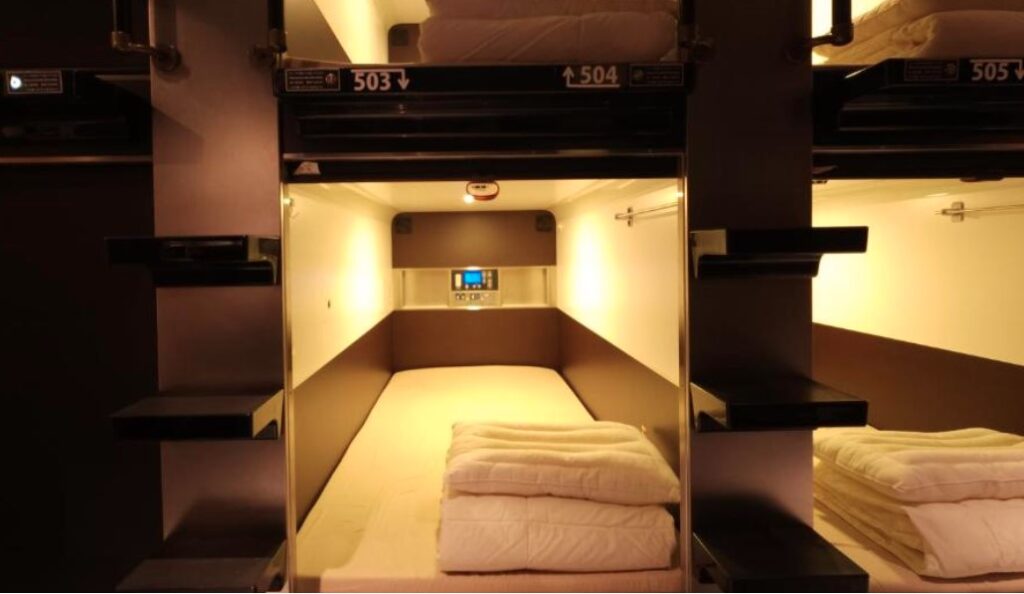
Budget is a trip where you sleep in a hostel dorm or a capsule hotel and eat mostly from convenience stores and cheap chains. A typical day’s food is rice balls for breakfast, a beef bowl for lunch, ramen in the evening and three bottled drinks at about ¥240 each. A metro day pass gets you around, and the sights allowance covers two paid temples.
Mid-range
Mid-range is a private hotel room shared between two, with one cheap meal and one proper sit-down dinner each day. Your share of the room is half of a three-star double, and food comes to about £25 to £50 a day, with the table using the middle of that. You get around on an IC card (more on those below), and the sights allowance covers a temple and one bigger ticket, such as an observation deck.
Comfort
Comfort is a four-star hotel and eating out for every meal. Your share of the room is half of a four-star double, food sits at the top of that £25 to £50 range, and there’s a pricier attraction most days. The 7, 10 and 14-day totals also include one kaiseki dinner, a traditional multi-course meal.
What a typical day in Japan costs
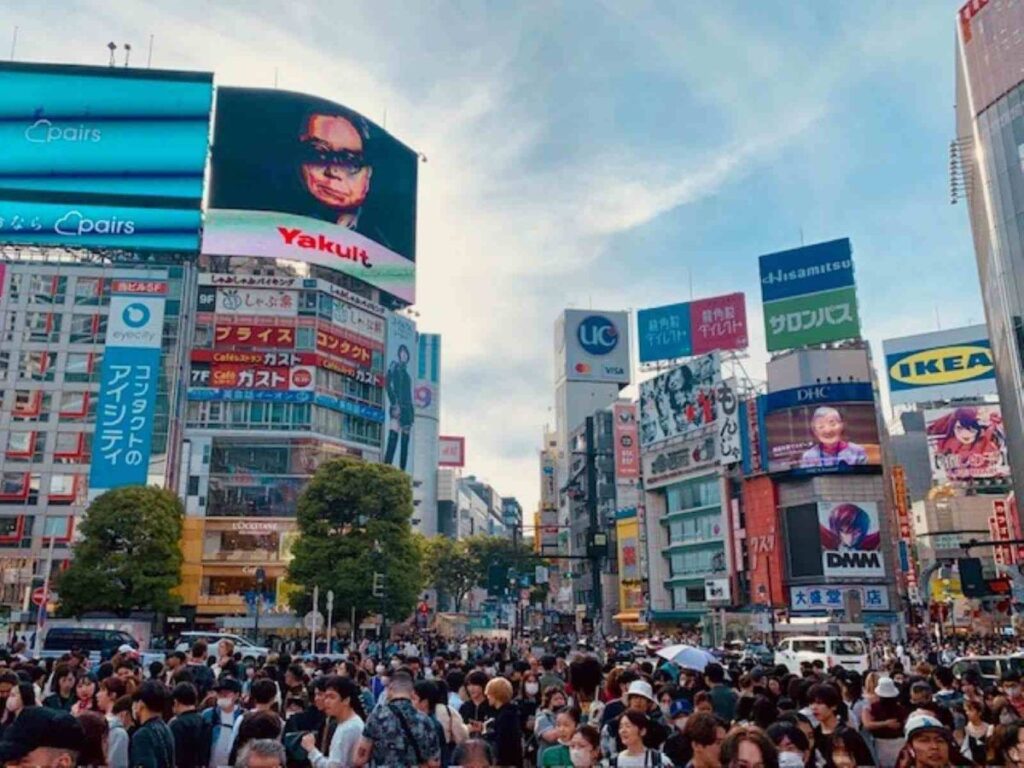
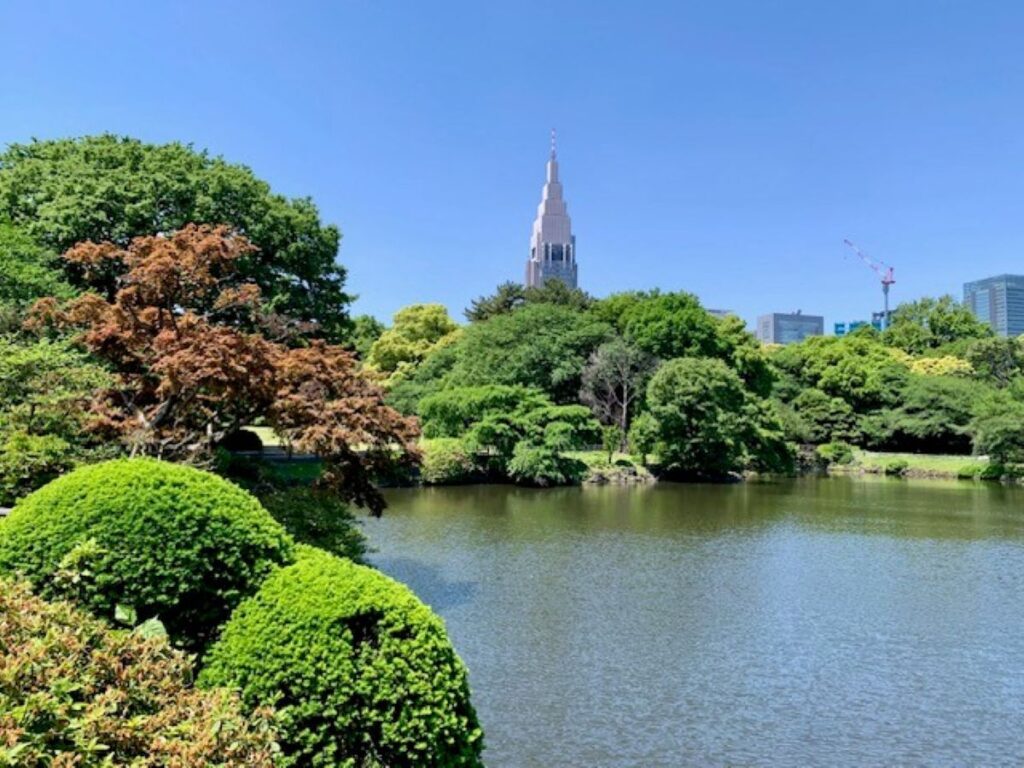
Here’s a mid-range day in Tokyo covering Shinjuku, Harajuku and Shibuya, item by item. The stops are all from my 3-day Tokyo itinerary.
| Item | Cost |
|---|---|
| Two rice balls from a 7-Eleven for breakfast | ¥428 (£2) |
| Shinjuku Gyoen garden entry | ¥500 (£2) |
| Meiji Jingu shrine | Free |
| Lunch at Ichiran ramen, Shibuya | ¥1,180 (£6) |
| Shibuya Sky observation deck, booked online before 15:00 | ¥2,700 (£13) |
| Dinner out (allowance) | ¥5,000 (£24) |
| Tokyo Subway Ticket, 24 hours | ¥1,000 (£5) |
| Day total | ¥10,808 (£52) |
Add half of a typical three-star room in Tokyo and the full day comes to about ¥20,700 (£99) each.
Flights to Japan

Flights aren’t in the totals above, and the month you fly changes the price more than almost anything else you book. These are average return economy fares to Tokyo for the cheapest and most expensive months, from Kayak’s fare data.
| Flying from | Cheapest month | Most expensive month |
|---|---|---|
| London | January, £644 | July, £1,136 |
| Los Angeles | January, $671 | June, $1,136 |
| New York | February, $1,040 | December, $1,663 |
| Sydney | May, A$1,119 | December, A$1,759 |
From London, flying in January instead of July saves about £490 per person. That’s more than four days of mid-range spending once you’re in Japan, so if your dates are flexible, check the fare first.
Open-jaw tickets and which airport to use
An open-jaw ticket flies you into one city and home from another, typically into Tokyo and out of Osaka’s Kansai Airport. It doesn’t always cost less than a return, but it saves you the train back to Tokyo at the end of the trip.
Tokyo has two international airports, Haneda and Narita. Pick your flight on price and times first. If the two come out the same, Haneda is the cheaper one to get into the city from: the Keikyu train to Shinagawa costs about ¥330 (£2), against ¥1,030 (£5) on the cheapest Keisei train from Narita or ¥3,070 (£15) on the Narita Express. My Haneda vs Narita guide compares the two properly.
If your trip ends in Osaka, price a flight home from Kansai Airport before you book a Tokyo return. The bullet train from Osaka back to Tokyo costs ¥14,720 (£70) on its own.
Get prepared for your Japan trip with my first-timer starter kit
- Break down the language barrier: key phrases and tech for an easy first trip
- How to stay connected: the cheapest data and easiest setup
- Japan on a budget: how to save money without missing the best bits
- Avoid currency fees: the best cards for spending and cash
- How much a trip to Japan costs: Totals for 7, 10 and 14 days, plus a typical day cost
- 25 apps that make your trip easier: the best free downloads
- Save 30 to 90 minutes at the airport: the free Visit Japan Web QR code
- Etiquette do’s and don’ts: what to know on your first visit
Accommodation costs in Japan
Accommodation is the biggest cost once you’ve landed, and the type you pick sets most of your daily budget. Tokyo, Kyoto and Osaka also add a small hotel tax per person per night, no more than ¥400 (£2) on a mid-range room, and it’s already in my totals.
| Type | What you get | Typical price |
|---|---|---|
| Hostel or capsule hotel | A dorm bed or sleeping pod, with shared bathrooms | ¥2,000–¥5,000 (£10–£24) per person |
| Three-star business hotel | A small private room with its own bathroom | ¥17,400–¥27,800 (£83–£133) per room |
| Four-star hotel | A full-service hotel room | ¥17,800–¥38,000 (£85–£182) per room |
| Ryokan | A traditional Japanese inn, with dinner and breakfast included | ¥15,000–¥30,000 (£72–£144) per person |
Prices change most from city to city. A three-star room averages about ¥19,700 (£94) a night in Tokyo, ¥27,800 (£133) in Kyoto and ¥17,400 (£83) in Osaka. Four-star rooms average about ¥33,300 (£159) in Tokyo and ¥38,000 (£182) in Kyoto, but only ¥17,800 (£85) in Osaka, barely more than three-star. My Kyoto vs Osaka guide looks at that gap if you’re choosing a base.
A ryokan looks expensive next to a hotel, but the price is per person and covers your two biggest meals of the day as well as the room. It’s an experience I recommend everyone has at least once in Japan, and my Hakone ryokan guide has examples at different prices.
Hostels and capsule hotels are also priced per person, which makes them the cheapest option by far if you’re travelling alone.
Put your full group into the search before you compare hotel prices. Japanese hotels price by the number of guests as well as the room, so a search for one person can show a lower price than two of you will pay. For specific hotels, my where to stay guides for Tokyo, Kyoto and Osaka set out the areas and prices.
Food costs in Japan
Food is one of the smaller costs in your Japan budget, and the one that flexes most with how you like to eat. Rather than tell you what to order, here’s what each kind of meal costs, so you can put together a day that suits you.
| Kind of meal | Typical cost per person |
|---|---|
| Convenience store rice ball or bento box | ¥214–¥754 (£1–£4) |
| Chain meal or ramen, such as a Yoshinoya gyudon or Ichiran | ¥498–¥1,180 (£2–£6) |
| Cheap restaurant meal | under ¥4,200 (£20) |
| Mid-range restaurant meal | ¥4,200–¥10,450 (£20–£50) |
| Special-occasion dinner | ¥10,450–¥52,000 (£50–£250) |
| Kaiseki dinner in Kyoto | ¥25,300–¥37,950 (£121–£182) |
| Hotel breakfast buffet | ¥2,500–¥3,850 (£12–£18) |
| 500ml bottled drink | about ¥240 (£1) |
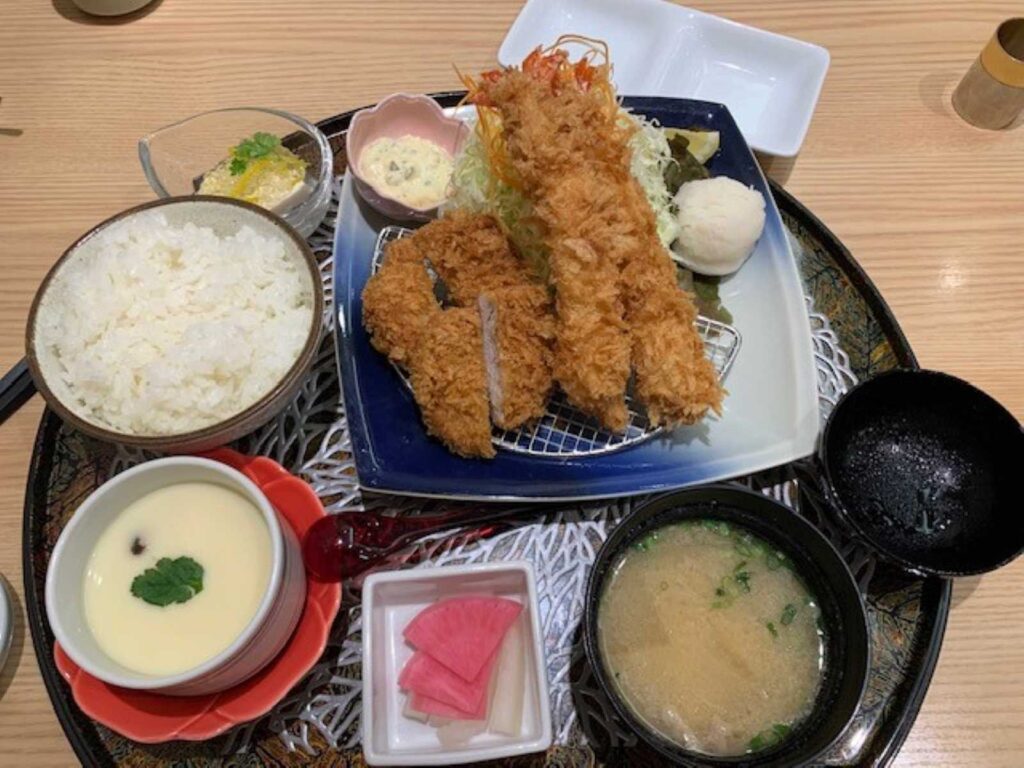
A few of those need a word of explanation. A konbini is a convenience store, and in Japan 7-Eleven, Lawson and FamilyMart sell proper meals, not just snacks. Gyudon is a bowl of rice topped with simmered beef, and Ichiran is one of the ramen chains where you order from a ticket machine by the door. Kaiseki is Japan’s formal dinner of many small seasonal courses. The three restaurant bands are the ones I use in my Tokyo restaurant guide, which has places to eat in each.
Getting around: JR Pass or single tickets
Getting between the three cities costs about ¥30,000 (£144) per person, and it’s one of the few costs in this guide that doesn’t change with your travel style. A hostel traveller and a four-star traveller sit in the same seat on the shinkansen, Japan’s bullet train.
The only real decision is whether to buy a Japan Rail Pass, which lets overseas visitors ride JR trains as much as they like for 7, 14 or 21 days, or to pay for each journey.
For the classic first-timer route, pay per journey. Tokyo to Kyoto is ¥14,170 with a reserved seat, Kyoto to Osaka is ¥580 on a local JR train, and Osaka back to Tokyo is ¥14,720, which comes to ¥29,470 (£141).
A 7-day pass costs ¥50,000 (£239) on the official site, so you’d be paying about ¥20,500 (£98) for the privilege of not buying tickets. On my first trip, before the price went up in 2023, a pass saved me money. Today, on this route, it wouldn’t, and my JR Pass guide works out when it does.
Local transport is small change by comparison. Budget about ¥1,500 (£7) a day on an IC card, a prepaid travel card you tap at the gate, which is less than 7% of a mid-range day. A 24-hour Tokyo Subway Ticket for visitors is ¥1,000 (£5), and Kyoto’s bus and subway day pass is ¥1,100 (£5), so don’t let the cost of getting around shape where you go in a city.

Sightseeing and the smaller costs
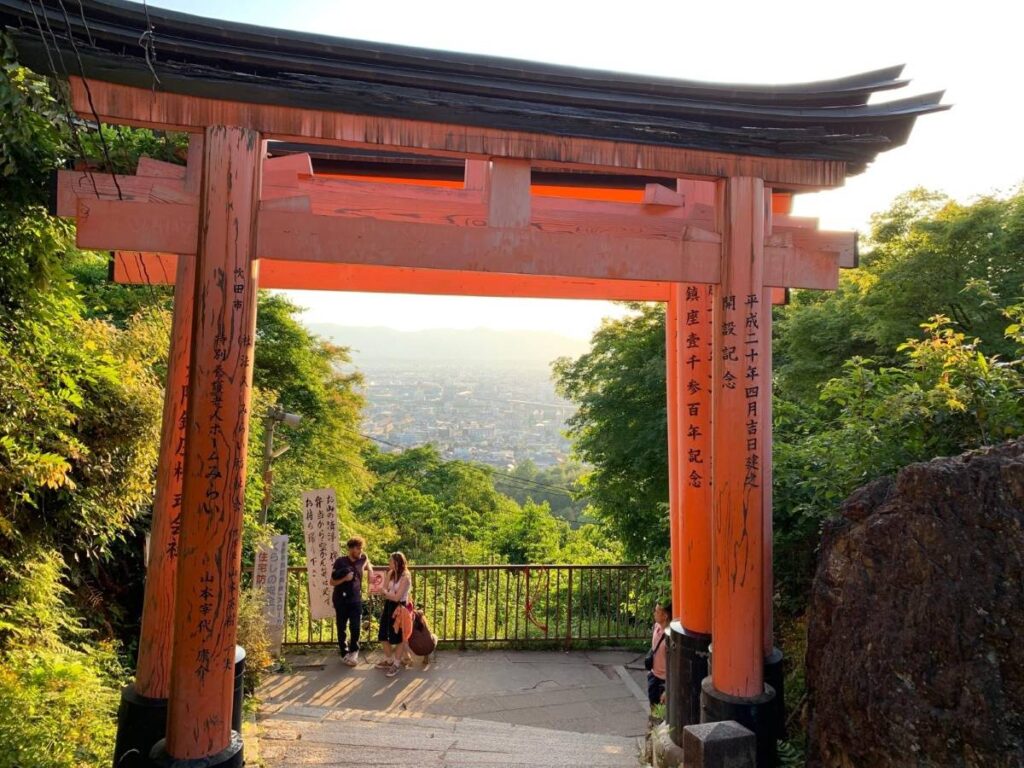
Sightseeing is usually the smallest cost in a Japan budget, as many of the famous sights are cheap or free. The big shrines, such as Fushimi Inari in Kyoto and Meiji Jingu in Tokyo, are free, and most temples and gardens cost about ¥500 (£2), Kinkaku-ji, Kiyomizu-dera and Shinjuku Gyoen among them. A day with two paid temples in it costs less than a single ticket to teamLab.
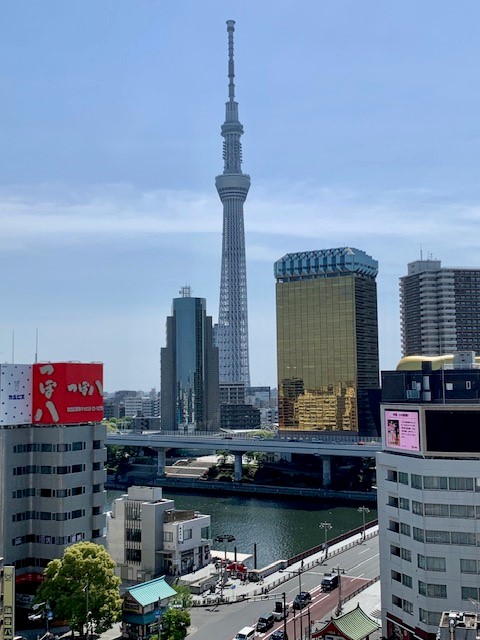
The modern attractions are where the money goes. Tokyo Skytree’s lower deck is from ¥2,100 (£10) in advance, Shibuya Sky is ¥2,700 (£13) booked online, and the teamLab digital art museums are from ¥3,800 (£18), with prices that change by date. The mid-range sights allowance covers a temple and one of these a day. One of the pricier ones every day is what takes you to the comfort figure.
How the season changes the cost
Everything above uses year-round averages, so if your dates fall in a busy period, add to the hotel line first. Flights move with the season, but hotels move more. In Kyoto, the average hotel night costs about ¥34,900 (£167) in January, the cheapest month to book, and ¥83,700 (£400) in April, the most expensive. That’s the same room costing nearly two and a half times as much.
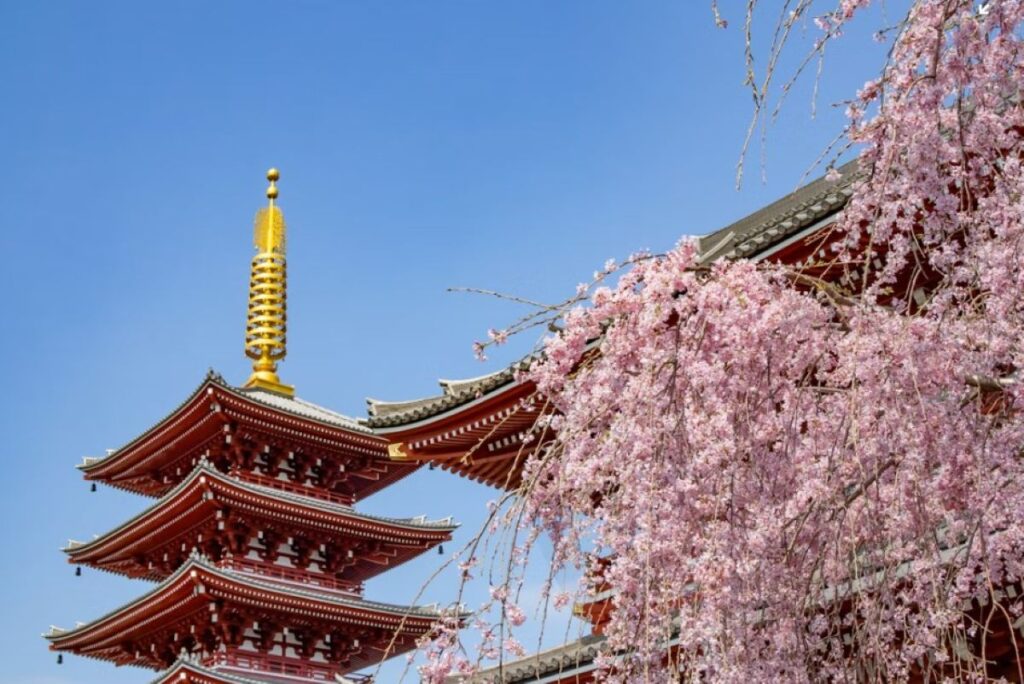
The busy periods are cherry blossom season from late March, Golden Week at the start of May, the autumn leaves in October and November, and New Year, when many businesses also close for several days. If you’re set on cherry blossom, go in knowing that both the flight and the hotel will cost more than the figures here.
My month-by-month Japan guide has the detail for each season.
What changes the cost of a Japan trip most?
Here’s what five of the bigger choices are worth over two weeks, ranked.
| Choice | Difference over two weeks, per person |
|---|---|
| Travelling alone vs sharing a mid-range room | about ¥144,000 (£690) |
| Flying in July vs January | about £490 |
| Eating out for every meal vs one cheap meal a day | about £350 |
| Four-star vs three-star hotels | about £265 each if sharing (¥111,000 or £530 per room) |
| JR Pass vs single tickets on the classic route | about ¥20,500 (£98) |
Which of these you spend on is your call. If you want to bring the total down, my guide to travelling Japan on a budget goes through where the savings are, and the two-week itinerary these figures are based on has the full route.
Japan trip cost FAQs
Is Japan expensive to visit?
Less expensive than its reputation. A mid-range day in Japan costs about ¥22,700 (£109) per person, including your share of a hotel room and a sit-down dinner. Everyday food is the cheap part: a bowl of ramen is about ¥1,180 (£6) and most temples cost ¥500 (£2). Hotels in busy seasons and the flight are what make a trip expensive.
How much does a trip to Japan cost for 2 weeks?
About ¥337,000 (£1,610) per person for a mid-range trip, sharing a room, before flights. That covers three-star hotels, food, local transport, sights and bullet train tickets between Tokyo, Kyoto and Osaka. A budget trip in hostels is about ¥164,000 (£790), and travelling alone in mid-range hotels pushes it to about ¥481,000 (£2,300).
How much spending money do I need per day in Japan?
About ¥11,800 (£56) per person per day for food, local transport and sights on a mid-range trip, once your hotel is paid for. Including your share of the room, it’s about ¥22,700 (£109). So £100 a day is comfortable for a budget trip, just short for a mid-range couple, and not enough on your own in a mid-range hotel.
Is $5,000 enough for a trip to Japan?
For one person, yes. Two weeks at a mid-range level, sharing a room, costs about $2,130 per person in Japan, and a return flight from Los Angeles is $671 to $1,136 or from New York $1,040 to $1,663, so the trip comes to about $2,800 to $3,800. For two people, $5,000 won’t cover flights and a mid-range trip together.
How much does a trip to Japan cost for a family of four?
About ¥1,348,000 (£6,450) for two weeks at a mid-range level, before flights. Two rooms cost about the same per person as a couple sharing, so a family pays roughly four times the per-person figure of ¥337,000 (£1,610). Children’s fares on trains and metro passes bring that down a little.
How much cash should I take to Japan?
Enough to pay for a meal for your whole group at any time. About 80% of my spending in Japan went on a card, but small restaurants and stalls are the most likely to be cash only, and you won’t always know before you’ve eaten. 7-Eleven cash machines accept foreign cards, so you can top up as you go.
Should I exchange money before I go to Japan?
You don’t need to. Seven Bank ATMs, in more than 28,000 7-Eleven stores across Japan, take foreign Visa, Mastercard, Amex and JCB cards, with a limit of ¥100,000 (£478) per withdrawal, and the fee depends on your own card. Taking out yen after you land is simpler than carrying a trip’s worth of cash from home.


2 Comments
Comments are closed.