
How many days do you need in Tromsø, and what would you actually do with them? My recommendation is to count activities, not days.
One day for the city itself, then one for each thing you want to do on top, this is why I recommend five for a winter itinerary: Tromsø itself, a Northern Lights night, whale watching out in the fjords, a day driving your own husky sled, and a snowmobile ride followed by a night in a glass cabin.
Five is the optimum, not the minimum. Fewer days still works, it just means choosing, and choosing well is what decides whether you see the lights.
I did six days on my first trip and saw the lights twice, on a tour on my first night and from a cabin in the middle of nowhere. On the two nights we stayed in the city, nothing, that’s why it’s important to plan it well.
I’ve made the calls you’re about to make, my guide is written to help you avoid the mistakes and mapped out by day so you can pick the ones that work for your trip.
More of my Tromsø guides to help plan your trip
- Where to stay in Tromsø – Best hotels for all budgets, plus igloos and cabins outside the city
- Best restaurants in Tromsø – Where to eat, with a map and what you’ll actually pay
- Best pubs and bars in Tromsø – Where to go after a day out in the cold, with live music options
- Travel around by bus in Tromsø – How the buses work, tickets and getting to Fjellheisen
- Skiing in Tromsø – Alpinpark, lift passes and night skiing in the dark months
How do you get to Tromsø?
Getting to Tromsø is easier than you might think. We flew via Oslo, but you have a few options and some airlines fly direct in peak season.
By Air: Tromsø Airport, Langnes, is well-connected with direct flights from Oslo and other major Norwegian cities. There are also some international flights, particularly during the peak winter season. From the airport, it’s a quick 10-minute drive to the city centre and taxis are readily available as well as Uber.
By Sea: The Norwegian Coastal Express calls at Tromsø on its way between Bergen and Kirkenes, and it’s a slow, scenic way in if you have the time to spare. Two companies work the route now, Hurtigruten and Havila Voyages, sailing the same ports on different days, so check both when you’re comparing fares.
By Road: For the adventurous, a road trip through Norway to reach Tromsø can be an unforgettable experience. Just be prepared for long distances and potentially challenging winter driving conditions.
Once in Tromsø, the city centre is compact and walkable, with good public transport options for reaching attractions further afield.
Disclaimer: This article may feature affiliate links. If you click these links, and choose to book with that hotel or company, I will earn a small commission at no extra cost to you. I appreciate the support that allows me to continue providing this information
What area should I stay in?
Take a look at my detailed guide covering the best hotels for all budgets in Tromsø
Tromsø offers a range of accommodation options to suit various budgets and preferences:
City Centre: For convenience, stay in the heart of Tromsø. You’ll be within walking distance of restaurants, shops, and major attractions. Options range from budget-friendly hostels to luxury hotels. This is also where the majority of tour operators pick up from.
Across the Bridge: For stunning views of the city and easier access to the Arctic Cathedral and cable car, consider staying on the mainland side of Tromsø.
Outside the City/Unique options: For a more secluded experience and better Northern Lights viewing, look for cabins or hotels on the outskirts of Tromsø. Also Consider staying in a glass igloo, an ice hotel, or a traditional Sami lavvu for a truly memorable experience.
For the purpose of this article I am focusing on how many days for the perfect winter trip Tromsø itinerary, as that was my experience.
Day 1: Exploring Tromsø and Chasing the Northern Lights

Day one is the city itself, and it doesn’t need much planning. The centre is small and easy to walk, with the old wooden houses sitting right alongside the newer buildings.
We just walked it and let the day go where it went. If you’d rather have somewhere to aim for, the Polar Museum and the Tromsø Museum both cover the expeditions the city was a base for and the history of the Sami people, and either one gives you somewhere warm to be in the middle of the day.
For lunch, skip the sit down places and do what the locals do. We opted to try Raketten Bar & Pølse, a tiny hot dog kiosk on Storgata that does reindeer dogs. It’s been a meeting point in Tromsø since 1911 and has also been a licensed bar since 2014, claiming it’s title as “Norway’s smallest bar”.
Opening hours move about. They open from midday most days, but the kiosk is upfront that the weather decides: on a good day they stay out into the evening, and if it’s pouring they shut up early. If you want more options for eating, I’ve got a full guide to the best restaurants in Tromsø.
Darkness comes early here. Between late November and mid January the sun doesn’t clear the horizon at all, so you get only a few hours of twilight around the middle of the day. That’s your cue to get ready for the Northern Lights tour.
This isn’t about ‘chasing’ the lights as some tours might suggest. You’ll be driven out to a spot the guides pick on the night, well away from the city lights, based on where the conditions are best.
Top tip: Wear your own layers under the thermal suit rather than relying on the suit alone. Most tours hand one out, but you’ll be standing still outside in the dark for a long stretch and that’s a different thing to walking around in the cold. We wore everything we had underneath ours and never got too hot.
Photography tips
When the lights appear, be ready with your camera. If you’re not a photography expert, don’t worry. Your guide will help you set up your camera for the best shots. A few key things to remember:
- Use a tripod – it’s essential for the long exposure times needed.
- Learn how to use your camera’s night mode or manual settings. I was astounded by how good the iPhone night mode is. This guide will help newbies
- Bring extra batteries – the cold can drain them quickly.
We got lucky. Even if the lights don’t show, and they might not, you’ve still spent the evening round a fire under an Arctic sky, and that’s not a bad first night.
We booked our tour through Getyourguide who we found very reliable throughout the trip. Ours included coach transfer both ways (pick up and drop off at the Radisson Blu), a meal, guide and marshmallows – non negotiable for my other half!
Prices start at NOK 960 (£70) and you can find the options to BOOK HERE
Some people prefer Viator as a platform, tour options can be FOUND HERE for you to compare.
Day 2: Whale Watching in the Fjords

Whale watching is the one thing on this itinerary that might not be running when you go, so check your dates before you plan.
The season usually opens at the beginning of November and closes at the end of January, and the exact timing moves year to year. The whales follow the herring, and the herring shift. Since 2017 the orcas and humpbacks have been feeding around Kvænangen and the fjords near Skjervøy rather than in the fjords right outside Tromsø, and that can mean a longer boat ride.
There are two formats and it’s worth knowing which one you’re booking. Some boats leave from Tromsø harbour and sail north, which is the easy option, a simple pickup in the centre. Others put you on a bus or minibus up to Skjervøy and start the boat trip from there. Either way this is a full day out.
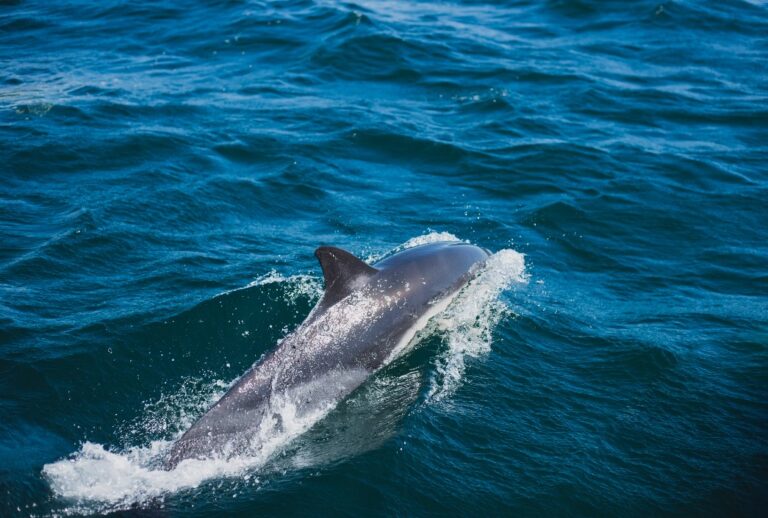
Orcas and humpbacks are the two you’re most likely to see.
My Top Tip! Book this early in your trip rather than late. If the whales have moved on or the weather turns, you want days left to fill the gap with something else.
Getyourguide Prices start at NOK 1,640 (£120) and you can find the options to BOOK HERE. Viator tour options can be FOUND HERE
TOP TIP! Make sure you are fully prepared with my “First time visitor to Tromso starter kit”
HOW TO STAY CONNECTED ON THE GO: The cheapest data and easiest way to make sure you can access everything you need
HOW TO AVOID CURRENCY FEES LIKE A PRO: The best cards for travel and withdrawing cash
WHERE TO STAY : A Hand picked guide covering Luxury hotels, budget stays, igloos for the northern lights and more
Day 3: Husky Sledding Adventure

Day three is the huskies, and it was the day I’d book first if you love dogs. You get picked up and driven out to a farm outside the city, and you hear the place before you see it.
These are working dogs bred for the snow, and they want to go. You realise that the moment you set off, because they don’t want to stop.
My Top Tip! Check in advance what gear is provided. Most tours offer thermal suits and boots, but it’s best to dress warmly underneath just in case. We both ended up wearing all our warm gear as well as the suit provided, we didn’t get too hot.
Before you set off there’s time to meet the dogs and learn how they’re looked after. Every single one of them loved having a fuss made of them, keen to be stroked and lapping up the attention.
Then you drive your own sled. There’s a safety briefing and a driving lesson first, and it’s genuinely simple to pick up.
My Top Tip! Some tours are not self drive, this might be good for you if you are nervous about controlling the sled. For us, self drive was non negotiable, so check before you book carefully. The process of driving the sled was very simple to learn.
The route takes you across frozen lakes and through snow covered forest, with a few hills thrown in. Keep an eye out for reindeer or Arctic foxes. We didn’t see any, but we were pre briefed to look.
You stop halfway for lunch, usually in a lavvu, which is a traditional Sami tent, or sometimes an igloo. Hot drinks and something warm, normally a soup.
One word of warning. The dogs don’t stop once they’ve got going, even if one of them needs a toilet break, so keep your eyes peeled and be ready to dodge. It takes the majority of your day, with over an hour on the coach both ways, but we loved it and it was well worth the cost.
Getyourguide Prices start at NOK 2,470 (£180) and you can find the options to BOOK HERE. Viator tour options can be FOUND HERE.
Day 4: Arctic Cabin Experience and Snowmobile Adventure

This was the best thing we did on the whole trip. We left the city for a night in the wilderness in an igloo style cabin, which sounds rough and absolutely is not.
Two things to know before you book. The camp is in Hatteng, about 90 minutes from Tromsø, and the transfer is another coach ride. The bus leaves the city in the late afternoon and doesn’t get you back until the following evening, so you lose an evening and most of the next day to it.
On the money: the Aurora Hut glass igloos sleep two and cost about NOK 4,700 (£342) a night for the hut and your meals. We booked ours as a package with the transfer and the snowmobiling bundled in, which I’d do again. It’s not cheap, but it was the best thing we did.
Ours came with a choice of snow shoeing or a snowmobile ride, plus lunch, dinner and breakfast. We went with the snowmobile. It was my first time driving one and I loved it. Your guide takes a small group out and shows you how to handle it safely, and there’s plenty of time to stop and take pictures. The ride was about two and a half hours, which was the right length.
There’s a sauna before dinner, and for the brave there’s the roll in the snow afterwards.
The northern lights came out that night and we saw them several times. Sleeping with the curtains open and the view straight from the bed was the whole reason we booked it.
A few places offer this, some igloos, some log cabins, some built from ice, at different budgets. Check very carefully what’s included before you book, because the packages vary a lot.
We stayed at North Experience Basecamp which can be found and booked directly HERE
Getyourguide offer similar tours with hotel transfers and activities included starting at NOK 3,420 (£250) BOOK HERE
And Viator have an overnight stay in a cabin, combined with dog sledding FOUND HERE

Day 5: Fjellheisen Cable Car and Arctic Cathedral
Your last day is the view. Head back into the city, drop your bags, and make for the Fjellheisen cable car, which takes you up Mount Storsteinen at 421 metres above sea level.
My Top Tip! Go up in the middle of the day in winter and give it a few hours. We went up at about 12:30 in late January and the sun never cleared the mountains, so instead of daylight we got hours of low pink and orange light across the fjord. We were up there for nearly three hours, and the town lights had come on by the time we came back down. That was the best part of it. Wrap up warm and take some snacks.
A return ticket costs NOK 645 (£47) for an adult and NOK 310 (£23) for children aged 3 to 15, and there’s a family ticket for two adults and two children at NOK 1,360 (£99). One way is NOK 415 (£30). The cable car goes every half hour, the ride takes about five minutes, and it stays open until midnight. Worth the NOK 645. Go up with time in hand rather than treating it as a quick ride, because the light is the point and it changes while you’re up there.
If you’d rather not pay for the cable car, there’s a free alternative. The Sherpatrappa is a stone staircase of roughly 1,300 steps, starting at Fløyvegen and finishing on the plateau just below the top station at 421 metres. It’s open all year, but check conditions before you set off.
At the top you get wide views over Tromsø, the fjords and the mountains behind. There are several hiking trails at the summit. We walked for two hours up there and could have done longer had time allowed.
As the light goes, the city below starts to switch on. That fade takes a long time in winter, with the sky working through pink and orange for well over an hour rather than the few minutes you’d get at home.
On the way back, stop at the Arctic Cathedral. The peaked roof and the glass front are what everyone photographs, and the design is meant to suggest ice floes and the aurora.
If you’ve got the energy, walk back across the Tromsø Bridge rather than getting the bus. It’s 1,036 metres and the city lights coming on across the water is the better version of the view you got from the top.

What if you only have 2 or 3 days?
So with three days, what should you prioritise?
For me it was prioritising northern lights, above everything else. Then dog sledding. Then whale watching, but only if you’re there between November and January and you haven’t already seen whales somewhere else. If you’ve done a whale trip somewhere warmer and cheaper, give something else a try here.
Not fussed about the animals? Snowmobiling and a night out in a glass igloo are great fun and completely different to anything you’ll have done at home. Pick those two and you’ve got a proper three days.
I actually recommend people don’t go for two days, unless you have no other option. You get the city and one activity, and a single chance to see the aurora.
You’ll have noticed I haven’t filled the evenings, and that’s deliberate. The lights were the priority of my trip, so I wanted every evening free to go out and look. Get them on night one and you can spend the rest on dinner, the bars, or a late trip up the cable car. Don’t, and you’ve got another go.
Whatever you cut, keep at least one night outside town. The street lighting is the problem, you can have a decent display going on overhead and still see almost nothing from a hotel window, which is exactly what happened to us on both of our town nights.
My Top Tip! Book your aurora night early in the trip, not late, and check your flight times before you settle on a number. An evening arrival and a morning departure turns three days into two, which changes what fits.
Spending more time in Tromsø? Here are some extra options
If you are lucky enough to have some more time, or weren’t too keen on some of my suggestions above, here are some other activities that you can try
Skiing at the Alpinpark
Tromsø Alpinpark is about 10 minutes from the city centre and it’s a small resort rather than a big one, which suits a spare afternoon better than a full day. The night skiing under floodlights during the dark months is a good reason to go, as are some of the views. I’ve written a full guide to skiing in Tromsø covering the Alpinpark, lift passes and ski touring in the Lyngen Alps.
Kayaking and Ice Fishing
Kayaking and ice fishing usually come as one trip. You paddle out into the fjord, then your guide sets you up on the ice to fish, and some tours cook your catch on the spot.
Snowshoe Hiking
Snowshoeing is the low effort way into the landscape. No skill needed, and your guide points out what’s around you as you go. Many trips include a campfire lunch. There are night time versions too, which double as a Northern Lights hunt on foot.
Reindeer Sledding/Feeding
Reindeer sledding is the slower, quieter alternative to the huskies, and the better pick if you’re not a dog person. You visit a Sami camp, feed the reindeer, take a sled ride, then warm up in a lavvu with Sami food and hear about how the herding works.
Tromsø Snow Dome
The Tromsø Ice Domes out in the Tamok Valley are no longer taking bookings. There’s a closer alternative though. The Tromsø Snow Dome is an indoor attraction built entirely from snow and ice, with four rooms covering Northern Norwegian history, nature and mythology. It’s at Tromsø Alpinpark on Jadevegen, about 10 minutes from the centre, and it’s open all year rather than just in winter.
Opening hours are 12:00 to 20:00 Monday to Friday, last entry 19:30, and 12:00 to 17:00 at weekends, last entry 16:30. There’s a lavvo, a traditional Sami tent, serving food and drink from local producers next to it.
Pick this if you want the ice art without giving up half a day to get there. Pick a full ice hotel experience if the drive is part of the appeal.
Kvaløya and Sommarøy
Kvaløya is the island directly west of Tromsø, joined to the city by bridge and about 40 minutes from the centre. Sommarøy sits further out at the western end.
This is the extra day I’d add first if your itinerary allows it. It’s away from the city lights, which makes it a much better bet for the aurora than anywhere in town, and it’s where a lot of the northern lights tours head anyway.
If you’re not confident driving on snow and ice, book a guided tour rather than hiring a car. That’s my strong advice to anyone considering it, the driving is a lot harder than people think.
How many days do you need in Tromsø in the summer?
Three days is enough in summer, and the reason why says a lot about why winter needs five.
In winter the day count is driven by the Northern Lights. You need spare nights because you can’t book a clear sky, and you’re working with only a few hours of usable light in the middle of the day. Neither of those applies in summer. Between 20 May and 22 July the sun doesn’t set in Tromsø at all, so there’s no short window to squeeze things into and no waiting game to hold days back for.
You do lose things. Whale watching finishes at the end of January. Dog sledding on snow, snowmobiling and the aurora are all winter activities. What you get instead is hiking, fjord trips and evenings that never really end, and none of that needs a spare day kept in reserve in case the weather turns.
Pick summer if you want the mountains and the midnight sun without the cold, and you’d rather not gamble three nights on the lights. Pick winter if the aurora is the reason you’re going, and give it five days.
Best Time of Year to Visit
The best time to visit Tromsø largely depends on what you want to experience. Each season offers something unique:
Winter (December to March): This is the prime time for Northern Lights hunting and winter activities like dog sledding and snowmobiling. Whale watching is the exception, that season usually ends in late January.
Spring (April to May): As daylight hours increase, you can enjoy a mix of winter and summer activities. The snow starts to melt, revealing the city’s colourful buildings.
Summer (June to August): Experience the midnight sun and endless days. It’s perfect for hiking, fjord cruises, and outdoor festivals. The weather is mild, and the city is alive with activity.
Autumn (September to November): The Northern Lights return in September, and the landscape transforms into a palette of autumn colours. It’s less crowded than winter, but some tourist facilities may start to close for the season.
Tips for Travelling to Tromsø
- Book the popular tours before you fly. Northern Lights trips and whale watching fill up in peak season.
- Build in slack. We had to move our plans twice because of the weather, and that’s normal rather than bad luck. It’s the single strongest argument for an extra night.
- Learn your camera’s night mode before you go, not while standing in the snow with cold hands. The iPhone one is better than I expected.
- Norway is expensive and there’s no way round it. Work out what the tours will cost before you book flights, because the activities cost more than the hotels.
What should you pack for Tromsø?
Tromsø is milder than the latitude suggests. It sits at 69 degrees north on the same line as Finnish Lapland and Murmansk, which average around minus 14 in midwinter and often drop below minus 20, but the Gulf Stream keeps Tromsø’s coldest nights to about minus 14 and most winter days well above that. The fjord doesn’t even freeze.
That does not mean warm. The thing that catches people out is how much of the trip you spend standing still outdoors, waiting for the lights or on a boat deck, which is colder than walking around in the same temperature.
- Thermal base layers, merino or synthetic. Not cotton, it holds sweat and then freezes on you.
- A fleece or wool mid layer.
- Waterproof and windproof jacket and trousers.
- Warm waterproof boots with a decent grip. The pavements ice over.
- Wool socks, and more pairs than you think.
- Hat, scarf and gloves. Bring a thin pair to wear under the thick ones so you can work a camera without stripping down.
- Hand and foot warmers. These are what get you through the long waits outside on an aurora night.
- Portable charger. The cold flattens phone batteries fast.
- Swimwear, if you’re doing a sauna or an Arctic dip.
- Lip balm and moisturiser. The dry cold is harsher on skin than the temperature suggests.
FAQ about Tromsø
Is Tromsø worth visiting?
Tromsø is worth visiting if you want the Northern Lights, snow activities like husky sledding, or Arctic landscape within a short flight of the UK. It does those about as well as anywhere you can reach easily. It is not worth the airfare as a city break, though. The centre is small, the museums are an afternoon between them, and the reason to come is what sits outside the city rather than in it.
Is 4 days enough in Tromsø?
Four days is enough for Tromsø. It gives you the city plus three activities, which covers a Northern Lights night, one animal day such as husky sledding, and one bigger day out. Four is also the point where a night in a cabin outside the city stops eating the rest of your trip, because you still have days either side of it. Five is better if you can stretch to it.
How do you get to Tromsø from Oslo?
The quickest way from Oslo to Tromsø is to fly. Direct flights go several times a day and take about two hours, landing at Tromsø Airport, Langnes, which sits roughly ten minutes from the city centre by taxi or bus. The coastal ferry is the scenic alternative, but it sails from Bergen rather than Oslo and takes several days.
Can you see the Northern Lights in Tromsø in summer?
You cannot see the Northern Lights in Tromsø in summer. From late May to late July the city has 24-hour daylight, so the sky never goes dark enough for the aurora to show, even on nights when it is active overhead. The lights need darkness as much as they need a clear sky. Go between autumn and early spring if seeing them is the point of your trip.
What happens if your Tromsø tour gets cancelled?
If a tour in Tromsø is cancelled, what you get back depends entirely on the operator’s terms, so read them before you pay rather than after. Terms differ between operators, and the terms on a booking platform are not always the same as the operator’s own, which matters most on expensive bookings like an overnight cabin. Weather is only one cause of cancellation. Whale trips also depend on where the herring are that year, and the season shifts, so a trip that operated in January one winter might not be available the next.


8 Comments
Comments are closed.