
A day trip from Gibraltar across to Morocco is one of those rare travel experiences where you can hit two countries and two continents before dinner. The crossing itself is short, Tangier is right there on the other side, and a single day is genuinely enough to get a real feel for the place.
A quick heads up before I go further: although the headline is “Gibraltar to Morocco” because that’s how most people search for it, you don’t actually take the ferry from Gibraltar itself. The reliable route is from Tarifa, a small Spanish town about a 40 minute drive west of Gibraltar. I’ll get into the why below, but if you’re staying in or near Gibraltar, this guide is still for you. You just travel to Tarifa first.
If you finish reading this and decide a day isn’t enough, I’ve also written a two day guide here that takes you on to the blue city of Chefchaouen.
More of my Spain guides to help plan your trip
- What to do in Granada: A full guide to the best sights, restaurants and view points
- Where to stay in Granada: Advice on the best areas to stay, some great hotels and why
- Alhambra Palace Granada Guide: An easy to follow route, tips and photo spots
- What to do in Madrid: A guide to the best things to see and do all plotted on a free map
- How many days in Seville: A first timers guide to the best of Seville
- 3 days in Barcelona: My favourite route and tips for first time visitors
- 2 week Spain itinerary from Barcelona: A full road or train trip from Barcelona
- Where to stay in Seville: The best areas and hotels to make the most of your trip
Disclaimer: This article may feature affiliate links. If you click these links, and choose to book with that hotel or company, I will earn a small commission at no extra cost to you. I appreciate the support that allows me to continue providing this information
Transport Options: Getting from Gibraltar to Tangier
Ferry Services: Day trips from Gibraltar to Morocco
Direct ferries from Gibraltar to Morocco have come and gone over the years and they aren’t a reliable option for a day trip. The route you actually want is Tarifa to Tangier, run by Balearia and Africa Morocco Link (AML). It’s the shortest sea crossing between Europe and Africa, the boats are fast, and crucially the Tarifa ferry arrives at Tangier Ville port, which is a 15 to 20 minute walk from the medina. That last point matters more than people realise. The other Moroccan port, Tangier Med, is about 45 km out of town and a real time drain on a day trip.
Tarifa itself is on the Costa de la Luz in Cadiz province, the southernmost point of mainland Europe. It’s also one of the most famous kitesurfing and windsurfing spots in Europe, so the town has a fun, laid back vibe if you fancy a wander before or after the ferry.
From Gibraltar to Tarifa it’s about 40 km by road. A taxi takes around 40 minutes, or there are buses via Algeciras that take a bit longer.
How long the crossing takes and what it costs
The fast ferry from Tarifa to Tangier Ville takes about 1 hour. That’s it. You’re in another continent in the time it takes to watch an episode of something.
For prices, expect to pay around €40 to €50 each way as a foot passenger, so a return is typically €80 to €100. It varies a bit by season and how far in advance you book. I always recommend booking in advance, especially in the summer months, partly to lock in a better price and partly to make sure you get the departure times you actually want. Walk up tickets are usually fine off season but I wouldn’t gamble on it in July or August.
Ferryhopper is the site I used to compare timings and book. Easy to use and you get your ticket on your phone.
My Top Tip! Get to Tarifa port at least an hour before departure, ideally a bit more on your first crossing. You need to clear Moroccan passport control on the boat itself, which sounds odd but means a queue forms during the crossing. Get on early, find your seat, then go and queue for the stamp before everyone else realises. It saves you a faff at the other end and gets you into Tangier faster.
Time difference between Spain and Morocco
This is one of the things that catches people out, so worth getting straight. Morocco runs on GMT+1 all year round, except during Ramadan when it drops back to GMT. Spain follows European clock changes, so it’s GMT+1 in winter and GMT+2 in summer.
In practice that means:
- Spanish winter, outside Ramadan: Spain and Morocco are the same time. No change at all.
- Spanish summer, outside Ramadan: Spain is 1 hour ahead of Morocco. So you actually gain an hour landing in Tangier.
- During Ramadan: Morocco drops an hour, so the gap is 1 hour in winter or 2 hours in summer.
It’s worth checking before you travel because the dates of Ramadan move every year. Don’t assume your phone will update automatically the moment you step off the boat either, I’ve had it stay on Spain time for a while before catching up.
My Top Tip! If your itinerary allows, do this trip in the Spanish summer outside of Ramadan. You get the longest crossing window of usable daylight in Tangier, and the ferry timetable plus the time difference works in your favour for squeezing the most out of the day.
What you actually need to bring
Here are some tips for a smooth ferry crossing concerning customs and immigration:
- A passport valid for at least 6 months from your entry date. They will check this.
- UK, EU, US, Canadian, Australian and most other Western passport holders don’t need a visa for visits up to 90 days. If you’re not sure about your country, check the Moroccan consulate’s list here.
- Some euros to swap for dirhams once in Tangier, or a card. ATMs in Tangier are easy to find but the queue at the port one is always long.
If you’d rather skip the planning entirely, jump down to the tour options.
What to do in Tangier on a day trip
Tangier is small enough that you can see the headline sights in a day on foot, plus one taxi out to the Caves of Hercules if you want to fit it in. Here’s the route I’d actually do, in roughly the order I’d do it.
Exploring the Kasbah
The Kasbah is the old fortified citadel at the highest point of the medina. From the port it’s about a 25 minute walk uphill, or you can grab one of the blue petit taxis for a few euros and start from the top. I’d recommend starting at the top and walking down through the medina afterwards. Your legs will thank you.
The big draw inside the Kasbah is the Kasbah Museum of Mediterranean Cultures, housed in Dar el Makhzen, the former Sultan’s palace. It’s not a huge museum and you don’t need hours, but the building itself is stunning, with tiled courtyards, fountains and proper Moroccan craftsmanship throughout.
The collection is a mix of Roman finds from sites like Volubilis (well worth a look, even if you don’t usually do museums), Phoenician artefacts and Moroccan crafts. Entry is around 20 dirham, so basically nothing.
The views from the Kasbah walls back across the medina and over the Strait to Spain are great. On a clear day you can see Tarifa across the water.
My Top Tip! Wear shoes you can walk in for hours. The lanes through the Kasbah and medina are cobbled, often steep, and worn smooth in places. Trainers are fine, anything with a heel is asking for trouble.
The Medina
This is the old town and where you’ll spend most of your day. It’s a maze of narrow streets and small squares, with shops, cafés, food stalls and people going about their lives. It’s busy but not overwhelming, much less full on than Marrakech if you’ve ever been.
Two squares to anchor yourself around:
- Grand Socco: The main square at the top of the medina, a big roundabout with a fountain. Useful as a meeting point and a place to grab a juice or a coffee at Cinema Rif, the old art deco cinema on the corner.
- Petit Socco: A smaller, more atmospheric square deep in the medina, lined with cafés that have been there for decades. This is where you stop for a mint tea and watch the world go by for half an hour.
You’ll get lost in the medina. Everyone does. Google Maps actually works pretty well even in the tighter streets, but honestly part of the fun is wandering. If you do get properly turned around, head uphill and you’ll find one of the gates out.
For shopping, the medina is the place. Leather goods, Berber rugs, lamps, spices, ceramics. Haggling is expected and is part of the experience, not something to feel awkward about. Start at around half the price they offer and work from there. If you don’t want to buy, a polite “non, merci” works, French is widely spoken.
Café Hafa for a mint tea with a view
Café Hafa is the one place in Tangier I’d say you should make time for, even if you only have a day. It’s been open since 1921, sits on a clifftop over the Bay of Tangier, and has the kind of view that does most of the work for you. The Rolling Stones, Paul Bowles, William Burroughs and a long list of other big names have all sat at these terraces over the years.
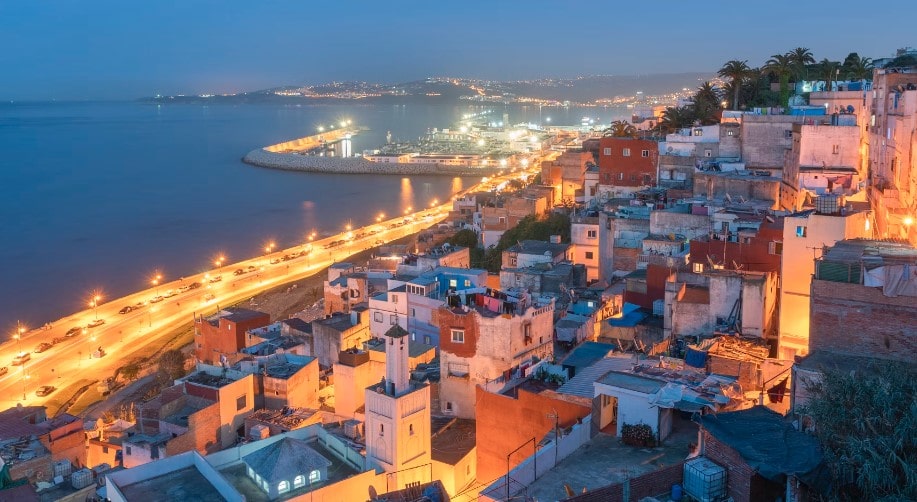
It’s not a fancy place. Plastic chairs, tiled tables, blue walls, several stepped terraces going down the cliff. You order a mint tea (about 15 dirhams), find a spot, and stay as long as you like. On a clear evening you can see the lights of Tarifa across the water.
It’s about a 15 minute walk west of the medina in the Marshan neighbourhood. Worth the walk.
My Top Tip! Skip the food and stick with mint tea. Café Hafa is famous for the view and the tea, not the food. Eat in the medina instead.
The Caves of Hercules and Cape Spartel (if you have time)
These are about 14 km west of Tangier, out near where the Atlantic and Mediterranean meet. You can’t really walk there, you need to get a taxi or a tour to take you out. Allow 2 to 3 hours for the round trip including time at both sites.
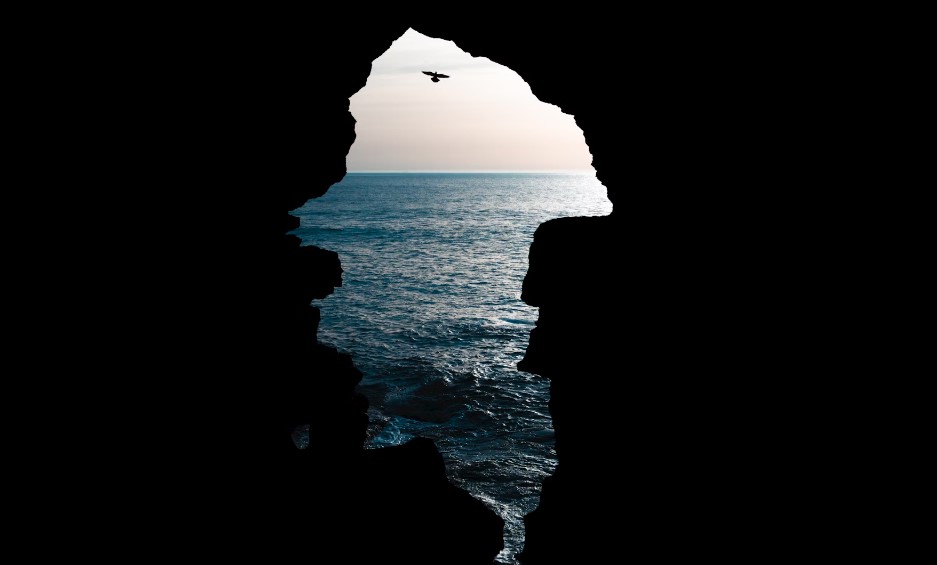
The Caves of Hercules are a sea cave with a striking opening shaped uncannily like the map of Africa when viewed from inside. According to Greek myth this is where Hercules rested before his 11th labour, stealing the golden apples of the Hesperides. The cave is small and the visit doesn’t take long, maybe 20 to 30 minutes, but the photo through the Africa-shaped opening is genuinely worth the trip out. Entry is around 60 dirham.
Cape Spartel is just up the road and is the northwestern tip of mainland Africa. There’s a 19th century lighthouse and wide views over the Atlantic. A see it and tick it off stop, but it pairs naturally with the caves and is on the way back.
My Top Tip! If you’re tight on time, prioritise the medina, Kasbah and Café Hafa over the caves. The caves are great but they’re 2 to 3 hours of your day on transport and a quick visit. Do them only if you’ve got an early ferry over and a late one back.
Food and drink: what to actually eat
Tangier punches above its weight on food, partly because it’s a port city with strong Spanish influences mixed in.
The dishes I’d order:
- Tagine: The slow cooked stew you’ve heard of. Lamb with prunes, chicken with preserved lemon and olives, or a vegetable one are the classics. Comes in the conical clay pot, usually with bread to mop up the sauce.
- Couscous: Traditionally a Friday dish in Morocco, big mound of fluffy couscous topped with vegetables and meat in a broth.
- Harira: A hearty soup of tomatoes, lentils, chickpeas and lamb, with herbs and spices. Great for lunch.
- Fresh fish and seafood: Tangier is on the coast and the fish is excellent. Look for places near the port for the freshest stuff.
For a sit down lunch in the medina, a tagine with bread, a salad and a drink will run you about 80 to 120 dirham (£6 to £10) at a local restaurant. Touristy places at the main squares can charge double, so if a menu has every dish in three languages and English first, you’re paying tourist prices.
For something quicker and cheaper, the food stalls around the medina do good grilled fish, kebabs and msemen (a kind of layered Moroccan flatbread) for a few dirhams.
My Top Tip! Stick to bottled water for the day, and skip ice in drinks unless you’re at a higher end place. It’s a one day trip, you don’t want to spend the ferry back feeling rough.
Practical tips for a day in Tangier
Getting around
- On foot: This is your main mode for the day. The medina, Kasbah and Café Hafa are all walkable from the port and from each other.
- Petit taxis (the small blue ones): Ideal for short hops around the city, like getting from the medina to Café Hafa or back to the port if you’ve worn yourself out. Always agree the fare before you get in. A short trip across town is usually 20 to 40 dirham. They don’t really do meters even when they have one.
- For the Caves of Hercules: Either negotiate a return taxi (typical 250 to 400 dirham including waiting time) or join a group tour for the day.
Safety, hassle and what to expect
Tangier is generally safe for tourists, especially in the daytime areas you’ll be visiting. The main thing to be ready for is friendly hassle, men offering to be your guide, take you to “their cousin’s shop” or show you the way somewhere. A polite “non, merci” repeated firmly is enough. Don’t be rude, but don’t feel obliged to engage either.
Other practical things:
- Use a cross body bag or a zipped pocket. Pickpocketing isn’t rampant but the medina is busy.
- Dress modestly enough to blend in. Shoulders covered, knees covered for women is plenty. Men in shorts and a t-shirt is fine.
- Learn one phrase: “Salam Alikoum” (peace be upon you), used as a greeting. It opens doors with locals and is a courteous thing to do.
- Travel insurance. Boring but worth it for a day trip that crosses an international border.
Plan it yourself or managed day trips From Gibraltar to Morocco?
This trip can be done both ways and there are decent reasons for each. Here’s how I’d think about it.
Pick the DIY route if:
- You like planning your own travel and don’t want to be on someone else’s schedule
- You want to spend longer in the medina or at Café Hafa than a tour would allow
- You’re comfortable using ferries, agreeing taxi fares and asking directions
- You want to keep the cost down
You’ll save some money and have full flexibility, but you do all the legwork yourself: book ferries, plan your route, sort transport at the other end. For most independent travellers this is fine.
Pick a tour if:
- It’s your first time in Morocco and you want someone else to handle the logistics
- You want a local guide to give context and history (this genuinely adds a lot to the Kasbah and medina)
- You want hotel pickup and drop off back in Spain, which is a real plus on a long day
- You don’t want to deal with the friendly hassle in the medina alone
You’ll pay more, you’ll be on a set schedule, and you’ll likely get less time at the bits you love most. But you’ll also see more in less stress.
Two tours worth considering
In peak season there are plenty of tours to consider, both online and with local tour operators when you are in Spain. The below are two of the most comprehensive and highest rated I can find at time of writing.
Disclaimer: The tours are affiliate links. If you click these links and book one of the tours, I will earn a small commission at no extra cost to you.
Summary of what to expect:
- A full-day private excursion to Tangier from Tarifa by ferry and car
- Enjoy a personalized experience, limited to you and your group
- Visit the Kasbah Museum, Moshe Nahon Synagogue, and other cultural sights
- Travel comfortably by ferry and air-conditioned vehicle with hotel transfers
The luxury option is the easier one if you’re starting from Gibraltar and don’t want to think about the Tarifa transfer yourself.
Luxury All Inclusive Private Day Tour
Summary of what to expect:
- All the key tourist spots plus several more on top
- Camel ride on the beach
- Breakfast, Lunch and soft drinks included
- Ferry tickets, WiFi and private transportation both sides
- Private licensed guide in Tangier
Final thoughts
A day in Tangier is short, but it’s enough. You get the medina, the Kasbah, a mint tea at Café Hafa, a proper Moroccan lunch, and a ferry crossing each way that is a bit of an experience in itself. By the time you’re back on Spanish soil for dinner, you’ve been to two countries and two continents in one day. Not many places in the world let you do that.
If this guide has made you want to see more, my two day Spain to Morocco guide takes you on to Chefchaouen, the blue city, which is genuinely one of the prettiest places I’ve been. And if you’re lucky enough to have longer, Marrakech is worth the trip south, ideally with a night in a traditional riad.



5 Comments
Comments are closed.