
Two weeks is enough time to see a real slice of Spain, and doing it by car gives you even more flexibility. This is a 14-day road trip that starts and ends in Barcelona, follows the Costa Dorada coast down to Valencia, then heads inland to Madrid, with a couple of smaller towns to break up the driving.
I have covered some of the best areas in the east and centre of the country, so it gives you a taste of real Spain and suits first-timers who want the big cities and some beach time without long hours behind the wheel.
I have planned it so no single driving day is more than about four hours, and the full loop comes to around 1,400km. Spring and autumn are the best times to do it, warm enough for the coast, not too hot for the cities.
If you like the idea of this route, but don’t fancy driving, it can all be done by train with a little planning up front.
More of my Spain guides to help plan your trip
- What to do in Granada: A full guide to the best sights, restaurants and view points
- What to do in Madrid: A guide to the best things to see and do all plotted on a free map
- Where to stay in Barcelona: Neighbourhood comparisons and best hotels by budget
- Barcelona or Madrid: Deciding between Spain’s two big cities? My honest comparison and verdict
- How many days in Seville: A first timers guide to the best of Seville
- Barcelona airport to city centre: The fastest, cheapest and easiest ways into the city
- Things to do in San Sebastián: What’s worth your time and what to skip
- Pintxos in San Sebastián: 17 bars I ate at, with the best dish to order.
A bit about this guide
This guide has been written by Maerle from traveltocatalonia.com in partnership with me. Maerle has been living in Spain for 10 years and has traveled around the country a lot. She has put together this road trip from Barcelona that introduces you to some of the best the country has to offer at a relaxed pace, using all her insider knowledge!
Disclaimer: This article may feature affiliate links. If you click these links, and choose to book with that hotel or company, I will earn a small commission at no extra cost to you. I appreciate the support that allows me to continue providing this information.
TL;DR The route at a glance
Here’s a quick overview if you’re short on time. The whole route is covered more in detail further below.
- Day 1: Barcelona
- Day 2: Barcelona
- Day 3: Drive from Barcelona to Cambrils
- Day 4: Cambrils
- Day 5: Cambrils / optional day trip
- Day 6: Drive from Cambrils to Vinaròs and Valencia
- Day 7: Valencia
- Day 8: Valencia
- Day 9: Drive from Valencia to Madrid
- Day 10: Madrid
- Day 11: Madrid
- Day 12: Drive from Madrid to Tarazona
- Day 13: Drive from Tarazona to Barcelona
- Day 14: Barcelona
2-week Spain travel itinerary: Individual stops and where to stay
This road trip itinerary starts and ends in Barcelona, but it also takes you to the Costa Dorada (also known as Costa Daurada) and the cities of Valencia and Madrid. I’ve set up an ideal 14-day itinerary for you below, but if you prefer slower travel or if you have less time, you can adapt it according to your preferences.
The total driving distance of this road trip through Spain is about 1,400 kilometers, which would take you more or less 16 hours, depending on traffic.
| Leg | Distance | Driving time |
|---|---|---|
| Barcelona to Cambrils | 114 km | about 1h30 |
| Cambrils to Vinaròs (lunch stop) | 98 km | about 1h15 |
| Vinaròs to Valencia | 151 km | about 1h45 |
| Valencia to Madrid | 361 km | about 3h50 |
| Madrid to Tarazona | 292 km | about 3h20 |
| Tarazona to Barcelona | 392 km | about 4h |
| Total | about 1,400 km | about 15 to 16 hours |
No tolls on the direct route. Spain scrapped the AP-7 and AP-2 tolls in 2021, so ignore any old guidance (or a 2019-era satnav) telling you to pay at booths on these roads. If you take the C-32 there are still tolls between Barcelona and San Vicente de Calders, so plan your route accordingly.
Where to stay at a glance
These are the hotels I recommend you consider on the route. All come with parking once you’ve started your road trip, which is incredibly useful. I share more detail on these and other options on the detailed route below.
| Base (nights) | Hotel | Parking on site? | Pick this if |
|---|---|---|---|
| Barcelona (3) | Casa Bonay | No – but get your car as you leave to save money | You want a central base with a spa and rooftop terrace |
| Cambrils (3) | Instants Boutique Hotel | Yes | You want a modern seafront base with a pool and private parking |
| Valencia (3) | Hotel Puerta Serranos | Yes | You want to be in the old town with rooftop views over the Torres de Serranos |
| Madrid (3) | AC Hotel Atocha | Yes | You want easy train access and a walkable central spot |
| Tarazona (1) | Torre Chiguita | Yes | You want apartment-style space, quiet, with easy parking |
Map of my route
Day 1: Barcelona
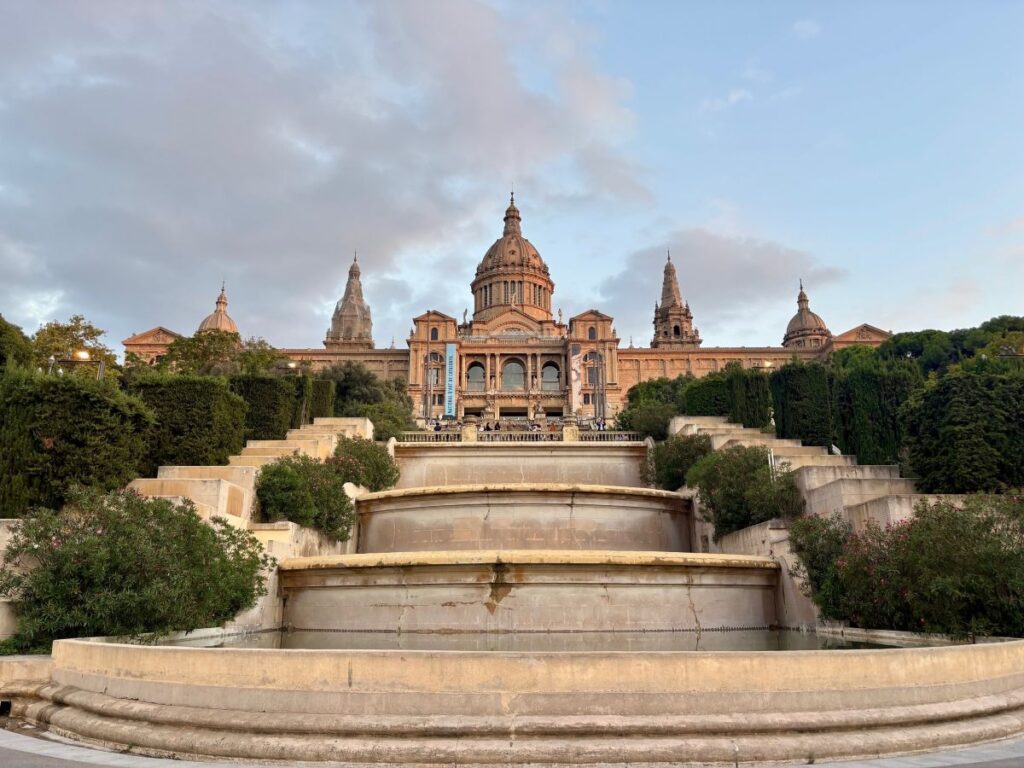
Barcelona is the starting point of this 2-week road trip. I had never put Barcelona on my bucket list before going there, but now I really love the city. Barcelona truly has it all if you ask me. You can enjoy incredible beaches, visit impressive historical sites, taste amazing food, and even go hiking in the surrounding hills and mountains, all without leaving the city.
Today is your first day in Barcelona and you’ll have a full day to explore the old city center. I always love to just wander around in this area, but you could also do a guided walking tour if you prefer.
It’s a nice way to really get a good feel of Barcelona. If you want a fuller day-by-day plan for the city, I have a complete 3 days in Barcelona itinerary for first-timers. Both El Born and the Gothic Quarter are worth seeing.
Don’t skip Plaça Reial, Catedral de Barcelona, Basílica de Santa Maria del Mar, Arc de Triomf and Parc de la Ciutadella. If you need a break, it’s nice to stop for some food or a drink at Plaça de Sant Cugat. Another option is to eat in the area of Port Vell, where you can enjoy your meal with views of the marina.
Where to stay in Barcelona
Casa Bonay is an excellent place to stay when you are in Barcelona. It’s located right in the middle of it all in a beautiful building. The rooms are very comfortable, and the hotel even has a spa and a rooftop terrace to get into the ultimate relaxation mode.
If you would rather compare areas before booking, my guide to where to stay in Barcelona covers the best neighbourhoods and hotels for first-timers.
Day 2: Barcelona
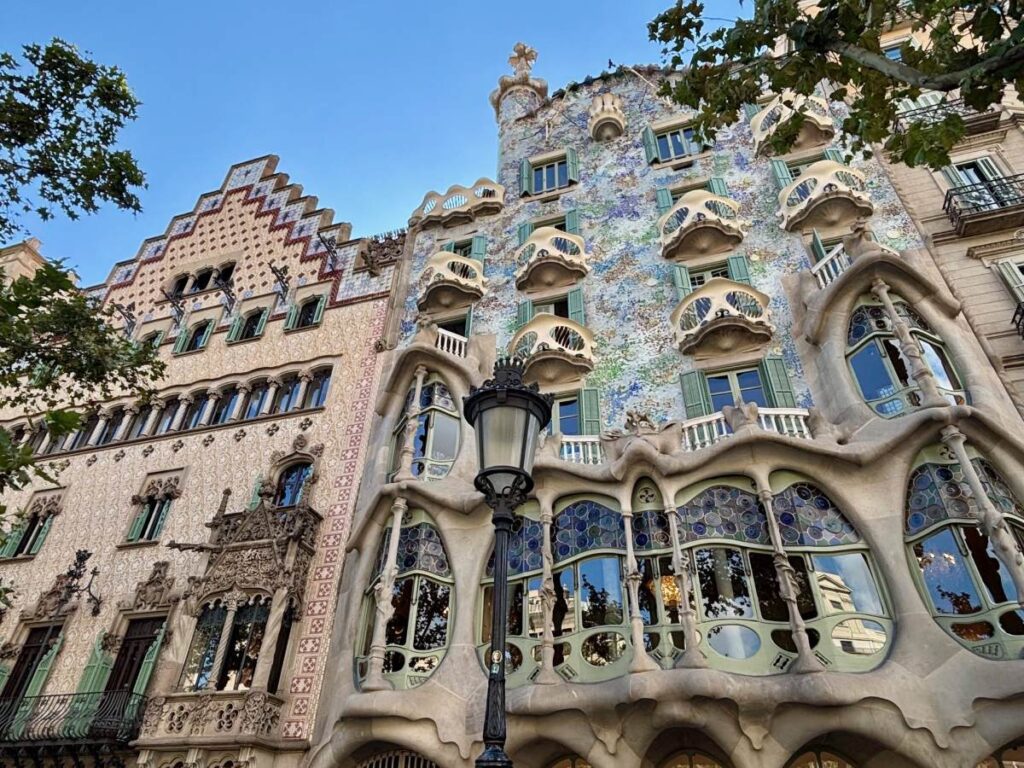
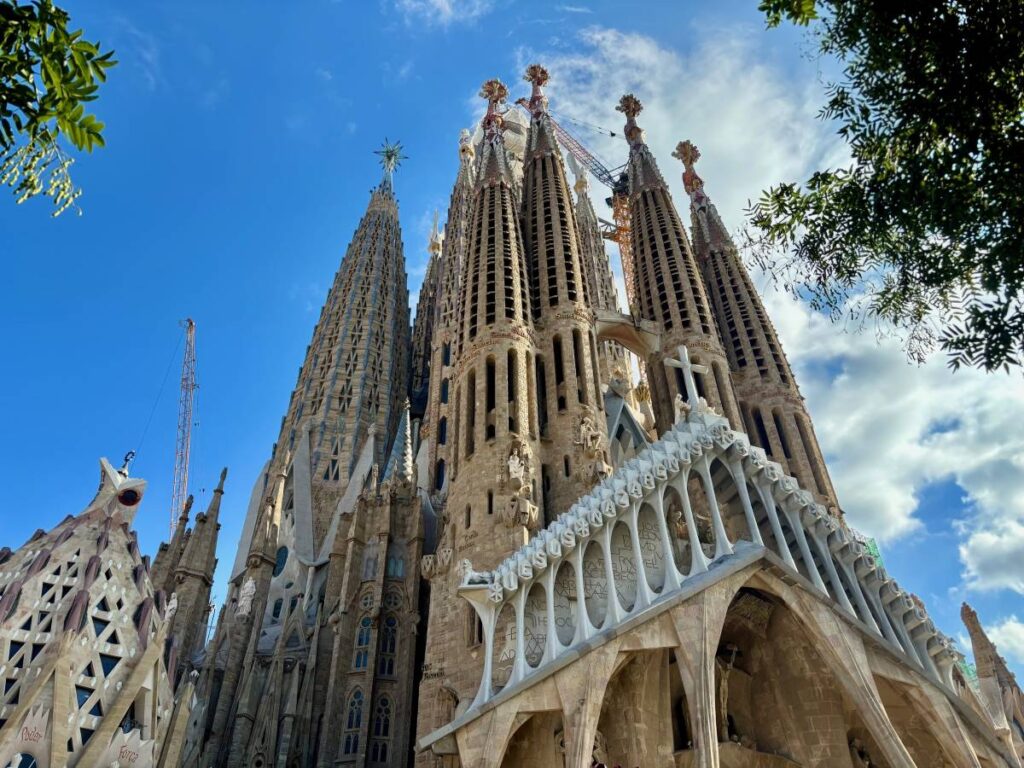
On the second day you’ll head to the one place you really cannot miss when you’re in Barcelona: Sagrada Família. This iconic cathedral that was designed by Antoni Gaudí looks different from all sides and you’ll need some time to take it all in.
I used to live nearby but I still get amazed by the complexity and beauty of the building. On the inside, I truly love the colored light that enters through the stained-glass windows and it’s also worth it to climb the towers for incredible views.
Note: if you want to visit Sagrada Família from the inside, make sure to book tickets ahead of time.
I recommend continuing your day in the Gracia neighborhood, where it’s fun to wander around, check out some local shops and sit down on a nice terrace on one of the many squares for some tapas and drinks. I can recommend heading to Plaça Del Sol for this.
After Gracia, walk towards Passeig de Gracia, where you can admire two houses that were designed by Gaudí: Casa Milà and Casa Batlló. Both are impressive and you can visit them from the inside as well if you want. When you’re ready to continue, walk further along Passeig de Gracia towards Plaça Catalunya.
On the top floor of El Corte Inglés you’ll find a bar where you have incredible views of the surrounding area. After this, head back to your hotel to freshen up, go shopping or relax on one of the terraces nearby.
Day 3: Drive from Barcelona to Cambrils

Distance from Barcelona to Cambrils: 114 km, Driving time: 1 hour and 30 minutes.
Today you’ll be leaving Barcelona to head towards Cambrils. If you are worried about leaving the city already, don’t, because you’ll return to Barcelona at the end of this road trip.
Along the way you can stop in Sitges if you like, a popular beach town with a charming historic center. You can enjoy an amazing lunch here before continuing to Cambrils.
Cambrils is a relaxing coastal town along the Costa Dorada and I think it’s an ideal place to stay for a couple of days between the cities you’ll be visiting during this road trip. It’s also a great base for the Costa Dorada, one of Spain’s best known coastal regions.
Where to stay in Cambrils
Instants Boutique Hotel is a very modern and comfortable hotel with a pool. It’s located close to the promenade, and the hotel offers private parking as well.
Day 4: Cambrils
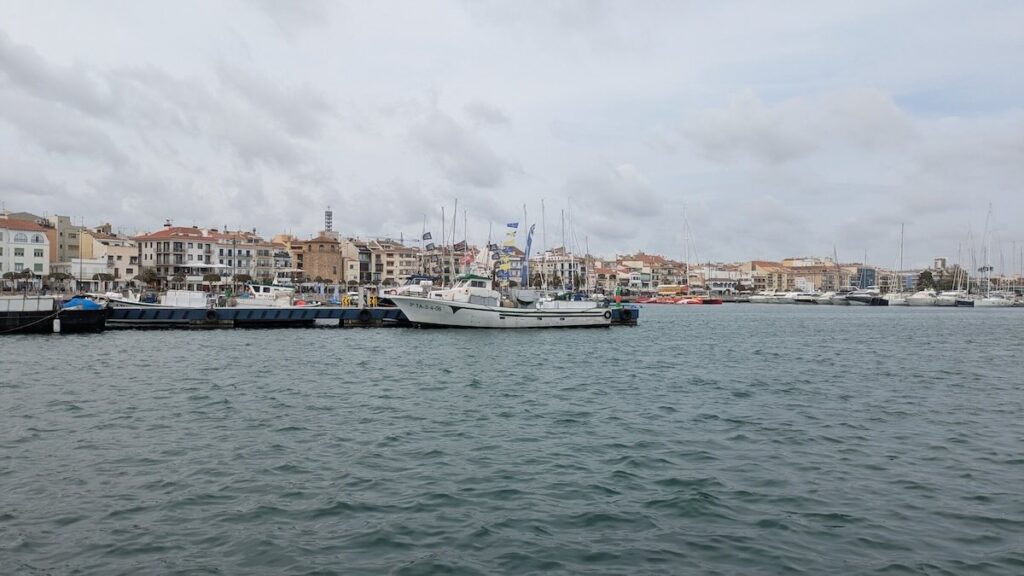
Today you’ll have a full day in Cambrils. The part of the town along the shore is relaxing and truly gives you a holiday feel. It’s nice to go for a walk to see the fishing boats and Cambrils’ stunning beaches. The town is also great for shopping, since there are lots of cute shops to entertain yourself for a few hours.
When you need a break, you can enjoy a seafood meal in one of the restaurants along the promenade.
If you’re interested in visiting the old town center with historical buildings, you’ll find it about 1 km inland from the shore. The atmosphere here is quite different from the rest of Cambrils, because it has more of a local vibe.
Day 5: Cambrils / Day trip
Today is a good day for a trip out, and you have two very different options.
Pick Tarragona if you want history: the city has Roman remains on the UNESCO World Heritage list, and the Amphitheatre, sitting right above the Mediterranean, is still largely intact. Close by is the Balcó del Mediterrani, a viewpoint over the coastline, and I love wandering the narrow streets of the old centre, where you come across the Gothic cathedral and squares like Plaça del Fòrum and Plaça de la Font.
Pick PortAventura if you are travelling with children or just fancy a full day off sightseeing, since it is one of Spain’s biggest theme parks and easy to reach from Cambrils.
After your day trip, you’ll head back to Cambrils for a relaxing evening.
Day 6 Drive from Cambrils to Vinaròs and Valencia
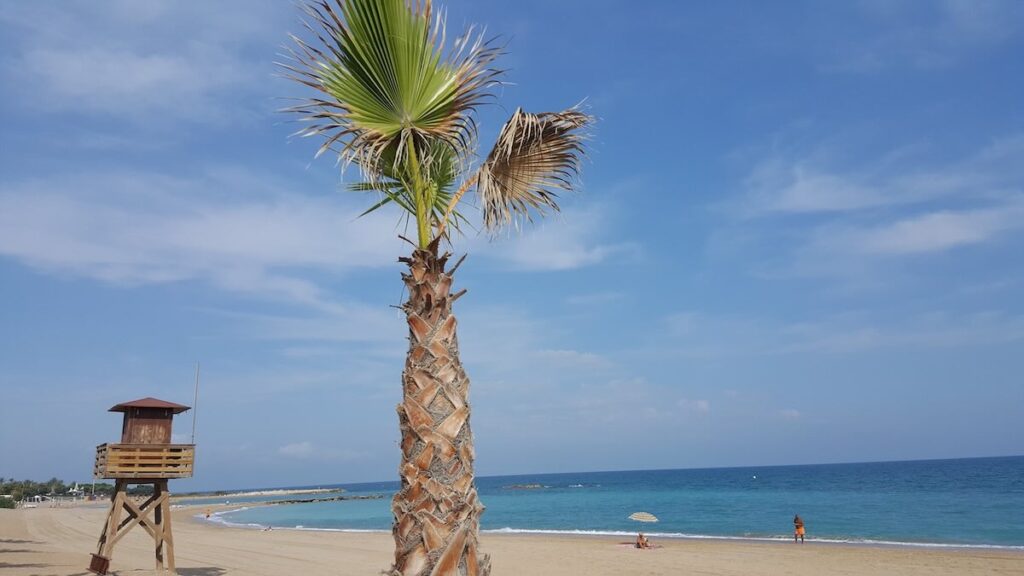
Distance from Cambrils to Vinaròs: 98 km, Driving time: 1 hour and 15 minutes.
Distance from Vinaròs to Valencia: 151 km, Driving time: 1 hour and 45 minutes.
Today it’s time to leave Cambrils and drive to the next amazing city on this road trip: Valencia. But before you get here, it’s great to have a lunch break in Vinaròs. If you like seafood, order prawns (langostinos) since these are a local specialty.
After this relaxing break you’ll continue your drive to Valencia, where you can enjoy a nice restaurant to end the day.
Optional addition to this road trip: Parc Natural del Delta de l’Ebre
Located between Cambrils and Vinaròs, you’ll find one of the most important wetlands of Spain. The Parc Natural del Delta de l’Ebre is famous for its rice fields and rich birdlife and it’s perfect for exploring by bike.
After the coastal drive, you’ll arrive in Valencia, another great Spanish city that I can really recommend.
Where to stay in Valencia
Hotel Puerta Serranos is a comfortable hotel when staying in Valencia. It’s located in the old city center, so it’s an easy base for sightseeing. The rooftop terrace is amazing and from there you have views of the Torres de Serranos.
Day 7: Valencia
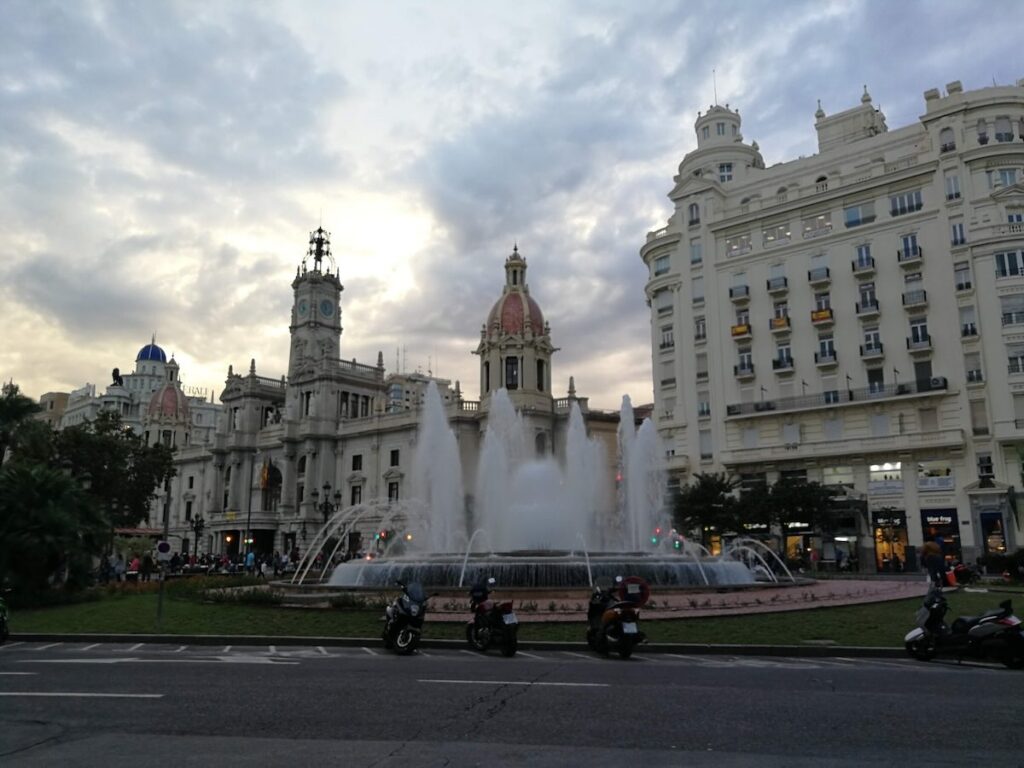
On the first day in Valencia, it’s nice to rent bikes or do a guided bicycle tour as you get a good idea of what the city has to offer in just a short time. Bikes are especially easy to explore the Jardines del Turia, the old riverbeds that have been turned into a large park.
Afterwards you can continue on to the Ciutat de les Arts i les Ciències, where you’ll be impressed by the large futuristic buildings. You can look around this area for a while, take pictures and if you want you could visit the aquarium L’Oceanogràfic.
You can head towards the coast next and cycle along Platja de la Malvarrosa and the port, before returning to the city to relax.
Day 8: Valencia
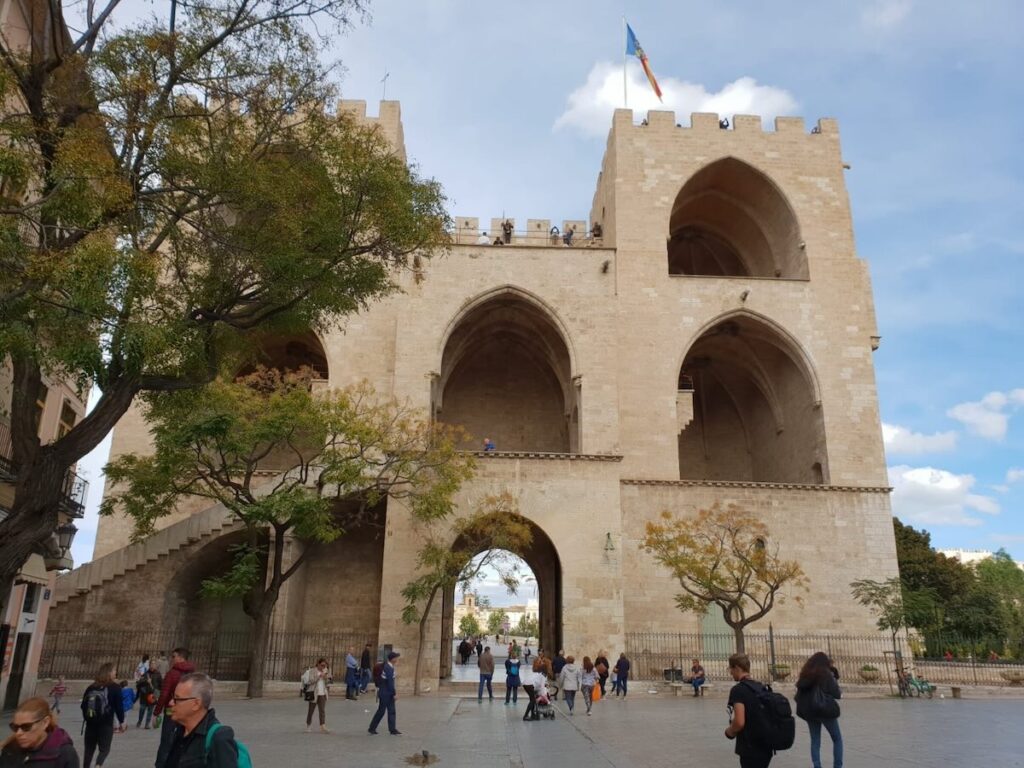
On the second day in Valencia I recommend staying in the old city center, to soak in the typical Spanish feel.
Start at Torres de Serranos, one of the old city gates that is still beautifully intact. Continue towards Plaza de la Virgen (also called Plaça de la Mare de Déu) next, where you’ll find the cathedral of Valencia. Try and visit the belltower ‘Miguelete’, which gives you spectacular views of the city.
After the cathedral continue onto Mercat Central de València, the local market hall that is great for stocking up on local produce. Along the way you can pass by Plaza Redonda, a small historic round square.
Almost next to Mercat Central you’ll find Lonja de la Seda. This stunning UNESCO World Heritage Site was once used for the silk trade and is also worth a visit.
After this, head to Plaza del Ayuntamiento. I was really impressed by the buildings on this square when I first visited Valencia, so please don’t skip it. There are some great restaurants in the area if you want to stop for a lunch break. Since Valencia is the place where Paella originated from, I recommend ordering paella when going for lunch, for instance at restaurant Puerta del Mar.
If you still want to discover more of the city after this, it’s nice to see the bullfighting arena, Plaza de Toros. This reminded me of the Colosseum in Rome, so I think it’s well worth a visit before ending your day of sightseeing.
Day 9: Drive from Valencia to Madrid

Distance from Valencia to Madrid: 361 km, Driving time: 3 hours and 50 minutes.
Today you’ll leave Valencia and head towards the capital of Spain, Madrid. The drive between Valencia and Madrid is one of the longest ones on this Spain travel itinerary. To stretch your legs a little during the drive, you could stop in Cuenca for a short visit and see the ‘hanging houses’ that were built along the cliffs.
If it’s not too late when you arrive in Madrid, it might be nice to head to El Retiro park, the immense city park. Here you can have a lovely walk and relax after the drive. Depending on where your hotel is located, you might be able to pass by Plaza de Cibeles and Puerta de Alcalá, which immediately give you a good idea of what Madrid has to offer.
Where to stay in Madrid
I can recommend AC Hotel Atocha while staying in Madrid. The hotel is conveniently located near Atocha train station and also within walking distance of the places you’ll want to see in the city center.
The hotel has comfortable rooms, and the staff are very friendly and helpful. For more areas and hotels to suit different budgets, see my guide to where to stay in Madrid.
Day 10: Madrid

Today is your first full day in Madrid and if you’re up for it, try and plan a cycling tour. This is one of the best ways to get to know the city when visiting for the first time. If you want more ideas for filling your days here, my guide on what to do in Madrid for first-timers has easy plans for one to three days.
You will have a good impression of which places are worth visiting tomorrow and you’ll often get insider tips too. Afterwards, I would recommend planning a visit to the Prado museum. You can easily spend a couple of hours in this art museum, discovering the international artworks. It’s best to buy your tickets before you go, because if you don’t, you might need to queue for a long time.
In the evening, try and find a nice tapas bar. You might be able to try a ‘bocata de calamares’ (a squid sandwich), which is one of the local specialties in Madrid.
Day 11: Madrid
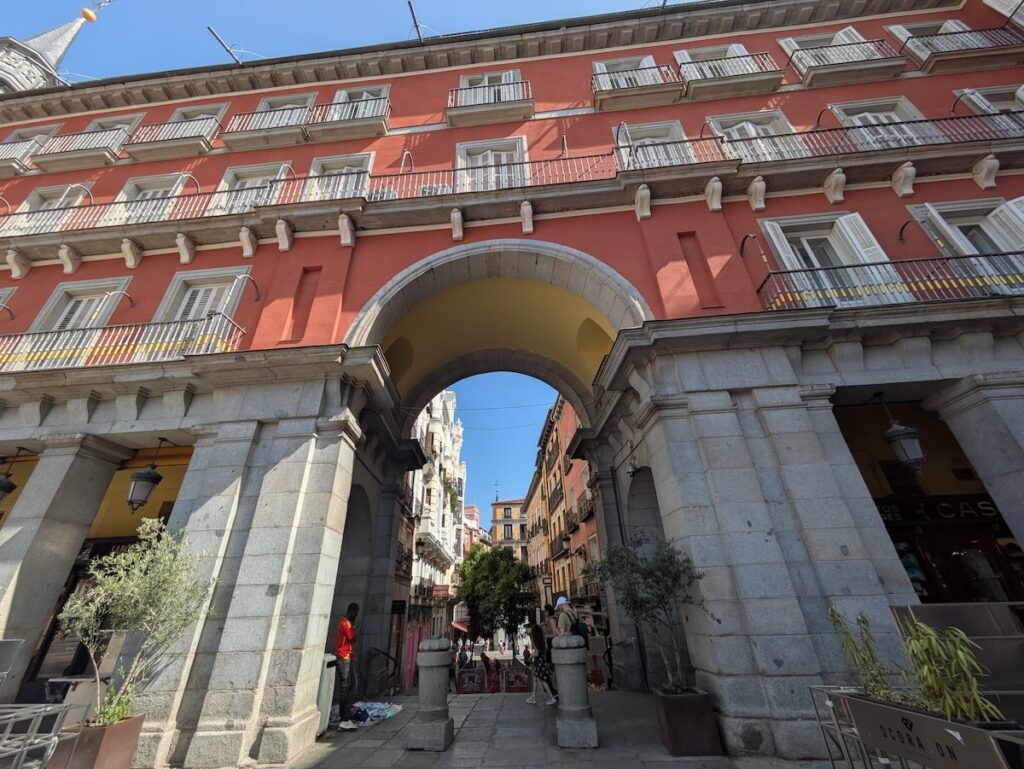
You’ll have another day in Madrid. In the morning, try and find a place where you can have churros for breakfast, as this is what locals do.
When you’re ready for some sightseeing, it’s time to explore the historical city center of Madrid.
Start your walk around the lively square ‘Puerta del Sol’ and head to Plaza Mayor, the impressive major square of Madrid. The arches you’ll encounter when entering the square are so beautiful. I can recommend entering via either Arco de Cuchilleros, one of the most iconic entrances.
The square has lots of terraces, but I recommend not sitting down here, since they are overpriced and the food and service isn’t what you would like. There are loads of better places you can find in Madrid.
After Plaza Mayor, Plaza de Oriente is worth a visit. On the way there you can pass by Mercado de San Miguel, a food market where you can grab some fruit or a drink before you continue on.
Once you’re at Plaza de Oriente, you’ll immediately see the impressive Royal Palace. There are several options for visiting the palace, with a guided tour or with/without an audio guide. But sometimes the tickets to visit without a guided tour get sold out, because they are cheaper. So, book ahead of time if you can.
Right across the Royal Palace you’ll find Teatro Real, where you can take a guided tour too if you want to see the inside. Of course, you could also book a ticket to see one of the shows.
If you still have time left, you can continue towards the neighborhood of La Latina to Plaza de la Paja, which I really like for a drink on one of the terraces. The Capilla de Nuestra Señora y de San Juan de Letrán offers a nice view while you’re there.
In the evening try to find a rooftop bar for some drinks and a bite to eat. You can head to The Hat Rooftop for instance, where you can relax while having views of the city.
Day 12: Drive from Madrid to Tarazona
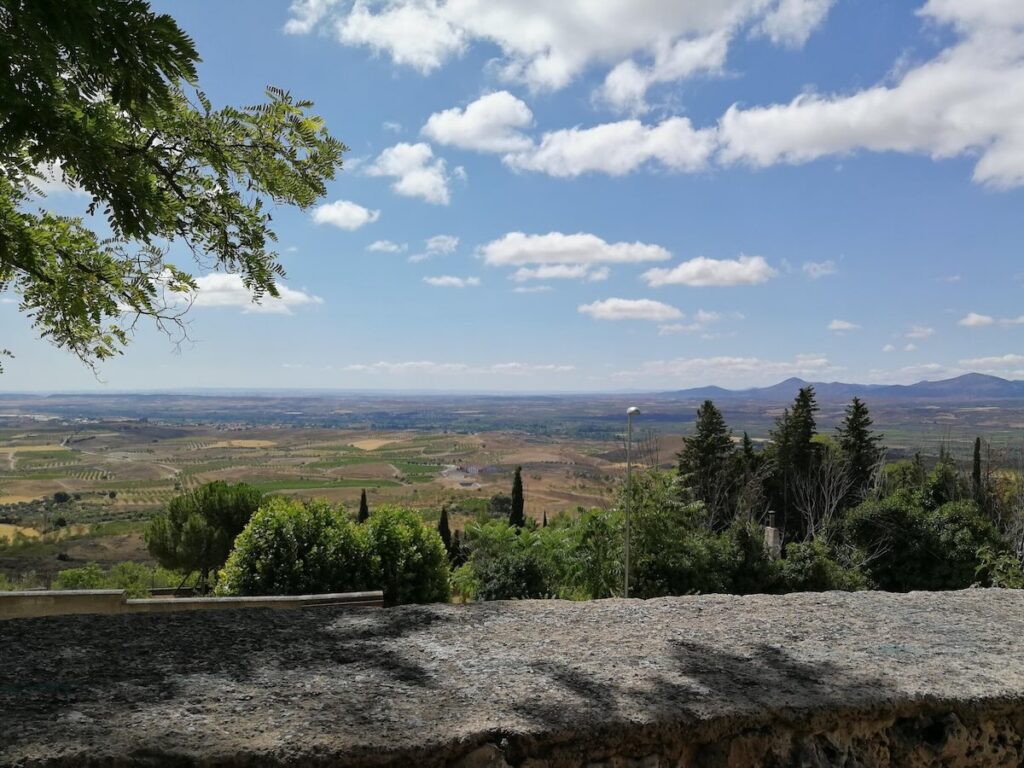
Distance from Madrid to Tarazona: 292 km, Driving time: 3 hours and 23 minutes.
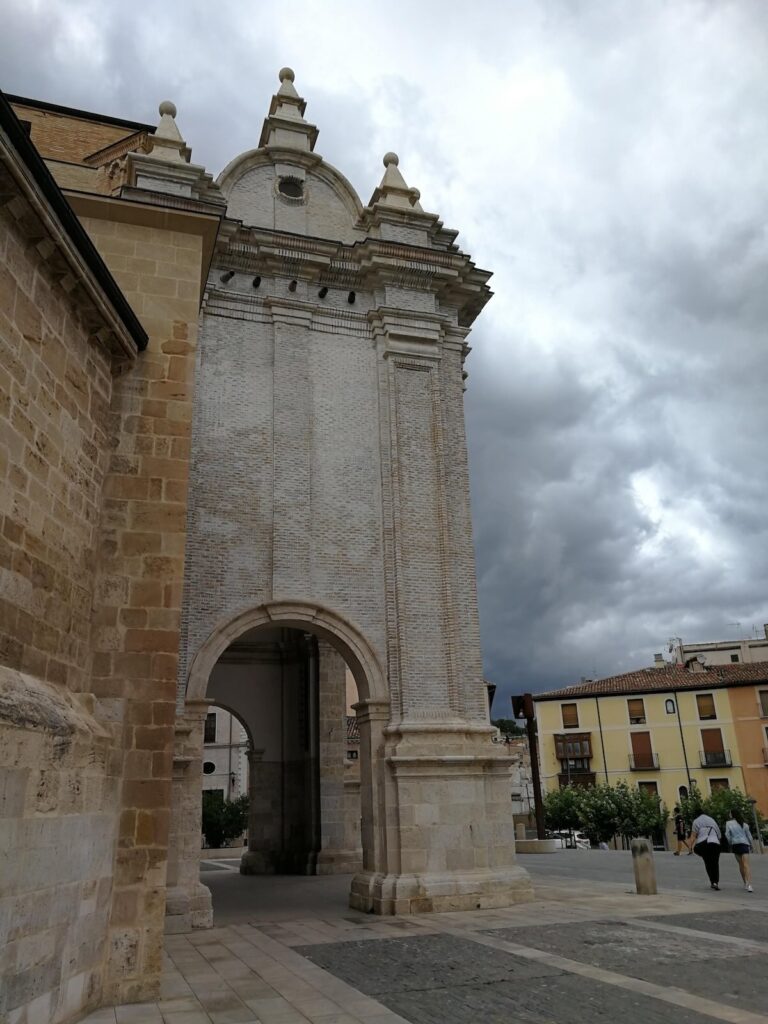
It’s time to leave Madrid again and head to Tarazona. Tarazona is just a small city, but it’s a pleasant stop to break up the long drive between Madrid and Barcelona.
The historic city center is very tranquil and it’s nice to walk around for a bit. Highlights you can visit while you’re here are Plaza de Toros Vieja (the old bull ring) and the Cathedral of Santa María de la Huerta.
Where to stay in Tarazona
Torre Chiguita offers spacious apartment style rooms that have everything you need. The hosts are very helpful and friendly. Torre Chiguita is in a quiet location, but you are still within easy walking distance of the old town center. It’s easy to park and the pool is a big bonus.
My Top Tip! If you have time while you’re in Tarazona, you can also visit Santuario de Misericordia, a peaceful hilltop sanctuary with beautiful views of the surrounding landscape.
Day 13: Drive from Tarazona to Barcelona
Distance from Tarazona to Barcelona: 392 km, Driving time: 3 hours and 40 minutes.
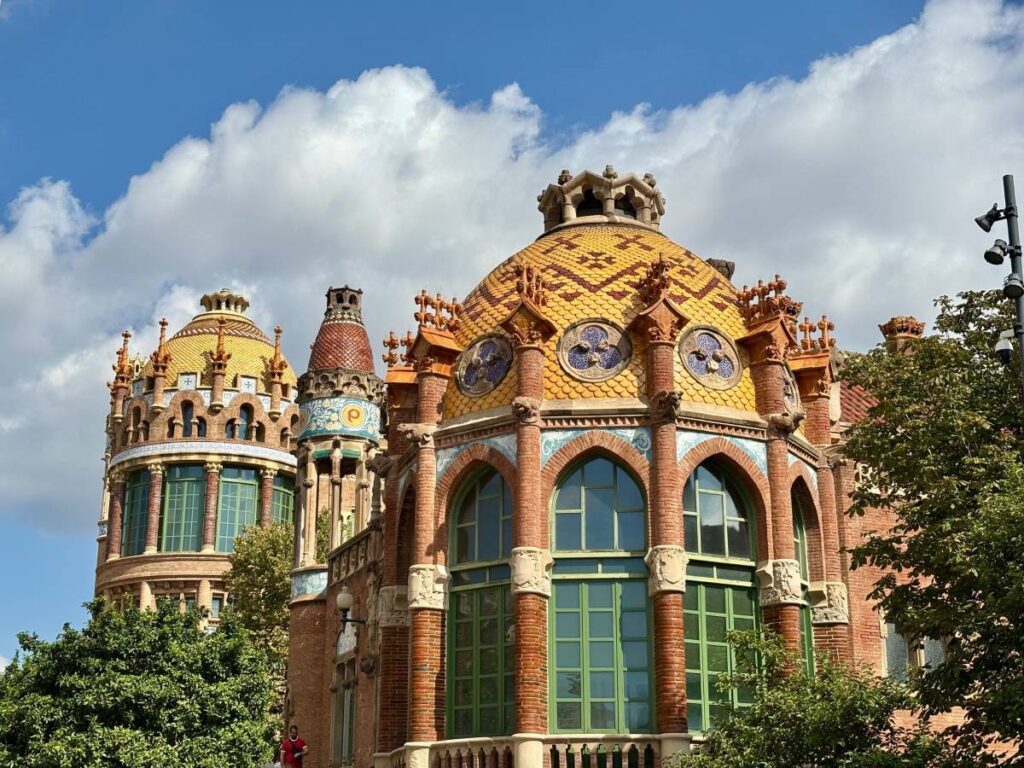
Today you’re leaving Tarazona and heading back to Barcelona, the last stop of this road trip. Today is a relatively long drive, but depending on traffic and how many stops you’ll have, you might have some time in Barcelona. If so, you could either visit Parc Guell or head to Tibidabo for incredible views of the city.
Day 14: Barcelona
Today you’ll have one more day in Barcelona and you could go back to some places you liked before or visit some new places in the city.
I can recommend visiting Montjuïc. Here you can check out the incredible fountains, the MNAC museum and the Olympic area, before taking the cable car to Port Vell. From here you can continue walking along the beach and relax on one of the many terraces.
If you feel like it, you can continue along the beach towards Rambla de Poblenou, a lively area that I love to visit when I’m in the city.
Practical tips
What a two-week Spain road trip costs
Here is a realistic budget for this trip, based on two people sharing a car and a room and travelling at a mid-range level: three-star hotels, and a mix of menú del día lunches and tapas dinners. It leaves out international flights. Figures are approximate, in euros, with pounds in brackets.
| What | Typical cost (2 people, 14 days) | Notes |
|---|---|---|
| Car hire (about 11 days) | €440 (£380) | Compact with basic cover, picked up in Barcelona |
| Fuel | €135 (£115) | About 90 litres for the 1,400 km loop |
| City parking | €150 (£130) | Around €20 a night where the hotel charges, mainly Valencia and Madrid |
| Hotels (13 nights) | €1,430 (£1,245) | Mid-range double, around €110 a night on average |
| Food and drink | €1,120 (£975) | About €40 per person per day |
| Attractions | €260 (£225) | Headline sights like the Sagrada Família (€26, or €40 with the towers) |
| Total, excluding flights | around €3,550 (£3,090) | Roughly €1,775 (£1,545) per person |
The biggest swing is hotels and season. Barcelona and Madrid cost more than Valencia, Cambrils and Tarazona, and both cities are at their priciest in July and August.
Barcelona also adds a small nightly tourist tax, which went up in April 2026.
Doing it by train instead? You drop the car hire, fuel and parking (about €725 for two) and add train fares of roughly €60 to €120 per person for the three main city legs booked ahead. So the train version comes out slightly cheaper for two people, and quite a bit cheaper if you are travelling solo.
Best time for this road trip from Barcelona
I recommend planning this road trip in spring or autumn if you can, because the temperatures are perfect for exploring and you’ll also avoid the peak tourist season.
July and August can be extremely hot, especially in Madrid, which isn’t ideal if you want to visit the city. Wintertime is also great for destinations along the Mediterranean, but less for inland regions, since temperatures can drop below zero.
Transportation for this road trip
The most convenient way to travel is by car. I would recommend renting a car in Barcelona for this road trip. You could rent a car on day 3 when you leave the city, so you can avoid the high costs and the hassle of parking in the city.
Since you won’t pick up the car until day 3, you’ll need to get from the airport into Barcelona first. My guide on getting from Barcelona airport to the city centre runs through the bus, train, metro and taxi options.
Rental cars are available at Sants station. For the rest of the trip, look for accommodation with parking, since space in the bigger cities can be limited and expensive. The hotels I recommend in this guide all have parking, so you can leave the car where you are staying rather than driving around looking for a space, which is a real relief after a long day.
Also good to know is that the main roads on this route are now toll-free. Spain removed the tolls on the AP-7 coastal motorway and the AP-2 in 2021, so the Costa Dorada legs and the run back from Madrid no longer cost anything at a toll booth.
The only watch out is if you choose to take the C-32, this is subject to a toll between Barcelona and San Vicente de Calders. The costs to budget for instead are city parking and the low emission zone rules in Barcelona and Madrid.
Before you pick up the car, a few things worth knowing.
Low emission zones. Barcelona and Madrid fine older, polluting cars for driving into their centres, using cameras. A car hired in Spain already has the right sticker, so you can drive in. Check it is on the windscreen at pickup, then park at a hotel garage or an edge-of-centre car park and take the metro in.
Speed cameras. They are everywhere, and fines reach you through the hire company with a fee added. Keep to the limits, and carry your licence and passport. Waze is a great app I swear by which also alerts you about the majority of speed cameras, and its free.
Good to know: if you are driving your own UK car down rather than hiring, you have to register it with each city’s low emission zone online before you drive in, which is why hiring locally is simpler.
The train option instead of driving
This route is built mainly for driving, but you can do a good chunk of it by train if you would rather not hire a car. The three main cities link up easily on fast trains: Barcelona to Valencia takes about 2 hours 35 minutes to 3 hours on the Euromed, Valencia to Madrid is under 2 hours on the AVE high-speed line, and Madrid back to Barcelona is a direct AVE of about 2 hours 30 minutes to 3 hours.
There are several trains a day on each leg, and fares are cheap if you book a few weeks ahead. Cambrils is reachable too, on the slower coastal regional line that stops at Tarragona and Cambrils, so the Costa Dorada part still works without a car.
The one stop that does not work by train is Tarazona, which is effectively off the rail network, so on a train version you would skip it and return straight to Barcelona from Madrid.
The cities and the coast are all doable this way. You just lose the small inland stop and some of the freedom to pull over wherever you like. For the detail on the main city legs, I’ve set up a full guide to travelling by train from Barcelona to Madrid.
FAQs about road trips in Spain
Yes, and it is a relaxed pace rather than a rush. You get two or three nights each in Barcelona, Valencia and Madrid, a couple of days on the Costa Dorada coast, and no single driving day longer than about four hours.
Mostly, yes. Barcelona, Valencia and Madrid connect easily on fast trains: Barcelona to Valencia takes under three hours, and Valencia to Madrid under two. Cambrils is reachable on the slower coastal line. The only stop that does not work by train is Tarazona, so you would skip it.
If you have a UK photocard licence, no. You can drive on it for visits of up to six months. You would only need an International Driving Permit with an older paper licence, a licence from the Isle of Man, Guernsey or Gibraltar, or one from outside the UK and EU.
Usually a full licence you have held for at least a year, a passport, and a credit card for the deposit. Most companies set the minimum age at 21, sometimes higher, with a young-driver surcharge under 25. Check the terms when you book, as they vary by company.
The main roads on this loop are toll-free. Spain scrapped the tolls on the AP-7 coastal motorway and the AP-2 in 2021, and the inland roads to Madrid and back use free autovías. Ignore older guides or satnavs telling you to pay at toll booths here. The only exception is if you take the C-32 from Barcelona.
Spring or autumn. The temperatures suit both the coast and the cities, and you avoid the peak crowds. July and August get very hot, especially inland in Madrid. Winter works for the Mediterranean stretches but is cold inland, where it can drop below zero.
This route covers the east and centre, so it does not include Seville or Granada. Adding Andalusia is really a separate trip. If you’re lucky enough to have more time in Spain my guides to how many days in Seville and what to do in Granada cover how long to spend and what to see.
Not to this loop. San Sebastián and Bilbao sit around five hours north of Madrid and six from Barcelona, so the north works better as its own trip or a separate few days on the end. If you’re tempted, my guides to things to do in San Sebastián and where to stay in San Sebastián cover what fits into a long weekend and where to base yourself.



8 Comments
Comments are closed.