
In my opinion, the best things to do in San Sebastián are a pintxos crawl through the Old Town, an afternoon at a cider house outside the city, and the walk up Monte Urgull for the view back over the bay. Those three are worth planning a trip around.
Everything else slots into the middle of the day, because a lot of bars shut from about three until seven and you get a few free hours to pick whichever appeals most.
I ate at 17 pintxo bars across a long weekend in July and did both of the city’s hills, including the old amusement park at the top of Igueldo. Below is my ranked list of what to do, with times, costs and the one I’d skip.
More of my Spain guides to help plan your trip
- Where to eat pintxos in San Sebastián: 17 bars I ate at and the best things to order in each
- Where to stay in San Sebastián: The three areas worth booking and 12 excellent hotels
- Sidrerías in San Sebastián: What to expect at a cider house, which to book and how to get there
- How to spend 2 days in San Sebastián: My exact route, day by day, and what to cut if it rains
- Bilbao Airport to San Sebastián: The best option, cost and how to book
- Is San Sebastián worth visiting?: My honest verdict and who should go elsewhere
- 3 days in Barcelona: My favourite route and tips for first time visitors
- Where to stay in Seville: The best areas and hotels to make the most of your trip
The short answer
| Thing to do | Time needed | Cost | Worth knowing |
|---|---|---|---|
| Pintxos crawl | A full evening | See my pintxos guide for details | Budget two or three evenings of your trip to this |
| Cider house afternoon | 3 to 4 hours | about €45 (£38) per person | Go for the first lunch sitting |
| Monte Urgull | 1.5 to 2 hours | Free | There is a free viewpoint at the top |
| Monte Igueldo and the funicular | 2 to 3 hours | €5.50 (£4.70) return | Bigger view than Urgull, far less walking |
| La Concha promenade | 45 minutes to 1 hour | Free | A beautiful beach that is also open at night |
| Old Town wander | 1 to 2 hours | Free | A different place in the afternoon lull |
| Parque de Atracciones | 1 to 2 hours | Rides €1 to €5 each | Good with young kids, easy to skip otherwise |
| San Telmo Museum | 1 to 2 hours | €10 (£8.50) | The wet weather option |
That order is my personal ranking of what I did in the city. If you had less time I’d protect the cider house afternoon and a second pintxos evening, and the first thing I’d drop is the amusement park at the top of Igueldo.
Watch out for trying to fit more than two of these into a day. The eating takes longer here than you expect and you’ll end up rushing the bit you came for.
Downloadable map of the best things to do
Disclaimer: This article may feature affiliate links. If you click these links, and choose to book with that hotel or company, I will earn a small commission at no extra cost to you. I appreciate the support that allows me to continue providing this information.
What type of visit should you plan?
There are two ways to handle a trip to San Sebastián , and picking the right one for you is the biggest planning decision you’ll make.
Food-first: eat from mid-morning to around three, sightsee in the afternoon gap, eat again from seven until late.
Sights-first: hills and Old Town in the morning, beach in the middle of the day, eat from eight or nine.
I did food-first and it was perfect for me. San Sebastián has long been my bucket list destination, because of it’s food scene.
Everything is easy to get to, we’re on the quicker side of walking, and we never felt rushed. The afternoon break was welcome after a morning of overindulging.
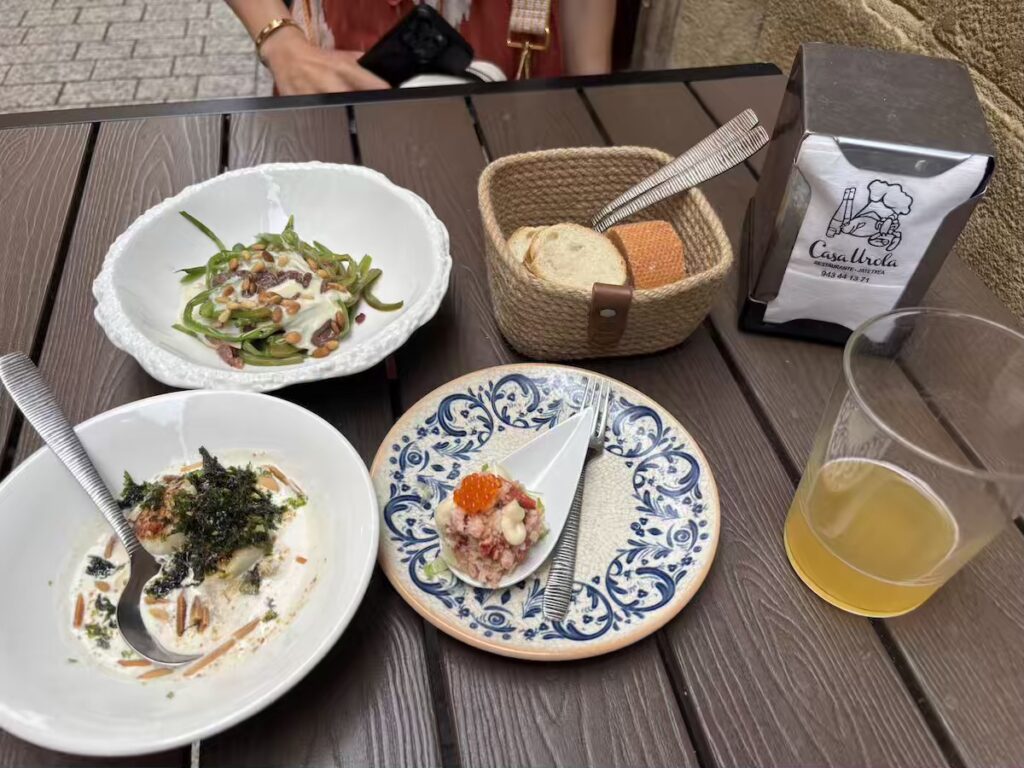
What you give up going the other way is the easy end of the eating. Bars are calmest at opening and worst at peak dinner, so a later start means more queueing. And a cider house lunch, one of the genuinely distinctive things you can do here, takes the middle of your day and involves a taxi out of town.
Either way, pick your two or three big eating sessions first and build the sights around them. Do it the other way round and you’ll end up eating at nine in whichever bar has space.
My Top Tip! If you’re going food-first, don’t book a hotel with breakfast. We skipped it deliberately and it was one of the best calls we made, because it frees you up to graze from mid-morning instead of filling up on a buffet you’ll regret by eleven.
One thing worth knowing before you plan either version. We went in peak season on a public holiday weekend and nothing felt horribly packed attraction-wise. Busy, yes, but nowhere near a Seville, Barcelona or Madrid in July.
Monte Urgull or Monte Igueldo: which viewpoint to choose
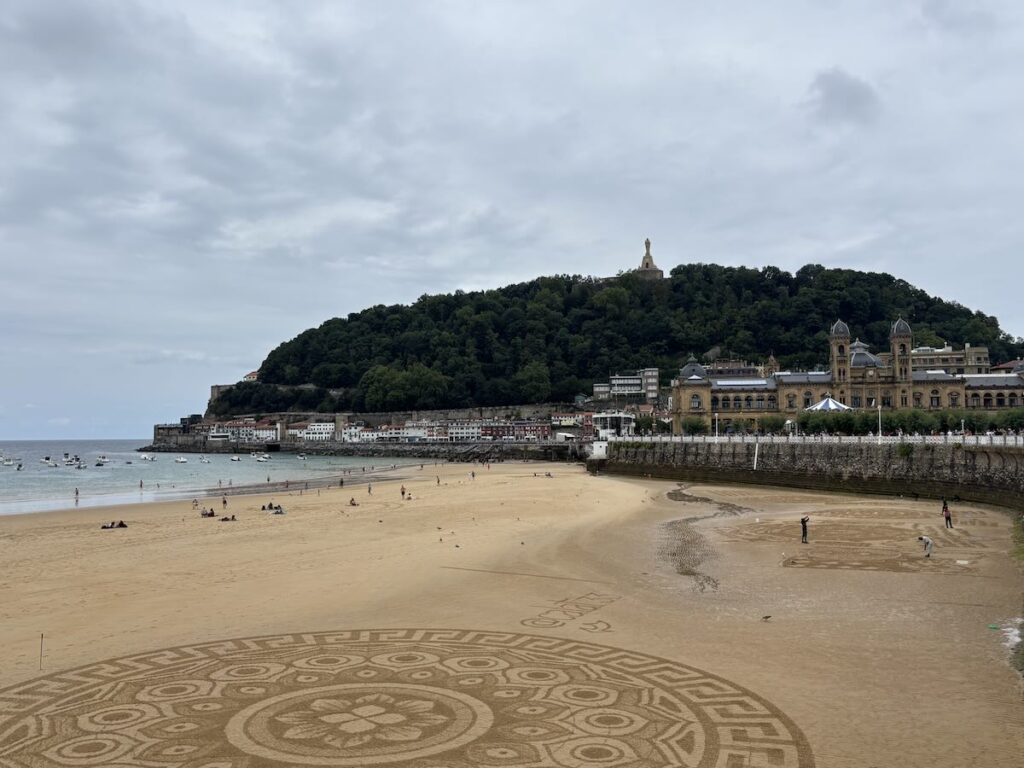
Two hills, one at each end of the bay, and almost every guide lists them as separate things to do without telling you they can easily be a choice. I did both in one weekend, so I can tell you which way I’d go, if you don’t want to do both.
Pick Monte Urgull if you are keen for a nicer walk. It’s closer to town, you go up through woods with the views changing as you climb, and it has several routes so it never feels busy. It’s also free.
Pick Monte Igueldo if the view is what you’re there for, if you’ve got kids with you, or if you’d rather not do the walking. The view from the top is the better one, no argument.
Monte Urgull
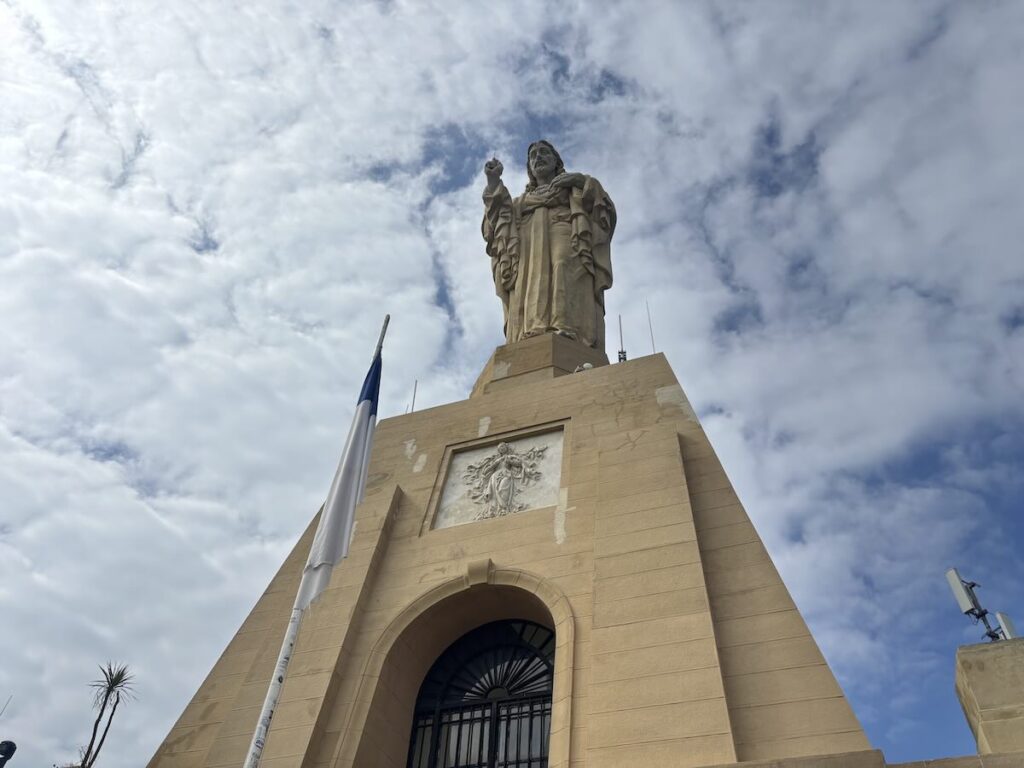
The green hill rising straight out of the back of the Old Town, with a Christ statue on top of an old fortress, the Castillo de la Mota. You walk up from behind the Basilica or from the Paseo Nuevo, the promenade that wraps round the base of the hill.
We went up and around two or three different routes, explored the fortress at the top, then came down the far side overlooking Zurriola beach for a completely different view. That’s the way to do it. Going up and back the same way wastes half of what the hill offers.
At the very top there’s a small free museum and a viewpoint inside the House of History. It looks like a ticket office you have to pay at, don’t be fooled. You’re given a slot rather than walking straight in, and we waited about ten minutes for ours. Worth it for the view.
My Top Tip! The free viewpoint at the top catches a lot of people out because you have to ask for a slot rather than just wander in. Get your slot as soon as you reach the summit, then go and look round the fortress while you wait.
Time 1.5 to 2 hours • Cost Free
Monte Igueldo and the funicular
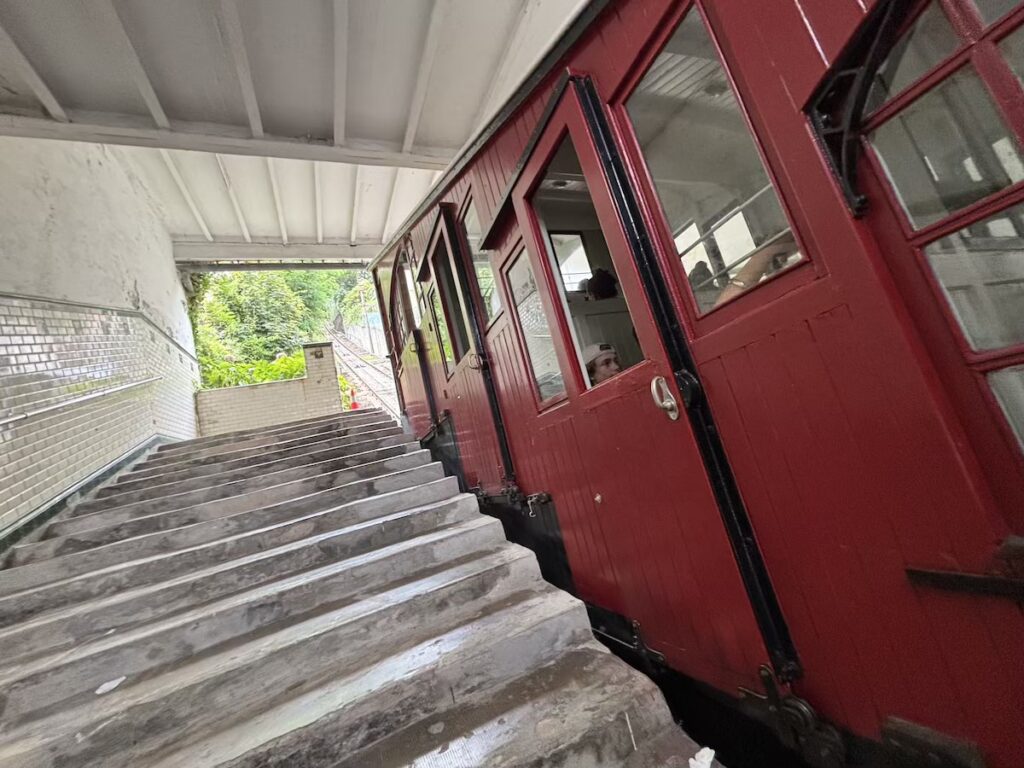
A funicular is a little railway that hauls carriages up a steep slope on a cable. This one has been going since 1912, the wooden carriages are original, and it climbs the hill at the western end of La Concha in a couple of minutes.
Yes, it’s worth the fare. It made the trip up much quicker and it’s interesting in itself, particularly if you’ve never been on one. We bought a one-way ticket at €4.00 (£3.40) and walked back down, which I’d do again. The return is €5.50 (£4.70) if you’d rather ride both ways.
The funicular isn’t mandatory. You can walk or drive up and pay €3.00 (£2.55) per person for the enclosure and lookout instead, which is worth knowing if you’re in a group and the fares start stacking up.
Time 2 to 3 hours • Cost €5.50 (£4.70) return
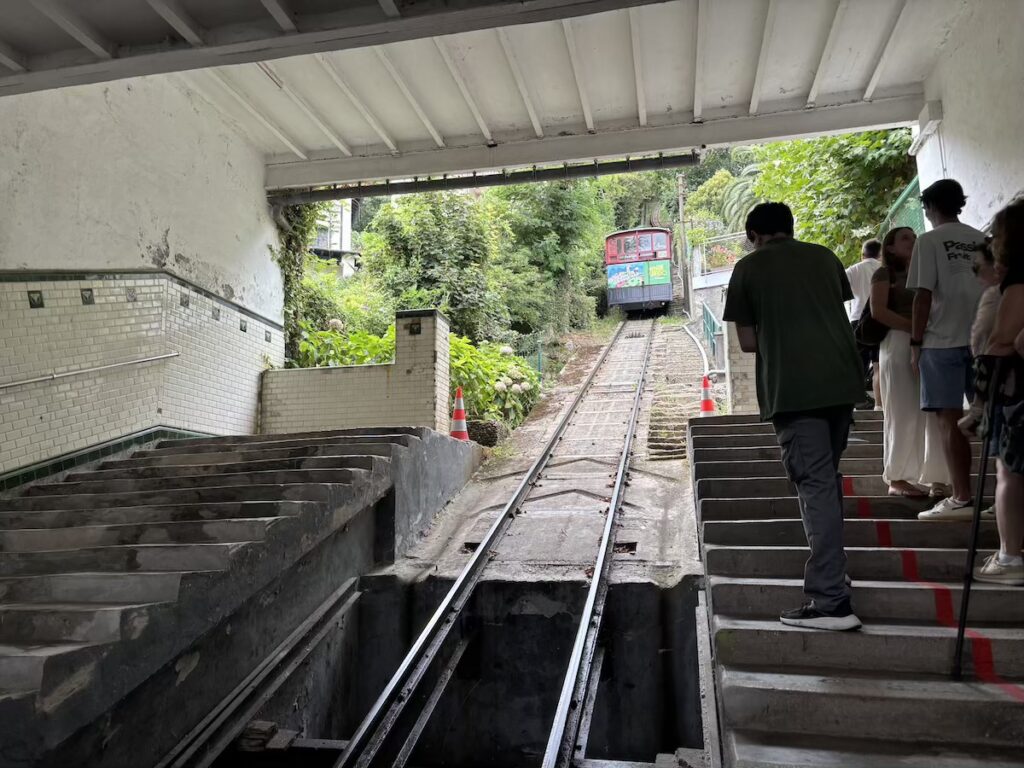
Parque de Atracciones on Monte Igueldo
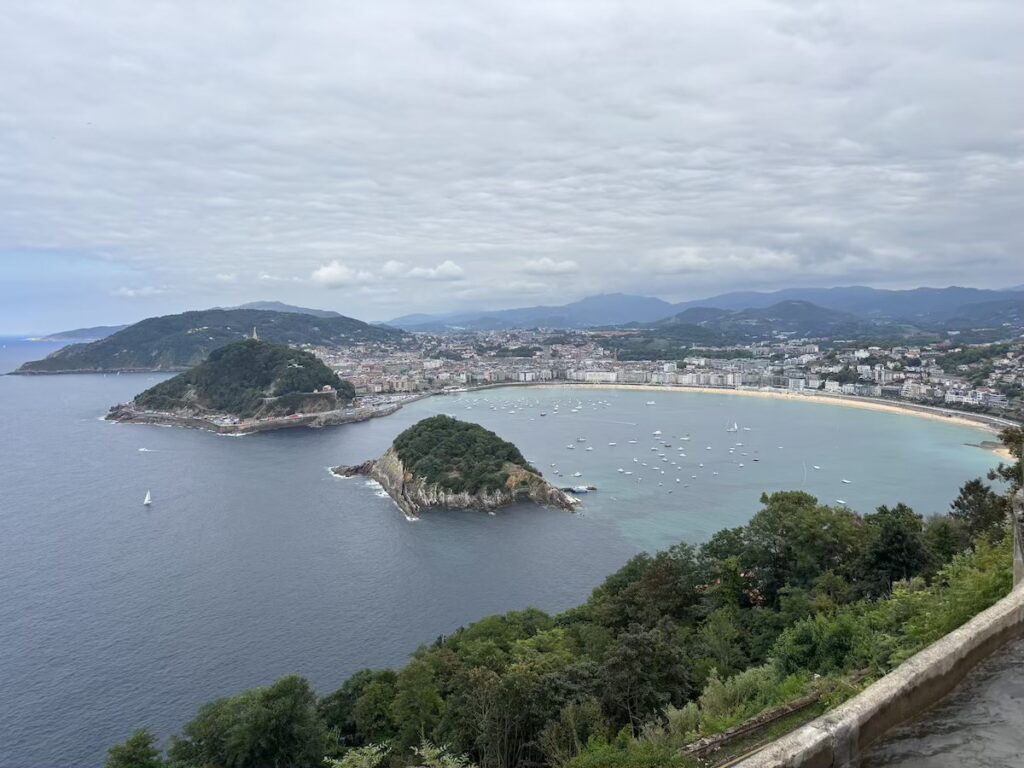
At the top of Monte Igueldo there’s a small amusement park that’s been there since 1912. Set your expectations properly. It’s an old-fashioned park with a handful of basic rides, closer to a seaside fairground than anything modern, and rides are paid for individually on top of your funicular fare.
It’s good for younger children, and it’s a fair way to fill an hour or two if you want to do something different. I wouldn’t go back myself, though it was a fun distraction at the time.
The log style boat ride is the one everyone queues for, and probably what you’ve seen on social media. I didn’t think it was worth the wait. My other half really enjoyed it for the view and the photos, so this one splits opinion!.
Time 1 to 2 hours • Cost typical €1 to €5 (£0.85 to £4.25) per ride
La Concha, Ondarreta and Zurriola: which beach is which
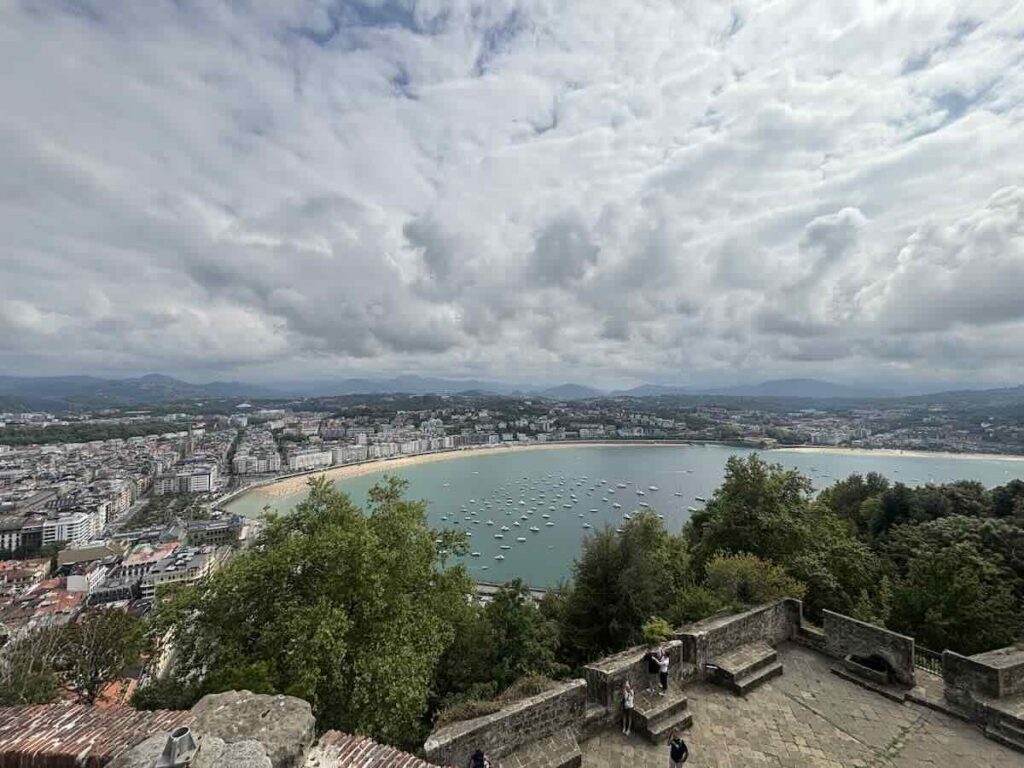
Three beaches, and they’re different from one another, each with their own benefits.
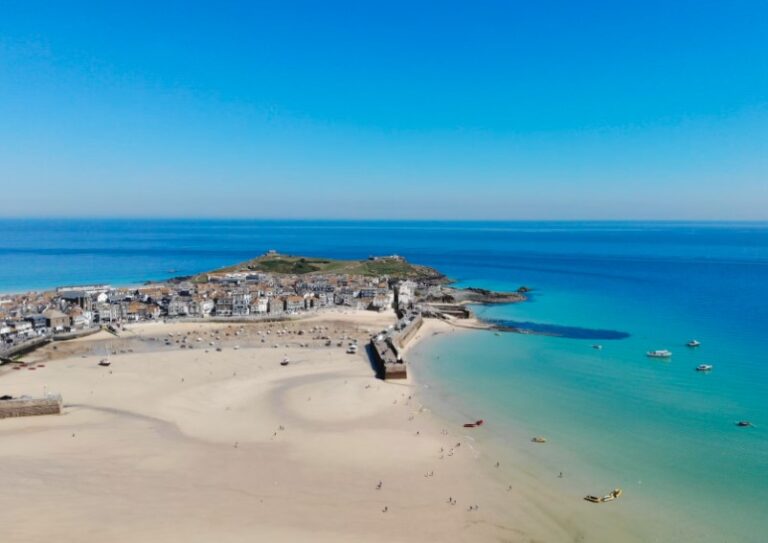
La Concha is the famous one, the shell-shaped curve with the white railings along the length of it. Calm water, good sand, and it sits right in the middle of the city.
Ondarreta carries on past the headland at the western end. Smaller, usually quieter, and it’s the one to head for if La Concha is heaving. The Peine del Viento sits at the far end of it, a set of iron sculptures bolted into the rocks where the waves hit them.
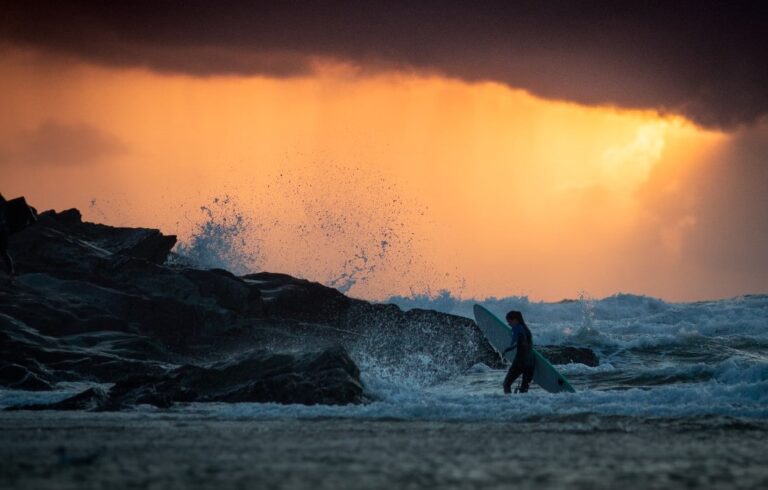
Zurriola is over the river in Gros and it’s the surf beach. Rougher water, younger crowd, and a completely different feel to the other two.
Walking the promenade
Walking the full length of La Concha is one of the better free hours in the city. The promenade is wide, flat and lined with those white railings, and it takes you past the City Hall, the gardens and out towards Ondarreta.
I was genuinely surprised by the beach. Not many cities this good have a beach like this right in the middle of them, and it’s properly good sand with decent food and drink options along it. We walked it every evening. When I go back I’ll spend more time on it during the day.
Time 45 minutes to 1 hour • Cost Free
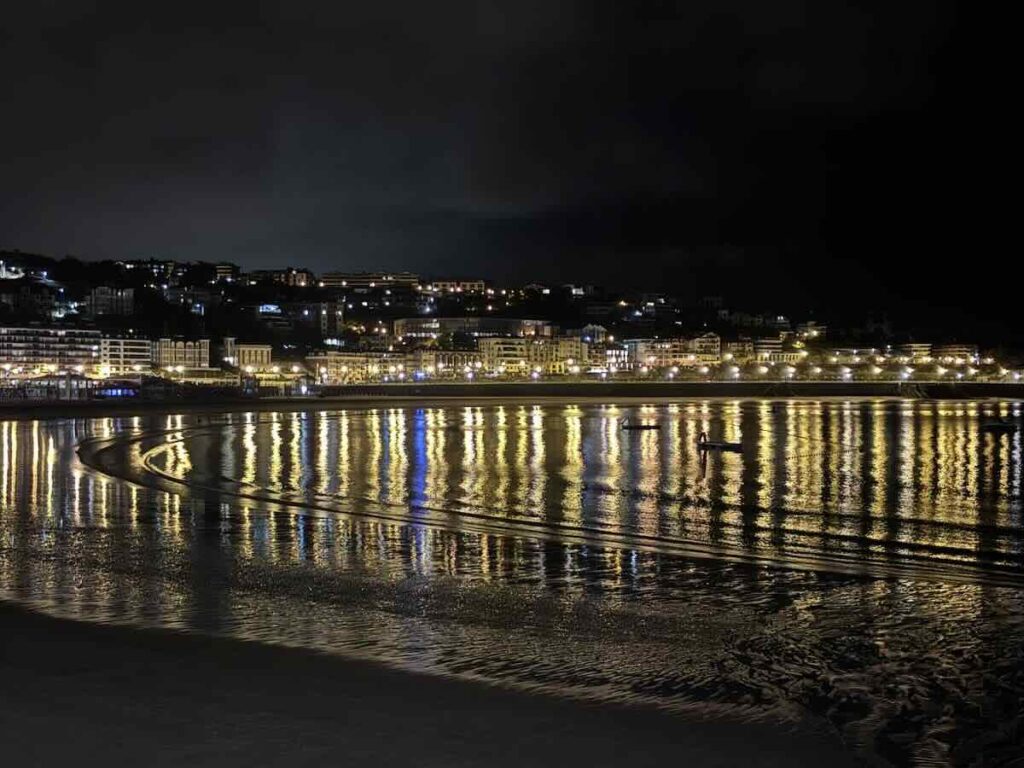
La Concha in peak season
In late July, on a public holiday weekend, I wrote the beach off in the middle of the day. It was too busy to enjoy and we’d come for the food anyway. But the same beach at sunset and into the evening was lovely, and the nightly stroll along it ended up being one of the parts of the trip I remember most.
I wouldn’t tell you to skip it. Just manage your expectations. On a long weekend I’d rather spend my hours on sights and food than relaxing on the beach, but that’s a preference, not advice.
My Top Tip! If you’re here in July or August, don’t write the beach off entirely because it’s rammed mid-afternoon. Go back in the evening. It’s a different place and the light is much better.
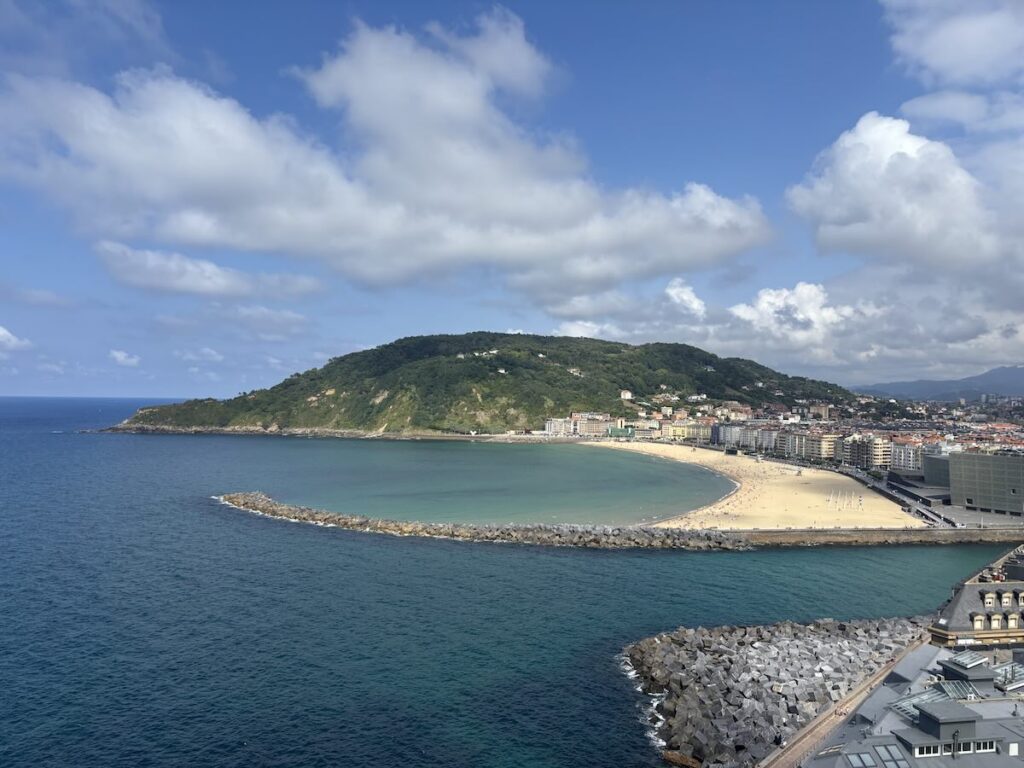
Zurriola and surfing
I didn’t surf, so I can’t give you a first-hand verdict on this one. What I can tell you is what Zurriola is set up for. It’s the city’s surf beach, exposed to the northern swells, and there are several surf schools along the streets behind it renting boards and teaching beginners. Summer is the calmer season, winter brings the bigger waves and the more experienced surfers.
The Old Town and Plaza de la Constitución
The Parte Vieja is smaller than you’d expect from how much gets written about it. A handful of narrow streets between the harbour and the river, and you can walk the whole of it in twenty minutes if you don’t stop.
Most people only ever see it after seven, when it’s three deep at every bar and you can’t see the buildings for the crowd. My advice is to walk it once in the afternoon lull instead, when the bars are shut and the streets are half empty.
An hour does it, and that’s my honest verdict on the wander itself, separate from the eating, which will bring you back into these streets several times anyway. I’ve mapped out the best pintxo bars in the Parte Vieja.
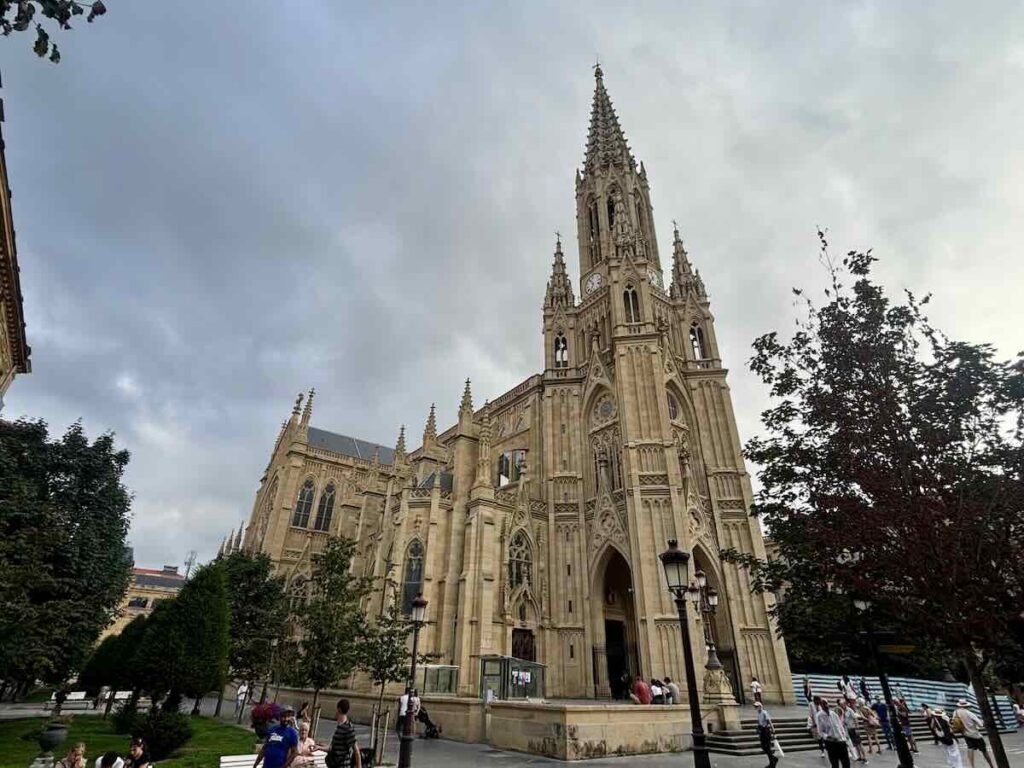
The Basilica de Santa María del Coro sits at the top of the main street and the Iglesia de San Vicente is a couple of streets over. Both are worth a look as you pass.
Time 1 to 2 hours • Cost Free
Plaza de la Constitución
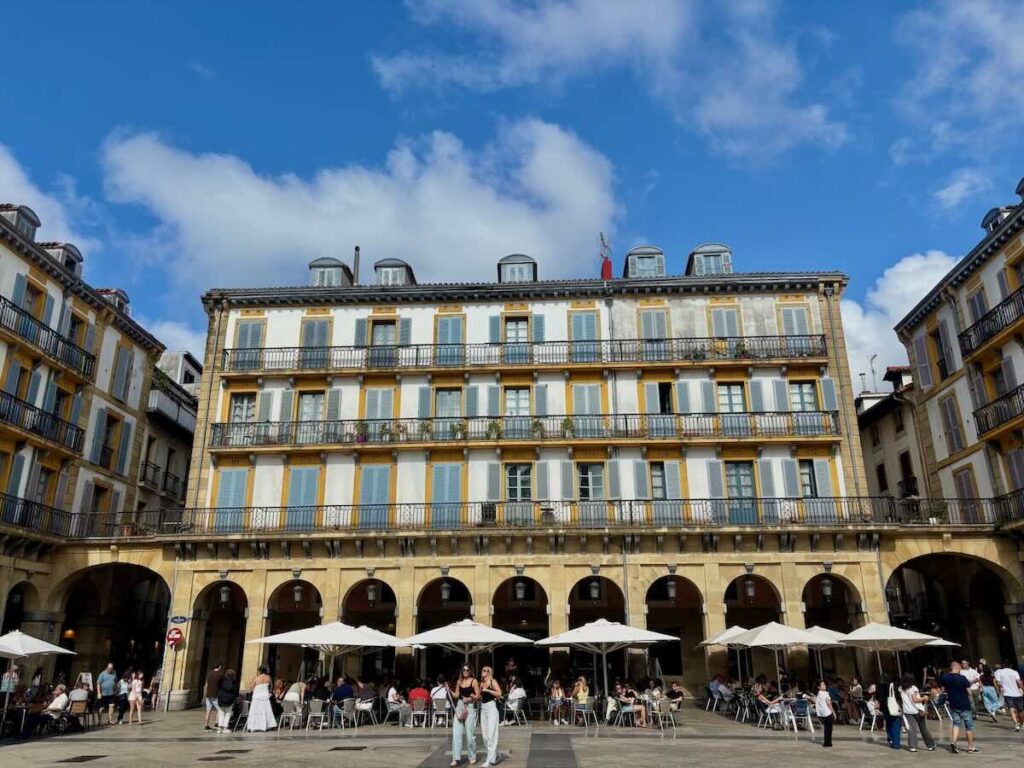
The main square of the Old Town, and if you look up at the buildings around it you’ll see numbers painted above the windows. They’re seat numbers. Spectators once rented those balconies to watch bullfights in the square below.
You could see it and tick it off in five minutes, and plenty of people do. We stopped for a drink and some people watching instead, and it’s a great spot for that with a decent choice of places to sit. You do a lot of walking and standing in San Sebastián, so somewhere to rest your legs can be a nice break.
I wouldn’t eat here though. There are far too many better options within two minutes’ walk to spend a meal on a square with a captive audience.
Time 5 minutes to 1 hour • Cost Free
More of my Spain guides to help plan your trip
- Barcelona or Madrid: Deciding between Spain’s two big cities? My honest comparison and verdict
- How many days in Seville: A first timers guide to the best of Seville
- 2 week Spain itinerary from Barcelona: A full road or train trip from Barcelona
Spend an afternoon at a sidrería
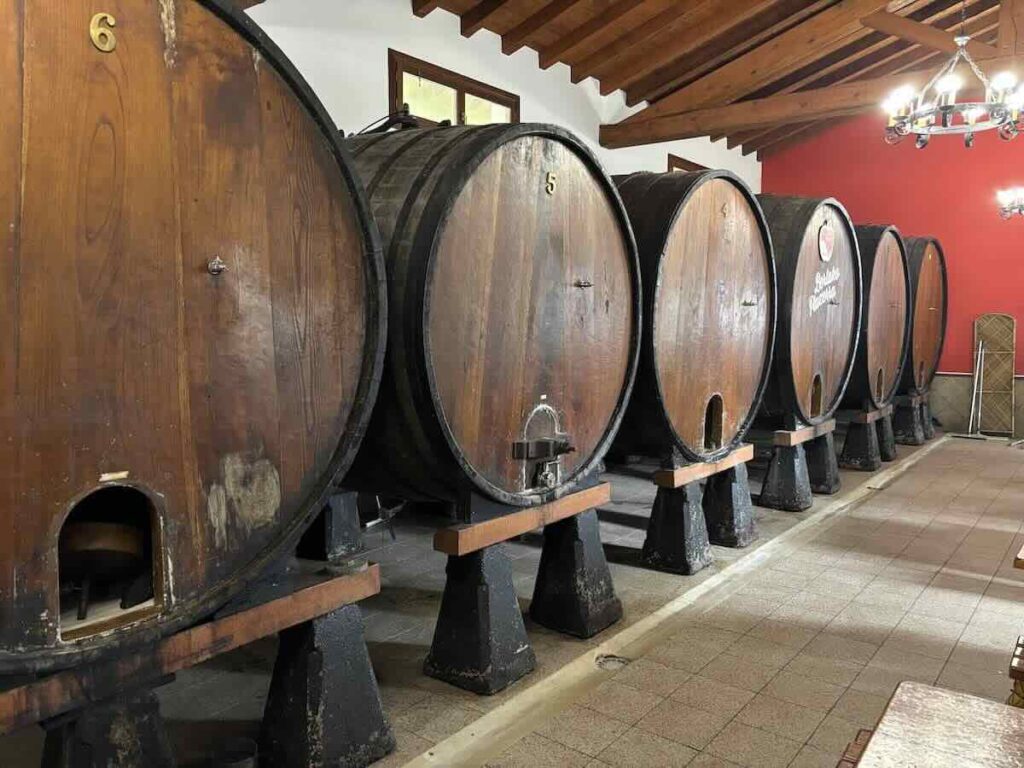
This was the best thing we did that wasn’t a pintxo bar, and it’s the one most guides barely mention. Two different sets of friends who live in San Sebastián pushed us hard to do it, and they were completely right.
A sidrería, or sagardotegi in Basque, is a cider house. Most of them sit in the hills around Astigarraga, about six kilometres out, so it takes a taxi or a bus to get there. We went to Alorrenea and I’d go again without hesitating. You walk into a room with six enormous barrels along one wall and an open coal grill with a pile of txuleta stacked beside it, which is a good way to arrive hungry. The steak was the best we ate in San Sebastián, and that’s the reason we skipped the Bar Nestor queue.
Cider season is roughly January to April, and that’s when the barrel ritual is at its loudest. We went in July and still had a great afternoon, just a calmer one.
My Top Tip! Book the first lunch sitting, from around 13:00. We were back in the city by late afternoon with the evening still ahead of us rather than writing off the whole day.
I’ve written the whole thing up separately: what to expect at a cider house, what it costs, and how to get out there and back.
Time 3 to 4 hours • Cost about €45 (£38) per person

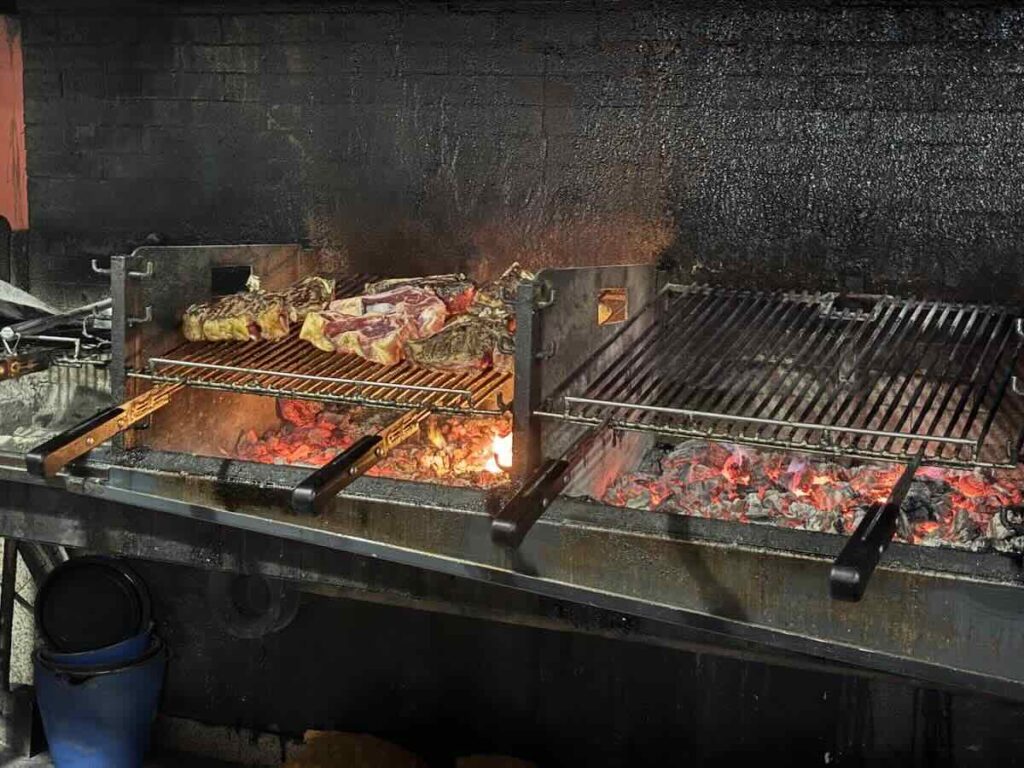
Do your own pintxos crawl
A pintxo is a small plate or a bite on bread, eaten standing at a bar with a drink, and you have one or two at each place before moving on to the next. This was my favourite part of San Sebastián.
Budget a whole evening for it. This is not something you slot in at eight o’clock after a full day. Five or six bars across four or five hours, and two or three evenings of your trip given over to it.
I researched and did my own crawl every single day rather than paying for a tour. What decides whether you eat well here is knowing what each bar is best at. That’s the only thing a tour is really selling you, and the bar names matter far less. If you’d rather not do the admin, a paid tour is a fair shortcut and we watched tour groups get served noticeably faster at the busiest bars.
I’ve put everything I learned into a separate guide: which pintxo bars are worth queueing for, what to order in each of the 17 I ate at, what it costs and how the opening hours catch people out.
Drinks and a night out
Here are two of my favourite options, if you want a proper sit down and a longer drink, either for an evening or to break up your pintxos hopping.
Basqueland Izakaia
Over in Gros, and a cooler spot with a much wider beer selection than you’ll find in the Old Town. We found it a fun crowd and loved the choices of drinks.
Akerbeltz
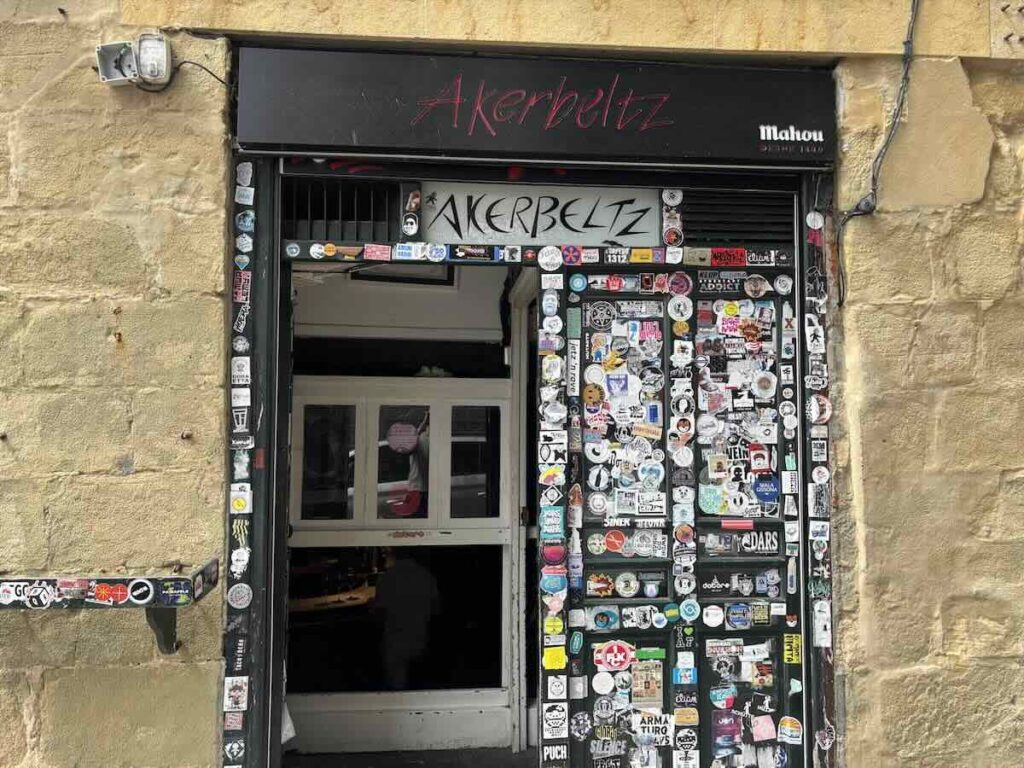
Great location and an excellent terrace looking out over La Concha. Inside it’s dark and cave-like, which I mean as a compliment, and there’s a good choice of drinks. Works either as a quick stop or somewhere to settle in for the evening. Time it for sunset if you can.
My Top Tip! Both of these are good for a break, a sunset or a longer session. If the Old Town is unbearable when you arrive, and in summer it will be at least once, cross the river to Gros, the locals we met considered it the cooler neighbourhood in the city.
What to do in San Sebastián when it rains
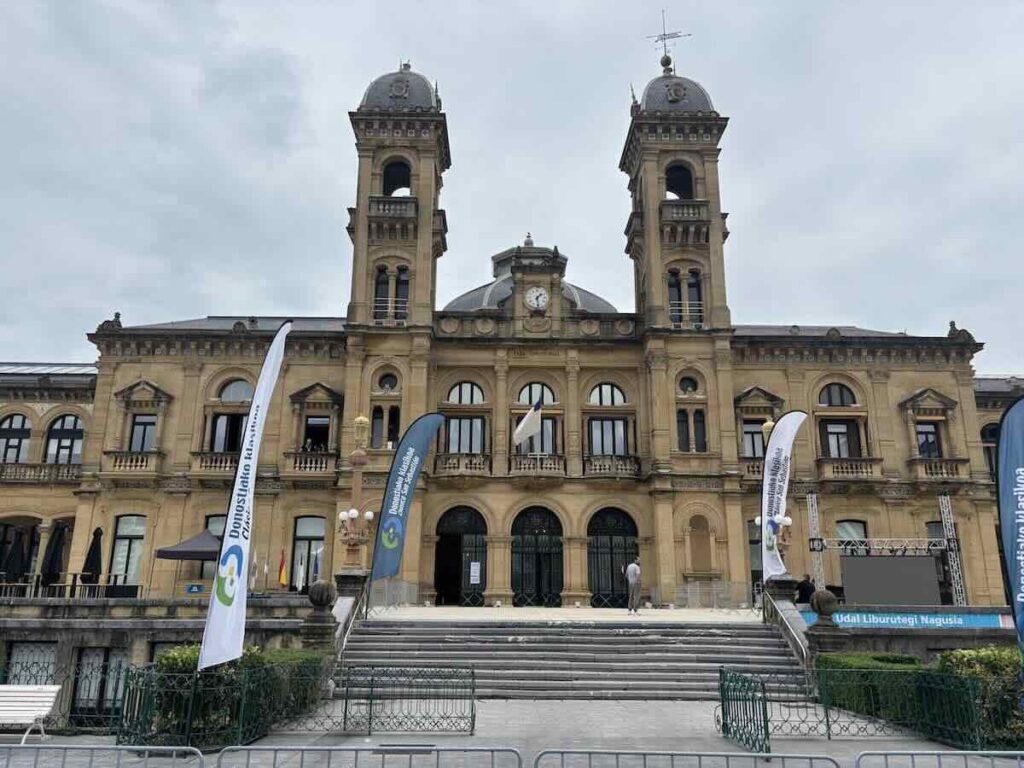
The weather was good the whole time I was there, so I never had to fall back on any of these. Given how much it can rain in San Sebastián, it’s worth having some options in your back pocket.
Everything below is checked against official sources and recommended by our friends that live there.
San Telmo Museum
A museum of Basque history and society in a former 16th-century Dominican convent, right at the foot of Monte Urgull. Art, archaeology and ethnography across a couple of floors, and it’s the best single introduction to the region you’ll find in the city.
Open Tuesday to Sunday, 10:00 to 19:00 in winter and 10:00 to 20:00 from April to October. Closed Mondays except public holidays. Entry is free every Tuesday, which is worth planning around.
Time 1 to 2 hours • Cost €10 (£8.50)
San Sebastián Aquarium
Down by the harbour at the end of the Old Town, and it doubles as a maritime museum covering the city’s fishing history. There’s a tunnel through the main tank, and divers feed the sharks at midday on Tuesdays, Thursdays and Saturdays.
Open all year apart from a handful of dates over Christmas and New Year, 10:00 to 20:00 daily in July and August. The ticket office shuts an hour before closing.
Time 1.5 to 2 hours • Cost €16 (£13.60) adults, €8 (£6.80) children aged 4 to 12
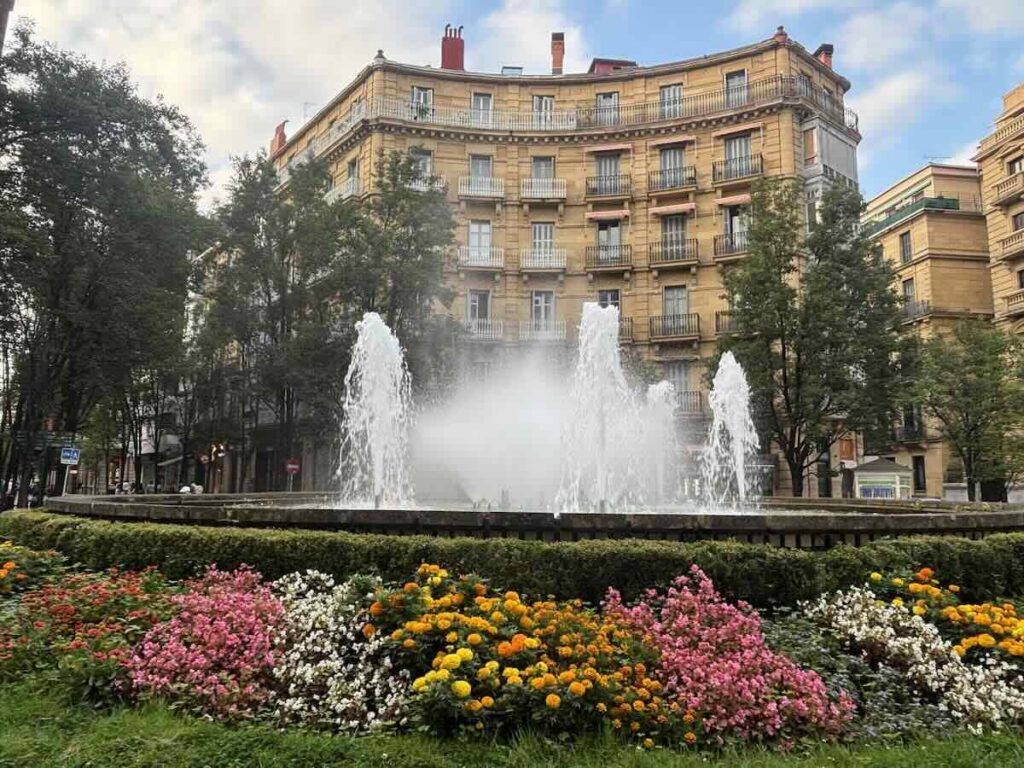
Tabakalera
An old tobacco factory in Egia turned into a contemporary culture centre. Exhibitions, a cinema, a library and a rooftop terrace on the fifth floor with wide views over the river and Gros. Entry is free.
It’s about ten minutes’ walk from the centre, next to the train and bus stations. One catch: the exhibition spaces close between 13:00 and 16:00, which is exactly the window a lot of the bars shut.
Time 30 minutes to 1.5 hours • Cost Free
Mercado San Martín
The main city-centre market on Calle Urbieta, open Monday to Saturday. Fresh produce, fish, meat and cheese downstairs alongside a handful of bars and counters where you can eat what’s on sale. Free to walk around.
Worth checking before you go: a remodelling project was announced in July 2026, so parts of it may be disrupted.
Time 30 minutes to 1 hour • Cost Free
If it’s really coming down, the most Basque answer is a long lunch. Half the good bars are indoors, standing room only, and nobody will look at you strangely for arriving at one and leaving at four.
If you have more time
I ran out of weekend before I ran out of things to do. I only managed to visit Miramar gardens myself, and I’d rather tell you that than pretend.
If any of the above doesn’t appeal to you, these are some of the best options to swap into your agenda, don’t try and do these in addition to the above as you’ll be rushing around rather than enjoying yourself.
Santa Clara Island
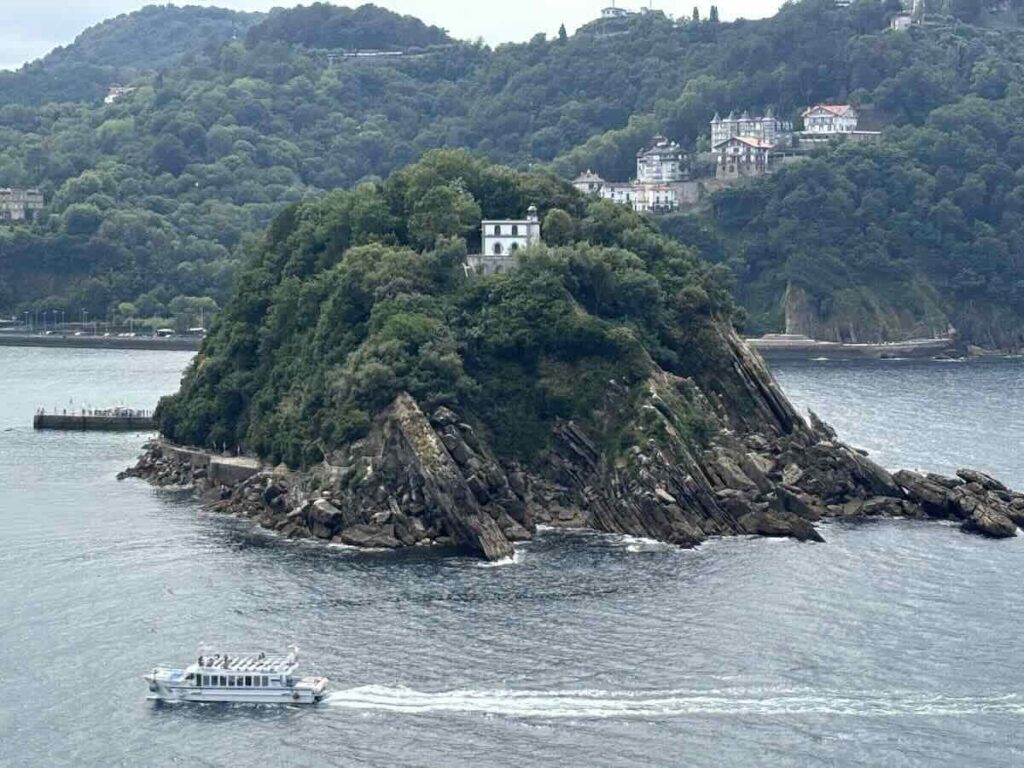
The small island sitting in the middle of La Concha bay, about 750 metres offshore, with a lighthouse and a couple of walking trails. Boats leave from the fishing port through the summer months only, and you can rent a kayak or paddleboard from near Ondarreta and paddle across in 10 to 15 minutes if you’re reasonably fit. There’s a small beach at low tide, a single restaurant and picnic tables.
Time 2 to 3 hours
Cristina Enea park
A large green park in the Egia neighbourhood, generally reckoned to be the best in the city and quiet because tourists skip it. Ducks, peacocks and a lot of trees. About 15 minutes’ walk from the centre and it pairs neatly with Tabakalera, which sits just beside it.
Time 45 minutes to 1 hour • Cost Free
Miramar Palace gardens
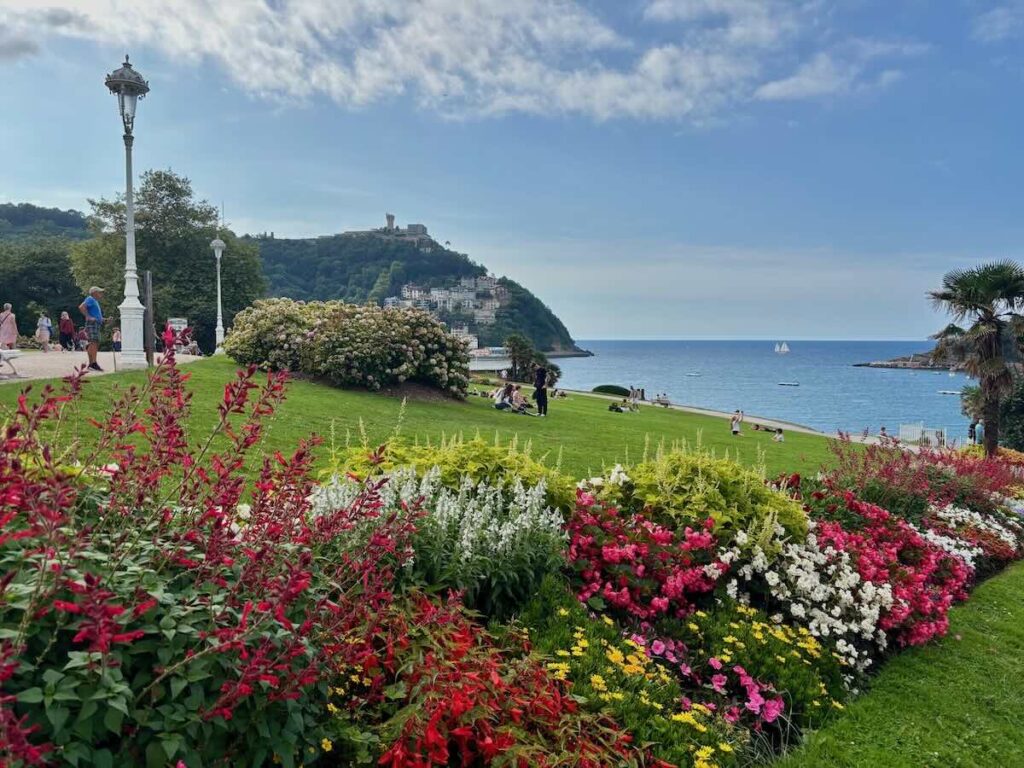
The former summer residence of the Spanish royal family, sitting on the headland that divides La Concha from Ondarreta. The building itself is closed to the public but the gardens are open and free, and they’re directly on the promenade walk, so you can add them without a detour. I was very impressed with the gardens, and if you’re walking to or from the funicular it’s worth a tiny detour to have a look.
Time 20 to 30 minutes • Cost Free
Aiete Palace and park
Another former royal residence, this one further inland and uphill from the centre with a large public park around it. It’s further out than the others here, so you’d have to make a deliberate trip of it.
Time 1 to 2 hours • Cost Free
Getting around and how the city fits together
You will not need transport. San Sebastián is small enough to walk end to end, and I’d say that having walked all of it across my long weekend.
Rough walking times from the Old Town:
- To the far end of La Concha beach: 15 minutes
- To Gros, over the river: 10 minutes
- To Ondarreta and the funicular base: 30 to 35 minutes
- To Tabakalera and Egia: 15 minutes
If you’re still choosing a base, I’ve measured those walks the other way round, from each area back to the Old Town, in my where to stay guide.
Gros is the one that surprises people. It looks separate on a map because there’s a river in the way, but it’s ten minutes over a bridge and it’s where a lot of the better, quieter bars are.
Two exceptions to the walking. Monte Igueldo is a fair way out at the western end, so most people walk the promenade and take the funicular up. And the cider houses need a bus or a taxi.
There are local buses if your legs give out, and metered taxi ranks around the city. Rideshare apps are unreliable here, so don’t count on summoning a car from your phone at midnight.
How many days you need in San Sebastián
Three nights is my answer. That gives you two full days plus your arrival evening, which is enough to do the city properly. Two nights is doable and you’ll see the city, you just won’t get a cider house afternoon and two proper pintxos evenings out of it.
I’ve now written up exactly how I’d spend the time, day by day with timings, in my 2 day San Sebastián itinerary.
Best time to visit, and what I’d do differently
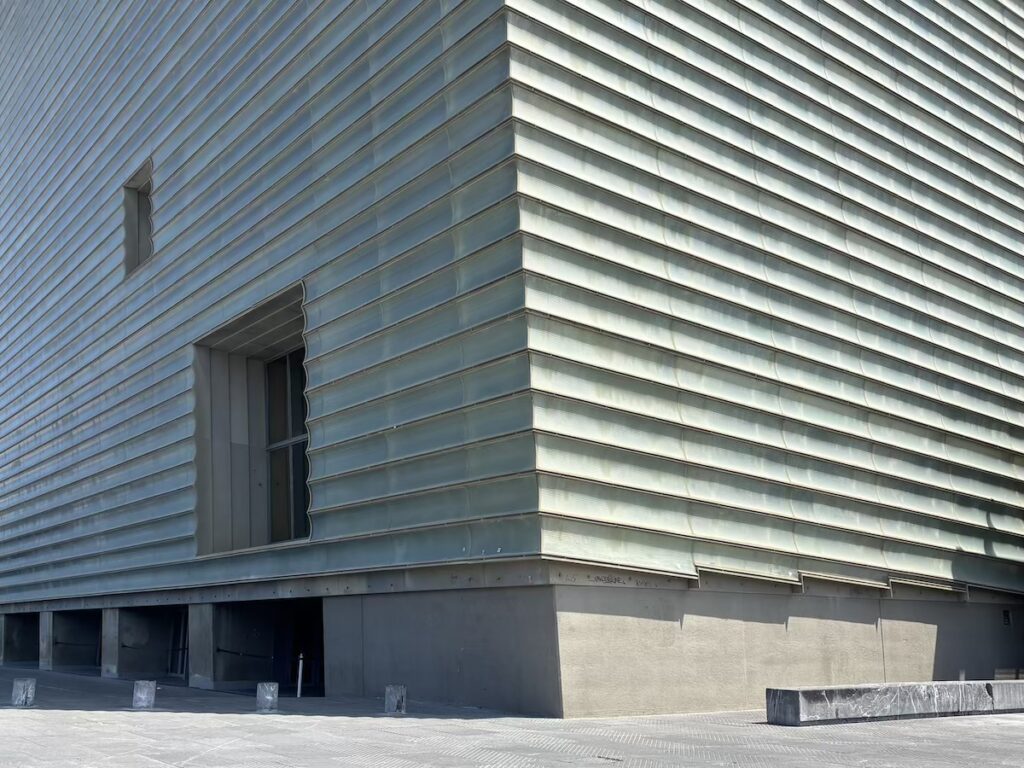
This is the Atlantic coast, not southern Spain. It’s greener, cooler and wetter than Barcelona or Seville, and rain falls all year round. Pack a light waterproof whenever you come.
I went in the last weekend of July, which coincided with a public holiday, and it was the only window I had. The food was excellent and the atmosphere was better for the crowds, with a lot of locals out enjoying it too.
What I got wrong was underestimating what peak season plus a public holiday would mean, and specifically what it would mean for the beach. If I’d known, I’d have written off the middle of the day at La Concha from the start and planned around it, rather than being mildly surprised. That’s the one thing I’d change on my trip.
Late spring and September are the standard recommendation and the reasoning is sound: similar temperatures, thinner crowds. Just don’t expect empty.
My Top Tip! Check the Basque public holiday calendar before you book. A festivo changes what’s open, what’s shut and how busy every bar in the Old Town will be, and it’s a two-minute check that would have saved me a bit of surprise.
FAQ’s about San Sebastián
Is San Sebastián worth visiting if you’re not into food?
Yes, but with a caveat. You get three beaches, two hills with good views, a walkable old town and a proper cider house tradition, all inside a small and attractive city. That’s a solid long weekend. But the food is genuinely why most people come, and if you’re indifferent to it you’d have a better time in Bilbao or out on the coast.
Is San Sebastián expensive?
It’s one of the pricier cities in Spain, particularly for hotels in July and August. The food doesn’t have to be, because eating well here is more about knowing where to go than how much to spend. I’ve broken down what a full evening of bars actually costs in my pintxos guide. On the hotel side, my guide to where to stay in San Sebastián has 12 hotels with prices and the three areas worth booking.
Is San Sebastián good for kids?
Yes. The beaches are calm and central, the promenade is easy with a pushchair, the aquarium is a solid couple of hours and the amusement park at the top of Monte Igueldo is aimed squarely at younger children. The pintxo bars are a harder sell with small children in tow, as they’re standing room only and busiest at exactly the wrong time of evening.
Do you need to book anything in advance in San Sebastián?
Only the cider house. Book that as soon as you know your dates, particularly during txotx season from January to April. Pintxo bars don’t take reservations at all, so there’s nothing to book and nothing to plan beyond turning up early. The museums, aquarium and funicular are all walk-up.




7 Comments
Comments are closed.