
For me San Sebastián is worth visiting, and it lived up to everything I’d been told about it. There’s one condition: this is a food destination before it’s anything else, so if food isn’t your reason for going I’d point you at other Spanish cities first and bring you here afterwards.
What I didn’t expect was just how much the city rewarded insider information and research before you travel. I spent a long weekend there at the end of July, ate at seventeen pintxo bars, walked both of the city’s hills, Monte Urgull and Monte Igueldo, and stayed in Centro, with local friends of twelve and eight years steering us.
This is my verdict on whether it’s worth visiting and what you should consider. My guides on what to see and do in San Sebastián are below.
More of my San Sebastián guides to help plan your trip
- Where to eat pintxos in San Sebastián: 17 bars I ate at and the best things to order in each
- Things to do in San Sebastián: What’s worth your time and what to skip in Spain’s food capital
- Sidrerías in San Sebastián: What to expect at a cider house, which to book and how to get there
- Where to stay in San Sebastián: The three areas worth booking and 12 excellent hotels
- How to spend 2 days in San Sebastián: My exact route, day by day, and what to cut if it rains
- Bilbao Airport to San Sebastián: The best option, cost and how to book
The short version
Go if: you want to eat brilliantly for three days straight, and you enjoy a range of food and venues.
Think again if: food is fuel rather than fun for you. Spain has cities with bigger famous sights, and I’d do those first.
How long: two to three nights will give you enough time to enjoy the city.
Disclaimer: This article may feature affiliate links. If you click these links, and choose to book with that hotel or company, I will earn a small commission at no extra cost to you. I appreciate the support that allows me to continue providing this information.
Did it live up to the hype?
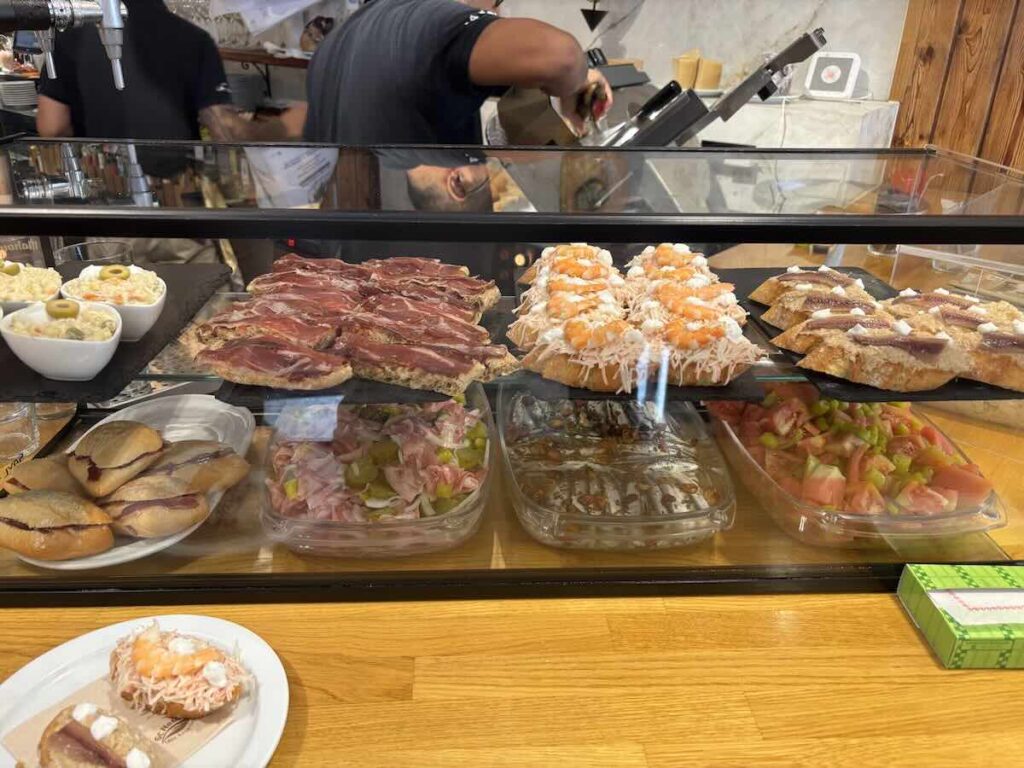
San Sebastián had been on my list for years, purely for the food. Expectations were high and it delivered on all of it. The food was excellent, there was plenty of it, and it was nicely varied. I like trying lots of different things, and that suits the way you eat here. One or two bites at a bar, pay, walk two minutes, go again.
I keep being asked whether any part of it felt overrated. It didn’t. The city is small, attractive and easy to get around, the food matched the reputation, and I came home planning my next trip.
Don’t judge a bar on one busy evening. Bar Sport took us 25 minutes on a Friday night and under three minutes at Sunday opening, so if the queue puts you off, come back at a different time rather than writing the place off.
One thing worth knowing before you book. You can eat brilliantly sitting down here and there are excellent restaurants, but a lot of the best food in this city is served standing at a bar with a plate in one hand. If that has no appeal at all, you’ll be skipping the main event.
The one thing that decides whether you love it
San Sebastián rewards planning, at least this was my view given all the choice on offer. You can turn up with no research and have a good weekend. But you’ll have a much better time, and you’ll eat miles better, if you’ve done some homework or you know someone who has.
I found the gap between turning up and winging it and a planned one is wider here than in most city breaks I normally do.
In Barcelona or Seville the sights are the reason you came and they’re famous enough to know well. Here, what decides whether you eat well is knowing what each bar does best. Every one of them has a couple of things it does better than anywhere else, and you can’t tell what they are by looking through the window.
Our friends made the difference for us. Not by getting us into anywhere, but by telling us what to order. Without that, or without doing the research yourself, I think you’d risk finding the place less special than its reputation suggests.
It also decides how much of your trip you spend standing around. Bars close at hours you won’t predict, and the good ones fill up at hours you will, so a list twice as long as you need is worth more than a list of the right names.
I’ve put everything we learned into my guide to the 17 pintxo bars and what to order in each.
What surprised me
Two things caught me out in a really positive way. A third I’d been told about and still underestimated.
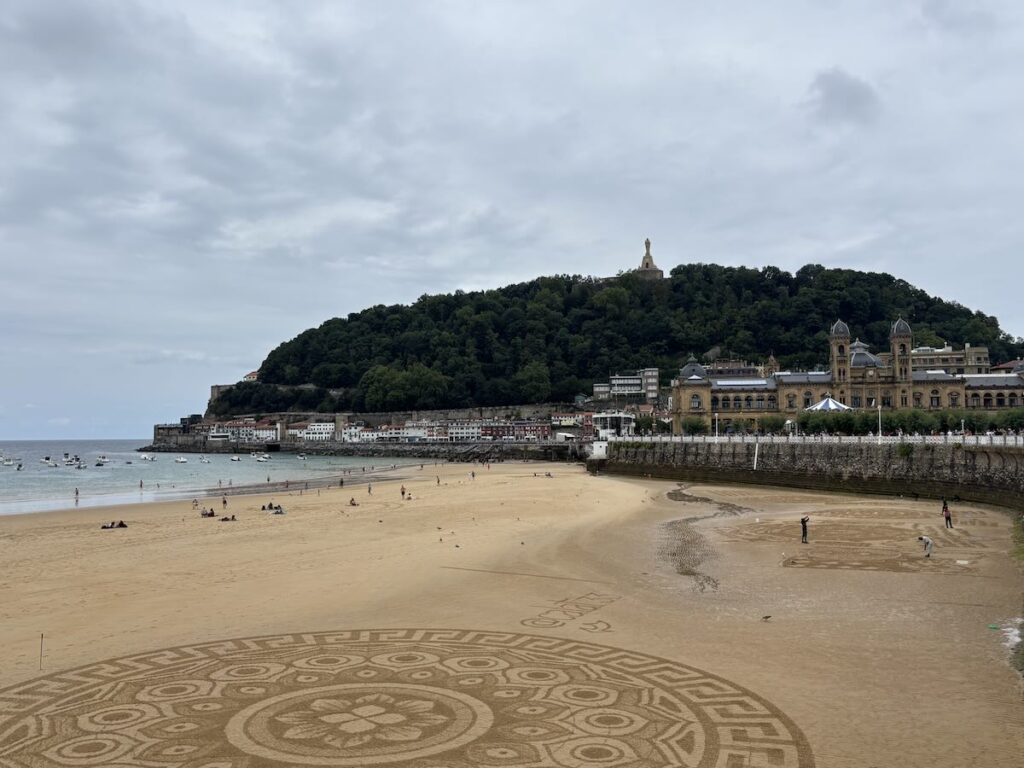
The beaches are better than I expected
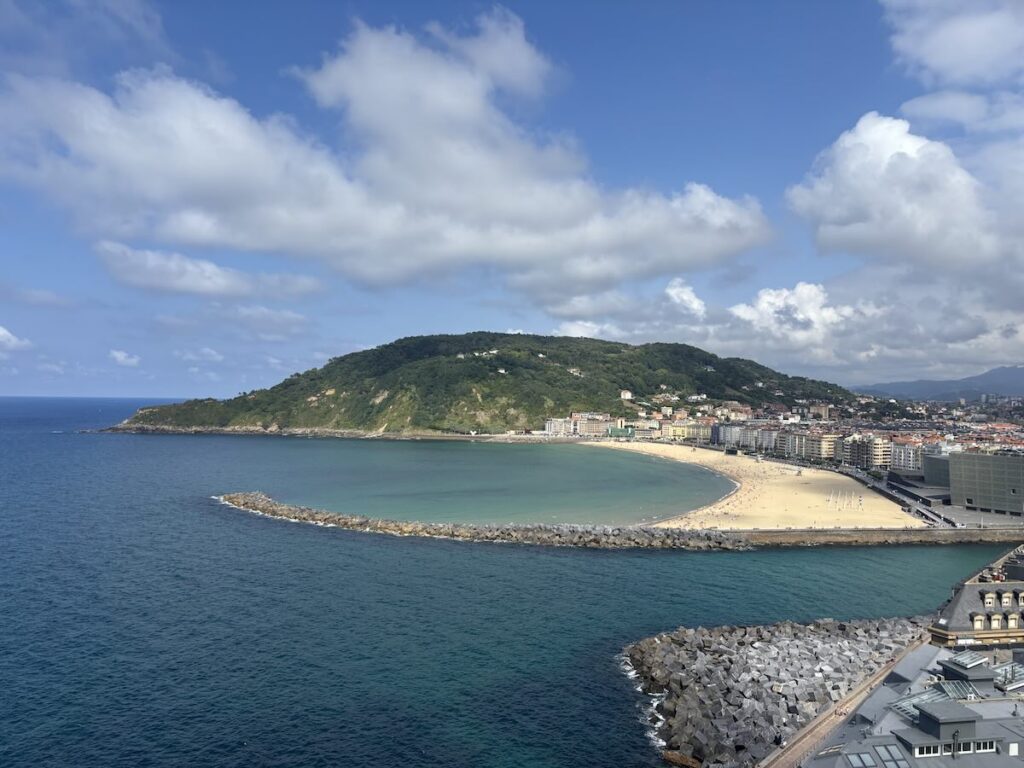
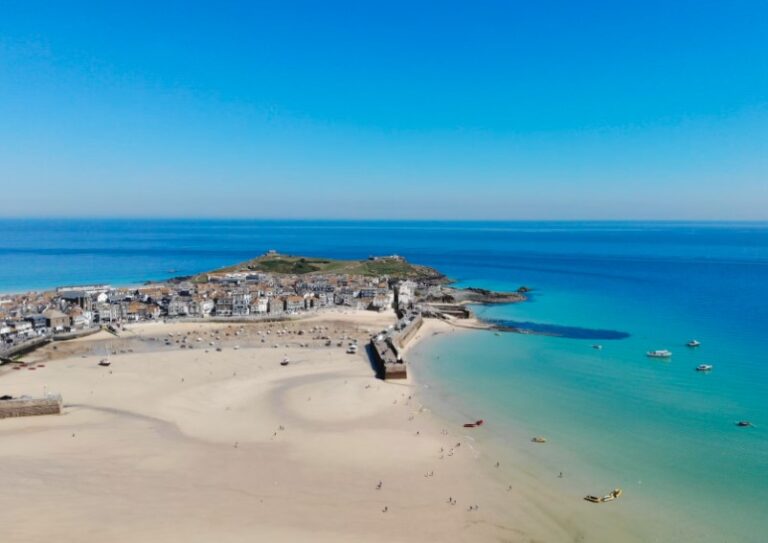
I knew there was a beach. I didn’t expect it to be this good. In my opinion these are the nicest beaches I’ve seen right in the centre of a Spanish city, and I’ve spent a fair bit of time in Spanish cities.
What makes it unusual is the combination. You can do a proper city break and a beach break on the same trip with no taxis and barely more than a ten minute walk from anywhere in town. That’s rare. Most places make you pick one, or commute to the other.
The surf side of the city
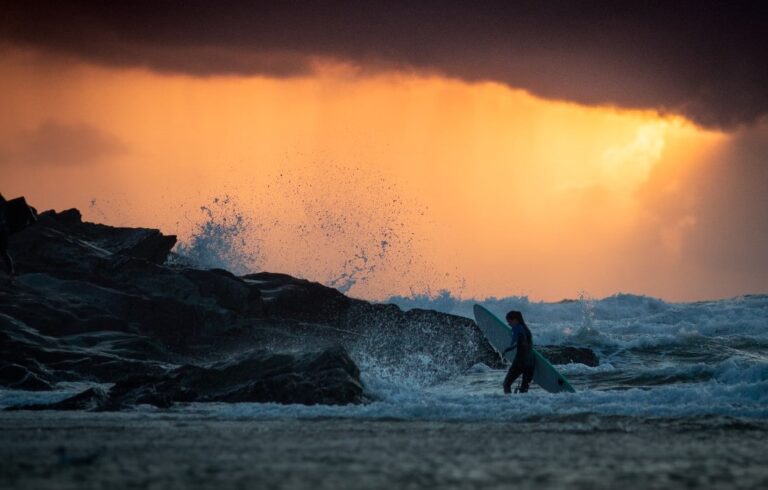
The other surprise was how much of a surfing city this is. We were there in the calm summer season, which is the beginner-friendly end rather than the big-waves, and the surf culture over in Gros was still obvious. Boards everywhere, and a noticeably younger crowd than you get across the river.
I didn’t surf, so I can’t tell you what the waves are actually like. What I can tell you is that the city is set up for it, with schools on the streets behind Zurriola beach renting boards and teaching beginners. If surfing is your thing, that’s another reason to consider the place that I hadn’t thought about before I went.
An afternoon at a Basque cider house
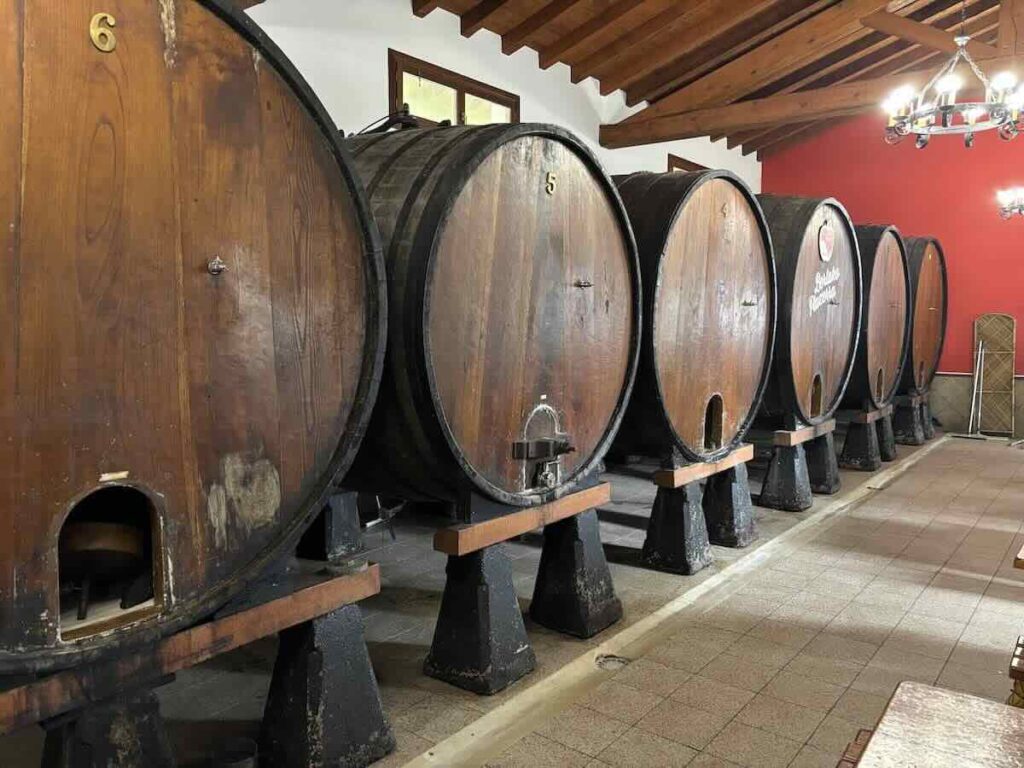
This was the best thing we did that wasn’t a pintxo bar, and it’s the part of the trip I’ve talked about most since I got home.
We went in July, so we missed the barrel ritual. That only happens in cider season, and it’s the single thing I want to go back for. If you’ve got three nights here, this is the afternoon to plan around. I’ve written up what actually happens at a cider house separately, including which one to book and how to get out there.
The honest downsides
None of these stopped me loving the trip. All of them are worth knowing before you book.
Peak season and public holidays
My trip fell on the final weekend of July, which turned out to be a Basque public holiday. I hadn’t checked and it was the only time we could go.
Check the local festivo calendar before you book, because a holiday weekend changes which bars open, which don’t, and how busy everywhere gets.
You can’t trust the opening hours
This one caught us out more than once. Google, websites and the local pintxos app all got things wrong, so we had to resort to trial and error a few times.
Afternoon closures and Sunday or Monday closures are common, and neither is reliable enough to plan around. My two day itinerary works around the afternoon shutdowns.
If it rains
This is the Atlantic coast, so it’s cooler and wetter than lots of parts of Spain, and rain is possible in any month.
I got lucky and had good weather the whole time, so I’m flagging this as a risk rather than something I dealt with. It matters on a short trip, because two of the best things here are outdoors. There are indoor options in my things to do guide.
If you’re vegetarian or vegan
Think hard about this one. The best parts of the food in this city are built on meat and fish, there’s probably just enough choice for vegetarians, but it would be a big struggle if you are vegan.
How many days do you need in San Sebastián?
Two to three nights as a minimum is my recommendation.
Two nights. Enough for two proper eating sessions and one of the hills. You’ll see the city and you won’t feel short-changed, but the cider house won’t fit.
Three nights. What I’d book. You get the cider house afternoon without losing an evening of bars, and that’s the trade worth making.
Inside a wider trip. Give it two days as part of a Basque or northern Spain route and it works well, particularly if food isn’t the main reason you’re travelling.
Is San Sebastián expensive?
Yes compared to southern Spain, about the same as Barcelona, and cheaper than a weekend in London. That last one is the comparison that mattered to me.
The food is better value than you’d expect. An evening across five or six bars, eating and drinking at each, came to about €30 to €45 (£26 to £38) a head. What moves that number is what you order, not where you go. Counter plates are a couple of euros, it’s the specials board and the sharing dishes that add up, and those are usually the best food in the place. Order them anyway, just check the price first.
Hotels are the expensive part. A mid-range double is roughly €160 to €190 (£136 to £162) a night most of the year and €300 to €360 (£255 to £305) in July and August. Book three months out rather than three weeks and the same room costs a lot less. My guide to where to stay in San Sebastián has twelve hotels with prices and the areas worth booking.
The cost that caught us out was neither of those. Our flight into Bilbao was delayed, we got to the ticket desk with minutes to spare, and the last bus was already full. We paid £160 for a ride we’d budgeted about €14 for. I strongly recommend you get the bus, timetables in both directions in my guide to getting in from Bilbao airport.
Who should go somewhere else first?
If food is your priority above everything, in my opinion it’s San Sebastián, no argument.
If it isn’t, and this would be your first city in Spain, I’d think twice. You’ll have a good weekend, but I think there are other options you should consider.
These are the ones I’d point you at first, all places I’ve spent proper time in.
- Barcelona for a multicultural city that has a bit of everything.
- Madrid for somewhere that feels distinctly Spanish, with some of the friendliest locals I’ve met in a big European city.
- Seville if you want a classic city in the south that is easy to travel to.
- Granada, my favourite of the southern options, for the atmosphere, the bar scene and the people. The Alhambra is the best single sight I’ve done anywhere in Spain.
If you’re weighing two of them against each other, I’ve written up Seville or Granada and Barcelona or Madrid properly.
FAQ about visiting San Sebastián
Is San Sebastián worth visiting for one day?
Yes, but you’ll only see half of it. The pintxo bars run in two sessions, roughly ten until three and then seven until late, and the evening one is much better. Day trippers usually catch the quieter session and leave before the part everyone raves about. If a day is all you’ve got, arrive late morning and stay for the evening rather than heading back at six.
Why is San Sebastián also called Donostia?
Donostia is the Basque name for the city and San Sebastián is the Spanish one. Both mean the same thing, and locals mostly use Donostia. It matters practically as well as culturally, because bus and train departure boards, ticket machines and journey planners often show Donostia on its own. If you’re standing at Bilbao airport looking for San Sebastián on a screen, that’s why you can’t find it.
Do people speak English in San Sebastián?
Yes, enough to get by. Hotels and the busier bars will have English speakers, and nobody expects you to arrive with Spanish. Ordering is the harder part, because menus go up on a chalkboard in Spanish or Basque and the dish names don’t translate in any obvious way. Take screenshots of what you want in the local wording before you head out. Showing someone your phone is a lot quicker than miming a mushroom.
Is San Sebastián worth visiting if you don’t like seafood?
Yes. Crustaceans are off the menu for my girlfriend and she ate brilliantly across three days, because every counter has fish, meat, egg and vegetable options sitting alongside each other. Skip fish entirely and you’re still fine, with jamón, tortilla, txuleta and croquettes on offer almost everywhere. It’s vegetarians and vegans who’d find this a hard trip, not someone who simply doesn’t fancy prawns.
Is San Sebastián worth visiting in winter?
Yes, for two specific reasons. Hotels are at their cheapest from December to February, and cider season starts around mid-January and runs to late April, which is the one thing I’d deliberately book a winter trip around. The trade-off is weather, because rain is possible here in any month and a wet weekend costs you the beach and both hills. I haven’t been in winter myself, so treat that as research rather than experience.



4 Comments
Comments are closed.