
Learning a few basic Japanese phrases for your first trip goes a long way. As with any foreign country, the locals appreciate you making an effort, and in my experience they’re patient with anyone who’s clearly trying.
On my first trip to Japan I worried about the language barrier, both the written side, with a completely different alphabet, and the spoken side. I quickly found you don’t need to learn Japanese in any depth to get by. Honestly, it’s easier and less stressful than most first-timers fear.
My approach is simple. Learn a small handful of polite basics, they take minutes and make a real difference, then lean on Google Translate for everything else. That mix, plus a bit of English, was all I needed to get around.
I bought a phrasebook before my first trip and barely touched it. So to save you the bother, the list below is based on the basic Japanese words I actually use when I’m in Japan.
Language is one piece of first-trip prep. My free 13 page Japan first-timer guide covers the rest: money, apps, etiquette, transport, and arrival. Quick ad-free read, useful before you fly.
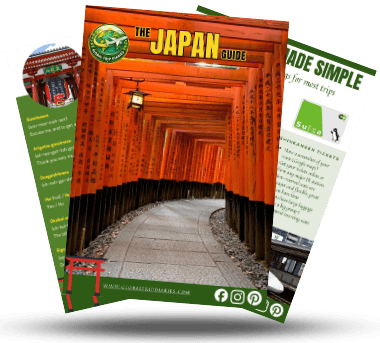
FREE GUIDE
Planning your trip to Japan?
I made a free 13-page guide that strips Japan planning down to the few decisions that matter.
No ads, instant download.
The top 10 basic Japanese travel phrases for first time visitors
If you only memorise a few of these, make them the polite basics: hello, thank you and excuse me. Those three, said with a smile, are what I use constantly and they carry you a surprisingly long way. The rest are useful to recognise, but don’t feel you have to drill all ten before you fly.
1. Konnichiwa
Japanese: こんにちは
Pronunciation: /kon-nee-chee-wah/
Meaning: “Hello”
Usage:
- A standard greeting used in the afternoon.
- Polite and neutral, suitable for all situations.
Cultural Note:
- Unlike English, “Konnichiwa” isn’t used in the morning (“Ohayou gozaimasu” is used instead).

2. Arigatou gozaimasu
Japanese: ありがとうございます
Pronunciation: /ah-ree-gah-toh goh-zai-mass/
Meaning: “Thank you very much”
Usage:
- To express gratitude politely in shops, restaurants, and interactions with locals.
Cultural Note:
- Adding “gozaimasu” makes it more formal. “Arigatou” alone is more casual.
3. Sumimasen
Japanese: すみません
Pronunciation: /soo-mee-mah-sehn/
Meaning: “Excuse me” / “I’m sorry”
Usage:
- To get someone’s attention (e.g., calling a waiter).
- To apologise for small mistakes or inconveniences.
- Sometimes used as “thank you” when someone does something for you.
Cultural Note:
- Often used instead of “Gomen nasai,” which is a deeper apology.
Not sure when to visit? My guide breaks down the best months for weather, crowds and costs.
4. Hai & Iie
Japanese: はい (Hai) & いいえ (Iie)
Pronunciation:
- /hai/ (Yes)
- /ee-eh/ (No)
Usage:
- “Hai” means yes or acknowledgment.
- “Iie” means no but is used less often—Japanese people tend to avoid direct refusals.
Cultural Note:
- Sometimes, a small nod or “un” (a casual “yes”) is used instead of “Hai.”

5. Onegaishimasu
Japanese: お願いします
Pronunciation: /oh-neh-gai-shee-mass/
Meaning: “Please”
Usage:
- Used when requesting something politely.
- Often used when ordering in restaurants or asking for a favour.
Example:
- “Mizu onegaishimasu” (Water, please).
Cultural Note:
- More polite than “Kudasai,” which is used for tangible objects (“Mizu o kudasai” for water, for example).
6. Ikura desu ka?
Japanese: いくらですか?
Pronunciation: /ee-koo-rah dess kah?/
Meaning: “How much is this?”
Usage:
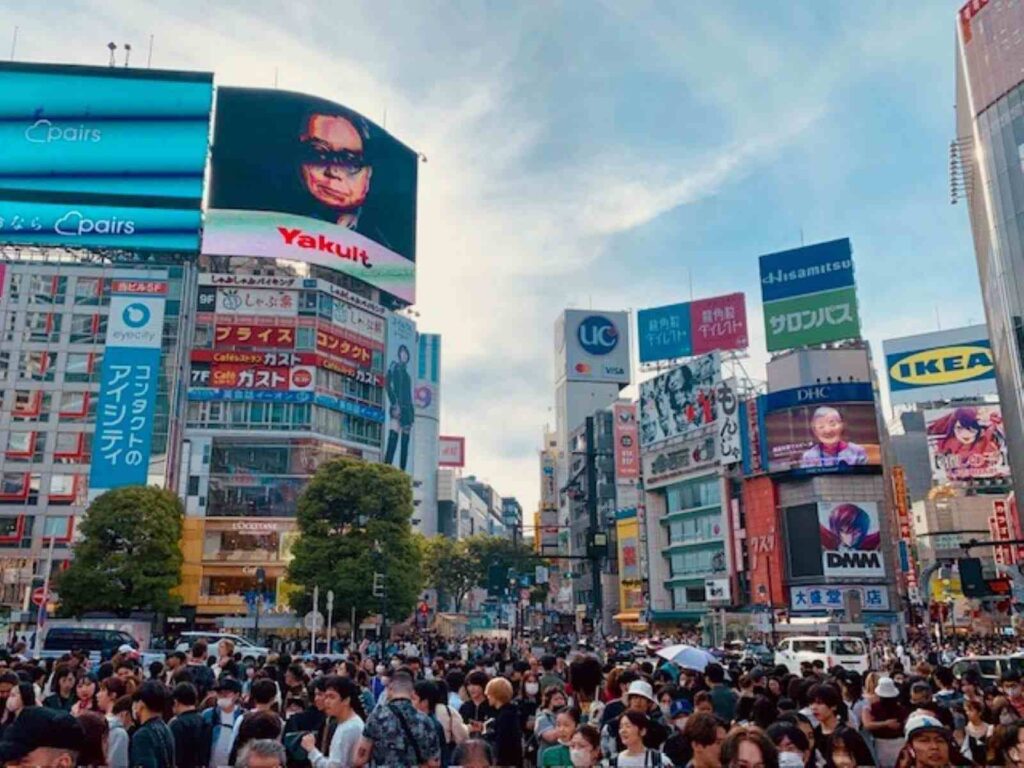
- When shopping or dining in places without clear pricing. I used this A LOT at markets!
Example:
- “Kore wa ikura desu ka?” (How much is this?)
Cultural Note:
- Most small businesses in Japan still prefer cash, so be ready to pay in yen.
7. Doko desu ka?
Japanese: どこですか?
Pronunciation: /doh-koh dess kah?/
Meaning: “Where is it?”
Usage:
- When asking for directions.
Example:
- “Eki wa doko desu ka?” (Where is the station?)
- “Toire wa doko desu ka?” (Where is the toilet?)
Get prepared for your Japan trip with my first-timer starter kit
- Break down the language barrier: key phrases and tech for an easy first trip
- How to stay connected: the cheapest data and easiest setup
- Avoid currency fees: the best cards for spending and cash
- 25 apps that make your trip easier: the best free downloads
- Save 30 to 90 minutes at the airport: the free Visit Japan Web QR code
- Etiquette do’s and don’ts: what to know on your first visit
8. Eigo o hanasemasu ka?
Japanese: 英語を話せますか?
Pronunciation: /eh-ee-goh oh ha-na-seh-mass kah?/
Meaning: “Do you speak English?”
Usage:
- When checking if someone can speak English before asking a question.
Cultural Note:
- While younger Japanese people often understand basic English, many are shy about speaking it. Google Translate helps break the ice, as does a few beers in Golden Gai, where we made several friends on our first Tokyo trip!
9. Daijoubu desu
Japanese: 大丈夫です
Pronunciation: /dai-joh-boo deh-soo/
Meaning: “I’m fine” / “No problem” / “It’s okay”
Usage:
- Reassuring someone (e.g., if they ask if you need help).
- Politely refusing something (e.g., when declining a refill or extra service).
Cultural Note:
- A very versatile phrase! Can also be a polite way to say “No, thank you.”

10. Tasukete kudasai
Japanese: 助けてください
Pronunciation: /tah-soo-keh-teh koo-dah-sai/
Meaning: “Please help me”
Usage:
- In emergency situations when you need assistance.
Cultural Note:
- In case of a serious emergency, dial 110 for police and 119 for fire/ambulance services.
The cheat way to make Japanese simple as a tourist
The polite basics are quick to learn. Holding a proper conversation, reading a menu, or making sense of a road sign is a different matter, and that’s where Google Translate comes to your rescue.
How much you lean on it really comes down to how much time you have before you go. We learned the basic phrases easily enough, then used Translate multiple times a day for everything else. I’ve used it in every country I’ve travelled to in recent years and I can’t recommend it highly enough.
The best part? It’s completely free. It works on pretty much any mobile device with a data connection and is simple to use even if you’ve never touched it before. The live camera translate, where you point your phone at a menu or sign and it translates on screen, is the feature I use most.
It does more than sort out logistics, too. On our first trip we ended up in conversations about music, sport and films with locals, all in broken Japanese, both in Golden Gai in Tokyo and in a few bars in Osaka. Translate is what turned a bit of friendly waving and cheers-ing into an actual conversation and a real connection. That was the bit I didn’t expect.
My Top Tip! Download the offline Japanese language pack in the Google Translate app before you fly. It means the camera and text translation still work when you’ve got no signal: on the train, underground, or before your eSIM kicks in. It takes two minutes and has saved me more than once.
Here’s a useful in depth guide on how to use it.
If you want to take things further and actually learn the language, Duolingo is a great free tool to start with.
FAQs about the language in Japan
FREE GUIDE
Planning your trip to Japan?
I made a free 13-page guide that strips Japan planning down to the few decisions that matter.
No ads, instant download.
What Japanese words should I learn first?
- Hello: Konnichiwa (kon-nee-chee-wah)
- Thank you: Arigatou (ah-ree-gah-toh)
- Yes: Hai (hah-ee)
- No: Iie (ee-eh)
- Excuse me / I’m sorry: Sumimasen (soo-mee-mah-sen)
How can i get the hang of pronunciation simple japanese words?
- Listen and Repeat: Use language learning apps or online resources to listen to native speakers and repeat after them.
- Phonetic Practice: Japanese pronunciation is quite phonetic. Practice the sounds of each syllable (e.g., “a” as in “car”, “i” as in “machine”).
- Technology:
- Pronunciation Apps: You don’t need a specialist pronunciation app for a holiday. The simplest trick is to tap the speaker icon in Google Translate and copy what you hear, it’s free and it’s the exact sound you need.
- Recording Tools: Use recording tools to record yourself and compare your pronunciation with native speakers. This can help you identify areas for improvement.
- Online Resources: Websites and YouTube channels dedicated to Japanese pronunciation can provide valuable tips and examples.

How easy is Japan to get around without speaking Japanese?
Japan is generally quite accessible for non-Japanese speakers, especially in major cities:
- Public Transport: Signs and announcements in major cities are often in both Japanese and English.
- Technology: Translation apps, like Google Translate, can help bridge the language gap.
- Helpful Locals: Many Japanese people are very helpful and will try to assist you even if they don’t speak much English.
When should I bow when speaking to a Japanese local?
Bowing is an important part of Japanese etiquette:
- Greetings and Farewells: Bow when you greet or say goodbye to someone.
- Thanking Someone: Bow to show gratitude.
- Apologising: Bow to express sincerity when apologising.
- Formal Situations: Bow in formal settings, such as business meetings or ceremonies.
When do you use “san” in Japanese?
In Japanese, the honorific “さん” (san) is used to show respect and politeness. It’s similar to “Mr.”, “Ms.”, or “Mrs.” in English. Here are some common situations where you would use “san”:
- Addressing someone politely: When speaking to or about someone you don’t know well, or in a formal setting.
- Professional settings: When addressing colleagues, clients, or superiors at work.
- Customer service: When speaking to customers or clients.
- General courtesy: When referring to someone in a respectful manner, regardless of their age or gender.
For example, you might say “Tanaka-san” when referring to Mr. Tanaka or “Yamada-san” for Ms. Yamada.
More useful Japanese phrases for tourists
Here’s a longer list to dip into, grouped by situation. You won’t need all of them, but they’re handy to screenshot before you go so you’ve got them offline. One quick tip: adding onegaishimasu (please) or sumimasen (excuse me) to almost any of these instantly makes it more polite, which counts for a lot in Japan.
Greetings & Politeness
- Ohayou gozaimasu /oh-ha-yoh goh-zai-mass/ – Good morning
- Konbanwa /kon-bahn-wah/ – Good evening
- Gomen nasai /goh-mehn nah-sai/ – Sorry (casual)
Useful words for basic Travel & Directions
- Eki wa doko desu ka? /eh-kee wah doh-koh dess kah?/ – Where is the station?
- Toire wa doko desu ka? /toy-reh wah doh-koh dess kah?/ – Where is the toilet?
- 〜ni ikitai desu /nee ee-kee-tai dess/ – I want to go to ~
- Migi /mee-gee/ – Right
- Hidari /hee-dah-ree/ – Left
- Massugu /mass-soo-goo/ – Straight
- Ikura desu ka? /ee-koo-rah dess kah?/ – How much is it?
- Kore wa nan desu ka? /koh-reh wah nahn dess kah?/ – What is this?
Eating Out & Ordering Food
- Menyuu o kudasai /meh-nyoo oh koo-dah-sai/ – Can I have the menu, please?
- Osusume wa nan desu ka? /oh-soo-soo-meh wah nahn dess kah?/ – What do you recommend?
- 〜o onegai shimasu /oh neh-gai shee-mass/ – I’d like to order ~
- Bejitarian desu /beh-jee-tah-ree-ahn dess/ – I’m vegetarian
- Okaikei o onegai shimasu /oh-kai-kei oh oh-neh-gai shee-mass/ – The bill, please
Shopping & Money
- Kore o kudasai /koh-reh oh koo-dah-sai/ – I’ll take this
- Kurejitto kaado wa tsukaemasu ka? /koo-reh-jit-toh kah-doh wah tsoo-kah-eh-mass kah?/ – Can I use a credit card?
- Mou sukoshi yasuku narimasu ka? /moh-oh soo-koh-shee yah-soo-koo nah-ree-mass kah?/ – Can you lower the price a little?
- Reshiito o kudasai /reh-shee-toh oh koo-dah-sai/ – Can I have a receipt?
Emergency & Health
- Tasukete! /tah-soo-keh-teh/ – Help!
- Byouin wa doko desu ka? /byo-in wah doh-koh dess kah?/ – Where is the hospital?
- Kibun ga warui desu /kee-boon gah wah-roo-ee dess/ – I feel sick
- Keisatsu o yonde kudasai /kei-saht-soo oh yohn-deh koo-dah-sai/ – – Call the police, please
- Kore wa nan no arerugii ga arimasu ka? /koh-reh wah nahn noh ah-reh-roo-gee gah ah-ree-mass kah?/ – What allergens are in this?
Casual Conversation & Slang
- Sugoi! /soo-goy/ – Amazing!
- Kawaii! /kah-wah-ee-ee/ – Cute!
- Kakkoii! /kahk-koh-ee-ee/ – Cool!
- Hontou ni? /hohn-toh-nee/ – Really?
- Naruhodo /nah-roo-hoh-doh/ – I see / I understand
- Wakarimashita /wah-kah-ree-mah-shee-tah/ – Got it
- Daijoubu desu /dai-joh-boo dess/ – I’m fine / No problem



39 Comments
Comments are closed.