
Japan is one of my favourite countries I have ever visited, and seven days is enough for a proper first taste. Not the whole country, nowhere near, but a chance to see Tokyo, Kyoto and Osaka with the bullet train doing the heavy lifting in between.
This is the 7 day Japan tour I would hand a friend going for the first time. Where to base yourself, what to prioritise in each city and the bits I would happily skip to stop you cramming too much in. I have done this route and eaten my way through it. I also got a few things wrong, so you don’t have to.
You’ll be crossing the Shibuya scramble and watching Mount Fuji slide past the train window soon enough. Let’s get the plan sorted first.
FREE GUIDE
Planning your trip to Japan?
I made a free 13-page guide that strips Japan planning down to the few decisions that matter.
No ads, instant download.
Getting to Japan
Traveling to Tokyo from international destinations is a journey well-served by two major airports. Narita International Airport (NRT) and Haneda Airport (HND).
Narita airport sits about 60 kilometres east of central Tokyo and handles most of Japan’s international flights. There are a few ways into the city: the Narita Express (N’EX) train, limousine buses and taxis.
I have written in depth about the best transfer options from Narita. If you are arriving early or very late consider an airport hotel with complimentary shuttle to and from the terminals
Haneda, situated closer to the city centre, has traditionally been the domestic hub but has expanded its international terminal. This makes it an increasingly popular choice for direct flights from various countries.
Offering both convenience and efficiency, Haneda allows for quicker access to Tokyo’s heart through a variety of public transport, including the Tokyo Monorail and Keikyu Line. If you’re arriving late have a look at the best hotels near the airport with free shuttle buses.
Disclaimer: This article may feature affiliate links. If you click these links, and choose to book with that hotel or company, I will earn a small commission at no extra cost to you. I appreciate the support that allows me to continue providing this information
Your 7 day Japan itinerary at a glance
Here’s the whole week in one go, so you can see the shape before we get into the detail. Three days in Tokyo to start, the bullet train down to Kyoto for two, then Osaka, with a flexible last day built around your flight.
| Day | Base | The day in short |
|---|---|---|
| 1 | Tokyo | Shinjuku, Golden Gai and your first night out |
| 2 | Tokyo | Shibuya Crossing, Mario Kart, Harajuku |
| 3 | Tokyo | Senso-ji, Asakusa and the walk to Skytree |
| 4 | Kyoto | Golden Pavilion, Nishiki Market, Fushimi Inari at sunset |
| 5 | Kyoto | Arashiyama bamboo, monkey park, a slower afternoon |
| 6 | Osaka | Kuromon Market, Osaka Castle, Dotonbori |
| 7 | Flexible | Extra day in your favourite city, or a stop on the way to your flight |
A quick word before you commit to this exact route. If you’re choosing between Kyoto and Osaka rather than doing both, I cover that call further down, it’s the most important decision you’ll make with only a week. And if you’d rather swap a city for a slower pace, a night in Hakone for onsen and Mt Fuji views is the easiest substitution.
Downloadable map of my 7 day itinerary
My 7 day Japan route: three days in Tokyo, two in Kyoto, one in Osaka, with the bullet train doing the legwork between them. Pins are the key stops day by day.
Where to stay in Tokyo
Tokyo is the first stop, and where you base yourself matters more than people expect. Get it right and you save yourself fiddly cross-city transport at the start and end of every day.
For a first trip I would point you at Shibuya or Shinjuku. The transport is excellent, you’re close to most of what you’ll want to see and there’s a huge range of places to stay at every budget. The only reason to avoid either is if you really don’t like busy, and even then, you are in Tokyo. We stayed in Shinjuku for the station links and the nightlife and would happily do it again.
I run through the pros and cons of three popular areas below, with my full Tokyo hotels guide linked just under this if you want the deeper detail.
TOP TIP: Have a look at my guide to the best hotels in Tokyo for all budgets and my guide to the best Tokyo restaurants
Travelling as a family or big group? Here are my recommendations for the perfect family hotels in Tokyo
Shibuya: Youth culture and big views
Pros:
- Shibuya is known for its youthful energy, fashion and nightlife.
- Offers easy access to the famous Shibuya Crossing and a plethora of dining, shopping, and entertainment options.
- Well-connected to other parts of Tokyo via the JR Yamanote Line and other subway lines.
Cons:
- Can be overwhelmingly crowded, especially during peak hours and weekends.
- Accommodation prices can be higher due to its popularity and central location.
Getting There from Haneda Airport:
The best way is to take the Keikyu Line directly to Shibuya Station. The journey takes about 30 minutes and is both convenient and affordable.
Shinjuku: A Mix of Bustle and Green Retreats
Pros:
- Home to the world’s busiest train station, offering unparalleled connectivity across Tokyo and beyond.
- A diverse area that combines skyscrapers, shopping, nightlife, and serene parks like Shinjuku Gyoen.
- Great place for a wide range of accommodations, from luxury hotels to budget-friendly options.
Cons:
- The sheer size and crowd levels can be daunting for first-time visitors.
- Nightlife areas might not be suitable for those seeking a quieter stay.
Getting There from Haneda Airport:
The easiest way is to take the Keikyu Line to Shinagawa Station and transfer to the JR Yamanote Line to Shinjuku Station. Total travel time is approximately 45 minutes.
Get prepared for your Japan trip with my first-timer starter kit
- Break down the language barrier: key phrases and tech for an easy first trip
- How to stay connected: the cheapest data and easiest setup
- Avoid currency fees: the best cards for spending and cash
- 25 apps that make your trip easier: the best free downloads
- Save 30 to 90 minutes at the airport: the free Visit Japan Web QR code
- Etiquette do’s and don’ts: what to know on your first visit
Asakusa: Traditional Tokyo at Its Best
Pros:
- Offers a more traditional Japanese experience, with historic sites like Senso-ji Temple.
- Generally more affordable accommodation and dining options.
- Quieter than Shibuya and Shinjuku, ideal for those seeking a more relaxed atmosphere.
Cons:
- Slightly less convenient for exploring Tokyo’s modern attractions due to its location.
- Nightlife and shopping options are more limited compared to Shibuya and Shinjuku.
Getting There from Haneda Airport:
Take the Keikyu Line to Asakusa Station via the Asakusa Line. The trip takes about 40 minutes, offering a direct route to this historic heart of Tokyo.
TOP TIP! Are you planning on going to Disneyland or Disneysea? Have a look at my guide, the best hotels with free shuttle buses and get your tickets here
What to do when you are there
The challenge you will find with only 7 days to tour Japan is you will have to be quite militant with your agenda. This country has so much to do that you will only be able to scratch the surface
If possible I would recommend two weeks for your first trip to get a real taste. See my full two week guide here. But, given you are here I assume time doesn’t allow an you only have a week
For each area I will give a daily recommendation. The absolute top things to prioritise with limited time. I’ll also share other notable activities that I have done, so you can swap in and out as you see fit! Let’s crack on!

Day 1: Shinjuku
Begin your 7 day tour of Japan with a visit Shinjuku Gyoen National Garden, the best time to defeat the jet lag. Catch the unique Animated Cat Billboard at the east exit of Shinjuku Station. I bet you stay and watch this longer than you expect!
As night falls, explore the maze-like streets of Golden Gai, a myriad of tiny bars. It’s a sight to see and an opportunity for some good photos, but I’d also encourage going in and experiencing.
This might feel intimidating at first, as it almost feels like you are walking into someone’s living room, but we tried several and everyone was very friendly. We were swapping music tips on the playlists and clinking glasses before we knew it!
When you have had your fill, head on to Omoide Yokocho (Piss Alley) for delicious yakitori cooked right in front of you. If you’re still going why not end your night with Karaoke & in one of Shinjuku’s lively spots.
Or if you are ready to go out-out on your first night read my guide on the best clubs in Tokyo
Day 2: Shibuya and Harajuku’s Trendy Vibes
On the second of your full days, experience the famed Shibuya Crossing, the worlds busiest pedestrian crossing. I recommend doing the crossing on foot, but also getting a view from above it, to really appreciate the scale. It’s a better vantage for the obligatory time lapse video!
Then try a real-life Mario Kart tour through the city. It’s touristy, no question, but being that low down in the Shibuya traffic in costume is genuinely good fun and you cover a lot of sights doing it. You’ll need to book ahead and bring your international driving permit, there’s no sorting one out on the day.
Spend the rest of your day in Harajuku, where fashion-forward streets like Takeshita beckon with their unique style and quirky eateries.
Day 3: Asakusa’s Temples and Sky-High Views
Start at Senso-ji Temple in Asakusa. Before you go in, head up to the free viewing deck at the Asakusa Culture and Tourism Centre across the road. Hardly anyone we saw bothered with it, and you get a clear view straight down over the temple approach for free.
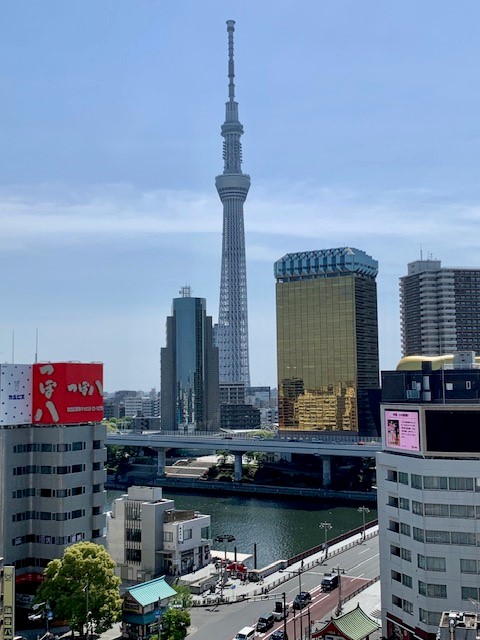
After the temple, if your legs are up for it, there’s a nice walk along the Sumida river and over the pedestrian bridge to Tokyo Skytree, Japan’s tallest tower. The view from the top is well worth it.
Other notable Tokyo activities
- Manga, arcades and Anime in Akihabara. Top arcade for me was GiGO Akihabara. I also enjoyed Super Potato for nostalgia.
- Ueno Park. Beautiful space, with museums and a zoo as well
- Tsukiji fish market. If you go, go early in the day. It’s a wonderful spectacle and there are so many food options
- Hama-Rikyu gardens. Right by Tsukiji market.
- Take a river cruise from Tsukiji to Asakusa for a different view of Tokyo
Want a slice of quieter Japan close to Tokyo, consider Hakone, a beautiful spot, natural onsen and traditional ryokan, with plenty of activities and views of Mt Fuji. You can find my in depth guide to the Hakone Loop here
Next stop Kyoto: History and Temples
Kyoto was the imperial capital for over a thousand years, and it still feels like the centre of old Japan. More than a thousand temples, seventeen UNESCO World Heritage sites, and the kind of streets you came to Japan to walk. For most people this is the highlight of the whole week.
How to get there?
With only 7 days and three cities, you do not need a JR Pass. For this trip it’s an added cost that won’t pay for itself against just buying the tickets you actually need. Buy a bullet train ticket for the exact journey you want, then use a Suica card and regional trains once you’re in each city. If you want the full breakdown, I go through the maths in my guide on whether the JR Pass is worth it.
The bullet train is how I’d get to Kyoto, for the speed and the experience of it. Tokyo Station to Kyoto takes a little over two hours and costs around ¥14,000 (£74) for a one-way reserved seat.
My Top Tip! Grab an ekiben before you board, the bento boxes sold at the big stations. We had a different one on every shinkansen leg and it turned each journey into a little event. They’re packed and presented with real care, and half the fun is seeing what you’ve ended up with, although you do get a choice if there are things you don’t like!
Where to stay in Kyoto
Have a look at my detailed guide to the best hotels in Kyoto for all budgets for an in depth look at some of the best options for all budgets. And I have also written a far more in depth two day itinerary, if you want to plan more.
Stay in Gion for a chance to spot a Geisha (be respectful if you want to photograph a Geisha), by the Kamo River for scenic views, or in Higashiyama for easy access to historic sites.
We stayed within walking distance of Nishiki market, which became our default for food. Handy for a lot of the sights too.
Buses will be your friend in Kyoto, as they tend to be the most efficient form of transport. Google maps was a reliable ally for our time here, both on foot and transport.

Day 4: The Kyoto Temples
Visit Ryoan-ji Temple and its famous karesansui rock garden, then head to Kinkaku-ji (the Golden Pavilion), a temple covered top to bottom in gold leaf. The reflection in the pond out front is the shot everyone comes for, so have your camera ready.
Following this, there is the opportunity to discover the tranquil Ninna-ji Temple, a UNESCO World Heritage site with beautiful gardens. Or if you are operating at a more leisurely pace today save yourself as the final activity of the day was a real highlight.
This is also the time to pop into Nishiki market and refuel. The range of food is the draw. The fussiest eater will find something safe, and if you like trying everything like I do, it’s a proper treat.
This is where I had my first sea urchin, and a bright red octopus head stuffed with a quail’s egg, alongside all the more familiar stuff. We were in Kyoto five days and ended up back here on four of them, at every time of day.
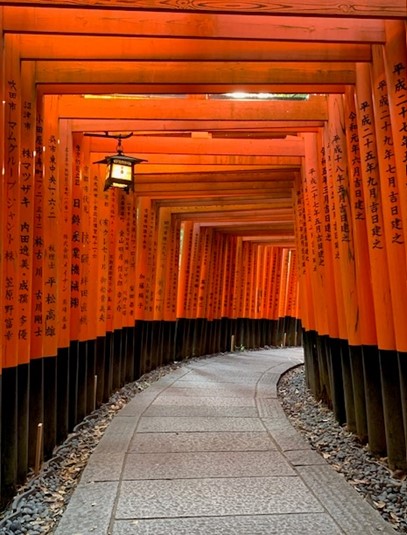
You’ll have seen the photos of Fushimi Inari, the thousands of vermilion torii gates winding up the mountain. The reality lives up to them, which isn’t always the case. We did it for sunset and that was the right call, you get the gates, the low light and wide views over Kyoto from higher up.
The full climb takes two to three hours, so wear something you can actually walk in and don’t do it in your nice shoes.
TOP TIP! Why not cap off a special day with an extra special meal, have a look at my guide to the best Michelin star restaurants Kyoto has to offer
Day 5: Arashiyama & Beyond
Start early in the Arashiyama Bamboo Grove. The early start is the trick, get there before the crowds and you get the towering green corridor closer to yourself. Leave it until mid-morning and it’s a slow shuffle behind selfie sticks.
Then head up to Iwatayama Monkey Park for wide views over the city and some very cheeky monkeys. Watch your belongings, and don’t get food out in front of them.
Now at this point you will have clocked up a good amount of steps in Kyoto alone, let alone the rest of the trip so far. I recommend two activities to take the weight off, breathe and let yourself take it all in. Of course if you are feeling raring to go and ready for more, swap these for one of my alternative suggestions.
A boat ride down the Hozugawa River followed by a relax in one of Arashiyama’s traditional onsens to unwind. Point to note, the majority of onsens are split into male and female so if you are there with a travel companion of the opposite sex, this will be a bit of time apart. This may or may not be a welcome opportunity for some alone time, but I’ll let you decide. It’s your Japan Itinerary after all!
Other notable Kyoto activities
Take a look at my detailed itinerary for Kyoto, including a free downloadable map
- Kiyomizu-dera Temple, an iconic landmark offering excellent city views
- Explore Yasaka Shrine and the nearby Maruyama Park, perfect for a leisurely stroll.
- Head to Gion to experience the ambiance of Kyoto’s famed geisha district.
- Explore the Kyoto Imperial Palace and gain insight into the lives of Japan’s former emperors. (Worth getting the audio guide here and make sure you pay the little bit extra to go inside)
- Kyoto Gyoen National Garden. Right next door to the imperial palace
- Pontocho Alley, where modern bars and restaurants line a narrow, picturesque alleyway
Your tough decision with only a week in Japan
This is the hardest call in a 7 day Japan tour, and my answer might not be the popular one. With only a week, I wouldn’t try to do both Kyoto and Osaka properly. I’d pick one and give it the time it deserves.
Pick Kyoto if you’re here for temples, history and the older side of Japan. Pick Osaka if you’re here for the food and a good night out. They’re genuinely different trips, and choosing one over cramming both is the best decision you can make with limited days.
If you’re set on doing both, it can be done and I show you how below. Kyoto and Osaka are under an hour apart by train, so you can base in one and day-trip the other. Just know you’ll be skimming each, and be ruthless about what you actually do rather than trying to see the lot. I go into using Osaka as a base in my in depth guide to Osaka here.
One more piece of advice with only a week: I wouldn’t squeeze Nara into the seven days. It’s well worth a visit, but it belongs in a longer trip. If your flight leaves you a bonus morning at the end, that’s the time for it (see Day 7).
Osaka: Japan’s Kitchen
Osaka is Japan’s kitchen, a city of food, nightlife and neon. Locals have a word for it, ‘kuidaore’, which roughly means ‘eat until you drop’. That tells you most of what you need to know before you arrive. It’s a challenge we took on happily.
The food throughout the trip was exceptional but this will be the best you find on your itinerary in Japan
I have written a detailed guide on the best way to get from Kyoto to Osaka, so you don’t waste time
Where to stay in Osaka
Read my in depth guide to the best hotels in Osaka here, this is perfect for couple and adults travelling together. If you are travelling as a family and need bigger rooms, more living space or guaranteed interconnecting rooms I have written a detailed guide in Osaka.
There are three areas I would recommend considering for Osaka:
- Namba, the entertainment heart of Osaka, perfect for food lovers and nightlife enthusiasts. It’s close to Dotonbori and offers excellent transport links.
- Umeda, Osaka’s main business and shopping district. Handy if you want easy access to transport hubs like Osaka Station.
- Shin Osaka, Proximity to Shin-Osaka Station makes it perfect for travellers using the Shinkansen. It’s more relaxed than central areas, offering good value accommodations.
Day 6: Dotonburi and Osaka Castle
Start with breakfast at Kuromon Ichiba Market, a covered market packed with stalls doing fresh sushi, sashimi and grilled bits you eat on the spot. It’s a good way to ease into how Osaka does food.
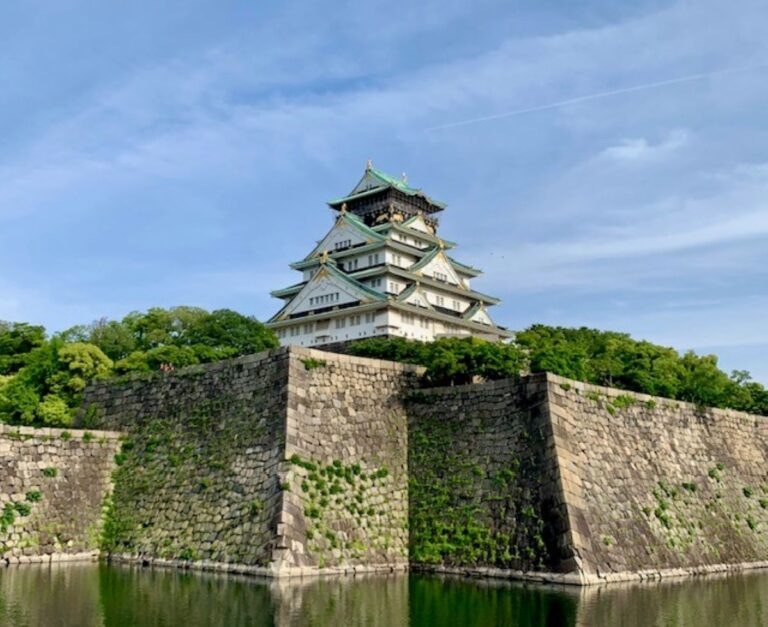
Next up, Osaka Castle, one of Japan’s most famous landmarks. The castle grounds offer a spacious park with hundreds of cherry trees, making it a popular spot during cherry blossom season. Be sure to make the trip to the very top of the castle for some epic views.
Then make your way to Dotonbori, Osaka’s food and neon strip, and the part of the city you’ve probably already seen in photos. This is where you eat. We had takoyaki (octopus balls) from a couple of street stalls, and watching the vendors turn them out at that speed is half the fun.
For okonomiyaki, a savoury pancake cooked in front of you, we sat down at Okonomiyaki Mizuno. The cooking is a bit of theatre and the run of sauces at the end makes it. Get your photo with the Glico Man sign while you’re here, then look up for the giant neon crabs, dragons and characters strung over the street.
If you have energy left, cap off the day exploring Amerikamura’s nightlife! Known as “Amemura” to locals, a district famous for its fashion, nightlife, and American-inspired culture. It’s the perfect place to experience Osaka’s youthful energy and world famous hospitality. We found Osakans to be some of the friendliest people we met in Japan, very happy to share a drink or a karaoke mic.
Other notable Osaka activities
- Shinsaibashi, the city’s premier shopping district. The area’s covered shopping arcade stretches for several blocks
- Tempozan Harbor Village, featuring the Osaka Aquarium Kaiyukan and the Tempozan Ferris Wheel
- Osaka Museum of History, worth it if you want more on how the city grew
- Umeda Sky Building’s Floating Garden Observatory. This offers panoramic views of Osaka, and another fantastic picture opportunity

Day7: Very much flight dependent.
Day 7 on your Japan tour is where you are going to have to make a call based on your flight time and location.
The ideal situation is you return home from Osaka. However if you need to get back to Tokyo, the journey will take around 2hrs 30 and is very simple thanks to the exceptional transport links.
If you actually fly tomorrow then you have the opportunity to explore a bit more of Japan. Three options I would consider depending on which city you have preferred so far:
- Another day in Tokyo with some of my notable activities. Or stop off at Mt. Fuji on the return.
- Another day in Osaka choosing some activities from my list
- Day trip to Nara park from Osaka, details of how to do this in my Osaka guide.
IS ONE WEEK ENOUGH TO EXPLORE JAPAN?
A good question, my firm view is:
Yes to give you a taste. If it’s this or nothing do it, the country is truly amazing, but know you’re just skimming the surface and missing some amazing things. Skipping some exceptional sites and activities in the cities I’ve recommended let alone the countless others I don’t reference here
You will want to come back for sure. If this is enough to convince you, check out my perfect two week itinerary in Japan here
Japanese etiquette: what first-timers actually need to know
You won’t cause an international incident if you get something wrong, people are kind and they know you’re a visitor. But a few habits are worth knowing before you go, and these are the four that come up most frequently.
Don’t tip. It isn’t customary in Japan and it can genuinely confuse people. The price you’re given covers everything, and a taxi driver or waiter may chase you down to return the money you left. Good service is just the standard, not something you pay extra for.
Don’t eat while walking. Grabbing street food and wandering off with it is frowned upon. You eat at the stall, or near it, then move on. This one caught me out early and it’s an easy habit to break once you know.
Take your shoes off when it’s expected. Ryokan, some restaurants, temples and most private homes will want shoes off at the door, with slippers usually provided. If you’re unsure, look at what everyone else is doing. Your shoes will be perfectly safe wherever you leave them.
Mind which side of the escalator you stand on. In Tokyo and most of the country you stand on the left and leave the right clear for people walking. Osaka flips it and stands on the right, which matters on this trip because you’ll hit both. When in doubt, copy the locals.
That’s enough to keep you out of trouble. For the full run-down, including bowing, chopstick rules, onsen etiquette and handling money, I’ve written a dedicated guide on the do’s and don’ts in Japan.

FREE GUIDE
Planning your trip to Japan?
I made a free 13-page guide that strips Japan planning down to the few decisions that matter.
No ads, instant download.
FAQs about Japan
For many countries, including the United States, Canada, Australia, and most European nations, you do not need a visa for short stays (up to 90 days for tourism purposes significantly more than your 7 day Japan tour). However, it’s always a good idea to check the latest visa requirements from the official Japanese embassy or consulate website in your country before your trip.
Japan can be pricey, but it flexes more than people expect. Your two big costs are accommodation and the bullet train between cities. Food, on the other hand, can be very cheap: a convenience store breakfast or a bowl of noodles costs next to nothing, and it’s genuinely good. You can keep things down with capsule hotels and conbini meals, or spend up on a nice ryokan and a proper dinner. The choice is yours on most days, which is what makes it manageable.
Spring and autumn are the sweet spots. Late March to April brings the cherry blossom and mild weather, while October and November give you autumn colour and comfortable temperatures for all the walking this trip involves. Summer is hot and humid, winter is cold but much quieter. It’s a big decision, so I’ve broken down every month for weather, crowds and cost in my full guide on the best time to visit Japan.
Trains, almost entirely. Within each city a Suica card on your phone gets you on the metro and local trains with a tap, and between cities the shinkansen (bullet train) is fast and easy. For this 7 day trip I would not buy a JR Pass. You’ll get better value buying individual bullet train tickets for the journeys you actually make. The pass only starts to pay off on longer trips with a lot more intercity travel than a week allows.
The food is taken seriously, the challenge is the language. Carry a card that states your allergies or dietary needs in Japanese and show it at restaurants, it makes life far easier and most places will happily work around you once they understand. Vegetarian, vegan and gluten-free choices are growing, especially in Tokyo, Kyoto and Osaka, and there are apps that list places catering to specific diets.


15 Comments
Comments are closed.