
A 4 day Marrakech to Fes desert tour is one of the most rewarding trips I’ve done in Morocco. It covers the High Atlas, the kasbahs, the Sahara and the Middle Atlas cedar forest in one straight line, and it lands you in Fes at the other end ready for the next leg of your trip.
It isn’t the most relaxing way to see Morocco though. The driving days are long, the schedule is tight and the camps vary a lot. My guide walks you through what my 4 days actually looked like, what each day costs in driving time, how to pick a tour that matches the comfort level you want, and the practical bits most articles skip (what to pack, camel ride reality, and whether it’s worth it at all).
I’ve also added a shortlist of three tours I’d recommend at the end, with a quick comparison so you can pick the right one without doing hours of research.
TL;DR. 4 day Marrakech to Fes desert tour at a glance
For those of you short on time, here’s the plan at a glance. It’s covered in full detail, with my top tips, further down.
- Day 1: Marrakech → Ait Benhaddou → Ouarzazate → Boumalne Dades (~8 hours driving, split into stops)
- Day 2: Boumalne Dades → Todra Gorges → Merzouga → camel ride to desert camp
- Day 3: Sunrise in the dunes, Khamlia village, nomad visit, Mifis fossil sites
- Day 4: Merzouga → Ziz Valley → Midelt → Azrou cedar forest → Ifrane → Fes (~9 hours driving)
Book ahead: A private or small-group tour is worth the extra money on this route.
Expect: Long driving days, spectacular landscapes, basic-to-comfortable camps depending on tier.
Best for: Travellers happy to trade comfort for variety, who want Morocco’s biggest sights in one go.
Not for: Anyone with a bad back, motion sickness or a tight schedule that can’t absorb an extra travel day.
More of my Morocco guides to help plan your trip
- 4 day Marrakech Itinerary : The best for first timers, what to see and where to stay
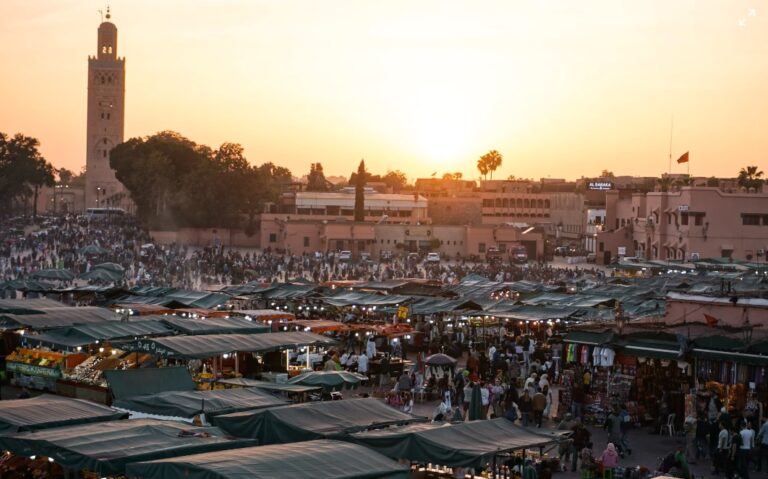
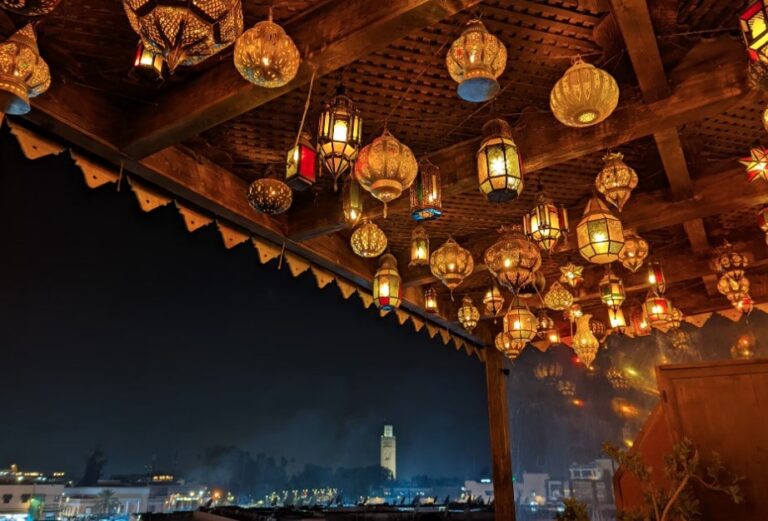
- The Best Rooftop Restaurants in Marrakech : My favourite spots for dinner with a view
- The Best Authentic Marrakech Food Tours : How to eat like a local on your first visit
- Most Beautiful Riads in Marrakech : Where to stay for a proper Marrakech experience
- Best Water Parks in Morocco : Handy if you’re travelling with kids
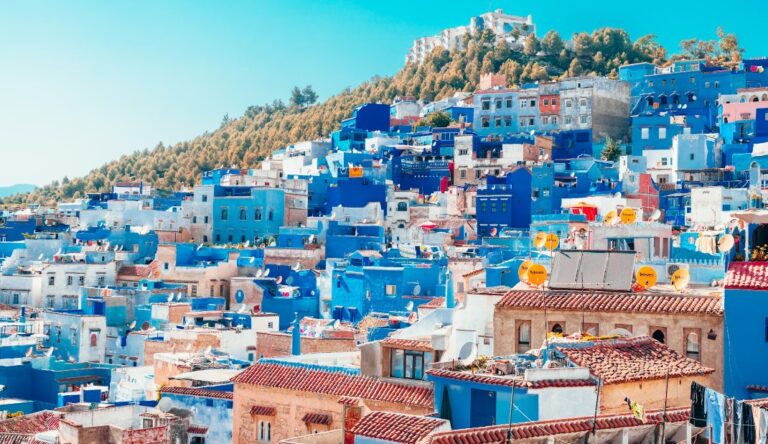
- How many days in Chefchaouen : The blue pearl, a natural next stop after Fes
Disclaimer: This article may feature affiliate links. If you click these links, and choose to book with that hotel or company, I will earn a small commission at no extra cost to you. I appreciate the support that allows me to continue providing this information.
Is a 4 day Marrakech to Fes desert tour worth it?
Yes, for most travellers it is, but go in with clear expectations.
The route covers roughly 1,200km over 4 days. That’s a lot of time in a vehicle, broken up by some of Morocco’s most memorable stops. If you want to see the kasbahs, the Sahara and the cedar forests in one trip, there is no quicker way to do it.
My Top Tip! If your time allows, consider stretching this to 5 days instead of 4. Adding a night in Ait Benhaddou or an extra day in the desert makes the driving days far more manageable and gives you proper time at each stop.
Who this 4 day Marrakech to Fes tour is best for
This trip suits first-time Morocco visitors who want the headline sights in one loop. It works well if you:
- Enjoy road trips and don’t mind long driving days
- Want a mix of landscapes rather than a single destination
- Are happy with variable accommodation (one good hotel, one basic riad, one desert camp)
- Have at least 4 full days before you need to be in Fes
It is probably not the right trip if you have mobility issues, suffer with motion sickness on winding roads, or if you want a slower, deeper experience of any single region. In those cases, a shorter 2-3 day desert loop returning to Marrakech is a better fit.
Best time of year for this tour
The desert landscape swings dramatically across the year, and this is the one bit of planning that really matters.
- March–May (best overall). Warm days, cool nights, roses blooming in the Valley of Roses and the High Atlas still has snow on the peaks. My pick.
- September–November. Similar to spring with slightly hotter days. Also excellent.
- December–February. Cold nights in the desert (can drop below freezing) and the Tizi n’Tichka pass occasionally closes due to snow. Pack a proper warm layer if you go now.
- June–August. The desert can hit 40–45°C. Camel rides and sunrise walks become a real slog. I’d avoid if you can.
Booking and choosing your tour
Unlike some Morocco experiences, this is not a trip I’d recommend doing yourself. The driving is long, some roads are tricky and the desert camp logistics alone are enough to put me off a self-drive.
That said, tours on this route vary a lot more than most travellers realise. The main things to check before booking:
- Group size. Private or small group (max 8) makes a big difference on long driving days
- Camp tier. “Standard” camps often have basic shared bathrooms and simple tents. “Luxury” camps have en-suite tents, better food and more space. Ask for photos before you book
- Inclusions. Some tours include entry fees and dinners, some don’t. Read the fine print
- Language. If English matters to you, confirm it’s guaranteed, not just “available”
- Route. Most tours hit the same headline stops but in different orders. Check Atlas Studios and Khamlia village are in yours if they matter to you
My Top Tip! Smaller is better on this route. A 16-seat minibus stops for photos at the pace of its slowest passenger. A 4-person 4×4 lets you stop when you want. If the price difference is manageable, pay up.
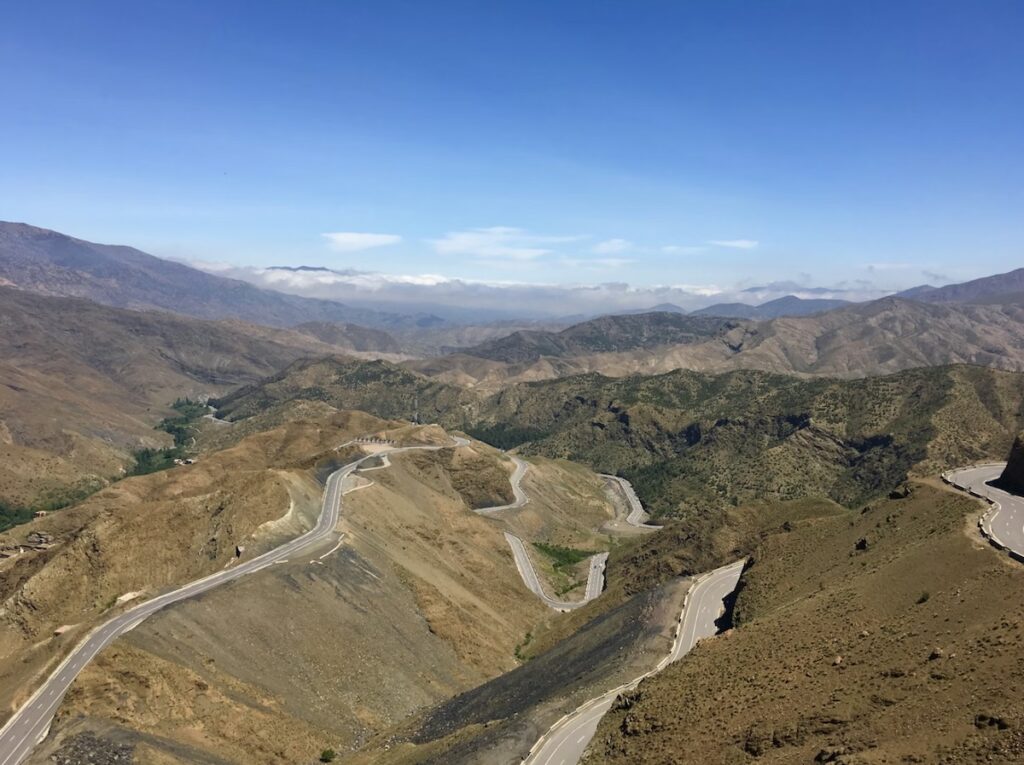
Day 1. Marrakech to Boumalne Dades
Day 1 is the longest driving day of the tour on paper, but it’s broken up by some of the best stops.
Total driving time around 7–8 hrs • Distance ~350 km
Departure from Marrakech
Most tours pick you up from your riad around 8:00 AM. If you’re in a private tour, confirm the exact pickup point the night before, as riads in the medina aren’t all car-accessible and your driver may meet you at the nearest square.
Tizi n’Tichka Pass
The road over the High Atlas via the Tizi n’Tichka Pass is the first highlight. It reaches around 2,260 metres and winds through dramatic mountain scenery with traditional Berber villages dotted on the slopes.
There are several natural stops for photos, and if your driver is any good they’ll build them in. If they don’t, don’t be shy about asking, this is one of the most photogenic stretches of the whole trip.
Time 2.5–3 hrs driving
My Top Tip! If you’re prone to car sickness, take a tablet before you set off. The pass has hundreds of turns and it catches people out who don’t usually struggle.
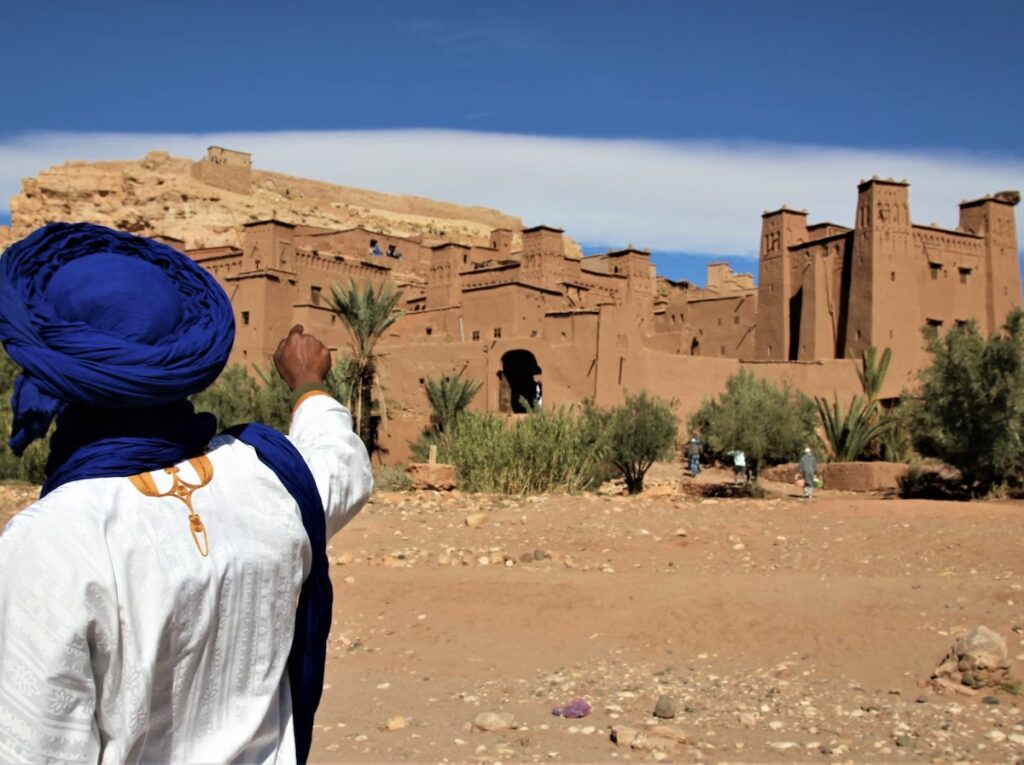
Ait Benhaddou Kasbah
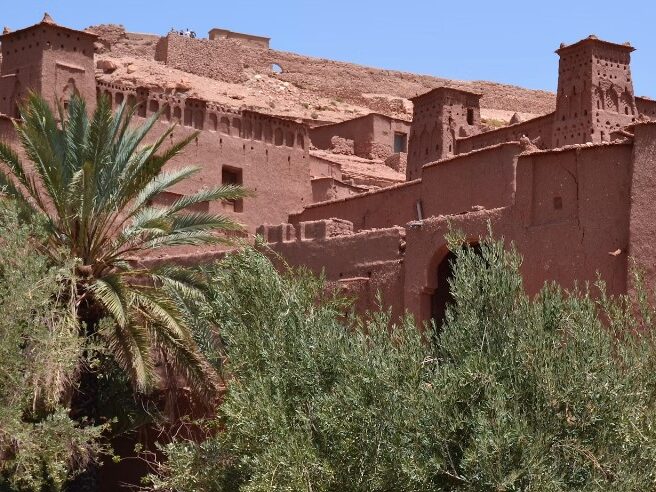
Ait Benhaddou is a UNESCO World Heritage Site and one of the most well-preserved kasbahs in Morocco. It is also Hollywood’s favourite Moroccan location — scenes from Gladiator, The Mummy, Prince of Persia, Kingdom of Heaven and Game of Thrones (as Yunkai) were all shot here.
You enter by crossing a small river on stepping stones, then wind up through the earthen-clay alleyways to the top for the view. Allow time to wander rather than rushing straight to the top.
Time 90 mins • Cost free to enter, small tip if you hire a local guide at the entrance
Lunch in Ait Benhaddou
Most tours stop for lunch at a local restaurant with a terrace view of the kasbah. The food is fine, tagines and couscous, but prices are higher than you’d pay in town as these places are firmly on the tourist circuit. If your tour gives you free choice, ask your driver for a cheaper local option a few streets back.
Time 45–60 mins • Cost typical 120–200 MAD (£10–£16) per person
Atlas Studios and Taourirt Kasbah, Ouarzazate
Ouarzazate is often called the “Hollywood of Africa” and it’s home to Atlas Studios, one of the largest film studios in the world by land area. Most 4 day tours only do a photo stop outside the studios rather than a full tour, so don’t expect to walk through the sets unless you’re specifically booked in.
The Taourirt Kasbah is a better stop in my opinion, a fortified palace once owned by the Glaoui family with intricate mud-brick architecture. Small museum inside if you want to go in.
Time 45–60 mins • Cost ~60 MAD (£5) for Taourirt Kasbah entry
Skoura Oasis and Valley of Roses
The drive from Ouarzazate to Boumalne Dades passes through the Skoura oasis and the Valley of Roses. This is a driving stretch rather than a walking stop, though your driver will likely pull over for photos.
The Valley of Roses is famous for its damascene roses, which are harvested in early May to produce rosewater. The annual Rose Festival in Kelaat M’Gouna usually runs in the first two weeks of May, so if you’re travelling then, factor in the extra crowds.
Time 1.5–2 hrs driving (with photo stops)
Arrival in Boumalne Dades
You’ll reach Boumalne Dades in the early evening, usually around 6 or 7 PM. The town sits at the mouth of the Dades Valley, which is a separate and less famous gorge to the Todra Gorge you’ll see tomorrow.
Check into your riad, most are simple but atmospheric with traditional tiled rooms and a roof terrace. Dinner is usually included and served as a shared tagine or couscous.
Day 2. Boumalne Dades to Merzouga
Day 2 is shorter on driving but bigger on payoff. By the end of it you’ll be sitting on a dune watching the sun set over the Sahara.
Total driving time around 5–6 hrs • Distance ~270 km
Todra Gorges
The Todra Gorges sit about an hour’s drive from Boumalne Dades, and they are genuinely spectacular. The limestone cliffs reach up to 400 metres and at the narrowest point the canyon is only 10 metres wide.
You can walk through the bottom of the gorge on a flat, easy path. The cool shade is a welcome break from the sun and the scale is hard to appreciate in photos.
Time 45–60 mins on foot • Cost Free
My Top Tip! The morning light is best in the gorge, so if your tour lets you influence the order, get here before the midday tour buses arrive.
Drive to Merzouga through the palm groves
After Todra, the drive continues south through palm groves and Berber villages. You’ll see traditional mud-brick houses, irrigation channels called khettara, and the landscape gradually dries out as you approach the edge of the Sahara.
Time 3–3.5 hrs driving
Camel ride into the dunes
At the edge of the Erg Chebbi dunes, usually around 4:30 PM, you’ll swap the vehicle for a camel.
Here’s my honest take: camel riding isn’t for everyone. The gait is awkward, the saddle isn’t padded and an hour in you’ll be shifting around trying to find a position that doesn’t hurt. For me it was somewhere in between, neither as romantic as the brochures make out nor as bad as some reviews say.
If you really don’t fancy it, most tours offer a 4×4 transfer to the camp instead. Ask before you book.
Time ~60 mins
Sunset on the dunes
The camel caravan stops on a high dune to watch the sun set. This, for me, is the moment that makes the whole trip. The Erg Chebbi dunes reach around 150m at their tallest and the light in the last 30 minutes before sunset is genuinely extraordinary.
Time 30–45 mins • Cost Free
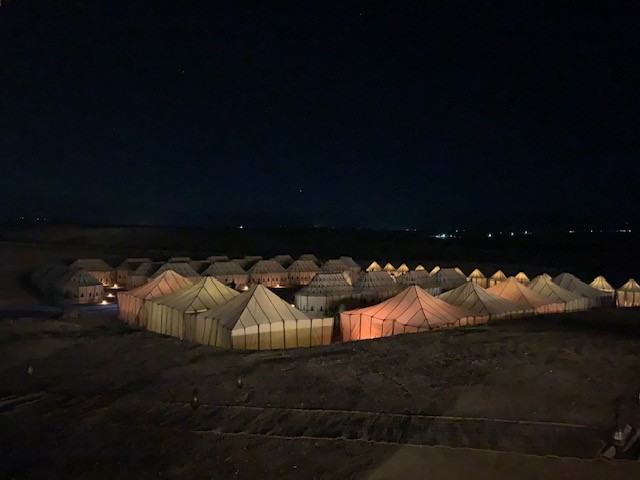
Luxury desert camp
The camp is where tours differ most. At the basic end, expect a canvas tent with a bed, shared bathrooms and simple food. At the luxury end, expect proper en-suite tents with rugs, heaters (worth it in winter) and a full Moroccan dinner.
We stayed somewhere in the middle – a comfortable tent with shared bathrooms. The shared part didn’t bother me as they were clean and well looked after, but ask about this specifically if it matters to you.
Dinner is served as a group around a fire, usually followed by Berber drumming and music. Then stargazing.
My Top Tip! The stars are the reason to do this trip for me, top 3 night skies I’ve ever seen. Step away from the camp lights, let your eyes adjust for 10 minutes and you’ll see the Milky Way clearly. Pack a light jumper even in summer, the desert cools fast at night.
Day 3. Merzouga and the oasis sites
Day 3 is your “rest” day, which really means no long driving, rather than no activity. It’s the day where you notice how tired the schedule has made you, so take any free time gratefully.
Total driving time around 1–2 hrs total (all local)
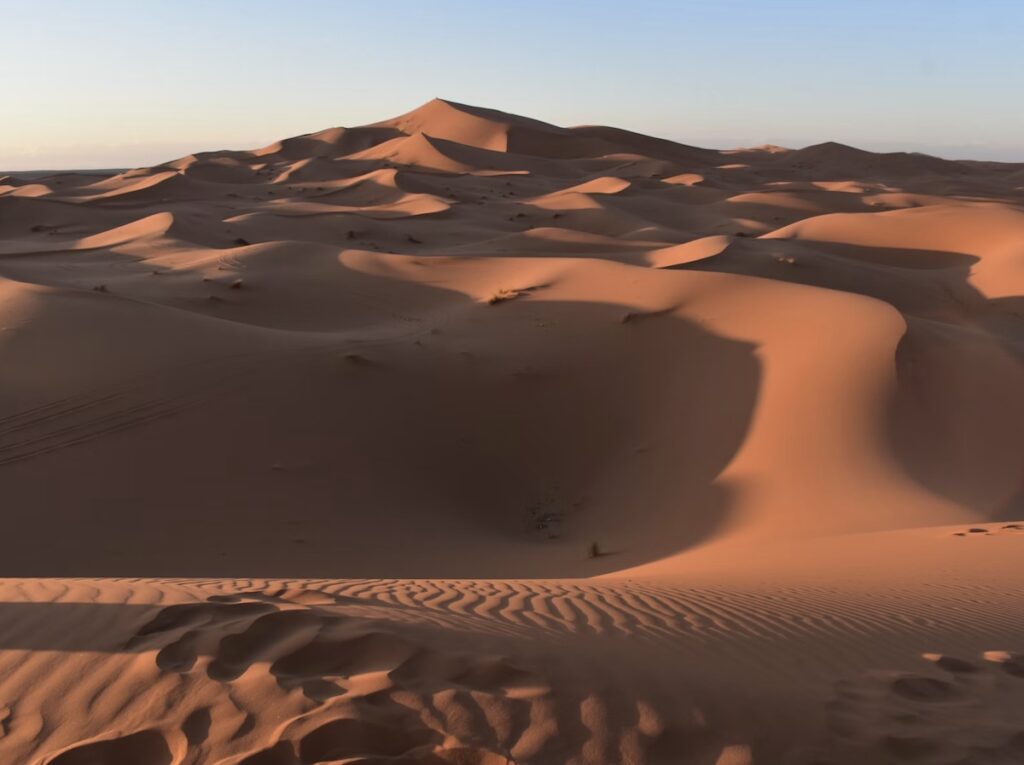
Sunrise over the Erg Chebbi dunes
Set an alarm, walk up a dune, wait. I know early mornings on holiday are unpopular but this one is worth it. The colours on the sand shift through pink, orange and gold over about 20 minutes and it’s even quieter than the sunset.
Time 45–60 mins
Breakfast and optional sandboarding
Back at camp for breakfast (usually Moroccan pancakes, bread, jam, mint tea). Some camps offer sandboarding if you want to try it, though it’s harder than it looks and most people give up after a couple of runs.
Time 60–90 mins • Cost sandboarding often free, 4×4 desert tours extra (~200 MAD / £16)
Khamlia village
Khamlia sits about 7km south of Merzouga and is one of the more meaningful stops on the tour. The villagers are descendants of sub-Saharan Africans from Sudan, Mali, Niger and Senegal who were brought to Morocco centuries ago through the trans-Saharan slave trade.
You’ll be welcomed with mint tea and a short live performance of Gnawa music, a trance-like style that blends Bambara, Berber and Arabic languages. The music is genuinely unusual and the setting (a small, simple room in a dusty village) makes it feel far removed from a staged tourist experience.
Time 45–60 mins • Cost Free, but tip expected (~20–50 MAD / £2–£4)
Nomad family visit
A short drive from Khamlia takes you to visit a nomadic Berber family in their tent. It’s a brief stop, usually tea and a short chat (interpreted by your guide). Worth doing once, even if it has a slightly staged feel.
Time 30–45 mins • Cost Free, tip appreciated
Mifis oasis and fossil sites
Mifis is an abandoned lead mining area rather than a natural oasis as the name suggests. Your guide will walk you around the old French colonial mining village and the nearby fossil beds, where you can see trilobites and other fossils embedded in the rock.
Time 45–60 mins
Afternoon at camp or Merzouga
Most tours give you free time in the afternoon, either back at the camp or in Merzouga town. Use it. After two long driving days and an early start, a lazy afternoon on a terrace with a mint tea is exactly what you need.
Time 2–3 hrs
Day 4. Merzouga to Fes
Day 4 is the longest drive of the tour, and the one that most tours underestimate in their marketing. The upside is that the stops are genuinely varied and one of them surprised me more than any other on the trip.
Total driving time around 8–9 hrs • Distance ~470 km
Ziz Valley
The first stop is a panoramic viewpoint over the Ziz Valley, with thousands of date palms lining the river. It’s a photo stop rather than a walk, but it gives you a proper sense of how green Morocco can be even this close to the desert.
Time 15–20 mins • Cost Free
Midelt for lunch
Midelt is known as the “capital of apples” and it’s where most tours break for lunch. The town sits at ~1,500m so it feels significantly cooler than the desert. Food options are fine rather than exciting, expect a straightforward tagine stop.
Time 60 mins • Cost typical 80–150 MAD (£7–£12) per person
Cedar Forest of Azrou
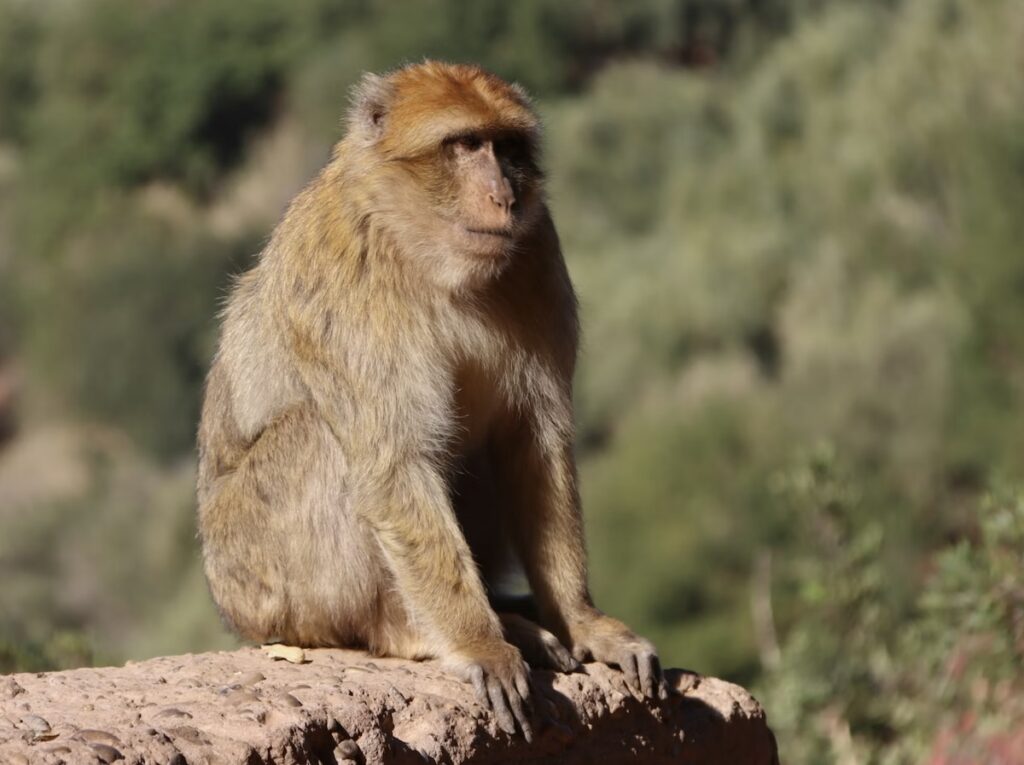
Heading further north into the Middle Atlas, you’ll pass through the cedar forest of Azrou. The forest is home to endangered Barbary macaques (also called Barbary apes, though they’re monkeys) and most tours stop for a short walk and a photo with them.
A note on the monkeys: some sellers offer peanuts to feed them, which I’d strongly suggest you don’t do. Human food damages their health and makes them aggressive towards the next group. Watch, photograph, move on.
Time 30–45 mins
Ifrane, the Switzerland of Morocco
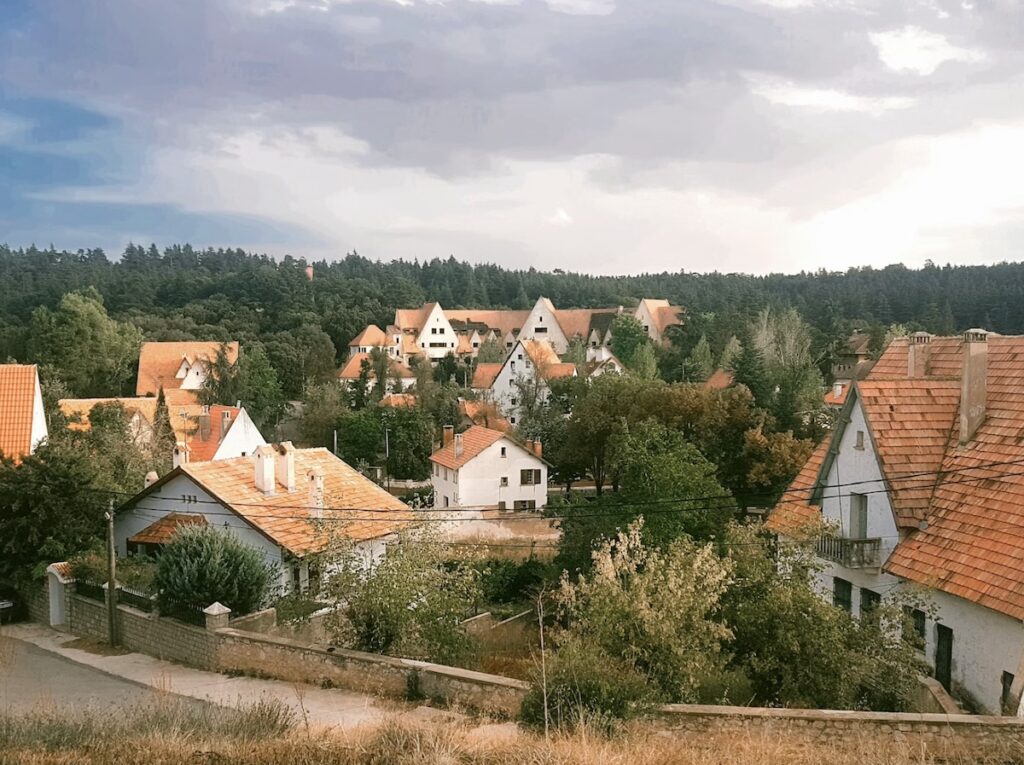
This was the stop that surprised me most. Ifrane looks like an Alpine village plucked from Switzerland and dropped into Morocco, with sloped roofs, clean streets, neat parks and a carved stone lion statue as its focal point. It was built by the French in the 1930s as a hill station.
After four days of kasbahs and dunes, it’s genuinely disorienting (in a good way). Worth the 30 minutes you get.
Time 30–45 mins
Arrival in Fes
You’ll reach Fes in the late afternoon or early evening. Most tours drop you at your hotel or riad in the medina. If you haven’t booked accommodation yet, this is the moment you’ll regret it.
Time 15 mins • Cost tip for your driver (standard 100–200 MAD per day of tour, pooled if in a group)
A quick note on what to do in Fes
If Fes is new to you, the medina is the headline. It’s one of the largest car-free urban areas in the world and easy to lose yourself in. My top 5 must-sees:
- Medina of Fes — the labyrinthine heart of the old city
- Al Quaraouiyine — founded in 859 AD, recognised by UNESCO and Guinness as the oldest continuously operating degree-awarding university in the world
- Bou Inania Madrasa — 14th-century Islamic school with stunning tile work
- Chouara Tannery — the famous leather tannery, viewed from a leather shop balcony
- Royal Palace gates — photogenic golden gates even though the palace itself is closed to the public
What to pack for this tour
The temperature swing on this trip is significant. In a single day you can go from 25°C in Marrakech, to 5°C at the top of the Tizi n’Tichka, back to 30°C in the desert and 0°C overnight.
- Layers. A light jumper and a proper warm fleece, even in summer
- Scarf or shemagh. Useful for dust in the desert and sun cover
- Sunscreen, sunglasses, hat. No shade on the dunes
- Comfortable walking shoes. Trainers are fine, no need for proper hiking boots
- Small daypack. For the camel ride and dune walks
- Power bank. Some camps have limited or no electricity in the tents
- Torch or headtorch. Camps are dark at night
- Cash in small denominations. For tips, tea stops and small bits the tour doesn’t cover
My Top Tip! Pack a small overnight bag for the desert camp and leave your main suitcase in the vehicle. You don’t want to be hauling a big case across the dunes.
How to book the best 4 day desert tour from Marrakech to Fes
I’ve picked three tours below that I’d be comfortable booking myself. They all cover the same broad route but differ in group size, camp quality and price. Use the table to pick the one that fits how you like to travel.
| Tour | Best for | Group | Reviews | Notes |
|---|---|---|---|---|
| 4-Day Private Atlas Mountains & Desert Tour | Best value | Small, private | 128+ | Hits the main stops, slightly cheaper than average |
| Private 4-Day Sahara Desert Discovery Tour | Best accommodation | Small, private | 53+ | Higher standard desert camp and riad stays |
| 4 Day Authentic Desert Tour Fes to Marrakech | Reverse direction | Small group | 50+ | Same route but starting in Fes, useful if you’re already there |
My Top Tip! If all three are in your budget, the middle option (the Private 4-Day Sahara Desert Discovery Tour) is the one I’d pick. Camp quality matters more than you’d think on this trip, and it’s the one thing you can’t easily upgrade once you’ve booked.
FAQs about the Marrakech to Fes desert tour
Is 4 days enough for a Marrakech to Fes desert tour?
4 days is the standard and works fine for most people. 3 days is too rushed and skips the Middle Atlas stops. 5 days is ideal if you can spare the time as it lets you add a proper night in Ait Benhaddou or two nights in the desert. If you want to see the most in the least time, 4 days is the sweet spot.
Can I do this tour from Fes to Marrakech instead?
Yes, and it’s a common option. The route and stops are nearly identical, just in reverse. Choose based on where you land and where you’re going next, not the tour itself.
How long is the camel ride to the desert camp?
Usually around 60 minutes, sometimes up to 90 depending on the camp. If that’s too much, most tours offer a 4×4 transfer to camp as an alternative, though you’ll still miss the sunset from the dunes if you skip the camel ride entirely.
Are the desert camps basic?
It depends on the tier. Standard camps are basic (shared bathrooms, simple beds, group meals). Luxury camps are much closer to boutique hotel standard (en-suite tents, heaters, private dining). Always ask for recent photos before you book.
Is there Wi-Fi in the desert camp?
Almost never. A few luxury camps offer patchy Wi-Fi near reception, but treat this trip as a digital detox. Download maps, music and anything you need before you leave Marrakech.
Can I do this trip with kids?
Yes, though I’d recommend age 8+ minimum. The driving days are long and the camel ride isn’t well suited to very young children. Most tour companies offer car seats on request but confirm before booking.
What currency should I bring?
Moroccan dirham (MAD). Bring small notes for tips, tea stops and markets. Credit cards work in bigger hotels and restaurants but not at roadside stops, camps or in the medina.
Is it safe?
Yes, this is one of the most-travelled tourist routes in Morocco and very safe. Take the normal precautions (don’t flash valuables, watch your bag in busy souks in Marrakech and Fes) and you’ll have no issues.
If you’ve got time for more Morocco, take a look at my guides on what to do with 4 days in Marrakech, the best rooftop restaurants, and how many days you need in Chefchaouen, the blue pearl, for a natural next stop after Fes.

4 Comments
Comments are closed.