
If you’re working out how to get from Tokyo to Kyoto, you want to know the best way to do that. Specifically, how long the bullet train takes vs a bus, what they cost and whether the JR Pass is worth it.
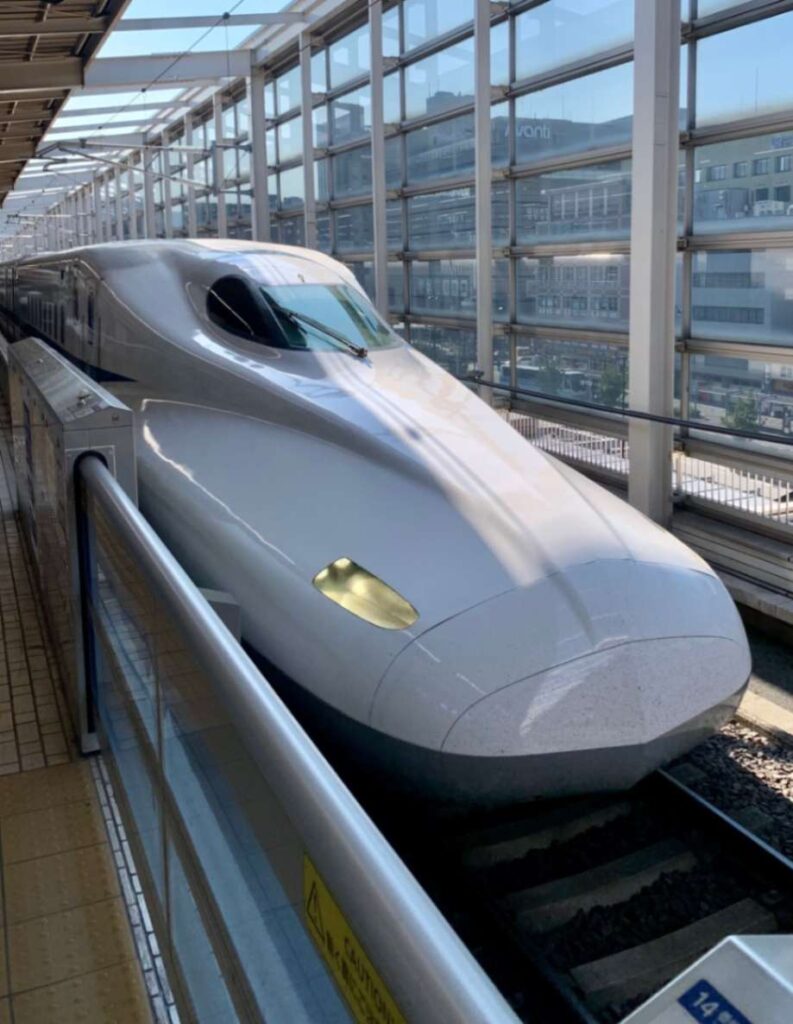
The Shinkansen is the best option for most people, a little over two hours station to station, and the only real decision is which ticket to buy.
We did it with one bag each and no seat booked and it was no bother, though a family with two big cases has a rule to know about before boarding. If you’re choosing between train, bus and flying, my quick answer section puts all three side by side before you start reading through the details.
More of my Kyoto guides to help plan your trip
- Kyoto in 2 Days – A guide to everything you will want to do in Kyoto
- How to get from Kyoto to Osaka – The fastest and cheapest routes
- Best Kyoto hotels — Choose the right area and hotels to make the most of your trip
- Family friendly Kyoto hotels — Areas and hotels that are perfect for families
- Day trip to Nara — How to do it in a day from Kyoto or Osaka, and when to go
- Kyoto vs Osaka — Which to visit, which to sleep in and how to split your days
Tokyo to Kyoto: the quick answer
In my opinion the best way is to take the Shinkansen. The Nozomi is the fastest train and goes from Tokyo Station or Shinagawa to Kyoto Station with no changes. A reserved seat costs ¥13,970 (£64) one way in the regular season, and there are departures every few minutes at busy times of day.
Kyoto is about 370km from Tokyo as the crow flies. Here’s how the three options compare, one adult, one way.
| Option | Time | Typical cost | Best for |
|---|---|---|---|
| Shinkansen (Nozomi) | about 2 hr 15 min | ¥13,970 (£64) reserved on smartEX | almost everyone |
| Overnight bus | about 8 hr | ¥3,500 to ¥4,200 (£16 to £19) | tight budgets, saving a hotel night |
| Flight to Osaka, then bus or train to Kyoto | about 2 hr plus airport time at both ends | airfare varies, plus ¥1,310 (£6) bus from Itami | only if Osaka is already in your plan |
The bus and the flight each get their own section further down, but only beat the train in a couple of specific circumstances for most first-timers.
Disclaimer: This article may feature affiliate links. If you click these links, and choose to book with that hotel or company, I will earn a small commission at no extra cost to you. I appreciate the support that allows me to continue providing this information
FREE GUIDE
Planning your trip to Japan?
I made a free 13-page guide that strips Japan planning down to the few decisions that matter.
No ads, instant download.
Which Shinkansen from Tokyo to Kyoto: Nozomi, Hikari or Kodama
All three use the same line, the Tokaido Shinkansen, and the same platforms at Tokyo, Shinagawa and Kyoto. The difference is how many stations they stop at on the way, and the name is what you’ll see on the departure boards.
The Nozomi stops only at the big cities and is the one to take on a single ticket. The Hikari stops at a few more, is about 20 minutes slower and is the fastest train the JR Pass covers. The Kodama stops everywhere, costs the same as a Hikari and takes over an hour longer, so skip it unless you’re getting off at one of the smaller stations.
| Train | Time to Kyoto | Stops | Is it included in the JR Pass? |
|---|---|---|---|
| Nozomi | about 2 hr 15 min | big cities only | add-on ticket needed |
| Hikari | about 2 hr 35 min | a few more | covered |
| Kodama | about 3 hr 40 min | every station | covered |
During the major peak periods, which JR Central lists each year and which cover Golden Week, Obon and New Year, the Nozomi has no non-reserved seats at all. If you’re choosing your dates, my guide to the best time to visit Japan sets out when those weeks fall.
Don’t just take the first train on the board. Check the name, and if it says Kodama while a Nozomi or Hikari is leaving ten minutes later, wait for the second one. The three trains, their stopping patterns and where to sit to see Fuji are covered in more detail in my Tokyo to Osaka guide, because it is the same line and the same trains.
Tokyo to Kyoto train price and whether the JR Pass is worth it
Shinkansen fares by train and seat type
Non-reserved seats cost the same wherever you buy. On reserved seats, off-peak dates are ¥200 less, peak dates ¥200 more and the busiest holiday dates ¥400 more.
| Train | Non-reserved seat | Reserved seat | Green Car |
|---|---|---|---|
| Nozomi | ¥13,320 (£61) | ¥14,170 (£65) | ¥19,040 (£87) |
| Hikari or Kodama | ¥13,320 (£61) | ¥13,850 (£64) | ¥18,720 (£86) |
A non-reserved seat means you sit in one of the non-reserved cars in any free seat. A reserved seat is a numbered seat in a numbered car.
The Green Car is the first class car, with four seats across instead of five and more legroom, and it costs about ¥5,000 (£23) more for a two-hour trip.
Children aged 6 to 11 pay half, so ¥6,980 (£32) for a reserved Nozomi seat on smartEX, and under-6s travel free if they sit on your lap rather than in their own seat.
If you’re happy with the slow train, JR Central Tours sells a Platt Kodama package at ¥10,700 (£49) one way, Monday to Thursday outside the holiday weeks, which you book by the day before. It’s a reserved seat for about ¥3,000 less than the Nozomi in exchange for an extra hour and a half, and it’s the one case where the Kodama makes sense.
Is the JR Pass worth it for Tokyo to Kyoto?
No, not for this trip on its own. The 7-day pass is ¥50,000 (£229). A Tokyo to Kyoto return on the Nozomi is two singles at ¥13,970, so ¥27,940 (£128). That leaves about ¥22,000 (£101) on the table before you have used the pass for anything else.
I used the pass on my first trip, before the 2023 price rise, and it paid for itself then. With the current price it is not worth it for most people, and if I was doing the same route again I would buy single tickets through Klook or smartEX. The pass only makes sense if you’re adding several more long train legs in the same week, which I go through in my guide to whether the JR Pass is worth it.
How to book Tokyo to Kyoto Shinkansen tickets
Reserved or unreserved seat?
I went unreserved on our JR Pass and had no trouble finding seats on an ordinary weekday. Go unreserved if you’re travelling light, outside the holiday weeks and outside the weekday rush, which is 7 to 9 in the morning and 5 to 7.30 in the evening.
Reserve if you have a large suitcase, since the oversized baggage seat has to be reserved, or if you’re travelling at one of those busy times. Station tickets go on sale at 10am one month before travel.
Klook, smartEX or the ticket machine
For most people the easiest way to book is Klook. You pay in pounds with the price shown before you commit, you can change your train time in the app, and the QR code on your phone is your ticket at the gate, so there’s no queue at the station machines. If I was doing the trip again I’d book ahead like this rather than queue for paper tickets.
smartEX is JR Central’s own booking site and app, in English, and it’s the one to use if you want a particular seat, such as the Mt Fuji side or an oversized baggage seat, because it shows you the seat map before you pay. It’s also ¥200 cheaper than the station price on a reserved seat, and you can link the booking to your Suica so you just tap through the gate. The ticket machines at Tokyo, Shinagawa and Kyoto stations have an English option and charge the station price.
A Shinkansen fare is the basic fare for the distance plus a limited express charge, so a machine or counter can hand you two paper tickets, and both go into the gate together, one on top of the other. A Suica has been in my pocket for every local train and bus I’ve taken in Japan, but on its own it won’t get you through the Shinkansen gate, so buy the Shinkansen ticket first.
My Top Tip! Book your Shinkansen ticket before you fly. The QR code is on your phone, and on the day you walk straight past the ticket machine queue to the gate.
Tokyo Station or Shinagawa
Every Tokyo to Kyoto Shinkansen stops at both and the fare is the same, so the choice is about where you’re staying. Tokyo Station is where the trains start, so the non-reserved cars are empty when they pull in, and it suits the east side of the city. Shinagawa is better for the south and west, and for anyone coming straight from Haneda.
We stayed in Shinjuku, took the Yamanote line round to Shinagawa, which was a simple one-train trip, and boarded there. At the Kyoto end the Shinkansen platforms are on the south side of Kyoto Station, my Kyoto to Osaka guide covers getting around the station, and if you haven’t booked yet, my guide to where to stay in Kyoto tells you which side of the station each area sits on.
Luggage
JR Central’s rule is that a case adding up to 160cm or less across length, width and height goes in the overhead rack or the space on the deck with no reservation. Between 161cm and 250cm you need to reserve a seat with an oversized baggage area, which costs nothing extra, you just tick the box when you book. Turn up with an oversized case and no reservation and you’ll be charged ¥1,000 (£5) and moved. Anything over 250cm is not allowed on the train.
We took a travel backpack and one big suitcase each onto the train and it was easy, so for me luggage forwarding, where a courier takes your case to the next hotel, is not necessary. Where it can earn its place is if you’re stopping in Hakone on the way, which I explain in my Hakone loop guide. The full luggage section, with the forwarding costs, is in my Tokyo to Osaka guide.
Get prepared for your Japan trip with my first-timer starter kit
- Break down the language barrier: key phrases and tech for an easy first trip
- How to stay connected: the cheapest data and easiest setup
- Avoid currency fees: the best cards for spending and cash
- 25 apps that make your trip easier: the best free downloads
- Save 30 to 90 minutes at the airport: the free Visit Japan Web QR code
- Etiquette do’s and don’ts: what to know on your first visit
Tokyo to Kyoto by overnight bus: the cheapest option
The highway bus is a coach that leaves Tokyo late in the evening and arrives at Kyoto Station early the next morning, so you save a night’s hotel bill. Willer Express is one operator you can book in English, with departures from Busta Shinjuku and other Tokyo terminals and arrivals at the Hachijo exit on the south side of Kyoto Station, and Kosoku Bus compares every operator on the route in one place.
It suits a tight budget and anyone who can sleep on a coach, and it doesn’t suit anyone who needs to be sharp the next day.
A standard seat in a four-across row is typically ¥3,500 to ¥4,200 (£16 to £19) one way. A three-across row, where each seat stands on its own with more recline, is about ¥8,400 (£39).
Time about 8 hr • Cost typical ¥3,500 to ¥4,200 (£16 to £19) per seat
Flying from Tokyo to Kyoto
Kyoto does not have its own airport. A flight from Haneda lands at one of Osaka’s two airports, Itami or Kansai, after about 1 hour 5 minutes in the air. From Itami the airport bus to Kyoto Station takes 50 to 55 minutes and costs ¥1,310 (£6), and from Kansai the Haruka train takes about 1 hour 20 minutes and costs ¥3,060 (£14). Airfares move with the date and the airline. Add the airport at both ends and the train wins on time door to door.
Fly only if Osaka is already part of your plan and you’re heading there first. My guide to getting from Kansai Airport to Kyoto covers that leg.
Time about 2 hr plus airport time at both ends • Cost airfare varies by date
Tokyo to Kyoto bullet train FAQs
What time are the first and last bullet trains from Tokyo to Kyoto?
The first bullet train from Tokyo to Kyoto leaves at 06:00 and the last leaves at 21:37, arriving at Kyoto Station at 23:31. JR Central’s timetable lists every departure in between, and Kyoto’s official tourism site recommends leaving Tokyo by 20:00, because there are fewer buses and trains from Kyoto Station to your hotel late at night.
What happens if I miss my bullet train?
If you miss a reserved bullet train from Tokyo to Kyoto, your ticket is still valid on a later train the same day, in a non-reserved car where you sit in any free seat. During the holiday peaks that means a Hikari or Kodama, because the Nozomi has no non-reserved cars then. If you booked on smartEX and know you’ll be late, move the booking to another train instead, which is free up to a few minutes before the original one leaves.
Can I stop in Hakone on the way from Tokyo to Kyoto?
Yes, you can stop in Hakone on the way from Tokyo to Kyoto by taking a Kodama, or a Hikari that stops there, to Odawara, the station for Hakone, then a second ticket on to Kyoto, because the Nozomi doesn’t stop at Odawara. Odawara is about 35 to 40 minutes from Tokyo. Book the two legs separately, because a single smartEX ticket from Tokyo to Kyoto doesn’t let you get off on the way. Reserved seats on smartEX come to ¥3,610 (£17) and ¥12,100 (£56), about ¥2,000 (£9) more than going straight through, and a JR Pass covers both legs. We did exactly that, with a night in Hakone in between, and my Hakone loop guide covers the day itself.
Which side of the train is Mt Fuji on?
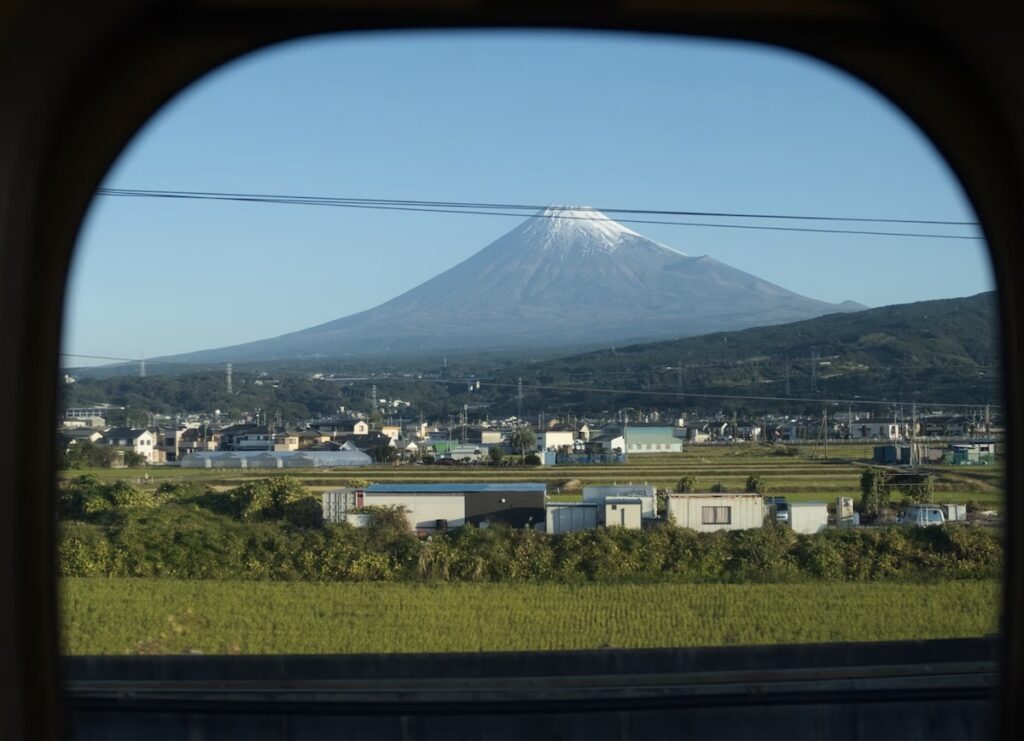
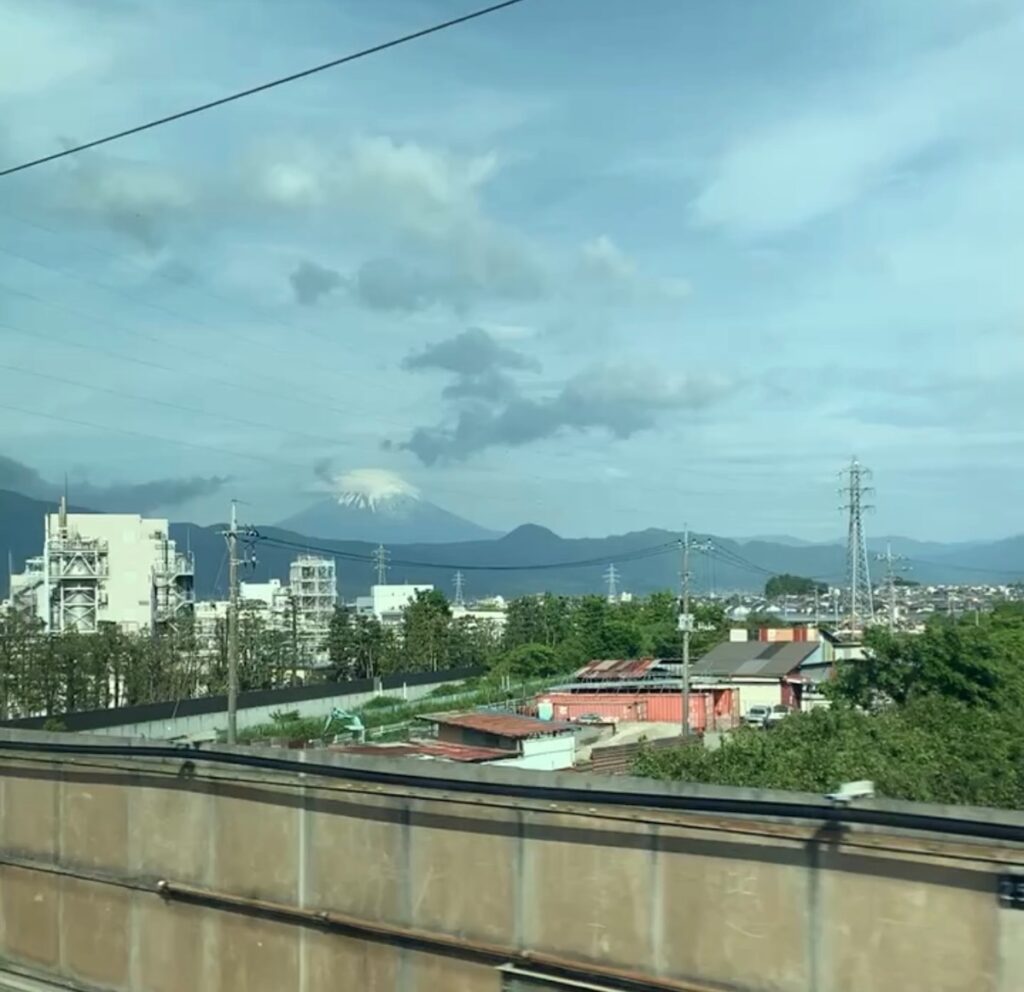
Mt Fuji is on the right-hand side of the train going from Tokyo to Kyoto, so book seat E in an ordinary car or seat D in the Green Car, and look out between Shin-Yokohama and Shin-Fuji. We saw it leaving Tokyo, and from the left-hand side on the way back from Osaka, and we were lucky with clear skies both times.
Can you do Kyoto as a day trip from Tokyo?
Kyoto is possible as a day trip from Tokyo, but with over four hours of the day spent on the train there and back, it leaves too little time to see Kyoto properly. I wouldn’t do it. Two nights is the minimum in my view, and my Kyoto in 2 days itinerary shows what you can fit in.
Can you eat on the shinkansen?
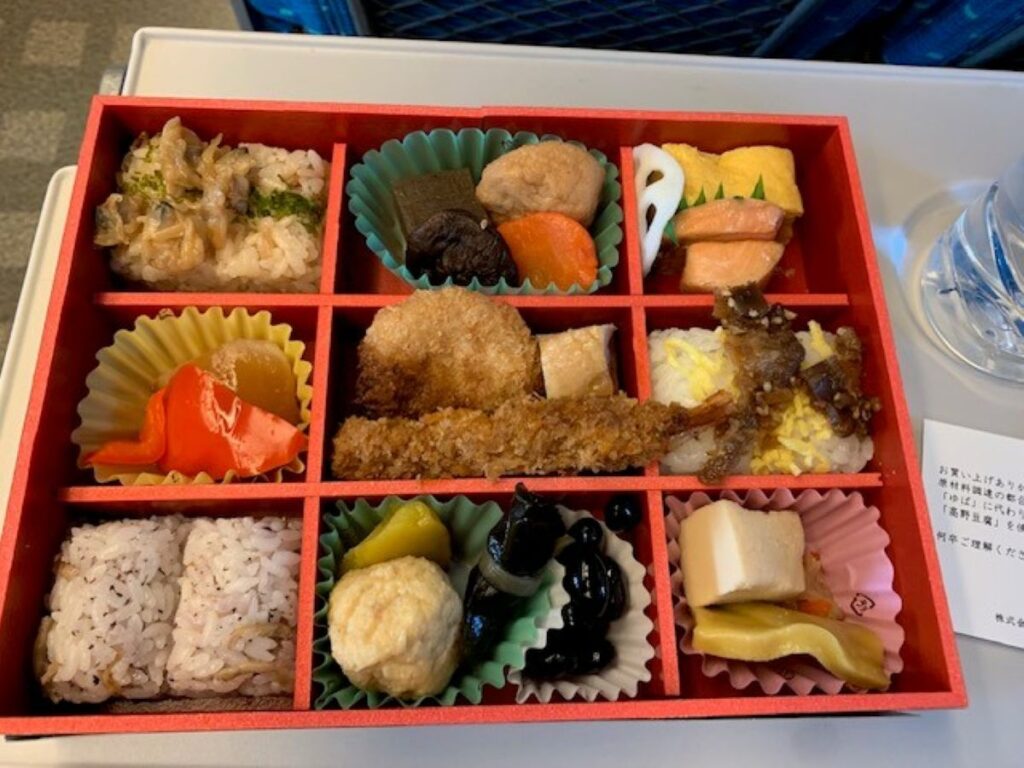
Yes, eating on the shinkansen is normal, and every big station sells ekiben, boxed meals made for the train, to take on board. Buying one is half the fun, and we loved choosing one each and seeing what was inside once we’d sat down. Eating on local trains is a different matter, so save it for the shinkansen.
Is there Wi-Fi on the shinkansen?
Yes, the Tokaido Shinkansen has free Wi-Fi on every Nozomi, Hikari and Kodama, with power sockets at the window seats in ordinary cars and at every seat in the Green Car. The connection drops in tunnels, so download anything you need before you board.


4 Comments
Comments are closed.