
Porto vs Lisbon is the first decision on a lot of people’s Portugal trips, and it comes up for a long weekend just as much as for a full week.
If you have to choose one, I recommend you pick Lisbon for a first visit. Pick Porto if you’d rather have a compact centre you can walk end to end and a slower pace.
I’ve been to Lisbon five times and Porto twice, done the two on one trip, and sent family and friends on the same plan since, so I can tell you what each city actually costs, which one is more walking, and the one queue in each that isn’t worth your time. And if you can stretch to a week, do both, the split I use is further down.
More of my Portugal guides to help plan your trip
- What to see and do in Porto: All the best activities mapped out for you on a downloadable map
- Where to stay in Porto: The best areas for first-time visitors, families and romantic getaways
- What to eat in Porto: A First-Timer’s practical food guide
- Where to stay in Lisbon: Pick your perfect area and hotel to enjoy Portugal’s capital to the fullest
- How many days to spend in Lisbon: A full itinerary for first timers to tick off all the best sights
- How to get from Lisbon to Porto: Train, bus, car or flight compared, with times and cost
Porto vs Lisbon at a glance
Everything in my comparison guide in one table. For the specific details and key things to know read further down the article.
| Porto | Lisbon | Winner | |
|---|---|---|---|
| Cost | Mid-range double about €215 a night | About €285 a night | Porto |
| Walking | Steep, but short distances and a funicular | Steep, bigger, more climbs and slippery cobbles | Porto, just |
| Sights | The city itself, the bridge, the cellars | Belém, the castle, Alfama, far more of everything | Lisbon |
| Food | Dishes you only get here, port, cheaper special dinners | More restaurants, more cuisines, easier without a plan | Lisbon, just |
| Day trips | Douro Valley, Braga and Guimarães | Sintra, Cascais, more choice | Lisbon for choice, Porto for the Douro |
| Nightlife | Great at weekends, quiet midweek | Bairro Alto to Pink Street to clubs at dawn | Lisbon |
| Weather | Cooler summers, wetter winters | Hotter summers, drier winters | Draw |
My personal favourite, and why it might not be yours
Lisbon is my favourite city in Europe. I’ve been loads of times and I keep going back for the same reasons: there is always more to see, the food is excellent, the people are friendly, and it is comparatively cheap for a big European capital. The standout for me is the miradouros (the viewpoints scattered across the hills) at sunset. I’ve done them from a bench, from a bar and from the castle walls on different trips, and they never get old.
That is my personal pick. The things I love about Lisbon are also the things that wear some people out: it is big, it is spread over hills, and there is always one more neighbourhood you haven’t got to. If you’d rather have a city you can finish, Porto will suit you better.
Disclaimer: This article may feature affiliate links. If you click these links, and choose to book with that hotel or company, I will earn a small commission at no extra cost to you. I appreciate the support that allows me to continue providing this information
Getting there and which city to fly into
Lisbon is Portugal’s long-haul hub. TAP is based there, more than 60 airlines fly in, and there are direct flights from across Europe, from both US coasts and from the Gulf.
Porto’s long-haul list is short, direct from Boston and New York and not much else, so if you are coming from outside Europe you will usually land in Lisbon. Within Europe both cities are well served by the low-cost airlines, and the flight times are close enough not to make a difference to your choice.
Airport to city centre in each
Both are simple. In Porto, the purple Metro Line E takes you from the airport into the centre in about half an hour for about €2.30 (£1.95), and I take it every time. In Lisbon the red metro line does the same job in about 20 minutes.
When I am tired or in a hurry I use Uber from both airports, which I find much better than the taxi rank.
Is Porto cheaper than Lisbon?
Yes, and you will notice it most on hotels and higher end eating out. But the gap is not so wide that it should decide which you pick on its own unless you are on a very tight budget.
Hotels
Averaged across the year, a mid-range double in Porto costs about €70 a night less than the same room in Lisbon. My own experience is exactly that, you get a nicer room in a better location in Porto for the same money, and Lisbon’s central areas like Chiado are notably more expensive.
Cost Porto about €215 (£185) per night, Lisbon about €285 (£240) per night
My first-timer area in each city and the hotels I’d actually book are in my where to stay in Porto and where to stay in Lisbon guides.
Eating out
Day to day there is not much in it. A set lunch, the prato do dia you’ll see chalked up outside tascas, is about €8 (£7) in Porto and about €10 (£8.50) in Lisbon. A normal sit-down dinner with a glass of wine is €20 to €30 (£17 to £26) a head in either city.
The difference is when you want a higher end, special occasion meal. Porto’s best restaurants are good value for what they are, I had a birthday dinner at Antiqvvm, a two-star, for about €200 a head, and you can do a tasting menu at Chama for €40 to €60. Lisbon’s top end is pricier.
| Porto | Lisbon | |
|---|---|---|
| Set lunch | about €8 (£7) | about €10 (£8.50) |
| Sit-down dinner with wine | €20–€30 (£17–£26) | €20–€30 (£17–£26) |
| Special dinner | Michelin rated from €150 (£128) | Michelin rated from €275 (£234) |
My Top Tip! Don’t eat at the first terrace you see with a view, you’ll pay higher prices for average food. Walk two streets back instead, or in Porto head for Bolhão or Cedofeita for dinner.
City passes and transport
Both cities sell a tourist pass that bundles public transport with free or discounted entry to sights.
The Lisboa Card costs €31 (£26) for 24 hours, €51 (£43) for 48 hours or €62 (£53) for 72 hours, and it includes the trains to Sintra and Cascais, which is where it starts to pay off.
The Porto.CARD is much cheaper, €7.50 for a day up to €18 for four, but it no longer includes transport (you buy an Andante day pass separately). Check the exact details before you plan to buy it.
I’ve never bought either. Porto is small enough that I walk it, and in Lisbon I’d only buy the card if you are doing Jerónimos, the castle and a Sintra day in the same 72 hours.
Getting around: hills, trams and tired legs
Both cities are hilly, and both have properly steep bits. The difference is how much walking you do between them, and the amount of cobbles you will find in Lisbon.
Walking Lisbon
Lisbon is built across seven hills and the neighbourhoods you want to see are spread between them. The cobbles are everywhere, they are very pretty, but they mean you need to keep your eyes about you. If you are unlucky enough to get rain, the streets are very slippery. If you or anyone in your group is unsteady on their feet, you want to consider this carefully and maybe book transport or a tuk tuk tour.
Walking Porto
Porto is compact but steep. There is one big hill, from the riverfront up to the old town, and you will go up and down it several times a day. I tend to walk it on my visits and for me that is one of the charms, but if you struggle with steps, take the Funicular dos Guindais from Ribeira up to Batalha and skip the worst climb. The metro stations with lifts are Trindade, São Bento and Jardim do Morro.

Metro, trams and travel cards explained
In Lisbon you can tap a contactless bank card at the metro gate and you’re done, no travel card needed. A single is €1.90 (£1.60) and a day ticket is €7.25 (£6.15). If you’d rather have a card, it’s called the navegante, €0.50 for the card itself, then you top it up at any machine.
In Porto my advice is that you get an Andante card from the machine at the station. Load single trips or a day pass. The machine asks how many zones you’re travelling through, so pick your destination and let it work that out. Contactless bank cards are being trialled at a few central stations and on Line E from the airport, but not across the network yet, so don’t rely on it.
Uber is cheap in both cities compared with most of Europe, and it’s what I fall back on when my legs have had enough.
My Top Tip! Wear proper shoes with grip in both cities, something you are comfortable doing a lot of steps in. Trainers are fine.
Things to see and do
Lisbon has more big-name sights and needs more days for them, which is why my Lisbon itinerary is built around three. Porto’s are closer together and you can cover the main ones in two, which is how my Porto itinerary is laid out.

What Lisbon has that Porto doesn’t
Belém, with the Tower and the Jerónimos Monastery, is a half day on its own. The stonework at Jerónimos is some of the most detailed I’ve seen anywhere.
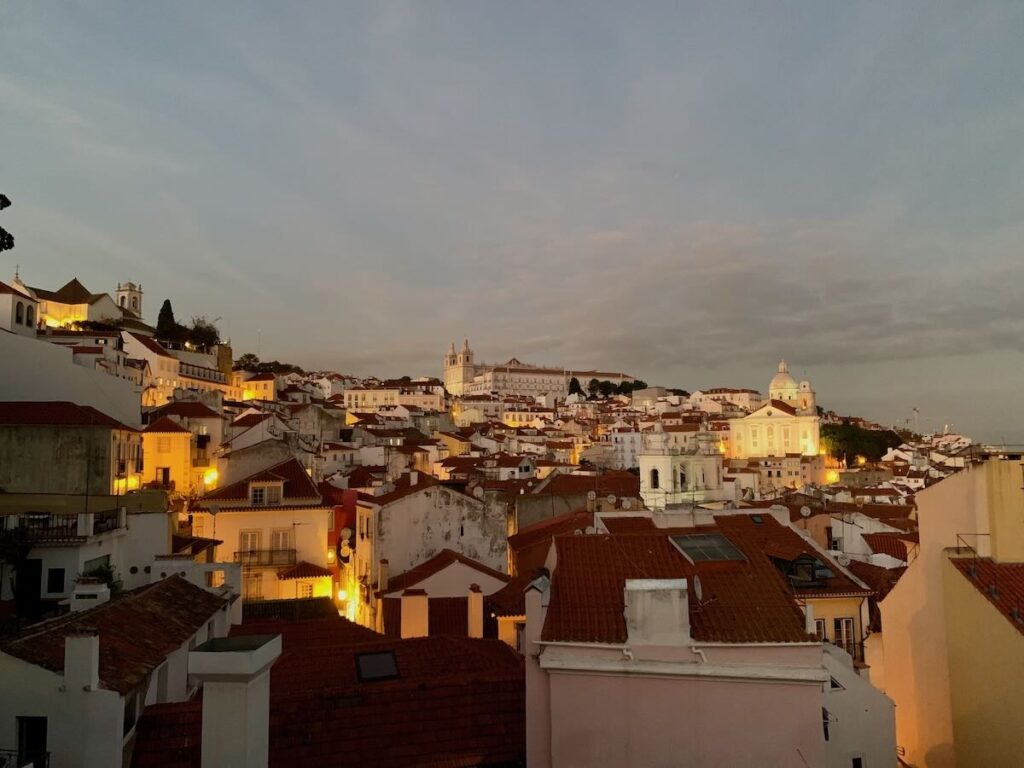
São Jorge Castle gives you the best views over the terracotta rooftops to the river. Alfama is the oldest neighbourhood, a tangle of narrow streets below the castle. Give it a couple of hours with no plan and finish at one of the miradouros for the view over the river.
Then there is Tram 28, the vintage yellow tram through the old neighbourhoods, which gets crowded but is worth one ride.
My Top Tip! Book Jerónimos ahead, the queues are long.
What Porto has that Lisbon doesn’t
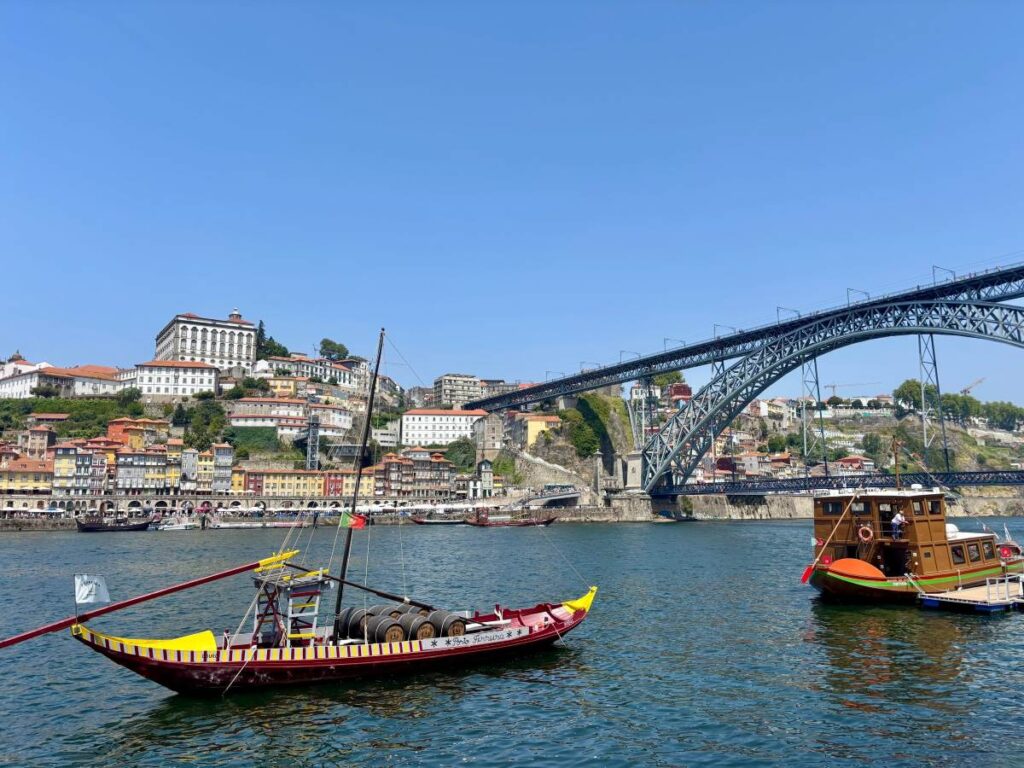
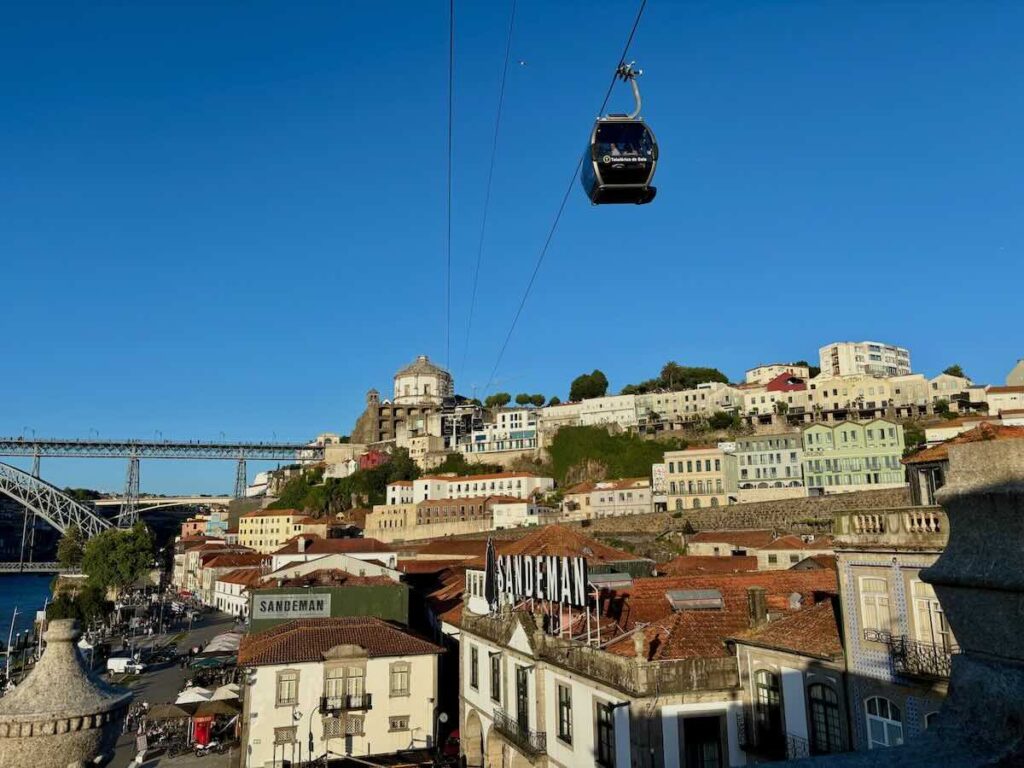
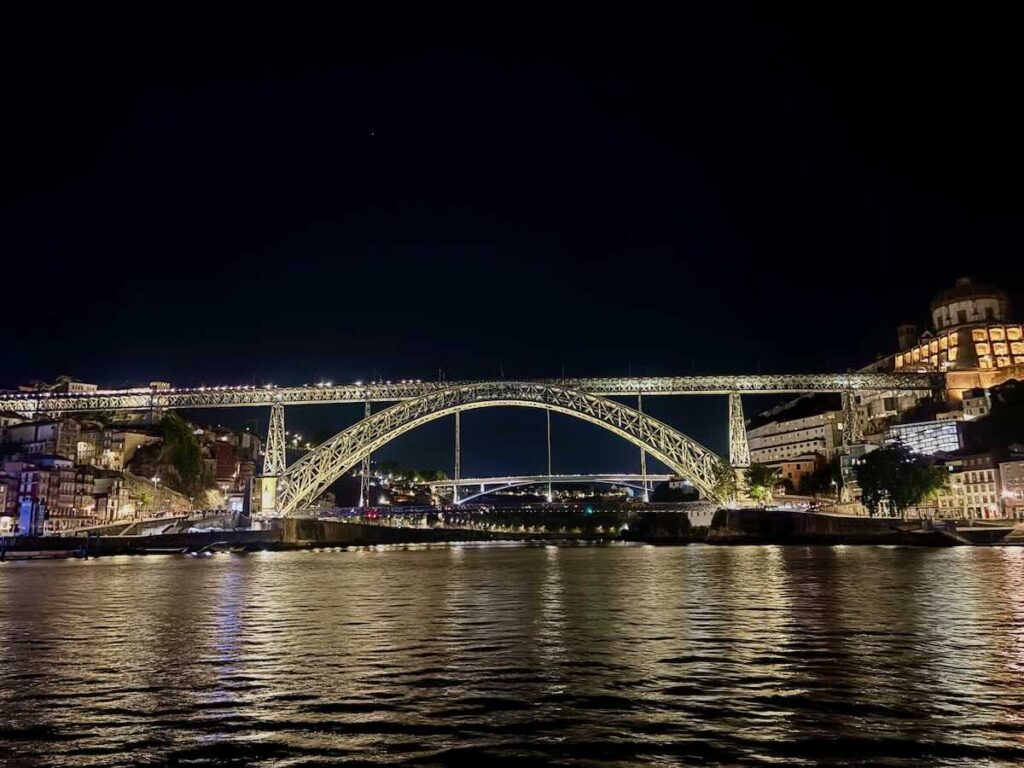
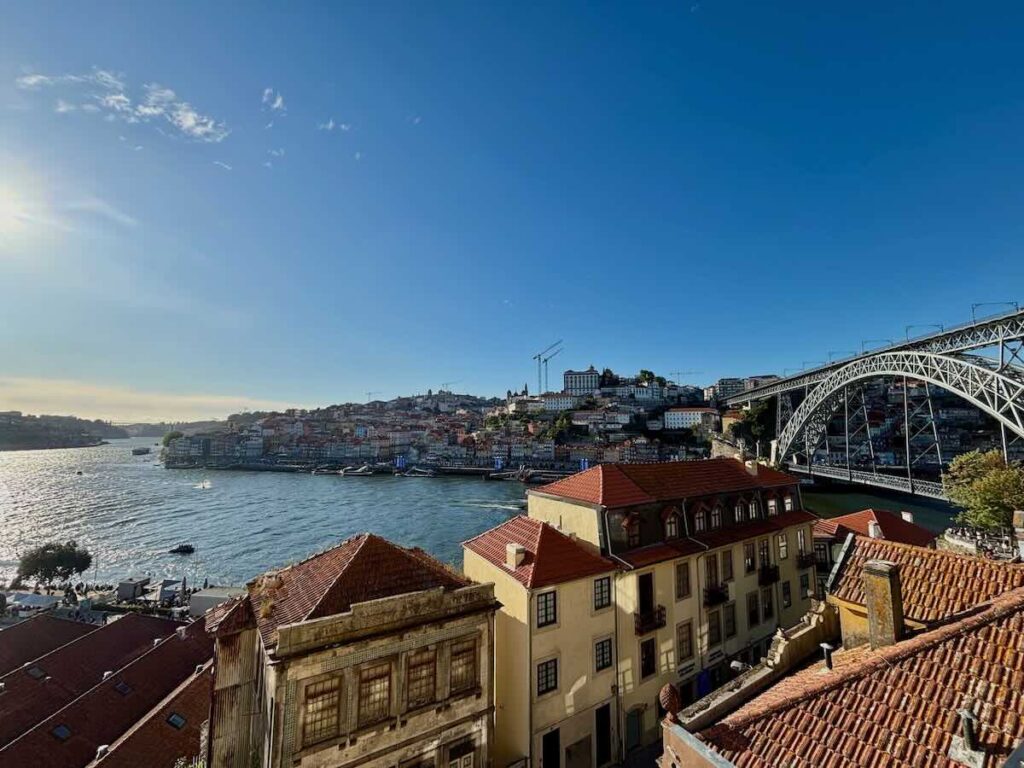
The river. Ribeira is the old riverfront under the Dom Luís I Bridge, and the upper deck of that bridge is my personal favourite view in Porto. Across the river in Vila Nova de Gaia are the port cellars.
The tiles at São Bento station and on the churches near Clérigos are the other thing Porto does better, and they are free.
Clérigos Tower is a tight climb but in my opinion well worth it for the view. Jardins do Palácio de Cristal is quieter than the bridge for river views, and there are peacocks, which surprised us.
What I’d skip in each city
In Lisbon it is the Santa Justa lift, the neo-Gothic lift up to Chiado. It is worth a look from the street, the wait to ride it isn’t, and the walk up the hill beside it takes less time than the queue.
In Porto I’d skip Livraria Lello, the ornate bookshop with the famous staircase, unless you can get an early slot. It is nice, but it is a quick look rather than a long browse, and it is not worth a queue. If you can’t book 09:00, spend the time at the Igreja do Carmo tile wall three minutes away instead, no queue and better photos.
Food and drink
Both cities are excellent for food. The difference is that Porto has dishes that are its own, and Lisbon has more of everything.

Eating in Porto
Porto’s food is its own. The francesinha, layers of meat and cheese in a beer-based sauce with chips, is Porto’s creation, and most people manage one per trip, my advice is to share it between two and order something lighter alongside.
The cachorrinho, a thin pressed hot dog you eat sliced at the bar with a beer, is the other Porto speciality. Even the bifana, a pork roll you get all over Portugal, is done differently here, slow-cooked in a garlicky sauce, and it was the local speciality that surprised me most. Absolutely delicious.
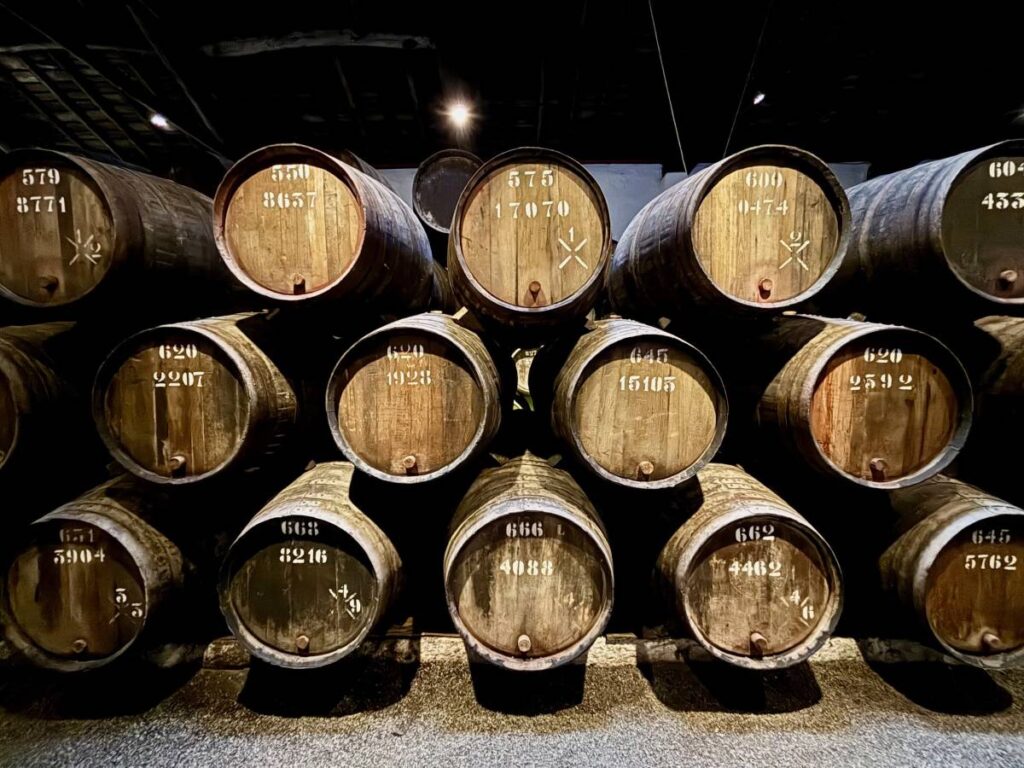
Then there is port. The cellars across the river in Gaia are a proper half day, with a guided tasting that explains the styles without getting technical. We enjoyed Taylor’s the most. Book ahead in peak season, the popular tours sell out.
I was very impressed by both the quality and the relative cost of Porto’s high-end restaurants. All my picks, by dish and budget, are in my where to eat in Porto guide.
Eating in Lisbon
Lisbon’s strength is both range and quality. There are more restaurants, more cuisines and more price points, and it is the easier city to walk into somewhere good without a plan. Seafood is the thing I’d tell you not to miss, and my picks are in my guide to the best seafood restaurants in Lisbon. It is also the city where I really recommend a food tour if you have time.
You get pastéis de nata all over Portugal, but Lisbon is where they’re best, and Pastéis de Belém, the bakery that has made them since 1837, is worth the queue, it moves quickly. If you’re there in June, the Santos Populares street parties are the time for grilled sardines.
Two things are Lisbon signatures. Ginjinha, a sour cherry liqueur served in small shot-sized glasses in tiny bars around the centre, and the quiosques, the bandstand-shaped kiosks in the squares where you sit outside with a cold beer or wine before dinner.

Porto and Lisbon day trips
Lisbon gives you more choice. In my opinion, Porto gives you the best single day out of the two cities.
Day trips from Lisbon
Sintra is the one to do. It’s a hill town of palaces 40 minutes from Rossio station on the suburban train, and it gets very busy, so I’d be on an early train and at Pena Palace, the colourful one on the top of the hill, before the coaches arrive. After that, Quinta da Regaleira and its spiral well, which is equal parts beautiful and slightly creepy. Cabo da Roca, the cliff at the westernmost point of Europe, is a short bus ride on from Sintra. Add it if you’ve got time left in the day and the light is good, skip it if you’re already flagging.
Time full day • Cost €2.55 (£2.15) each way by train or book a guided tour with transport
Cascais is a nice beach day. It’s a seaside town 40 minutes from Cais do Sodré, at the end of the line, with beaches in the town itself, and it’s the easy half day if you’d rather have sea than palaces.
Time 40 mins each way, half a day • Cost €2.55 (£2.15) each way by train
Day trips from Porto
If you only do one day trip from Porto, make it the Douro Valley. It’s the wine region upriver, and you have two ways to do it. A guided tour means you can taste without worrying about driving, my personal favourite option! The train from São Bento or Campanhã is cheaper and the river views from the window are better, but you’ll do fewer tastings.
Time 9–10 hrs guided, 8–10 hrs by train • Cost typical €90–€130 (£77–£111) guided tour, about €20–€22 (£17–£19) by train
If wine isn’t your thing, Braga and Guimarães are two historic towns about an hour away by train, and you can pair them in one day.
Can you do Porto as a day trip from Lisbon?
You can, but don’t. The train is about three hours each way, so even on the fastest service you’d spend six hours travelling for four or five in Porto, and that’s before you’ve found your way from the station. Give Porto at least a couple of nights. If you only have a day spare in Lisbon, spend it on Sintra instead.
Nightlife and evenings
Lisbon has more of it, in more places, on more nights. Porto has one very good area that comes alive at the weekend.
Lisbon after dark
Lisbon’s nightlife is spread across the city. Bairro Alto is where the evening starts, dozens of small bars with the crowd standing in the streets between them. Cais do Sodré and Pink Street (Rua Nova do Carvalho, painted pink) are where it moves to later, and the clubs there go until dawn.
The famous club, Lux Frágil, is somewhere else again, on the riverfront by Santa Apolónia station, and it has a strict door, so dress up.
Timing your night out catches people out: locals don’t head out until after 23:00 and the clubs don’t fill until after 01:00, so if you eat at 19:00 and go straight on you’ll be standing in an empty bar. Eat late, at about 21:00, then go.
One of my favourite Lisbon nights was drinking on a rooftop that turned out to be the top floor of a multi-storey car park in Bairro Alto. I loved the randomness of it. It is called Park, it is relaxed, and the sunset view is a good reason to go. The full list is in my guide to the best bars and clubs in Lisbon.

Porto after dark
Porto’s nightlife is concentrated on two streets, Galerias de Paris and Rua Cândido dos Reis, a couple of minutes from Aliados. From Thursday to Saturday it’s a proper night out, bars from early evening and clubs like Plano B from around midnight until 04:00 or later. Midweek, a lot of it is shut, and the city reverts to wine bars and riverside terraces.
On the nights you’re not going out, plan for sunset. Musa das Virtudes brews its own beer, has a good choice, and the street outside fills with people for the view across the river. If you want the view without the bar prices, the small shops nearby sell cold drinks.
When to go
May, June, September and October are the months I advise for both cities: warm enough, fewer crowds, and cheaper than peak summer. Porto is a few degrees cooler in high summer and has a few more rainy days in winter, and the table shows how small that gap is. If heat bothers you, that is a point for Porto in July and August. Otherwise, the month matters more than the city.
| Month | Lisbon high | Lisbon rainy days | Porto high | Porto rainy days |
|---|---|---|---|---|
| January | about 15°C | 9 | about 14°C | 12 |
| April | about 20°C | 7 | about 18°C | 10 |
| July | about 28°C | 5 | about 24°C | 3 |
| October | about 18°C | 8 | about 20°C | 11 |
Can you do Lisbon and Porto in one trip? How to split your time
Yes, and if you have a week it is what I’d tell you to do. The two cities are three hours apart by a train that goes city centre to city centre, they are different enough that you won’t feel you’re repeating yourself, and between them they cover everything a first trip to Portugal should: a capital with big sights and big nights, a river city with port on the doorstep, and a day trip from each.
It is the trip I’ve done, and the one I send family and friends on.
How many nights in each
I recommend roughly 60/40 in favour of Lisbon. On a seven-night trip that is four nights in Lisbon and three in Porto, which gives you a Sintra day from Lisbon and a Douro day from Porto. I’ve done that split and I swear by it, and everyone I’ve sent on it, older and younger, has come back happy. My day-by-day plans for each city are in how many days in Porto and how many days in Lisbon.
With five nights, do three in Lisbon and two in Porto and drop the day trips. With four or fewer, pick one city and don’t do both.
Which city first
I’d personally do Lisbon first, but the order doesn’t matter much. Book an open-jaw flight (into one city, home from the other) and let flight prices and hotel availability decide which way round. The mistake is booking a return into Lisbon, then spending a day of your holiday going back the way you came. Search multi-city on your airline instead and fly home from the city you finish in.
Lisbon to Porto by train
The Alfa Pendular, Portugal’s fast train, does it in about three hours from Santa Apolónia or Oriente in Lisbon to Campanhã in Porto. Seats are reserved, so book on cp.pt and search for promo fares before you pay full price, they’re often available. Grab a seat on the right as you leave Lisbon, the estuary views are worth it. Everything else about the journey, including the bus and driving options, is in my Lisbon to Porto guide.
Where to stay in each city
In Lisbon, Baixa or Chiado: Baixa is the flat grid at the bottom of the hills, Chiado the smarter streets just above it, and both put everything within walking distance. In Porto, Baixa or Aliados: flatter than the riverfront, central and well priced, and simple for early starts. Hotels for every budget are in my where to stay in Lisbon and where to stay in Porto guides.
Which city should you pick?
Everything above, boiled down to who each city suits. If you see yourself in one list more than the other, that’s your answer. If you see yourself in both, do both.
Pick Porto if
- You want a smaller city you can walk end to end, with a slower pace
- Port, wine and a Douro day are the point of the trip
- Your budget is tight: the hotels are where you’ll feel the saving
- Your big night out is a Friday or Saturday and the rest of the week you’d rather have a sunset and a drink
Pick Lisbon if
- It’s your first trip to Portugal and you want the most to see and do
- You want a proper night out on any night of the week
- You want a beach day and a palace day without changing base
- You’d rather walk into somewhere good to eat than plan it
Porto vs Lisbon FAQs
Should I fly into Lisbon or Porto?
Fly into Lisbon if you’re coming from outside Europe, because it’s the long-haul hub and Porto has very few direct intercontinental flights. From the UK or Europe, both are well served, so fly into whichever is cheaper for your dates and, if you’re doing both cities, fly home from the other one.
Can I land in Lisbon and go straight to Porto?
You can, but it makes for a long day: the train is about three hours once you’re out of the airport, and you’ll have been travelling since early morning. If you want to start in Porto, fly into Porto. If you’re doing both, start in whichever city you land in and take the train once, not twice.
Can you do Lisbon and Porto in five days?
Yes: three nights in Lisbon and two in Porto, with no day trips. You’ll see both cities properly but you won’t get to Sintra or the Douro. With four nights or fewer, pick one city.
Is Porto or Lisbon better for a long weekend?
Either, if you have three nights. Lisbon needs all three to do it justice; Porto is comfortable in three and still works in two, so if your weekend is only two nights, make it Porto.
How long does it take to get from Lisbon to Porto?
About three hours by train, city centre to city centre, on the Alfa Pendular. Driving takes about the same but adds tolls, and flying between them isn’t worth it once you count the airport time at each end.



7 Comments
Comments are closed.