
Ask around and most people will tell you Seville. I’d tell you Granada, and I was more taken with it than I expected to be: the Alhambra, the free tapas with every drink, the mountains on the doorstep. Both cities are excellent though, so my guide gives you a straight pick and the differences that matter, so you can choose for your own trip, based on what’s important to you.
I’ve spent time in both and send friends to both, so I’ll also flag the one booking, the Alhambra, that can decide your trip before you’ve even left home.
More of my Spain guides to help plan your trip
- What to do in Granada: A full guide to the best sights, restaurants and view points
- Alhambra Palace Granada Guide: An easy to follow route, tips and photo spots
- Where to stay in Granada: Advice on the best areas to stay, some great hotels and why
- How many days in Seville: A first timers guide to the best of Seville
- Where to stay in Seville: The best areas and hotels to make the most of your trip
- Barcelona or Madrid: My verdict on Spain’s two biggest cities
- 2 week Spain itinerary from Barcelona: A full road or train trip from Barcelona
- Things to do in San Sebastián: What’s worth your time and what to skip in Spain’s food capital
Seville or Granada: the short answer

Most first-timers fall into one of three camps.
Pick Seville if you want more to see and the easiest city to reach. It’s bigger, flat and walkable, with the Real Alcázar, the Cathedral and Plaza de España all within a short stroll. For a standalone city break, it’s the simpler choice.
Pick Granada if you want character and a bit of drama. You get the Alhambra, a dense Moorish old town, free tapas with every drink and the Sierra Nevada on the doorstep for a hike. It’s my personal pick. I found it more charming, I liked the feel of the place, and the free-tapas culture took me straight back to the Spain I first fell for years ago.
Do both if you have six days or more in the region. They’re too far apart to treat one as a base for the other, so you’d stay a few nights in each. More on that below.
The bit people get wrong is picking on reputation alone. A better plan is to match the city to what you actually want from the trip, using the table and sections below.
Disclaimer: This article may feature affiliate links. If you click these links, and choose to book with that hotel or company, I will earn a small commission at no extra cost to you. I appreciate the support that allows me to continue providing this information
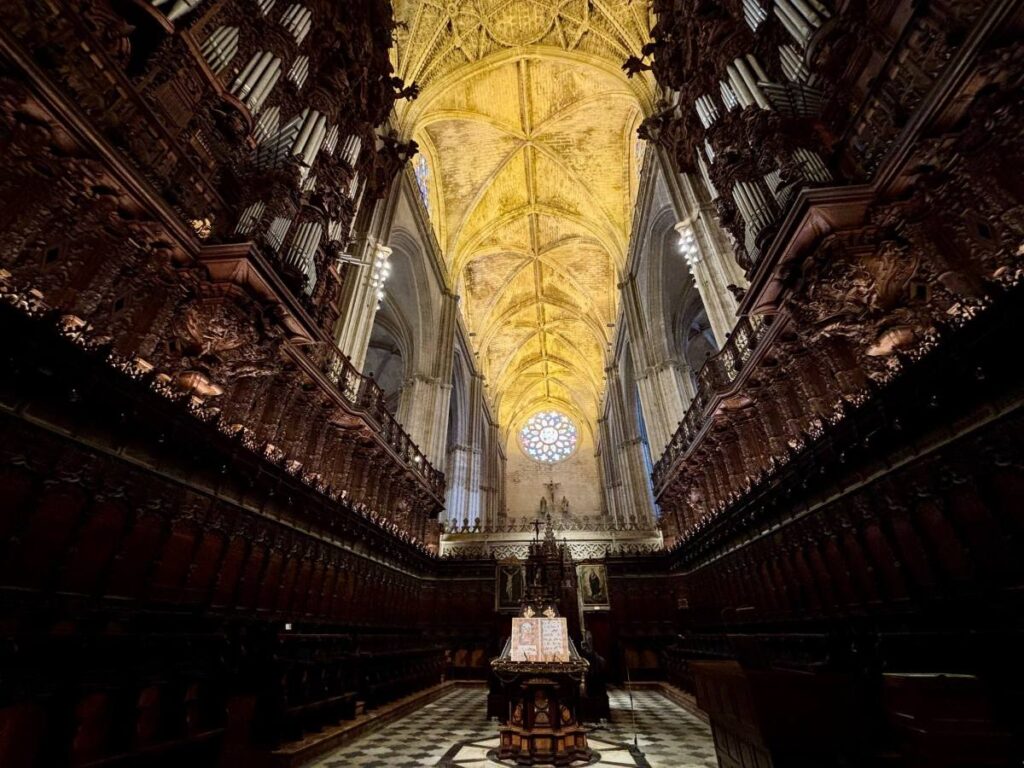
Seville and Granada at a glance
| Seville | Granada | |
|---|---|---|
| Best for | More sights, easier to get to | The Alhambra, old-town character, mountains |
| Headline sight | Real Alcázar and Cathedral | The Alhambra |
| Main sight entry | Alcázar about €15.50 (£13.50) | Alhambra about €22 (£19) |
| Size and pace | Bigger, flat, walkable | Smaller, hilly, compact |
| Food | High quality, lots of options | Free plate with each drink, classic |
| Days I’d give it | 3 minimum | 2 minimum |
| Reaching it from the UK | Direct flights | Usually a connection |
| Best season | Spring and autumn; summer very hot | Spring and autumn; cooler, higher |
How the two cities differ
Nearly every choice below comes back to one difference: size and pace.
Seville is roughly two to three times the size of Granada. It’s flat, easy to walk, and there’s simply more to fill your days: palaces, a giant cathedral, riverside walks, a spring fair and a varied tapas scene. If you like the feeling of a proper city with plenty on, Seville delivers it.
Granada is smaller, hillier and more compact, with a whitewashed old town climbing the slopes opposite the Alhambra and the mountains behind. It rewards wandering more than ticking off a long list. For me that was the appeal, but it’s a different kind of trip.
Watch out for assuming the smaller city means less worth doing. Judge Granada on the Alhambra, its old quarter and the hikes nearby, not on its size.
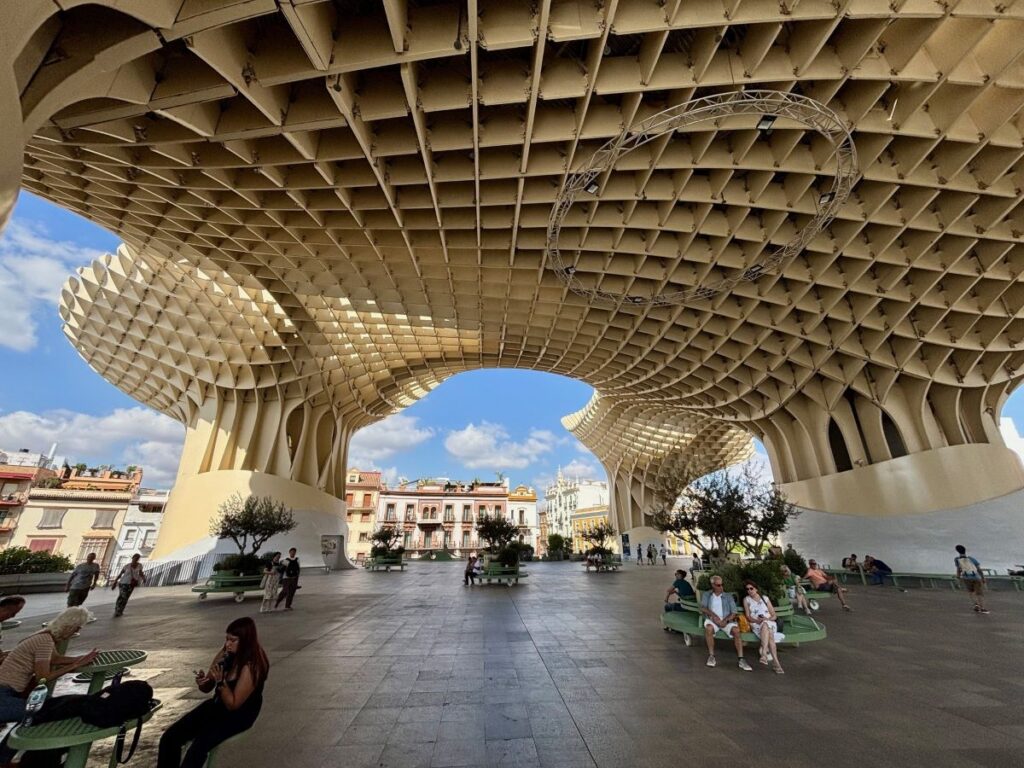
The big sights that might sway you
On the sights, the two cities have a couple of Spain’s headline attractions.
The Alhambra, and booking it ahead
The Alhambra is a hilltop complex of Nasrid palaces, a fortress and gardens above Granada, and it’s the reason most people come. It’s my favourite of the big-name sights in Spain, and I was far more impressed than I expected to be.
Seeing it change colour as the sun dropped over the Generalife gardens is a memory that has stuck with me: I just stood and watched the light shift, and it felt a little surreal. Great for photos, but better still for simply taking it in. I’ve mapped out the exact route I followed, with photo stops and the booking detail, in my full Alhambra guide.
The catch is the tickets. They sell out, often months ahead, and you cannot rely on buying on the day.
My Top Tip! Book your Alhambra tickets the moment your dates are fixed, ideally three to four months out for peak season. We didn’t realise this on our first visit and couldn’t get standard day tickets. The workaround that saved us was to book a guided tour (we used GetYourGuide who had a range of tours), because tour companies hold timed slots sold as part of a package.
It cost a bit more than the roughly €22 entry, but we got the slot we wanted and a guide who brought the history to life. Even if you usually avoid tours, it’s a genuine plan B, and I break the whole sold-out workaround down step by step in my Alhambra guide.
Cost about €22 (£19)

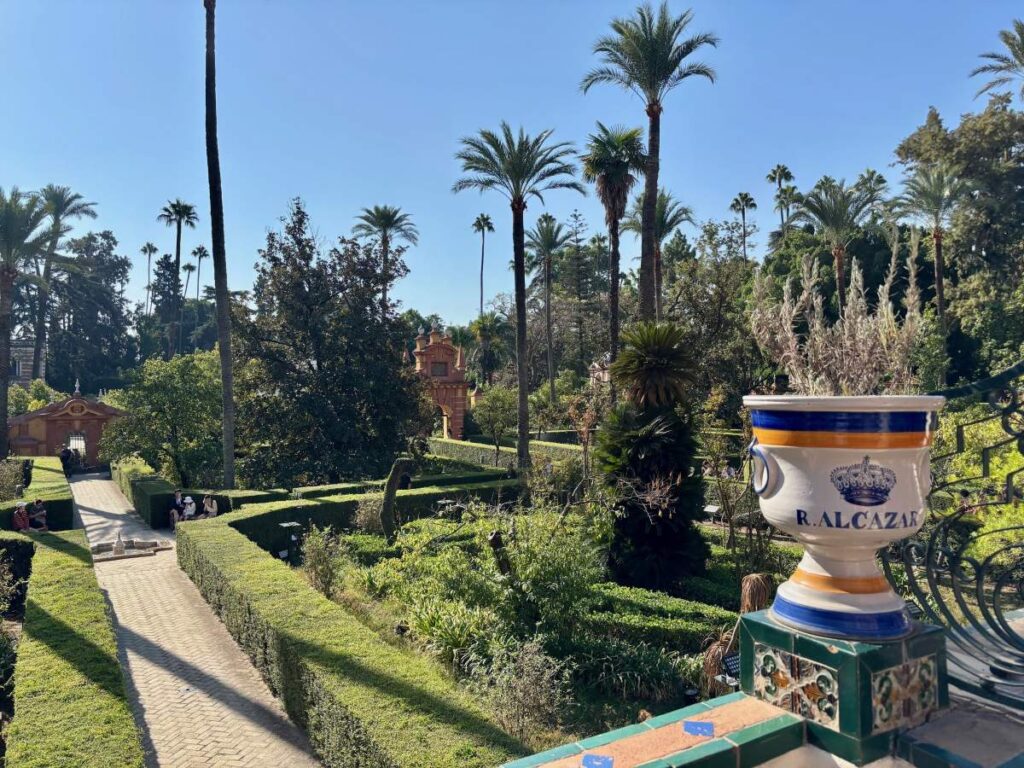
The Real Alcázar and Seville Cathedral
Seville has more sights, but none quite as standalone fantastic as the Alhambra. The Real Alcázar is a beautiful royal palace with layered Islamic and later architecture, and the Cathedral next door is one of the largest Gothic churches anywhere, with the Giralda tower climbed by ramp for skyline views (about €20 / £17.50 for the two together).
Both are well worth your time. For me though, the Alcázar is good rather than great next to the Alhambra. It isn’t close in my opinion.
Alcazar tickets are as hard to get in peak season as the Alhambra. You’ll end up queuing before the ticket office opens, or missing it. I advise you book your tickets online as soon as you plan your trip, and build your day around it.
Cost about €15.50 (£13.50)
Food and tapas
If eating is a big part of your trip, this section might settle the debate for you.
Granada’s free tapas
Granada is one of the last big tourist places in Spain where a free plate still comes with almost every drink, and it’s broadly city-wide, not one or two bars. Order a drink, get some food, move on. I loved it. The tapas-crawl culture, often with live music, felt more traditional and had more of a party feel, and it was superb value. It’s how I most enjoy eating in Spain.
My Top Tip! If you book a big set dinner every night in Granada, you’ll miss the point. I advise you embrace the culture, order drinks and drift between busy local bars, letting your free plates stack up, until you’ve had enough. If something caught our eye, we ordered it on top, and several bars even let you pick your free plates.
Cost about €18 per person for an evening of drinks with free tapas
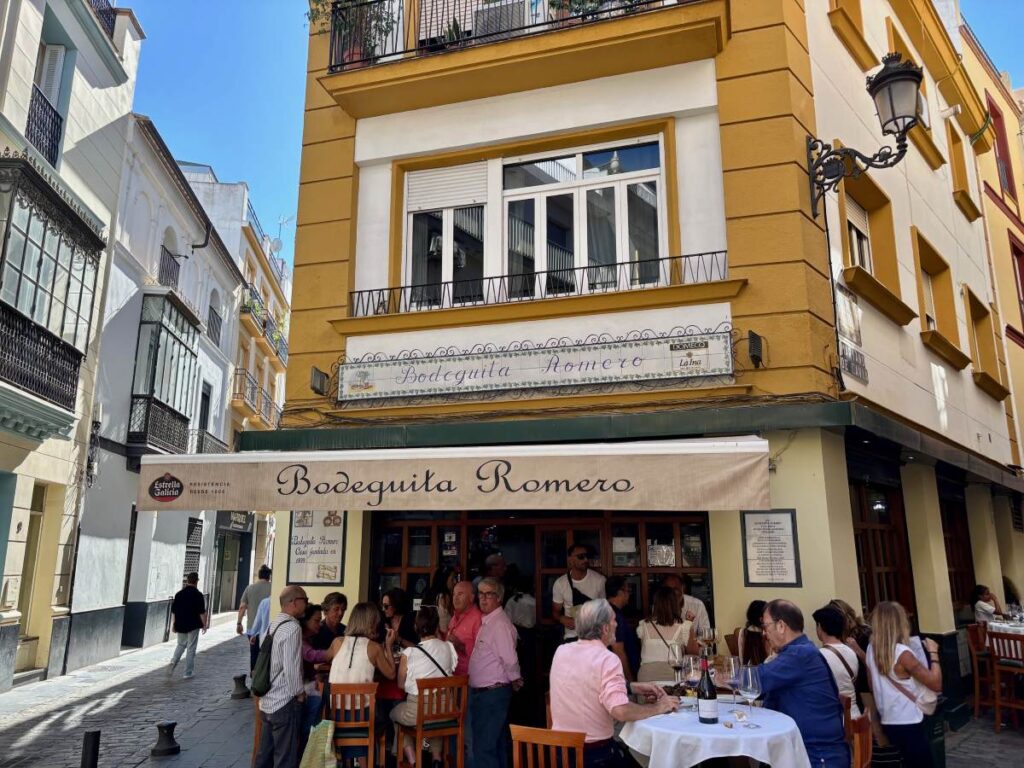
Seville’s pay-per-plate scene
Seville is a bigger, pay-per-plate scene with more range, and it’s home to some of my favourite tapas bars in all of Spain. You have to pick the right places, but the food in a couple of them genuinely blew me away. I won’t relist my picks here: they’re in my Seville and Granada guides, linked below, so this doesn’t become a restaurant list.
Cost about €28 per person for a tapas dinner
For the specific bars and dishes, see my full guides on how many days in Seville and what to do in Granada.
How many days in each, and can you do both
This is what I say to all my friends I send: give Granada two days minimum, and Seville three. Two days in Granada covers the Alhambra properly, the old town and a couple of tapas evenings. Seville has more to see, so three days lets you take in the Alcázar, Cathedral, Plaza de España and Triana without rushing.
If you can spare more, three to four nights in each is the sweet spot, and it gives you time for a hike in Granada.
Doing both: if you have six days or more in the region, do both. They’re not close enough to commute, so plan to stay a few nights in each rather than day-tripping. On reaching them, Seville is the easier standalone trip with direct flights from the UK, while Granada’s airport is small and usually needs a connection, so it works best slotted into a wider Spain itinerary.

Getting between Seville and Granada
The train is the way to do it. Direct services run several times a day, take about 2.5 to 3 hours, and fares are cheap if you book ahead. It drops you near both city centres, so you skip the driving and parking entirely, which is a win.
Time about 2.5–3 hours • Cost typical about €30 (£26) one way
My Top Tip! The train is the easy option here. Renting a car just to move between the two adds hassle at both ends for no real gain.
Is a day trip between them worth it
It’s possible but for me, no, and I’d advise everyone against it. It’s a long way, about five to six hours on trains for the round trip, which leaves you far too rushed at the other end. You’d have no real chance to see something like the Alhambra properly.

Where to base yourself in each
I have written dedicated guides on where to stay in both, with the pros and cons of each area and the best hotels for all budgets. Those are linked at the bottom. Here’s the whistle-stop version.’
Seville
For a first trip, base yourself in Centro. It’s central and walkable to everything, and I stayed four nights at Hotel Ateneo there and found the whole city easy from it. If eating well matters more than late nights, El Arenal by the river is a strong alternative, and Barrio Santa Cruz suits you if the classic old-town look is what you’re mainly after.
Cost about €160 (£136) a night for a mid-range central room
Granada
Centro again is my pick for first-timers: flat, convenient and easy after a long day. I based myself at Room Mate Leo in Centro and it worked well for exactly that. Realejo is great if food and evenings are your priority, and the Albaicín gives you the old-quarter atmosphere and viewpoints, with the trade-off of many hills and stairs.
Cost about €120 (£105) a night for a mid-range central room
My Top Tip! Booking a hotel that only says ‘central’ can land you on the edge of town. Check the walk time to the Cathedral (Seville) or Plaza Nueva (Granada) before you book.
Full detail on the best areas to stay in where to stay in Seville and where to stay in Granada.
Best time to visit
Season can genuinely tip this decision. Seville gets very hot in high summer, often above 40C in July and August, so spring and early autumn are the sweet spot. Seville in July and August is punishing, so if summer is your only window, treat air-con and a pool as essentials, not extras.
Granada sits higher and tends to be a little cooler, with cold winters and the chance of snow up near the Sierra Nevada. For me, late spring or September to October is the pick for either city, and in Granada that timing gives you the hikes at their best.
FAQs about Seville and Granada
If you’re flying from the UK, start in Seville, since it has direct flights while Granada usually needs a connection. See Seville, then take the train on to Granada. If you’d rather land closer to Granada, fly into Malaga instead and work back towards Seville.
Seville is at its most crowded and pricey around Semana Santa (Holy Week) and the Feria de Abril, both in spring, when hotels book out months ahead. Spring and autumn are peak season for both cities. For fewer crowds and lower prices, aim for the shoulder weeks outside the big festival dates.
Granada, on the whole. The clearest difference is accommodation, which tends to be a little lower than Seville for a similar central room. Eating and drinking is a touch cheaper too, helped by the free tapas that come with drinks. The one cost that goes the other way is the Alhambra, the most expensive single attraction in Andalusia, so factor that in. For most trips, Granada works out the more affordable of the two.
Both are safe cities for visitors, with busy, well-lit central areas into the evening. The usual advice applies: watch your bag or phone in crowds, at packed viewpoints and on nightlife streets at weekends. Neither should give a first-timer any real concern.
No, and I wouldn’t hire one for either. Both centres are compact, largely pedestrian and awkward for cars, so you’ll walk to nearly everything. Take the train between the two, and use taxis or the airport bus for arrivals.
Both are strong, but different. Seville is known for polished tablao shows in intimate venues, the classic first-timer experience. Granada does it in the Sacromonte caves, rougher and more atmospheric, often with the Alhambra across the valley. For a first show pick Seville, for the setting pick Granada.
Granada, for most couples. The Alhambra, the Albaicín viewpoints and the mountain backdrop give it a more romantic feel, and evenings out cost a little less. Seville is livelier and grander, so it suits couples who want more energy and a bigger night out.
Seville, on balance. It’s flat and walkable with more child-friendly sights, easy river walks and Plaza de España to run around. Granada is doable with kids, but the hills and steps in the old quarter are the main thing families find tiring, so base yourself in flat, central Centro if you go.
My verdict
If you only take one thing from this: both cities are excellent, and you can’t make a bad choice. For a first trip I’d point you to Granada for the Alhambra, the free tapas and the character, and to Seville if you want more to see and the easiest trip to organise. I wouldn’t skip a single thing I did in either.
The one thing I wish I’d known before I went is how far ahead you need to book the Alhambra and the Real Alcázar. Sort those first, and the rest of the trip falls into place.
Still weighing up the rest of your Spain trip? My Barcelona or Madrid comparison sorts the big two the same way.





5 Comments
Comments are closed.