
A sidrería in San Sebastián is a Basque cider house: a working cider farm just outside the city, usually serving a fixed menu of cod and charcoal-grilled steak, with unlimited cider poured straight from the barrel. Most sit about six kilometres out in Astigarraga and a meal costs about €45 (£38).
We went to Alorrenea at the end of July, strongly encouraged into it by two sets of friends who live there, and it was the best thing we did that wasn’t a pintxo bar. Below is what actually happens at one, what it costs, how to get out there and back, and the thing that changes the whole afternoon: when you go.
More of my Spain guides to help plan your trip
- Where to eat pintxos in San Sebastián: 17 bars I ate at and the best things to order in each
- Things to do in San Sebastián: What’s worth your time and what to skip in Spain’s food capital
- Where to stay in San Sebastián: The three areas worth booking and 12 excellent hotels
- How to spend 2 days in San Sebastián: My exact route, day by day, and what to cut if it rains
- Bilbao Airport to San Sebastián: The best option, cost and how to book
- Is San Sebastián worth visiting?: My honest verdict and who should go elsewhere
- What to do in Madrid: A guide to the best things to see and do all plotted on a free map
- What to do in Granada: A full guide to the best sights, restaurants and view points
What is a Basque cider house?
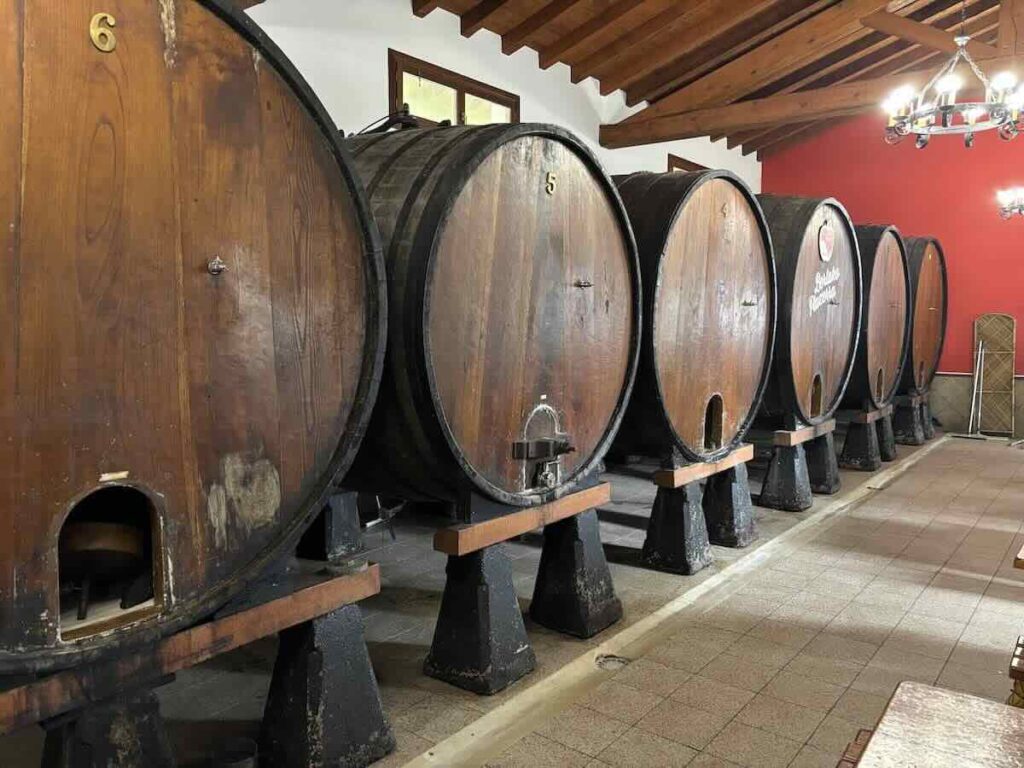
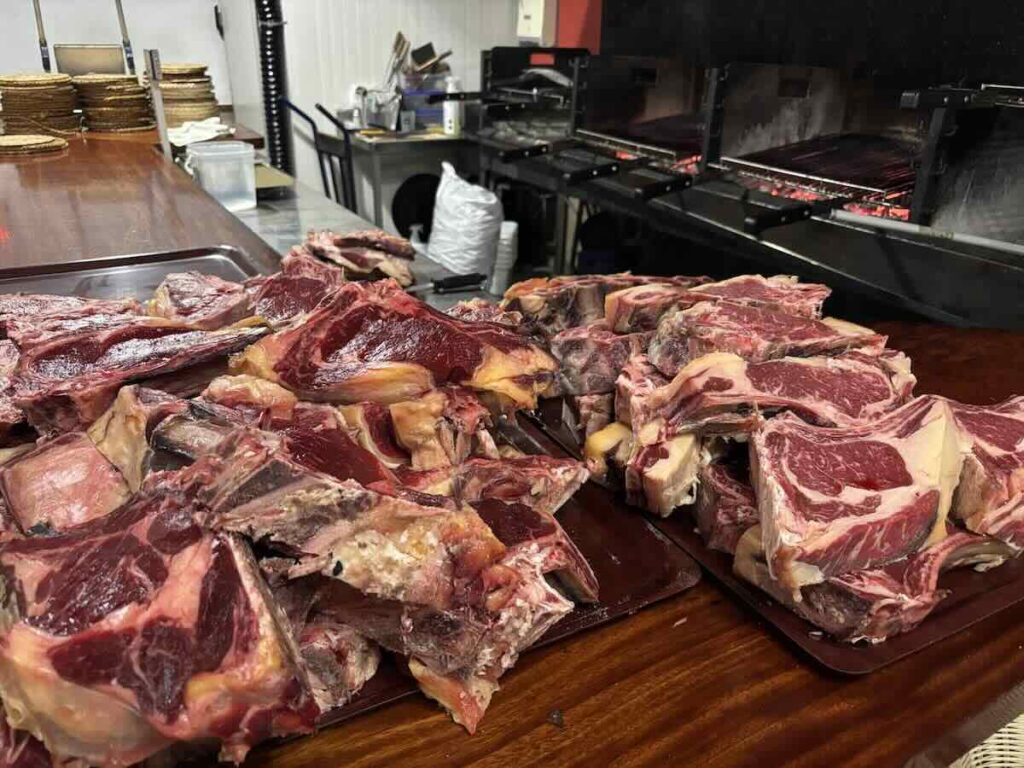
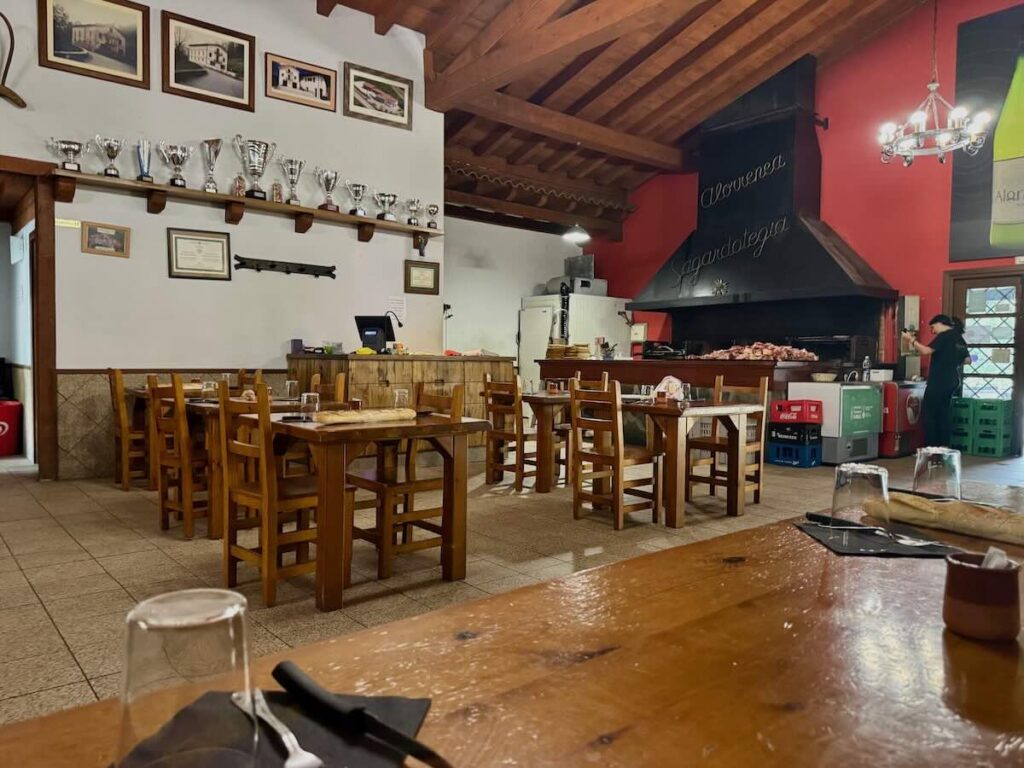
A sidrería, or sagardotegi in Basque, is a farm that makes its own cider and serves food alongside it. Walk into one and you’re in a big rustic room with enormous wooden barrels along one wall, an open coal grill in the corner, and long shared tables with benches, plus a handful of smaller tables. At Alorrenea there were six barrels lined up across the back and a pile of txuleta sitting ready by the grill as we came in, which is a very effective way to make a room hungry.
You don’t get a wine list. In season there’s a fixed menu, the cider is included and unlimited, and you sit wherever there’s space.
A few words worth knowing. Sidra is cider in Spanish, sagardoa in Basque. A kupela is one of those big barrels. Txotx (say it roughly as ‘choch’) is the call that goes up when a barrel is opened.
One thing to sort out before anything else: when you’re going. Txotx season is roughly mid-January to late April, which is when the barrels open and the houses fill with locals. Outside that, around half stay open with a different offer, much easier to get a booking.
The tradition came out of practicality. Locals and gastronomic clubs would go out to the farms to buy cider and bring their own food to cook while they tasted it. Eventually the farms worked out they could do the cooking themselves.
The bit people get wrong is treating a sidrería like a bar they can wander into, you need to book in advance, more on that below.
Where the cider houses actually are
Almost none of the San Sebastián cider houses are in San Sebastián. The main cluster is in Astigarraga and Hernani, small towns in the hills to the south, with Astigarraga holding around twenty of them in a village of under 6,000 people. It’s the cider capital of the Basque Country and it’s about six kilometres from the city centre.
How long you’ll be there
We sat down at 13:30 and left around 16:00. That’s two and a half hours and it felt about right, though we only moved because we had plans back in the city. Several tables of locals looked settled in for a much longer afternoon and nobody was hurrying them. Allow three to four hours if you’re not clock-watching.
Disclaimer: This article may feature affiliate links. If you click these links, and choose to book with that hotel or company, I will earn a small commission at no extra cost to you. I appreciate the support that allows me to continue providing this information.
What actually happens when they shout txotx
In season, this is the whole point of the place. Someone opens a barrel, calls txotx, and everyone gets up with their glass to catch the stream. You don’t get served, you go and fetch it, and you do that repeatedly across the meal, it’s theatre and practicality all rolled into one!
We went at the end of July, so the barrels weren’t open and the cider came to our table in bottles. The pour is the same either way, and our friends, one couple of whom have lived there twelve years, taught us properly. What we didn’t get was the whole room getting up at once, which is a real difference and I’ve covered it below.
How to pour cider at the barrel
The technique is the same whether it’s coming from a kupela or a bottle. It exists because natural Basque cider is flat, and the long pour aerates it.
- Hold your glass low, close to knee height, and tilt it.
- Let the cider hit the inside edge of the glass rather than the bottom.
- Take two or three fingers’ worth, drink it straight away, then step aside for the next person.
Watch out for filling your glass properly full, which is everyone’s instinct and completely wrong here. Instead, take the small pour and go back as often as you like, because it goes flat within a minute or two and a full glass just means warm, dead cider.
Nobody expects you to be good at this. You’ll miss the stream, which is what the buckets and the wet floors are for, and in a busy room the locals will happily show you. Unlimited sounds alarming if you’ve not done it, but the small pours and the sheer volume of food keep it sensible.
The fixed menu, course by course
The classic sidrería menu is the same shape everywhere: chorizo cooked in cider, then tortilla de bacalao (a cod omelette), then bacalao with fried green peppers, then the txuleta, and finally local cheese with quince paste and walnuts. Cider throughout.
Out of season there tends to be a little more variety house by house, which no other guide I read mentioned. At our lunch Alorrenea let us order à la carte, so we went traditional with a couple of additions: txuleta, cod tortilla, tomato salad, croquettes, then the cheese (typically Idiazabal) with walnuts and membrillo. If you’re a fussy eater, or travelling with one, an out-of-season lunch is an easier proposition than the in-season set menu.
What is txuleta?
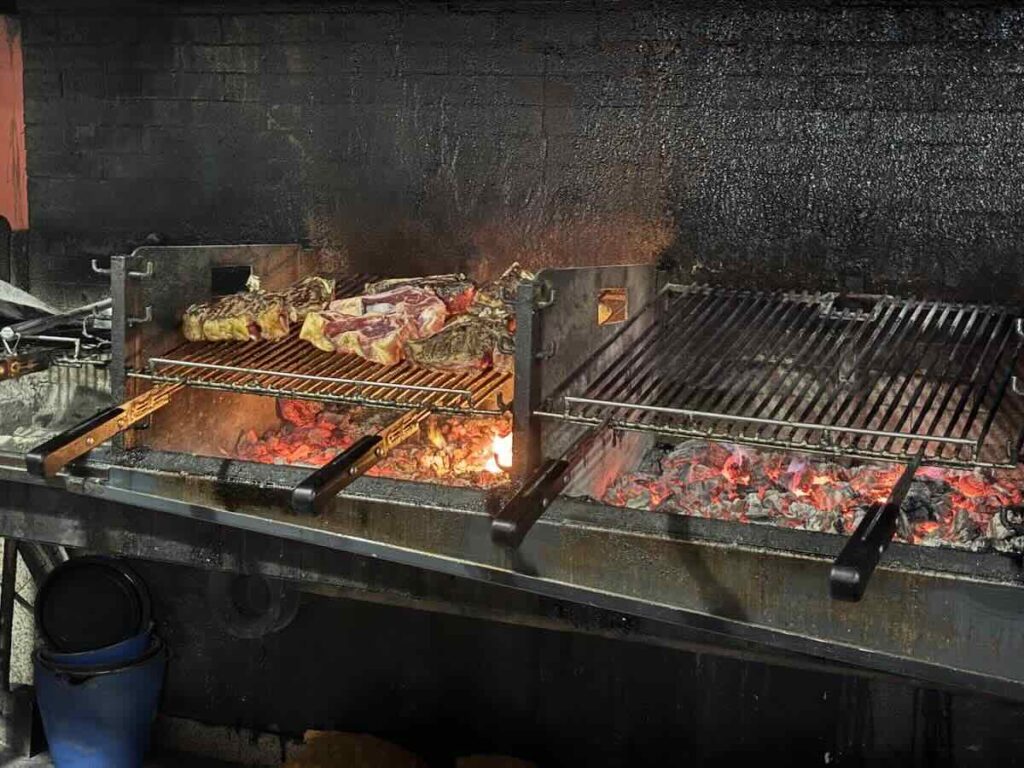
Txuleta is a thick bone-in ribeye, cooked over charcoal and served rare. It comes from older dairy cattle rather than young beef animals, which is why it tastes stronger and richer than a steak you’d get at home.
Ours was the best steak we ate in San Sebastián, and that’s saying something after three days of eating there. It’s also why we skipped the queue at Bar Nestor. The moment I remember is the trays of raw steaks going onto the grill and the small crowd that gathered to watch. Sounds daft. It won’t when you smell it.
Pace yourself on the early courses whichever menu you’re on. The txuleta is enormous, it arrives last, and you don’t want to fill up on cod and bread before it arrives.
More of my Spain guides to help plan your trip
- 3 days in Barcelona: My favourite route and tips for first time visitors
- How many days in Seville: A first timers guide to the best of Seville
- Where to Stay in Barcelona: Neighbourhood comparisons and best hotels by budget
- Where to Stay in Madrid: The best first-time areas with hotel picks
What it costs and how to book
In season it’s one fixed price per head with the cider included. Out of season it depends on the house, because some drop the set menu.
We went in July and ordered à la carte, and it came to about €45 (£38) each with the cider. The in-season set menu across the Astigarraga houses is roughly €40 to €50 a head, so we paid about what the fixed version would have cost us anyway. Against a full pintxos evening that’s decent value, and against what an equivalent steak costs in the city it’s very good value.
How far ahead to book
We booked two days ahead, which was only possible because we were out of season. Alorrenea’s website was down when we tried, so our friends phoned instead and got us the first lunch sitting. English isn’t guaranteed on the phone, so email or an online form is easier if you don’t speak Spanish, or you can get your hotel to do it for you.
Sittings are set times rather than an open kitchen, usually one at lunch from around 13:00 and one in the evening, and some close on Mondays in peak season.
If you leave booking until you’re in San Sebastián during txotx season, you’ll likely find the good houses full, especially at weekends. Pick your date before you fly and book at least a fortnight out.
My Top Tip! Book the first lunch sitting. We were back in the city by late afternoon with the whole evening still ahead of us, rather than writing off a day of a short trip.
If you’re working out where a cider house fits into a short trip, I’ve put it on day two of my 2 day San Sebastián itinerary, with the first lunch sitting so your evening survives.
Which one to book
I’ve eaten at one of these and my information on the other two comes from friends who live in San Sebastián and have worked through most of the Astigarraga houses over the years. That’s the whole shortlist, and I’d rather give you three I can stand behind than twenty I can’t.
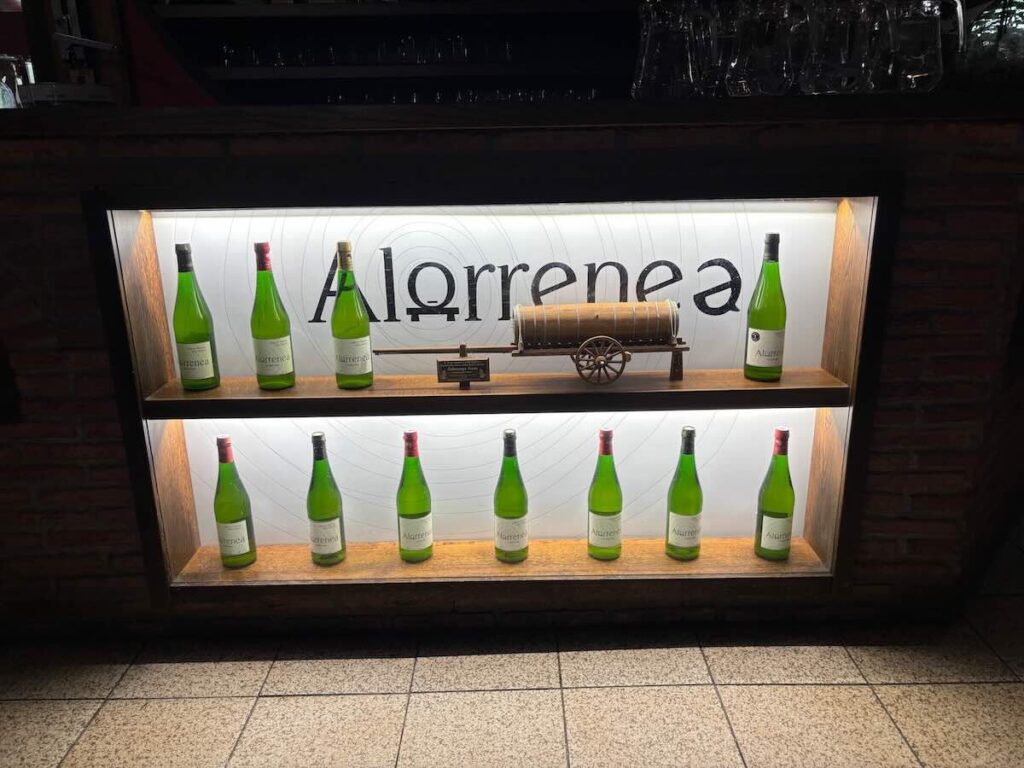
Alorrenea. Where we went and where I’d go again. Big dining room with long tables and benches, six barrels along the back wall, and the best steak we ate anywhere in San Sebastián. Open all year, with the set menu and barrel txotx in season and a more flexible menu outside it.
Website or Call: (+34) 943 336 999
Lizeaga. Our friends’ second recommendation and the one we’d have taken if Alorrenea had been full. They rate the food even higher, with the caveat that the atmosphere isn’t quite as good. Just down the road from Alorrenea.
Website or Call: (+34) 943 46 82 90
Petritegi. The easiest table to get and open year-round. Our friends told us it was a bit touristy and only worth using as a backup. That’s not automatically a mark against it. It’s the biggest of them, it’s set up for visitors, and it takes bookings online, so if you want a guaranteed table in peak season without a phone call in Spanish, that’s exactly what you want.
Website or Call: (+34) 943 457 188
Map of my recommended Sidrerias
Getting to Astigarraga and back after a few ciders
My strong advice, get a taxi. It’s likely most of your table is drinking, the houses are out in the hills, and the Basque drink-drive limit is stricter than the UK’s, so driving is out unless someone is happy to be your designated driver.
It’s about 15 minutes door to door and we paid around €12 (£10) each way for the car. Split between two that’s €6 a head, which is a few euros more than the bus for half an hour less faff and a drop-off at the front door.
The outbound one was the annoying bit. We tried Uber and couldn’t get a car, so our hotel booked us a taxi instead. Coming back was easy, because the staff at Alorrenea rang one for us. Rideshare apps are patchy across San Sebastián and worse out in the hills, so don’t plan around this.
My Top Tip! Ask the cider house to call your return taxi about twenty minutes before you want to leave, rather than when you’re standing outside. They do it constantly and they know which firms are best.
If you’d rather take the bus
Lurraldebus lines BU12 and BU13 go out to Astigarraga from the Okendo Kalea and Urbieta area for about €2. The ride is 15 to 20 minutes, but door to door it’s nearer 40 once you’ve walked to the stop, waited (they’re every 20 to 30 minutes) and got from Astigarraga centre out to your house, because the bus doesn’t drop you at the door. It’s worth checking that last leg on a map, since some of the houses are a fair way out of the village.
Booking a cider house tour instead
If the transport is what’s putting you off, a tour solves it. You get picked up in the city, driven out, walked round the orchard and the cellar, then sat down to the cider house menu. Several companies offer tours all year. GetYourGuide and Viator both have well rated options, typically €80 to €120 (£70 to £100) a head for a small group and more if you want it private.
We planned our visit ourselves and I’d do that again, because two taxis and a phone call isn’t much of a problem to solve. But if you’re travelling solo, nervous about the language, or booking in peak season when the houses are hardest to get into, the tour is the easier option and I wouldn’t talk you out of it.
When to go: Txotx season and the rest of the year
The dates are set by the fermentation cycle rather than by tourism. The apples are pressed in autumn, the cider is ready by mid-January, and that’s when the barrels open and the houses fill with locals. San Sebastián’s tourist board gives the same window, mid-January to late April.
Going outside txotx season
Around half the Basque cider houses stay open the rest of the year with a different offer. Some keep a couple of barrels going, some bring cider to the table by the bottle as we found at Alorrenea, and some drop the set menu for à la carte. It varies house by house and the listings don’t always say, so ask about your specific date rather than assuming.
Go anyway, and go for lunch. A summer sitting is quieter, easier to book, more flexible on food, and it leaves your evening free for pintxos, which is where San Sebastián really wins in July. That said, the one thing I wish I’d known before we booked is that we’d miss the whole room getting up at once. The afternoon was still excellent, but that’s a real difference rather than a small one, and it’s why I’ll go back in season.
If you want the cider culture without a three-hour meal, Sagardoetxea, the Basque cider museum in Astigarraga, is open all year on Kale Nagusia. Tickets start at €3.50 (£3), include a guided tour and a tasting, and the tour takes about an hour.
Standing, sitting and what to wear
Cider houses come in two shapes and the booking page rarely tells you which you’re getting. Some have proper dining rooms with long tables and benches. Others are barrel halls where you eat off high counters, standing, for the whole meal, and traditional cellars aren’t heated, so in February you eat in your coat.
We had the dining room at Alorrenea, mostly long tables and benches with a few smaller ones, something of a German beer hall feel to it. I’d choose that again without hesitating, particularly for a first visit, and particularly if anyone in your group won’t fancy three hours on their feet. Don’t wear anything you’d be upset about getting splashed, and leave the suede at the hotel, footwear choice is key as it can get a little wet underfoot in peak season!
Is a sidrería worth it?
Yes, 100%. It was completely different to anything else we did on the trip, you’re in a room full of locals eating the best steak of your week, and the whole thing costs less than a mid-range dinner in the city.
If you don’t eat beef, you’ll still eat well as long as you eat fish. If you eat neither, don’t bother, the menu is built around those two things. And if you don’t drink, you’re paying for cider you won’t touch, so think hard about whether the room and the food are worth it on their own.
Sidrería against a pintxos night
With only two nights in San Sebastián, I wouldn’t lose an evening to a cider house. Two proper pintxos evenings are what you came for and I’d prioritise this. We had three days and used a lunch slot instead, which cost us nothing in the evening and was ideal.
In season, I’d change that advice. The barrel ritual is unusual enough that I’d give it one evening even on a two-night trip, and I’d accept the pintxos night I lost.
I’ll be going back in season, which is the honest measure of what I thought of it. If you’re still building the rest of the trip, I’ve written up what else is worth doing in San Sebastián and where to stay, which matters here because it changes your taxi fare.
FAQs about cider houses in San Sebastián
What does Basque cider taste like?
Nothing like the cider you get in a UK pub. Basque natural cider is flat, dry and quite tart, closer to a sharp white wine than to anything on a British bar, with no added sugar and no added fizz. The long pour puts a bit of life back into it, which is the whole point of the technique.
How strong is Basque cider?
Basque natural cider is 4 to 6% alcohol, so roughly the same as a pint of lager. San Sebastián’s tourist board puts it at 4.5% and up. It goes down very easily, which is exactly why the cider houses put an enormous amount of food in front of you alongside it.
Can you buy Basque cider to take home?
Yes. Most cider houses sell their own bottles on site, and some, like Zapiain, export abroad. Bottled Basque cider is available all year regardless of season, so it’s the easy thing to bring back if you visit in summer and miss the barrels.
Is a sidrería good with kids?
Lunch sittings are much quieter than evenings and there were families with children at ours, so yes, at lunch. It worked fine as a meal for two as well.
Can you visit a cider house without doing the full meal?
Not really at a traditional cider house, where the meal and the cider come as one booking. If you want the culture without three hours at the table, the Sagardoetxea museum in Astigarraga does a guided tour and tasting from €3.50, and several houses offer cellar tours with tastings for around €12 to €15.
Do you need cash at a sidrería?
Cards are fine at most cider houses now, but take some cash if you’re splitting a bill several ways. Tipping isn’t customary in Spain and nobody expects it, so rounding up or leaving a couple of euros is plenty if the service was good.





6 Comments
Comments are closed.