
We had two nights in Manuel Antonio, which meant having to narrow it down and choose from some great activities. That’s the real challenge with the things to do in Manuel Antonio, not what options there are, but which are the best to fit into your limited time.
My guide ranks the best choices, with what each one costs, how long it takes, which get booked up, and which I’d drop if your days are tight. I cover the national park, the beaches you can reach, boat trips, the waterfalls, and what you can do in Manuel Antonio for free.
So by the end of my guide you will be able to pick what suits your travel style and the best ways to book those tours to maximise your time in this beautiful part of Costa Rica.
More of my Costa Rica guides to help plan your trip
- 7 Days in Costa Rica Itinerary: A first-timer route with costs, timings and where to stay
- Is Manuel Antonio National Park Worth It?: Honest tips on tickets, timing and when to skip it
- Where to Stay in Manuel Antonio: Which area to pick, what each one costs and where I stayed
- Things to Do in La Fortuna, Costa Rica: My guide to what’s worth your time and what to skip
- La Fortuna to Manuel Antonio: The four ways to travel it, costs and comparison
- Where to Stay in La Fortuna: The hotels with hot springs, what they cost and if it’s worth it
- Hotels Near San Jose Airport: Best airport hotels to make your arrival and departure easy
How many nights do you need in Manuel Antonio?
Three nights is what I recommend to most first timers. Most activities take half a day, so you need to plan accordingly.
We had two nights in Manuel Antonio on our first trip to Costa Rica, which was fine, and I don’t regret how we spent it, but with a third night we’d have been able to enjoy it even more, I would have added a boat trip or some tubing.
| Nights | What it gets you |
|---|---|
| 2 | The national park plus one other activity. What I had. Good if you are planning Manuel Antonio as a stop on a wider tour. |
| 3 | The park, one adventure morning, and a boat trip or a proper beach day. My pick. |
| 4+ | Slower pool and beach time between activities. Ideal for people who want more down time. |
For most travellers, don’t plan your travel day as a usable day. The majority of activities have a morning pickup. If you’re coming from La Fortuna, that drive takes five to six hours and you arrive mid-afternoon at best.
Disclaimer: This article may feature affiliate links. If you click these links, and choose to book with that hotel or company, I will earn a small commission at no extra cost to you. I appreciate the support that allows me to continue providing this information.
If you only do three things in Manuel Antonio
If a friend asked me what to book with limited time, this is what I’d say.
The national park with a guide. No hesitation, this is first. It’s the reason the area is on your route, and the wildlife density is genuinely surprising for somewhere this small. Do it with a guide or you’ll not see most of it.
A half day at the beach. Not something you book, which is exactly why it’s easy to squeeze out of a tight schedule or when you arrive. Two paid tours in two days is a lot, and the beaches here are free.
One adventure or water activity. This is where it depends on you. An ATV and waterfall morning, rafting or tubing, or a boat trip out to sea or to the mangroves. I did the ATV day and enjoyed it, but any of the three is a good option, with plenty to choose from in the area.
Book two of the big tours on the same day to save time and you’ll spend both halves of it in a minibus. Keep it to one activity per day and use the other half for the beach or the pool.
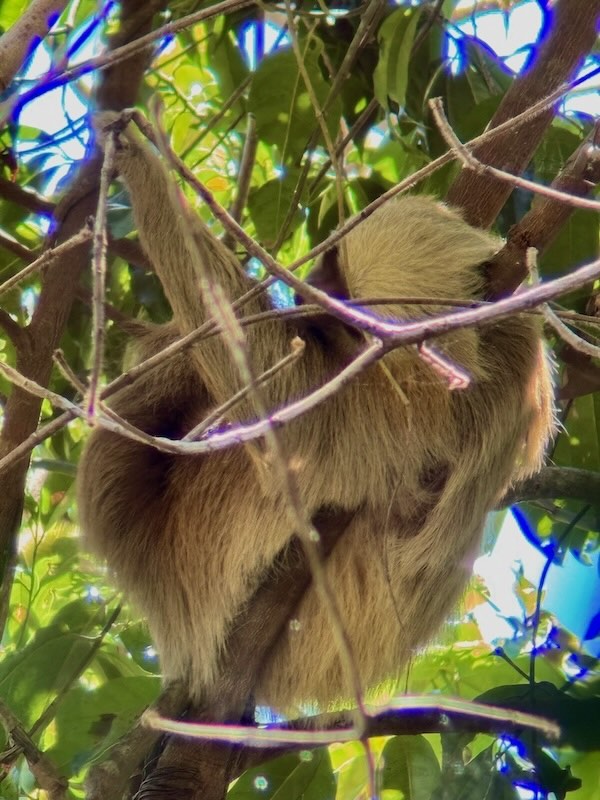
Where we stayed and why
Quepos is the small working town with a marina, about fifteen minutes north of the park. Manuel Antonio isn’t really a town at all. It’s one 6km road running from Quepos down to the park entrance, with most of the hotels, restaurants and bars strung along it.
We stayed on that road and chose our hotel for two things: wildlife on the property, and a free shuttle to both the park and the beach. If your budget stretches to a hotel with its own reserve, that’s what I’d do again. If it doesn’t, stay nearer the park entrance and the beach end where you can walk to both.
I’ve split the road into five areas, with a price and the honest downsides for each, in my guide to where to stay in Manuel Antonio.
Quick comparison of the best things to do
| Activity | Time needed | Typical cost | Book ahead? | Pick this if |
|---|---|---|---|---|
| National park with a guide | 3 to 4 hours | typical $55–$85 (£44–£67) | Definitely, aim for a week before | You want the best wildlife in the area |
| Visit the beach | Half a day | Free | No | You want to relax or have a spare slot in your plan |
| Rainmaker ATV and waterfall | 3.5 to 4 hours | typical $130–$180 (£103–£143) | Recommended | You want some adrenaline and a swim in one morning |
| Catamaran or sailing trip | 3 to 4 hours | typical $86–$95 (£68–£75) | Recommended | You want time out on the water |
| Damas Island mangroves | 2 to 4 hours | typical $45–$85 (£36–£67) | Recommended | You prefer wildlife to adrenaline |
| Night tour | About 2 hours | typical $57–$79 (£45–£63) | Recommended | You want to see the nocturnal wildlife |
| Nauyaca Waterfall | Half to full day | typical $10–$38 (£8–£30) | Yes for the 4×4 slots | You want a big waterfall and some adventure |
Manuel Antonio National Park
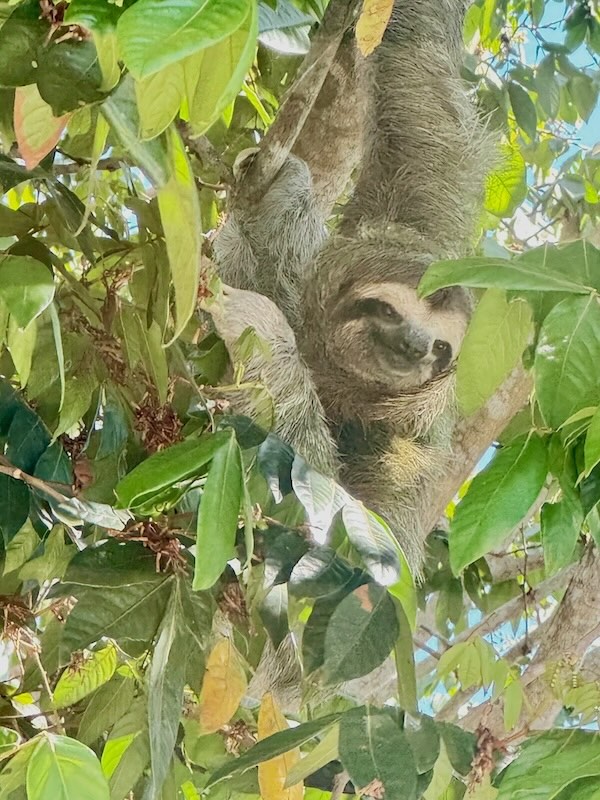
One of Costa Rica’s smallest national parks and comfortably its most visited, with coastal rainforest, flat easy trails and a couple of beautiful small white sand beaches inside the boundary where you can swim. Wildlife is the reason to go: sloths, three monkey species, iguanas, toucans and a lot of smaller things you’d never spot alone.
My strong advice is to get a guide. Ours carried a scope and pulled us off the main trail onto quieter side routes, and the guides here share sightings between groups as they go, which is why they find things you can’t.
Time 3 to 4 hours • Cost typical $55–$85 (£44–£67) CHECK AVAILABILITY
The park opens Wednesday to Monday, 7am to 3pm, and it’s closed every Tuesday. You pick an arrival slot when you book and they hold you to it, so give yourself a sensible window. Numbers are capped daily and it sells out, so sort it around a week ahead. Full details of what to see and the best trails can be found in my guide on whether Manuel Antonio National Park is worth it.
My Top Tip! Watch out for the white-faced monkeys at Playa Manuel Antonio, the beach inside the park. They went for our bags while we were in the water, and other people’s too. They’re funny but sneaky. Keep half an eye on your stuff and that of your neighbours, a towel waved in their direction moves them on.
The Beaches
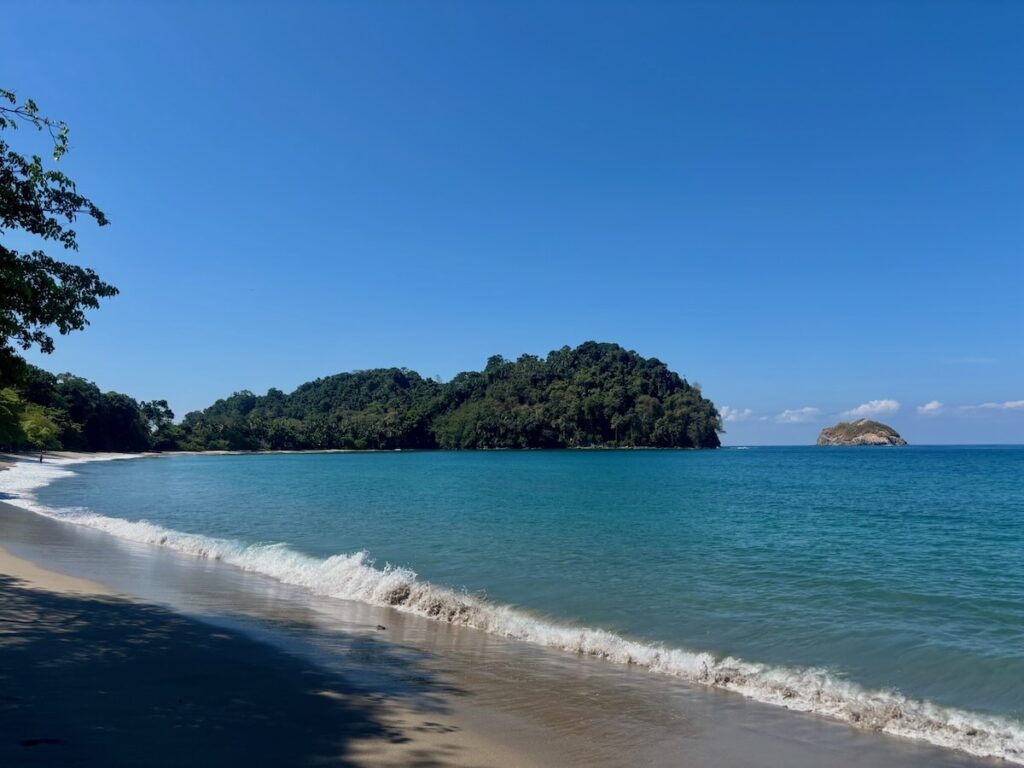
I personally swam at the park beach and spent time on Espadilla Norte, the park beach being my favourite of the two. Biesanz or Playitas are research rather than my own beach days.
- Playa Espadilla Norte. The easiest option. The long public beach right by the park entrance. Chairs and umbrellas for hire, plenty of amenities, and this is where the parasailing and jet skis operate from. It’s also the busiest and most touristed stretch in the area. There are crocodile warning signs at the freshwater brook on the southern end, so keep away from that stretch. Better for a sunset walk or a boogie board than a swim.
- Playa Biesanz. A sheltered cove on the northern side of Quepos Point, and the one most people rate as the best swimming beach here. You park on the main road, then follow a rocky jungle path down for five to eight minutes. Chairs, umbrellas, kayaks and paddleboards are for hire on the sand and there’s a bar. Go at low tide, because high tide leaves very little beach, and wear something better than flip flops for the path.
- Playa Playitas. Quieter, on the same stretch of coast near Quepos Point, and the one to choose if you want space rather than facilities. Parking is close to the sand here, so there’s no walk in with your gear.
- Playitas Beach Club at Arenas del Mar. A different thing to the beach above despite the name, this is a beach club on the sand at a resort, and you don’t have to be staying there to use it. Book a table in high season. Great if you want a proper lunch and a lounger.
Rainmaker Conservation Park
A private rainforest reserve about half an hour north of Manuel Antonio, meaning it’s owned and run privately rather than by the national park service. There’s a 2.5km trail system, most of it through primary rainforest that’s never been cut, with hanging bridges strung through the canopy and waterfalls you can swim in. Far quieter than the national park.
There are two ways to do it.
Going self guided
Admission on your own lets you walk the trails at your own pace. It’s $24 plus 13% tax, so budget around $27, and you don’t need to book ahead. Children under 7 go free. Bring cash, as card facilities at the visitor centre are limited.
Cost about $27 (£21)
Picking a Rainmaker tour with or without activities
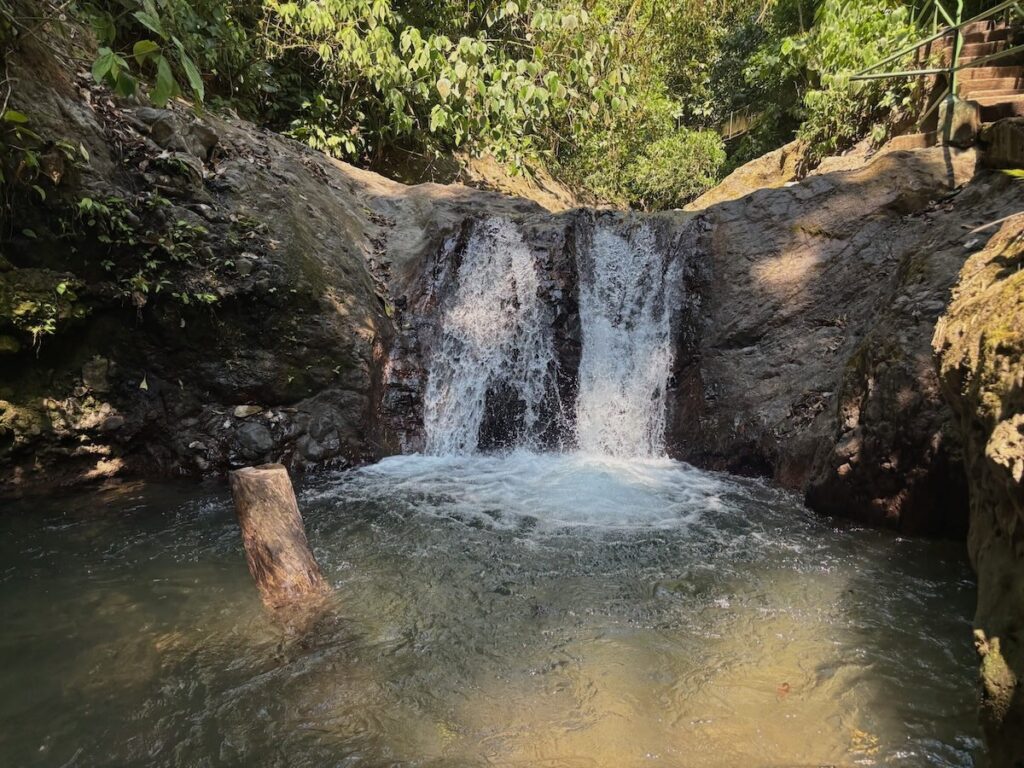
A guided group tour comes in at roughly $60 (£48) per person and includes transport from Manuel Antonio plus a professional guide.
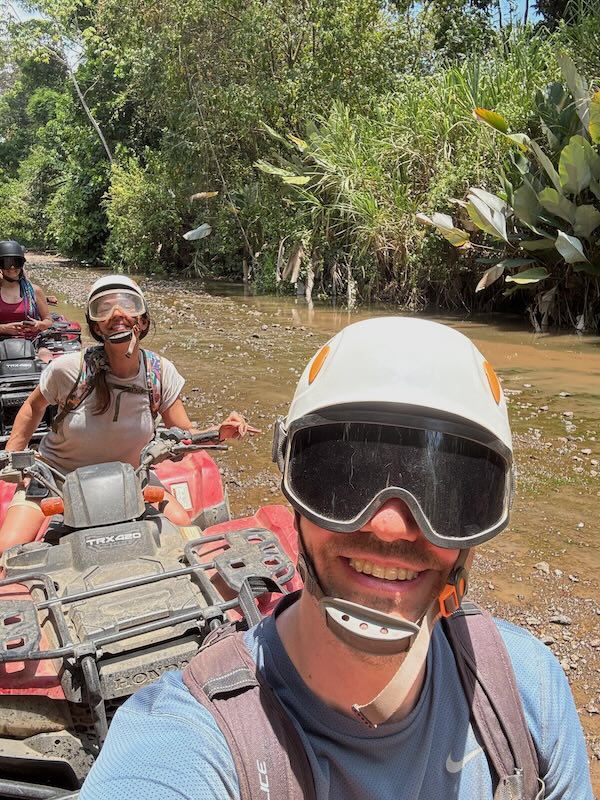
The tour I did was the ATV and waterfall combo, a different thing again: an ATV ride through farm tracks and forest, a guided walk on the suspension bridges, a swim under a waterfall and lunch, all in one morning with hotel pickup included.
Time 3.5 to 4 hours • Cost typical $130–$180 (£103–£143) CHECK AVAILABILITY
The ride was brilliant fun, crossing through rivers and different farmland, but the waterfall swim was my highlight, largely because you arrive at it hot and it’s very refreshing.
My Top Tip! The ride kicks up a serious amount of dust in dry season. If you’re going then, take a bandanna or a face mask, I wish I’d had one.
Seeing wildlife without a park ticket
Several hotels along the park road sit in their own private reserves, and a few run guided walks that are free if you’re staying. It’s worth factoring in before you book a room.
Hotels with their own reserves
- Gaia Hotel & Reserve. Walks tied to a scarlet macaw reintroduction programme. Adults only.
- Tulemar. 33 acres of preserve, with a daily sloth walk run with The Sloth Institute. Under 10s free.
- Arenas del Mar. 11 acres, own trails and a hanging bridge, guided tour included. On the beach.
- Si Como No. Near the top of the hill, with its own 25-acre refuge across the road.
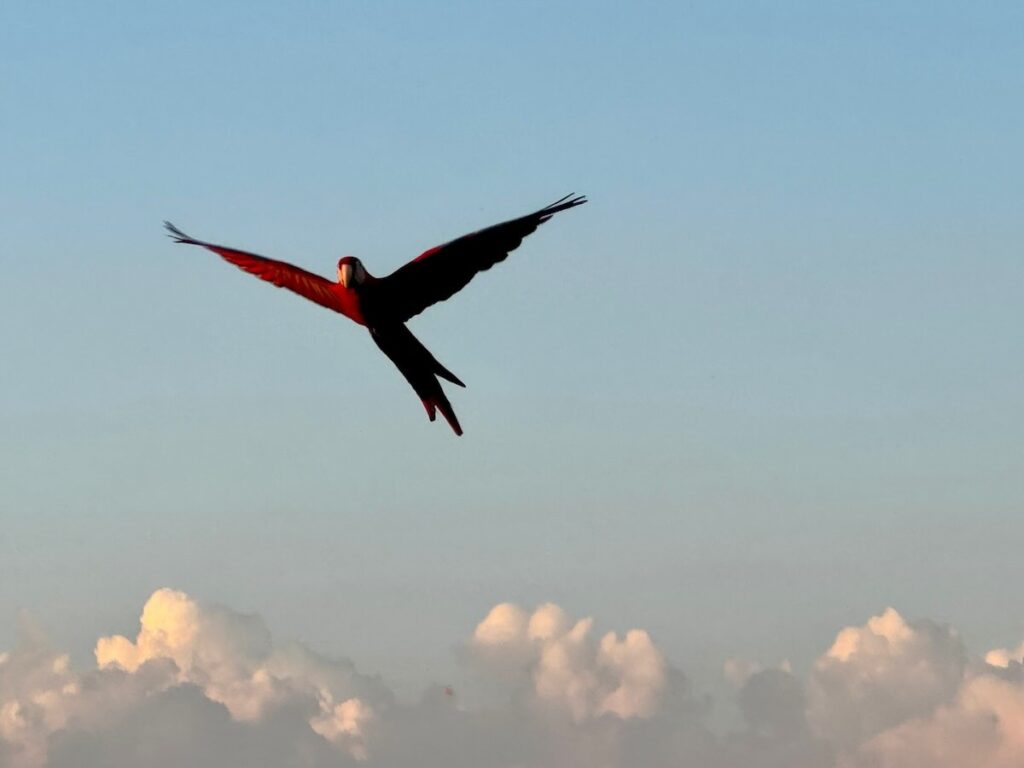
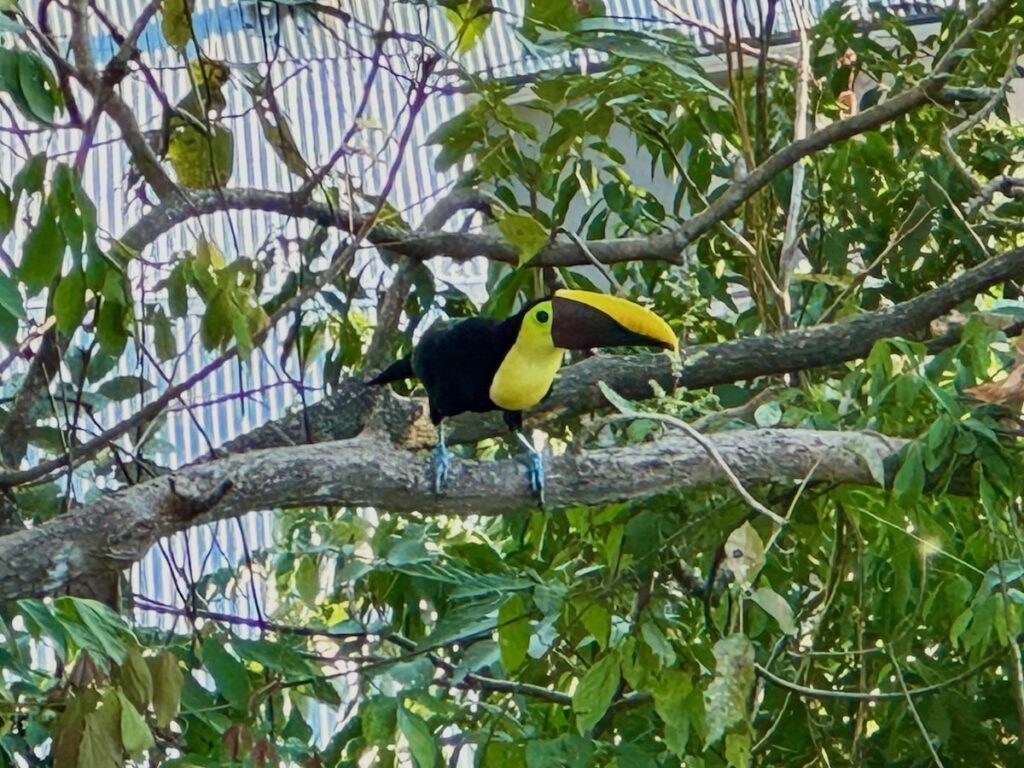
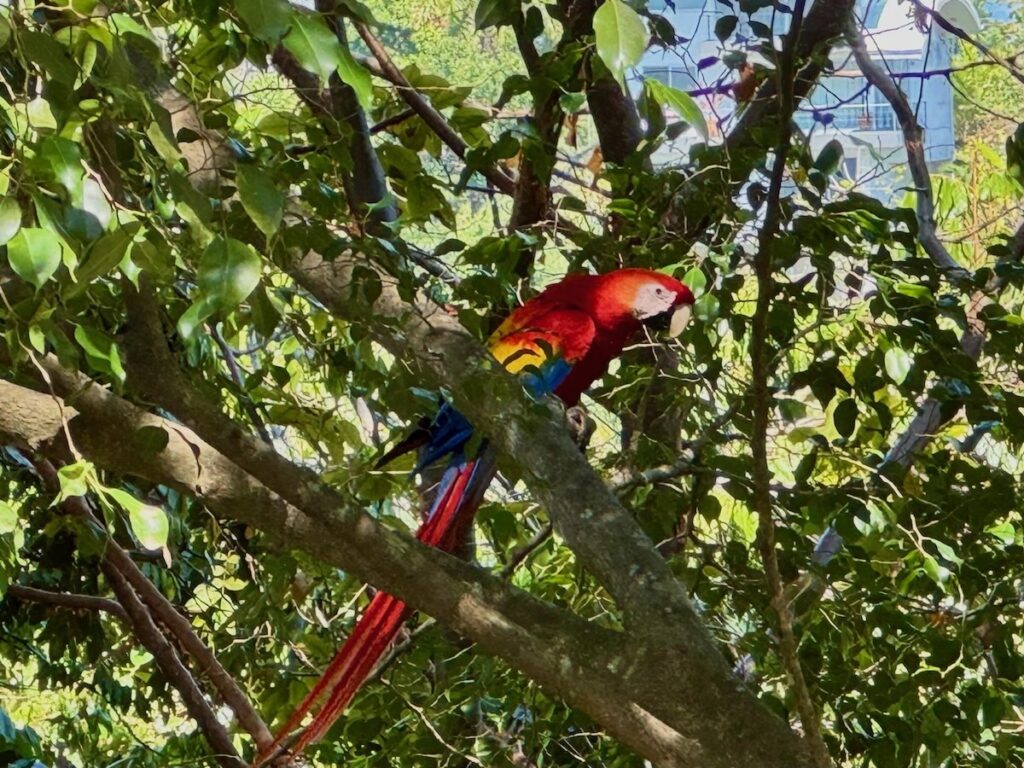
We stayed at Gaia and did the 90-minute macaw walk. Seeing them in full flight is the moment I remember most from Manuel Antonio, I’d never seen them in the wild before and they’re seriously impressive birds. The grounds also gave us sloths, toucans and iguanas, multiples of each right where we were staying, it was a special hotel I would highly recommend.
Prices, areas and which of these run a free shuttle are all in my guide to where to stay in Manuel Antonio.
Time 1 to 2 hours • Cost Free to guests
My Top Tip! Get yourself a scope or some binoculars before you head to Costa Rica. We used them daily in Manuel Antonio and further afield, it really helped.
Kids Saving the Rainforest
If your hotel doesn’t have grounds, this is the reliable alternative. A rescue and rehabilitation centre near Quepos taking in injured and confiscated animals, and one of the few in the country verified by the Global Federation of Animal Sanctuaries. They’re also behind the rope bridges you’ll see over the road between Quepos and the park, which keep monkeys and sloths from having to cross the dangerous road.
You’ll see sloths, spider monkeys and kinkajous, and it’s the one place here where a sighting is guaranteed rather than hoped for. Children under 12 are about $45 (£36), under 3s free.
Time About 1.5 hours • Cost about $60 (£48)
Get out on the water: catamaran and sailing trips
Boats leave from the marina at Quepos and cruise down the coast past the national park, usually looking for dolphins and turtles on the way back, then anchoring in a sheltered cove for a swim and a snorkel.
They’re not all the same trip, and it’s important you check the details to make sure it’s the kind of trip you want
- The big catamaran. A 100-foot boat with waterslides, music and a bar. Sociable and a bit of a party.
- The smaller boat. Around 50 feet, lower key, still food, drinks and music on board.
- The wooden sailboat. The high-end version, smaller groups, and the one to pick if the party feel puts you off.
Time 3 to 4 hours • Cost typical $86–$145 (£68–£115) Half day and Full Day available CHECK AVAILABILITY
My Top Tip! Book it for the boat trip, not the snorkelling. Snorkelling in this area is unreliable and heavily condition-dependent, which even local operators will tell you. Dolphins and turtles are common.
Damas Island mangroves by boat or kayak
Mangroves are the tidal forests where the river meets the sea, with trees growing straight out of the brackish water, and the ones at Damas Island sit just north of Quepos. You go through the narrow channels by small covered boat or by kayak, looking for white-faced monkeys, iguanas, crocodiles, herons and kingfishers. It’s a gentle trip rather than an adventurous one, but a great chance to see more wildlife.
Time 2 to 4 hours • Cost typical $45–$85 (£36–£67) CHECK AVAILABILITY
My Top Tip! One thing to check before you book. Some operators feed the monkeys to draw them down to the boats, which changes how the animals behave and can make them ill from human bacteria, don’t book these. You will likely see monkeys either way, it’s good to not encourage bad behaviour. Morning tours have a better chance of seeing more animals.
A guided night tour
Around 70% of Costa Rica’s rainforest wildlife is nocturnal, which is the entire argument for doing one of these. A night tour is a torch-lit guided walk, or in this area a boat trip through the mangroves after dark, looking for the animals that sleep through your daytime activities.
Two formats here: a walk at Rainmaker, or a mangrove boat out of Damas. Both usually include a meal.
Time About 2 hours • Cost typical $57–$79 (£45–£63) CHECK AVAILABILITY
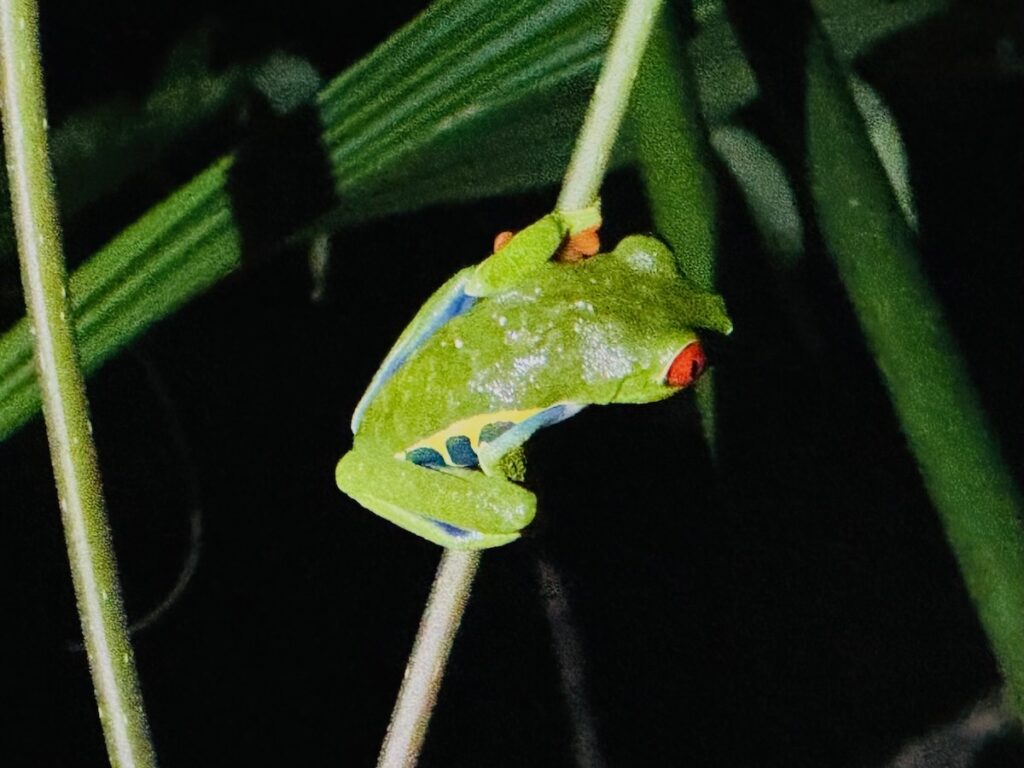
I didn’t do a night tour in Manuel Antonio. I did one in La Fortuna and it was comfortably the best wildlife experience I had there, red-eyed tree frogs, a poison dart frog the size of a fingernail, things I’d have walked straight past. That’s why I’d prioritise one here too, and you can read what it was actually like in my guide to things to do in La Fortuna.
Nauyaca Waterfall as a day trip
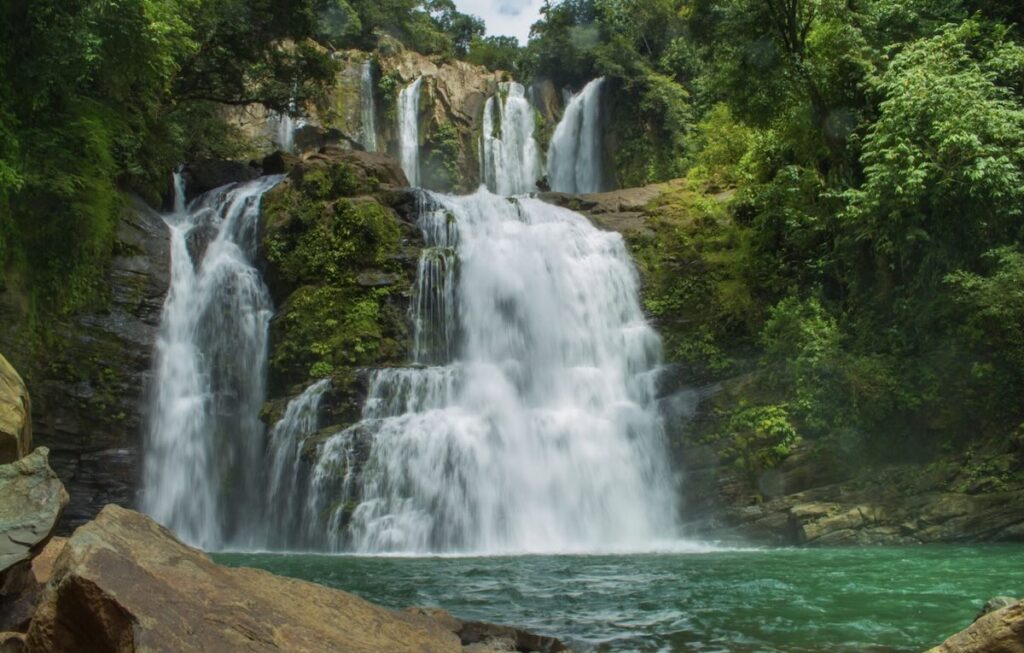
A two-tier waterfall about an hour inland from Manuel Antonio, with a big pool at the bottom you can swim in. It’s the one proper day trip from here, and I recommend you only pick it if you have 3 or more nights.
Time Half a day to a full day • Cost typical $10–$38 (£8–£30) or you can get guided day trips from Manuel Antonio
The two entrances, and why it matters which you pick
This is the thing to get right. Two rival private companies run two completely separate entrances to the same waterfall, with different roads, different prices and different rules. You sign a waiver saying you won’t cross the river between them, so whichever gate you use is the experience you get.
Cataratas Nauyaca, also called Don Lulo’s, is the original entrance on the paved main road, and there’s a bus stop right outside the office. Hiking both ways costs $10 (£8) plus $5 (£4) parking, but that’s an 8km round trip from the car park in serious heat. The 4×4 truck is $32 (£25) including parking, runs to a fixed timetable, and caps you at two hours at the falls. Those slots sell out, so book ahead. Horseback tours are available for about $80 (£63) with breakfast and lunch included.
Nauyaca Waterfall Nature Park is the newer entrance on the eastern side. A trolley both ways is $38 (£30), or $33 (£26) if you walk down and ride back up. There’s no time limit, no need to book, and the walk from the ranch is only 1.3km round trip. It’s the only side with the cave viewpoint looking out at the upper falls. The catch is that the last 10 to 15 minutes of the drive is unpaved, and there’s no bus.
Other things to do in Manuel Antonio
Two nights meant choosing, and these are what got cut. I’m including them because they’re genuinely popular and one of them might suit you better than something I did.
Adventure activities
Ziplining and canopy tours. Several operators run zipline circuits through the rainforest-covered hills behind the coast, with a short hike out to the starting platform. Minimum ages start as low as three with some companies, so it’s one of the few adventure activities that works with young kids.
Time About 4.5 hours • Cost about $90 (£71)
Whitewater rafting on the Savegre. Class II and III rapids, so bumpy and fun rather than frightening, with a waterfall stop for a snack. Departures at 08:00 and 11:00, minimum age six, and lunch and hotel pickup are included.
Time About 6 hours • Cost about $115 (£91)
Surf lessons. Serious surfers don’t rate Manuel Antonio and there are far better breaks elsewhere in Costa Rica, but it’s a reasonable place to learn. Book it as a beginner lesson, not as a surf trip.
Parasailing. Runs off Playa Espadilla and you’ll see people up there most afternoons. It’s a short activity rather than a half day out, so slot it around something else.
Slower and wet weather options
Villa Vanilla spice farm. A working farm about half an hour out, growing vanilla, cinnamon, cacao and pepper among rainforest trees, with a guided walk followed by a tasting of everything you’ve just seen growing. It runs rain or shine, which makes it a sensible reserve for a wet afternoon. Reservations are essential.
Chocolate and coffee farm tours. Hands-on visits where you follow cacao or coffee from the plant through to something you can taste. I’ve done this type of tour elsewhere on my travels and enjoyed it, though I’d put it behind the wildlife activities if your days are tight. Another good rainy-day booking.
FAQs about things to do in Manuel Antonio
Yes, it’s one of the more straightforward parts of Costa Rica for first-timers. There are tourist police in town and clinics in Quepos with English-speaking doctors. The main risk is petty theft from unattended bags on Playa Espadilla, so take a waterproof pouch and leave anything valuable at the hotel. Tap water is fine to drink.
Morning, in my opinion. It’s cooler, the wildlife is more active, and you’re out before the heat peaks. The exception is December to April, when the trails get busy early and an afternoon slot can mean a quieter walk with the wildlife still moving around at dusk.
No. Almost every tour includes hotel pickup, the local bus runs the one road between Quepos and the park every twenty minutes for under a dollar, and several hotels run a free shuttle to the park and the beach. Uber is also widely available and we found it pretty quick to get cars.
It depends where. The park beaches and the sheltered cove at Playa Biesanz are the calm options. Playa Espadilla Norte is long and open with rip currents, so stay where other people are swimming and don’t go far out. There are crocodile warning signs at its southern end.
No, and it’s worth knowing why. Feeding wildlife is illegal in Costa Rica, human food makes the monkeys ill, and it teaches them to raid bags, which is how people end up bitten. The capuchins here are bold and quick. Keep your bag zipped and don’t let them near your food.
Nearly. The Central American squirrel monkey, known locally as the titi, lives only along this stretch of the central Pacific and down in the Osa Peninsula. They’re small, fast and travel in noisy troops, and they were critically endangered until recently. Seeing them is one of the genuine draws of the area.
About three hours by road from the airport, which makes it one of the easier beach destinations to reach on a first trip. From La Fortuna it’s five to six hours, and I’ve compared all four ways of doing that journey in a separate guide.



7 Comments
Comments are closed.