
Manuel Antonio is Costa Rica’s most visited national park and one of the most divisive. Some travellers leave saying it was the highlight of their trip. Others leave hot, hangry and convinced they wasted a day.
Is Manuel Antonio National Park worth it? Yes, if you do it properly. The people who hate it almost always made the same handful of avoidable mistakes, and this guide walks you through them.
More of my Costa Rica guides to help plan your trip
- 7 Days in Costa Rica Itinerary: A first-timer route with costs, timings and where to stay
- Things to Do in La Fortuna, Costa Rica: My guide to what’s worth your time and what to skip
- Where to Stay in La Fortuna: The hotels with hot springs, what they cost and if it’s worth it
- La Fortuna to Manuel Antonio: The four ways to travel it, costs and comparison
- Where to Stay in Manuel Antonio: Which area to pick, what each one costs and where I stayed
- Things to Do in Manuel Antonio, Costa Rica: The best activities ranked and what to book ahead
- Hotels Near San Jose Airport: Best airport hotels to make your arrival and departure easy
Is Manuel Antonio National Park worth it? The short answer
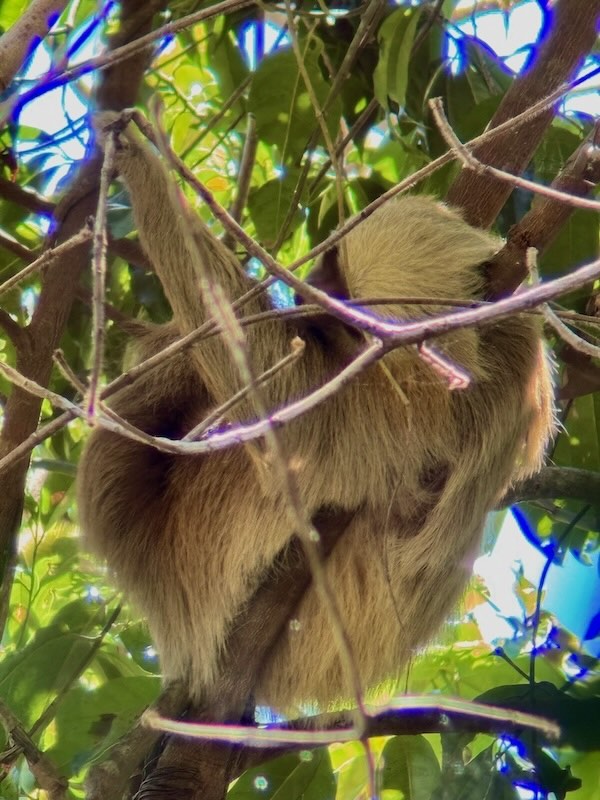
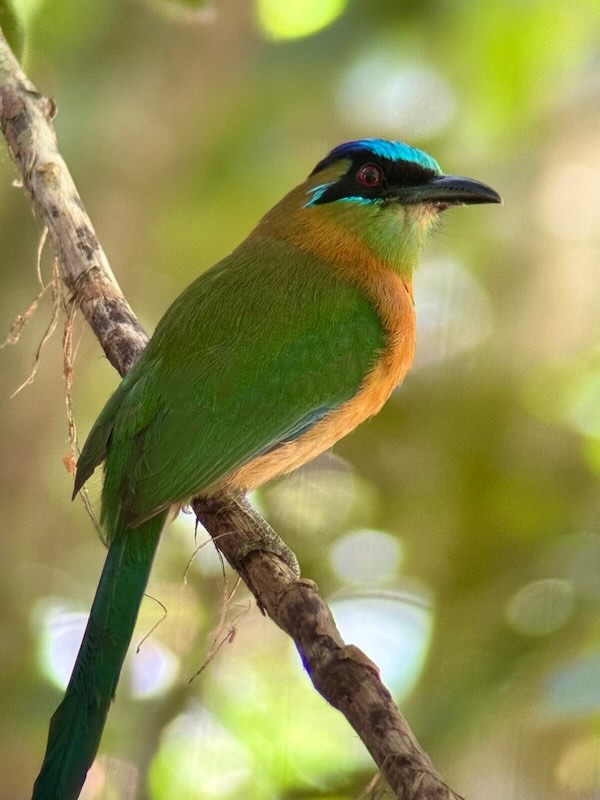
Yes, Manuel Antonio is well worth a half day for most visitors. We did a guided tour from Gaia Hotel, which ran a free shuttle to the gate, and saw six sloths, two monkey species, a pauraque with a chick, a motmot, basilisk lizards and a long list of other wildlife in five hours.
The trade-off is that it’s small, popular, and not remotely wild. If you’ve already booked Corcovado or Tortuguero, you can skip Manuel Antonio without missing much.
The conditions that decide whether you’ll enjoy it:
- Book your ticket online ahead of time. The park sells out at peak times.
- Avoid Christmas week, New Year and Easter if your dates are flexible.
- Don’t fall for the parking scam (more on that below).
- Bring a reusable water bottle. No plastic is allowed in the park.
- Get a guide if wildlife is the reason you came.
Disclaimer: This article may feature affiliate links. If you click these links, and choose to book with that hotel or company, I will earn a small commission at no extra cost to you. I appreciate the support that allows me to continue providing this information.
Who should visit and who should skip it
Pick Manuel Antonio if:
- You’re on a tight Costa Rica week and want jungle, beach and wildlife in one place.
- You’re travelling with kids, older parents, or anyone who can’t manage long, rough trails.
- You want beach swims inside a national park, not just a beach trip.
- You’re already in the area as part of a wider itinerary (I cover this in my 7-day Costa Rica route).
Skip it if:
- Your only window is Christmas week, New Year or Easter and your dates can’t move.
- You’re chasing serious, remote wildlife and you’ve already booked Corcovado on the Osa Peninsula.
- You’re allergic to crowds. Manuel Antonio is the most-visited park in the country.
- You only enjoy beach resort time. The point of going is the park, not lounging.
The bit people get wrong is treating Manuel Antonio as a remote rainforest experience. It isn’t. Think of it as a beautiful, accessible, popular park, and you’ll enjoy it.
Practical info you need before you go
A quick reference section so you’re not bouncing across tabs.
Hours and closure days
The park is open 7am to 4pm, Wednesday to Monday. Beaches are cleared from 3pm and everyone needs to be out by 4pm. The park is closed every Tuesday with no exceptions. Plenty of visitors turn up on a Tuesday and can’t get in. Don’t be one of them.
Booking tickets via SINAC
Tickets are sold online only through the official SINAC site. They are not available at the entrance during peak periods. The site is clunky and has been known to crash during busy booking windows.
Park entry ticket via SINAC. A single-day entry ticket bought direct from the government site. This is the cheapest way in and works fine when the site behaves. Try and book at least a week ahead and weeks ahead for peak season like Christmas, New Year and Easter.
You choose an arrival window when you book and rangers enforce it, so the earlier you can book in advance, the more choice you will have.
Cost around $18 (£15) per adult
Guided tour booked online. A pre-booked tour through a third party operator that includes your park entry, a naturalist guide and usually transport from your hotel. The simplest fallback if SINAC is broken on the day you try to book, and the easiest option for first-timers full stop. Book your guided tour here.
Cost typical $55–$85 (£44–£67) per person
My Top Tip! Book your SINAC ticket the moment you’ve locked in your travel dates. If the site won’t load or rejects your card, get a guided tour instead and let the operator handle the entry tickets. Don’t leave it until the night before.
The rules to know at the gate
- One ticket, one entry. You can’t leave for lunch and come back. Plan to do everything in one go.
- Single-use plastics aren’t allowed. Suncream and bug spray are exceptions. Water has to be in a reusable bottle.
- Bring your passport or a photo of the ID page. Rangers check it against your booking.
- The cafe inside the park is unreliable. I’d assume it’s closed and plan accordingly.
You are not allowed to bring your own food, the rangers search bags and will take this off you at the entry. Eat well before you go.
Guided tour, hired guide, or self-guided?
This is the single biggest decision in your visit. A guide changes the wildlife experience completely. The trails and beaches you’ll walk are the same either way.
| Option | Best for | Watch out for | Typical cost |
|---|---|---|---|
| Pre-booked guided tour | First-timers, families, anyone who wants logistics handled | Larger groups can dilute the experience | $55–$85 (£44–£67) per person |
| Hire a guide at the entrance | Confident self-organisers on a budget | Lots of touts, ask for the ICT certification badge | $25–$35 (£20–£28) per person |
| Self-guided | Independent walkers happy to miss most wildlife | You’ll walk past sloths and not see them | — |
Pre-booked guided tour
A tour operator collects you from your hotel, sorts your park ticket, walks you through the park with a naturalist guide, and drops you back. We did this on our visit. Our guide Jhon, was from the Caribbean side of the country, spoke excellent English, and carried a monocular that doubled as a phone-camera mount for sloth photos in the canopy. He was the reason we saw what we did.
I would recommend it for any first-timer who hasn’t done a guided wildlife walk before. The quality and knowledge of our guide was excellent. Both Getyourguide and Viator have good options.
Cost typical $55–$85 (£44–£67) per person
Hire a guide at the entrance
Cheaper option for travellers who’d rather sort their own ticket and transport. Guides cluster at the gate and can usually start a walk within ten minutes. Ask to see their ICT certification badge (called carnet in Spanish), which has their photo, ID number and certification mark.
Cost typical $25–$35 (£20–£28) per person, guide service only
Self-guided
You walk in with your own ticket, follow the trails, and look at the things you can spot yourself. Fine if you’re happy with a beach and rainforest walk.
Less good for wildlife: most sloths, frogs and small creatures are nearly impossible to spot without a trained eye and a scope.
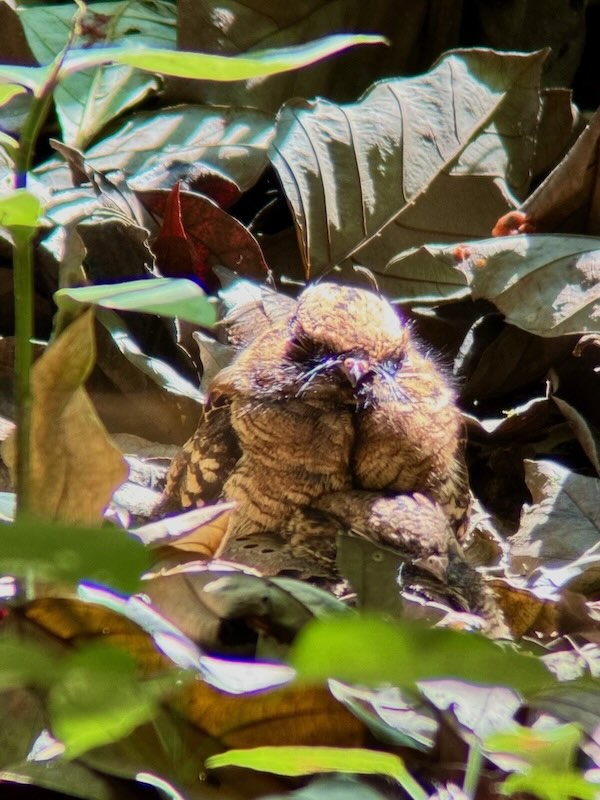
The pauraque our guide pointed out (a nocturnal bird that disguises itself) we’d have walked past a hundred times. If wildlife is the reason you came, get a guide.
How long do you actually need?
Half a day (3 to 4 hours) is enough for most visitors. We were in the park for five hours total, including beach time and a swim, and that felt about right. Plan a full day if you want to do every trail. Two days is overkill for everyone. The park is small and you’ll have seen the highlights by lunchtime.
If you’re trying to fit Manuel Antonio into a wider trip, a single morning visit followed by an afternoon at your hotel pool or one of the beaches outside the park works really well. I cover the beaches, boat trips and waterfalls in my guide to the rest of Manuel Antonio.
Half day plan
- 7am: Arrive at opening with a pre-booked ticket or as part of a guided tour.
- 7am to 9.30am: Main trail and Sendero Perezoso universal trail with your guide.
- 9.30am to 11am: Punta Catedral loop for the views.
- 11am: Quick swim at Playa Manuel Antonio inside the park.
- Midday: Out before the heat peaks and the day-trip crowds arrive.
Full day plan
Same morning as above, then add a beach lunch at Playa Manuel Antonio, the Sendero Mirador in the early afternoon for the viewpoints, and a final swim at Playa Espadilla Sur before the 3pm beach close.
The trails worth your time
Punta Catedral loop. A 1.4km circular trail around a former island that’s now connected to the mainland by sand. Steep in places with a lot of steps. The viewpoints over the bay are the best in the park.
NOTE: The Punta Catedral trail is temporarily closed as of August 2026. The trail is shut for renovation work and there’s no reopening date published yet. Check the SINAC site before you go, and if it’s still closed, spend the time on the Sendero Miradores instead. It’s shorter and less dramatic, but it gets you a viewpoint over the coast and it runs off the same main path
Time about 1 hour • Cost Free with park entry
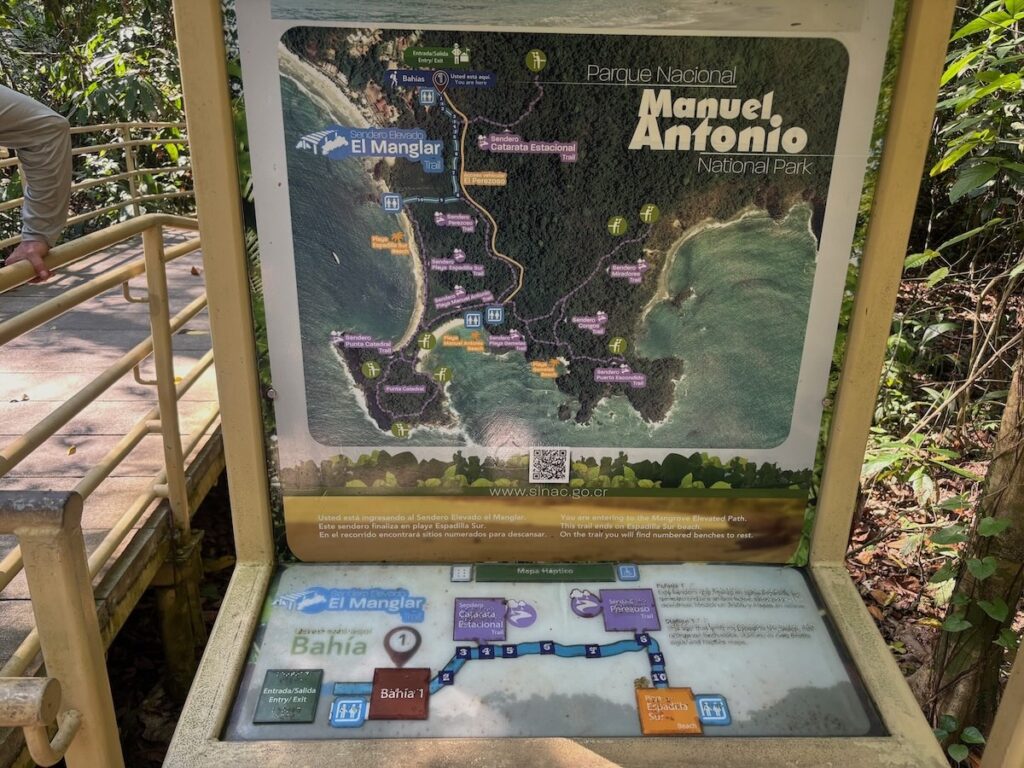
Sendero Perezoso universal trail. A flat, well-maintained boardwalk through primary rainforest. Easiest trail in the park, suitable for wheelchairs and prams. Connects to the beaches via the mangroves. The best place in the park to spot sloths.
Time 30–45 minutes • Cost Free with park entry
Avoid trying to do every trail in midday heat. By 10am the temperature and humidity climb fast and the longer trails become a slog.
A better plan is to walk the Perezoso and Punta Catedral early, then pick one beach to settle at for the rest of your visit.
Our guide also pulled us off the main trail when we arrived, as it was busy, and walked us round on quieter side routes, which made a real difference. By the time we looped back, the main trail had thinned out.
The parking scam (and where to actually park)
I didn’t run into this myself, I opted for a guided tour and the operator handled all the logistics. But it comes up so often in recent visitor reports that it’s worth flagging properly.
About half a mile before the real park entrance, people in fake park-ranger uniforms wave drivers down and direct them into an unofficial parking lot. They charge inflated prices, then send a second person over claiming guides are mandatory and quoting around $50 per person. Both claims are false. Guides are not mandatory in Manuel Antonio National Park. Self-guided is fine.
What the scam looks like
A flag-waver in the road, a uniform that doesn’t quite fit, and a laminated badge on a lanyard, all delivered with a confident manner. They’ll insist this is the only place to park and the only way to enter. Some have been reported physically standing in front of cars to stop them driving on. Reports from late 2024 suggest the police moved them on, others from early 2025 say they’re still out there. Treat it as live until proven otherwise.
Where to park instead
Drive past anyone flagging you down until you reach the signposted lot near the gate. On Google Maps, search Manuel Antonio National Park – Official Parking. It’s around 150 metres from the entrance, properly signposted, and run by locals who don’t try to upsell you on guides.
Cost typical $10 (£8) per day
My Top Tip! Roll up your windows, keep driving past anyone in a uniform standing in the road, and trust the actual signs. The real car park doesn’t need a flag-waver in the middle of the road to direct you in.
When to go and when to avoid
The dry season runs roughly mid-December to April. The green season runs May to mid-November, with daily rain in concentrated afternoon bursts.
- February to April: dry, sunny, busiest weekends. My pick if your dates are flexible.
- May to early July: start of the green season, fewer crowds, manageable rain.
- October: rainiest month, lowest tourism, sometimes you can buy tickets at the gate.
- Avoid: Christmas week, New Year week, Easter week. The crowds change the experience completely and queues at the gate stretch to over an hour.
Best time of day
7am opening, every time. Wildlife is more active in the cool. The heat is bearable. The day-trip groups from San José don’t arrive until around 9.30am, so you get nearly two hours with a much quieter park.
Getting there for opening is easier from some hotels than others. Several along the road run a free shuttle to the gate, ours included, which is one of the things worth checking in my guide to where to stay in Manuel Antonio.
We arrived at 7am and left around 1.30pm. By the time we left the park was noticeably quieter again as the day-trippers thinned out, but we’d already seen everything we’d hoped to.
What to bring
A short list. The gate rules are what catch people out.
- Reusable water bottle. Single-use plastics aren’t allowed.
- Reef-safe sun cream and DEET insect repellent.
- Walking shoes with grip. Trainers fine, they’ll get muddy.
- Swimwear under your clothes and a quick-dry towel for the beaches.
- A snack you can eat before you go in, or have a big meal before. Don’t rely on the inside cafe.
- Passport or a photo of your passport ID page for entry.
- Binoculars if you have them. A cheap £30 pair will transform what you see.
My Top Tip! A small pair of binoculars is the cheapest upgrade to your visit. Even on a guided tour, they let you see things between your guide’s pointers. I used mine every day on my Costa Rica trip.
What you’ll actually see
Manuel Antonio is small and packed. The thing that surprised me most was the sheer density of wildlife in such a tiny park. We’d already done Arenal Volcano National Park earlier in the week and the hanging bridges, and Manuel Antonio had more visible wildlife than either.
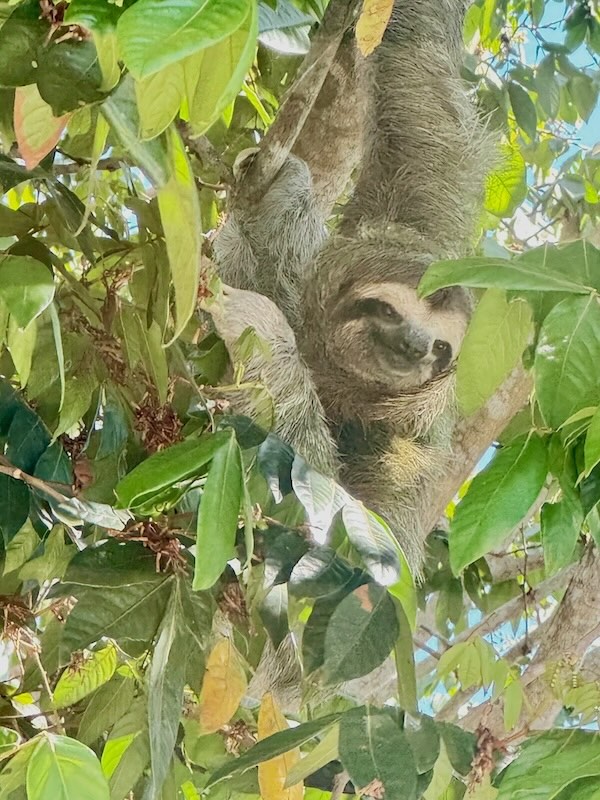
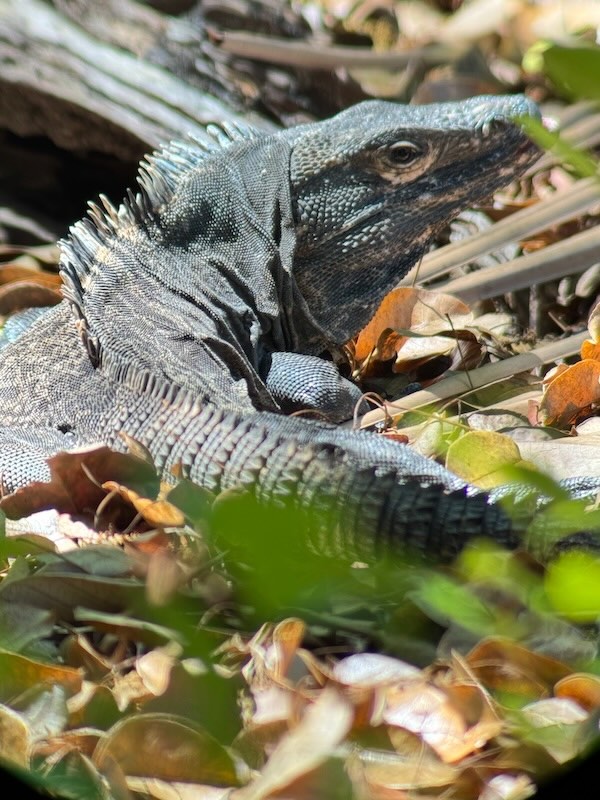
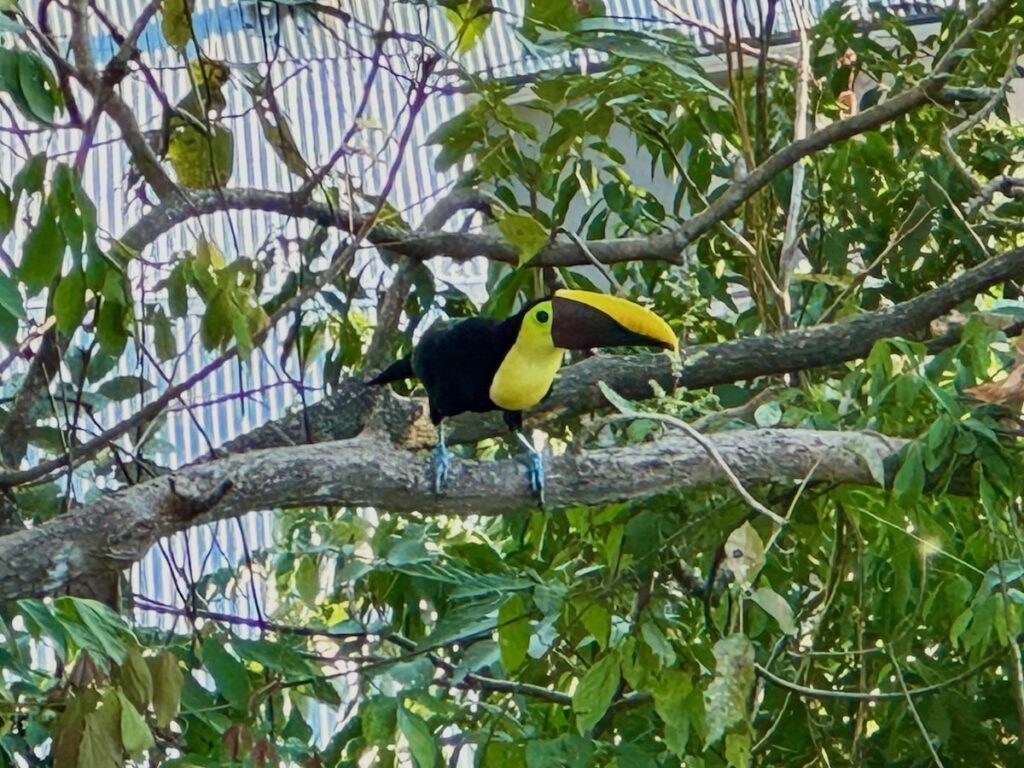
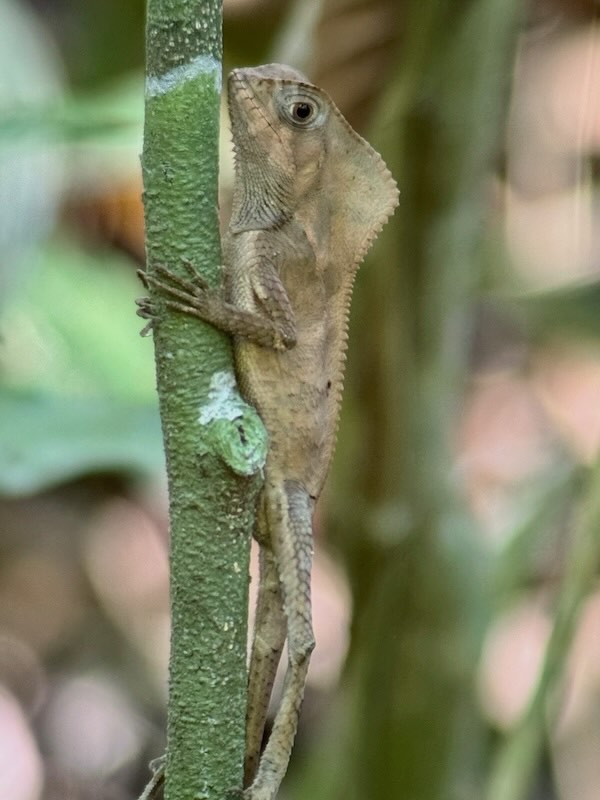
In five hours we saw six sloths (both two-toed and three-toed), white-faced and howler monkeys, basilisk lizards, dozens of iguanas, bats roosting under a leaf, crabs on the beach, a toucan, vultures, a motmot, and the genuine highlight: a pauraque with a chick.
The pauraque is a nocturnal bird that disguises itself very well in the brush. We walked straight past it. Our guide doubled back, pointed it out, and we’d never have seen it on our own.
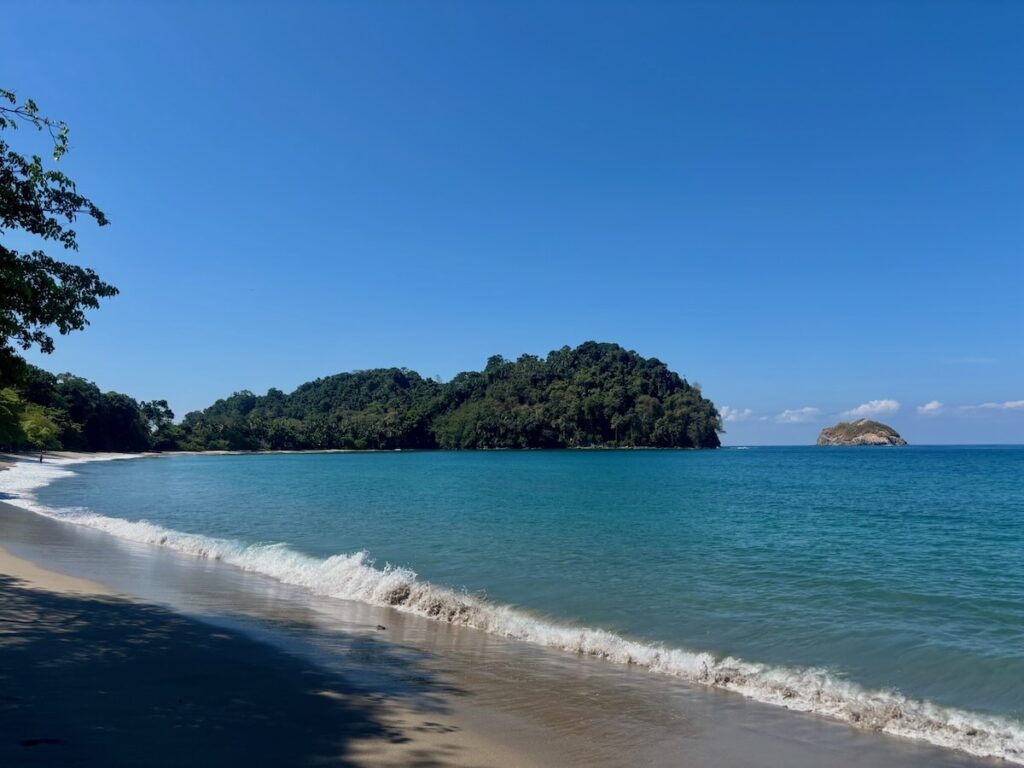
The beaches inside the park, particularly Playa Manuel Antonio, are the other highlight. White sand, clear water, low rocky headlands and forest right up to the edge.
We swam at Playa Manuel Antonio, which was lovely until the white-faced monkeys turned up. They’re brazen rather than scary, but they will absolutely try to get into your bag, and into other people’s bags too. We spent a chunk of time chasing monkeys off our stuff and other strangers’ stuff. This is exactly why food is no longer allowed inside the park!
If you decide it isn’t for you, here’s what to do instead
If the park itself doesn’t appeal but you’re still coming to this stretch of coast, there’s plenty here that doesn’t involve a ticket. I’ve ranked the best things to do in Manuel Antonio separately. Or there are some alternative areas in Costa Rica below.
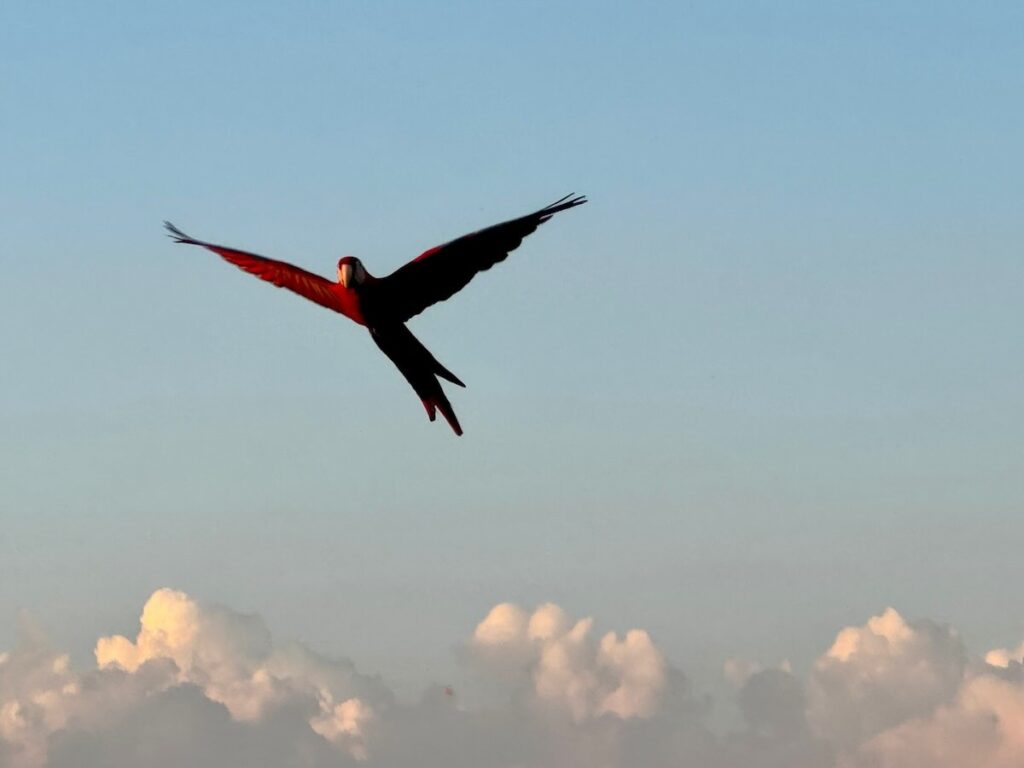
Corcovado National Park (Osa Peninsula). The wildlife park in Costa Rica. Tapirs, scarlet macaws, four monkey species, and a real chance of seeing big cats. Remote, harder to reach, and worth every minute of the journey if you have time. Pick this if Manuel Antonio feels too tame.
Tortuguero National Park (Caribbean coast). Reachable only by boat or small plane. Jungle canals, sloths, monkeys, caimans, and turtle nesting in season. A completely different ecosystem to the Pacific side. Pick this if you want a quieter, more remote experience.
Arenal Volcano National Park. Volcano views, hanging bridges, hot springs and easy rainforest hikes. Not as wildlife-rich as Manuel Antonio, but the scenery is the headline. If you’re basing yourself in La Fortuna, I’ve written a full guide to the best things to do in La Fortuna.
I also cover it in detail in my 7-day Costa Rica itinerary, where it pairs well with Manuel Antonio rather than replacing it.
FAQs about visiting Manuel Antonio National Park
Yes, if you book ahead, arrive early, and steer clear of the peak weeks. Half a day is enough without it eating your itinerary.
No, guides are not mandatory. But if you want to see wildlife, a guide is well worth the extra cost. Self-guided is fine for the trails and beaches.
No. One ticket equals one entry. If you leave for lunch, you can’t come back.
Reports vary. It was very active through 2024 and into early 2025. Some recent visitor reports say the police have moved the scammers on, others say they’re still flagging cars down. Treat it as live, drive past anyone waving you down, and head to the signposted official lot near the gate.
Around $18 (£15) per adult including tax. Check the SINAC site for the current price as fees do change.
Different parks, different reasons to visit. Manuel Antonio is easier, prettier on the beaches, and quicker to do. Corcovado has dramatically better wildlife and a much more remote feel. If you have time and budget for both, do both. If you have to pick one and wildlife is your priority, Corcovado wins.



7 Comments
Comments are closed.