What are the best things to do in Chengdu if it’s your first time? I had four nights there, and I’d put it this way: see the pandas first, then choose the rest by what you enjoy.
The pandas alone make Chengdu worth the trip, but there’s way more to it than that. Give me a few minutes of your time and you’ll have your own shortlist, know what each thing costs and how to plan your trip.
The best things to do in Chengdu at a glance
These are the best places to visit in Chengdu that I recommend from my trip. For inside information on each read further down or click its name in the table.
| Thing to do | Area | Best time |
|---|---|---|
| Giant pandas | 10 km from the centre | Morning |
| Du Fu Thatched Cottage | West | Daytime |
| Daci Temple, Taikoo Li and IFS | City centre | Afternoon |
| Zouchuan hotpot | City centre | Evening |
| The river and cocktail bars | City centre | Night |
| Grand Stage tea house show | East (Dongjiao Memory) | Daytime |
| Dongjiao Memory | East (Dongjiao Memory) | Daytime |
| Shuyanfu show and dinner | East (Dongjiao Memory) | Evening |
| Cheersum spa | South (High-tech Zone) | All day and overnight |
If you’re looking for what to skip, the first thing I’d drop is the shopping. Taikoo Li and IFS are impressive, I just don’t choose to go shopping much when I’m away.
Disclaimer: This article may feature affiliate links. If you click these links, and choose to book with that hotel or company, I will earn a small commission at no extra cost to you. I appreciate the support that allows me to continue providing this information.
See the giant pandas
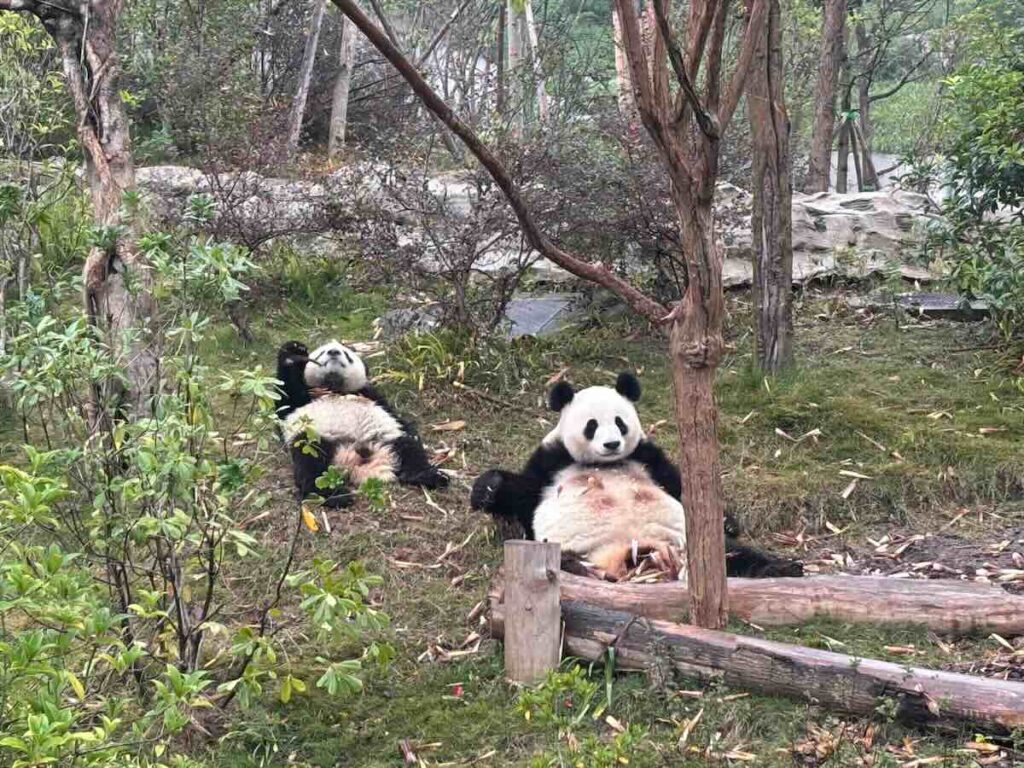
The Chengdu Research Base of Giant Panda Breeding is a breeding and research centre about 10 km from the city centre. It was set up in 1987 with six giant pandas rescued from the wild, and today the pandas live across a big park, with nurseries for the cubs, red pandas, golden monkeys and a panda museum.
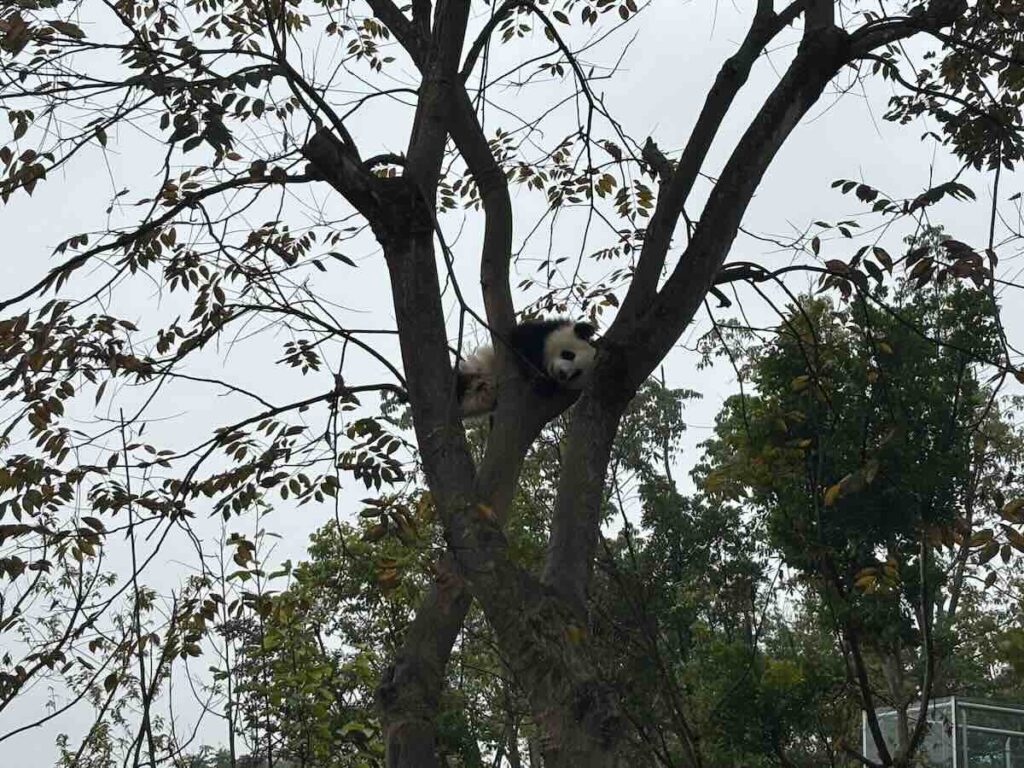
The first time you see them is very surreal. It’s an animal you’ve seen so often in pictures and videos, and there it is in the flesh, quite close to you. What surprised me was how well they climb, which is probably silly of me given they’re bears, but several were very high up in the trees. There’s even a whole air-conditioned building for them in the summer months.
Standard tickets are sold online only, as a morning or an afternoon ticket. Book with the exact name on your passport and bring it with you, because the two are checked against each other at the gate. If you’re not taking a DiDi (China’s version of Uber), Metro Line 3 goes to Panda Avenue station and a shuttle bus covers the last bit. The Panda Base lists every bus and metro route on its official getting there page.
I did the VIP experience. You give them the number plate of your DiDi and the car is let in all the way up to the staff entrance, so you skip the whole queue. People were queuing from 07:00 for the 08:00 opening, so it made quite a difference, and we didn’t queue anywhere all visit.
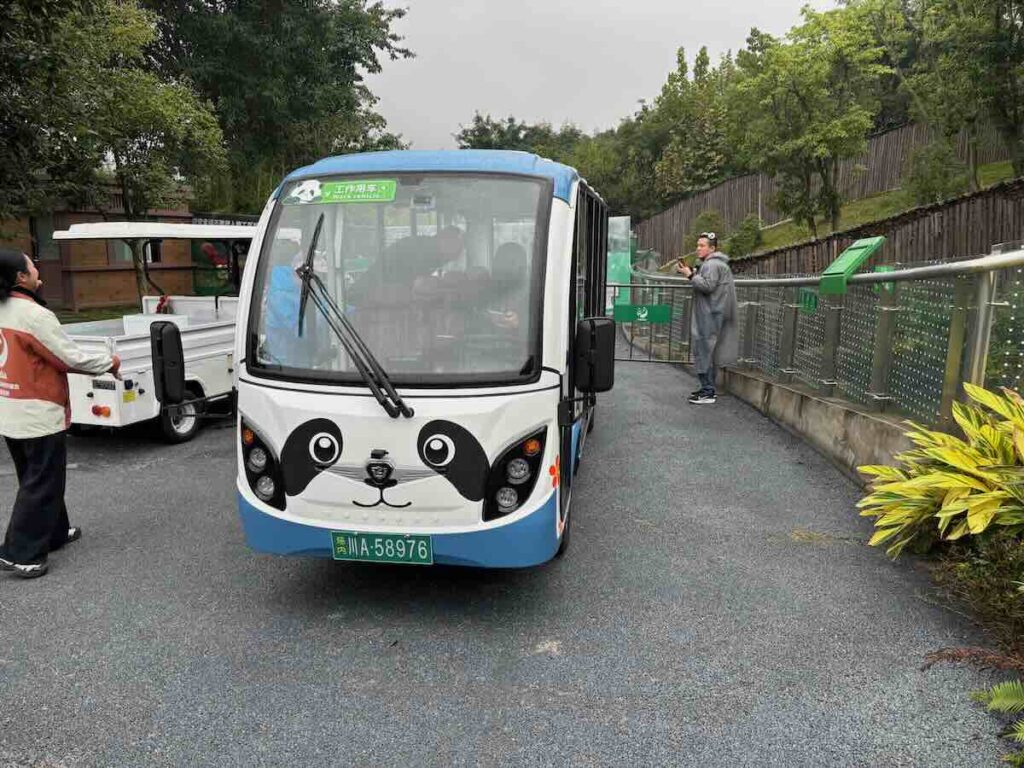
You also get a coffee and you’re shuttled around the base, with no ticket slot to worry about. The guide added a lot. Hearing about the breeding programmes, the pandas themselves and how it all works was really interesting, and she knew just as much about the other animals in the park. I booked it through Trip.com, where it’s sold as an admission ticket with express entry and a half-day study tour.
It’s about £50 more than a standard ticket. If you’re not watching costs, it’s well worth it, and it’s what I tell my friends to book.
Time 3–4 hours • Cost RMB 55 (£6) standard, about RMB 500 (£56) VIP Check availability here
Du Fu Thatched Cottage
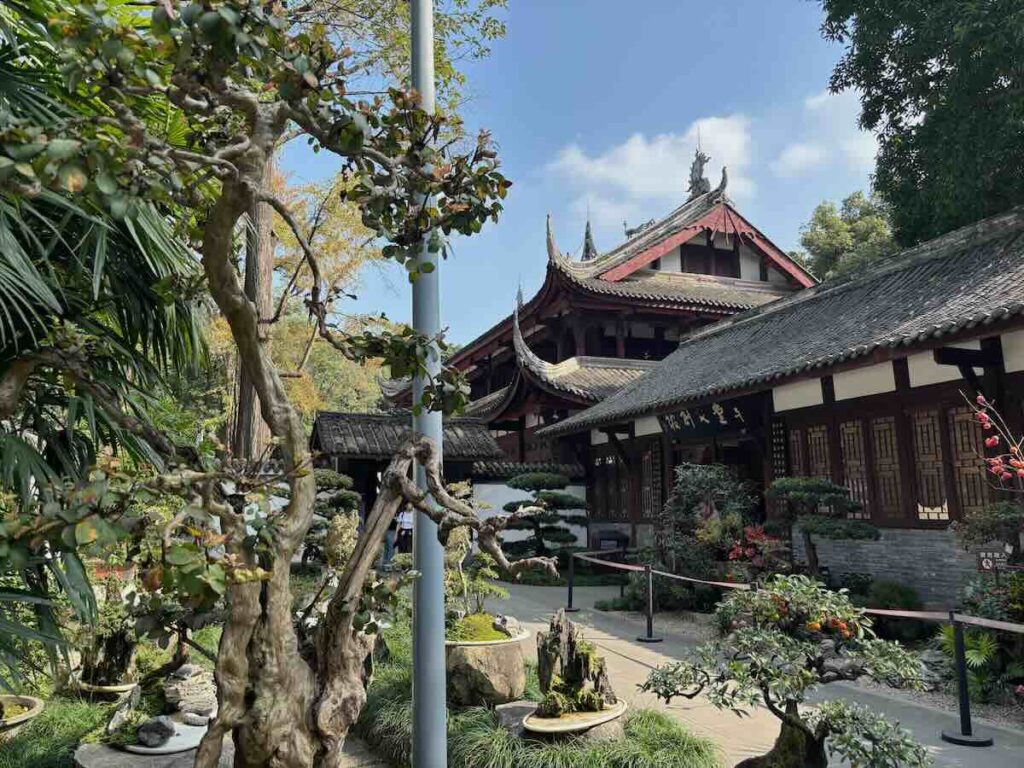
Du Fu was one of China’s great poets, writing in the Tang dynasty more than a thousand years ago, and this is the site of his home in Chengdu. Today it’s a museum set in a large garden, with old halls, water and paths between them.
The gardens were my favourite bit, for sure. They’re beautiful and well kept, and it was a nice break from the city. The bonsai garden was the highlight for me.
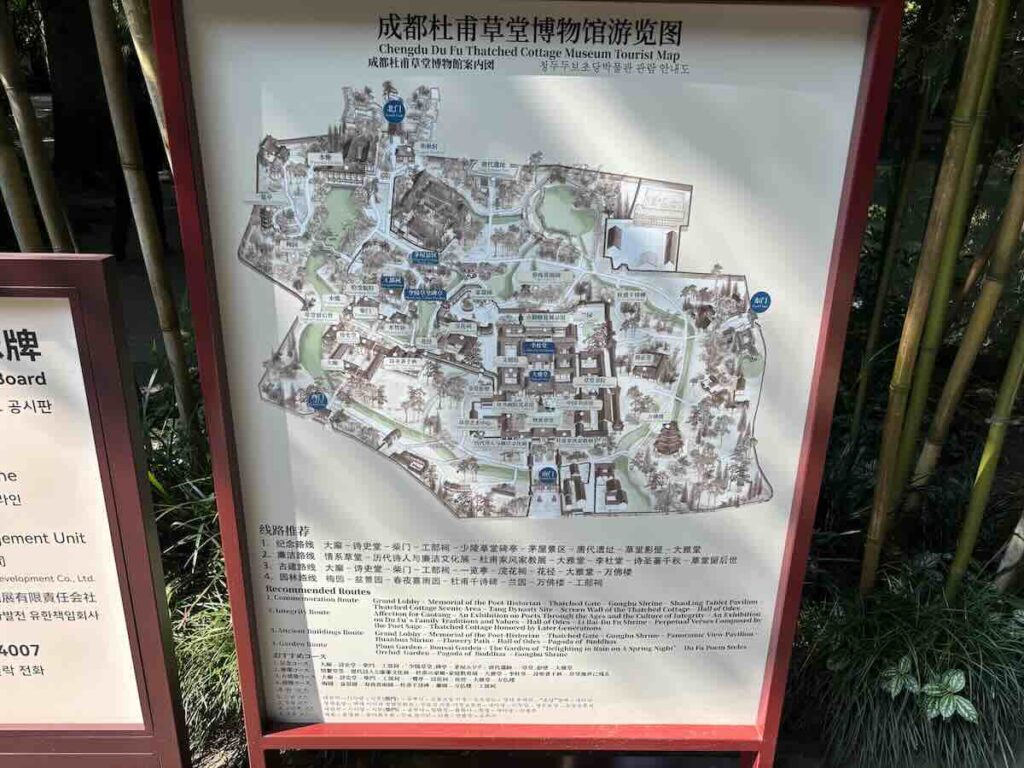
How to visit Du Fu Thatched Cottage
It’s on the west side of the city. A DiDi is the easiest way there, or Caotang North Road station on Metro Line 4 is about a 15-minute walk away. I went in at the South Gate. There’s a map at the entrance with four recommended routes, which is useful if you like a plan. We enjoyed just wandering around. You can hire a guide, but we chose not to. The last tickets are sold at 17:00.
Time about 2 hours • Cost about RMB 50 (£6) you can book tickets in advance to skip the queue.
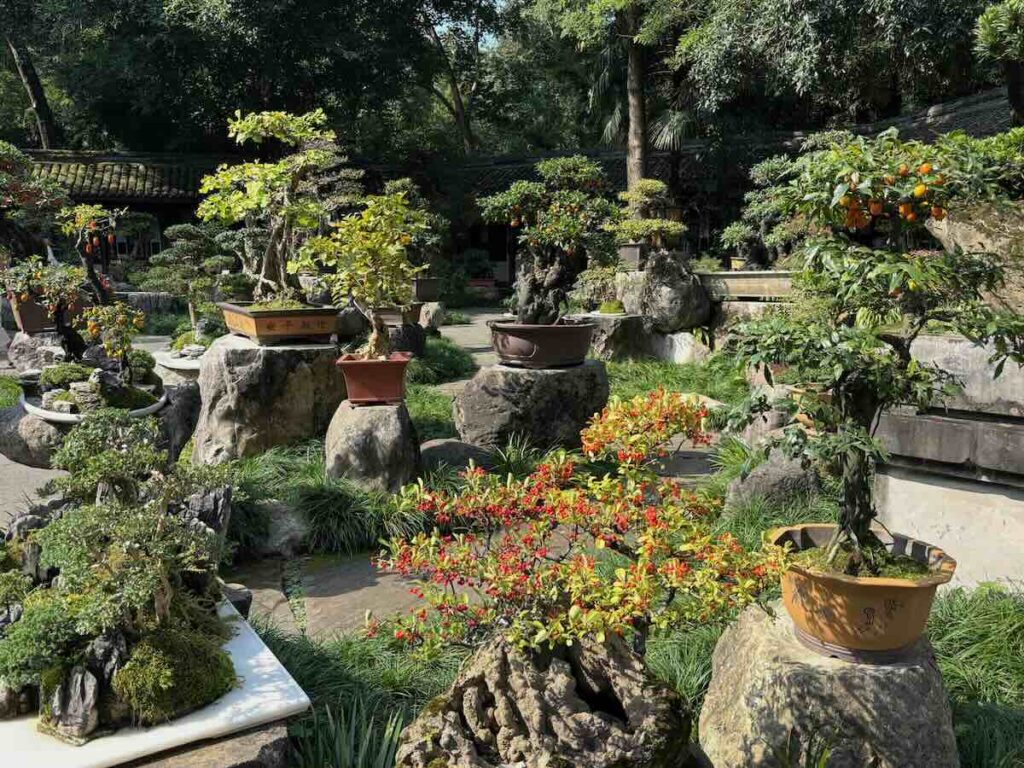
Is Du Fu Thatched Cottage worth it?
Yes, if you like gardens. For a longer visit, there’s a bigger scenic park, free to enter, just across the road from the South Gate.
Daci Temple, Taikoo Li and IFS
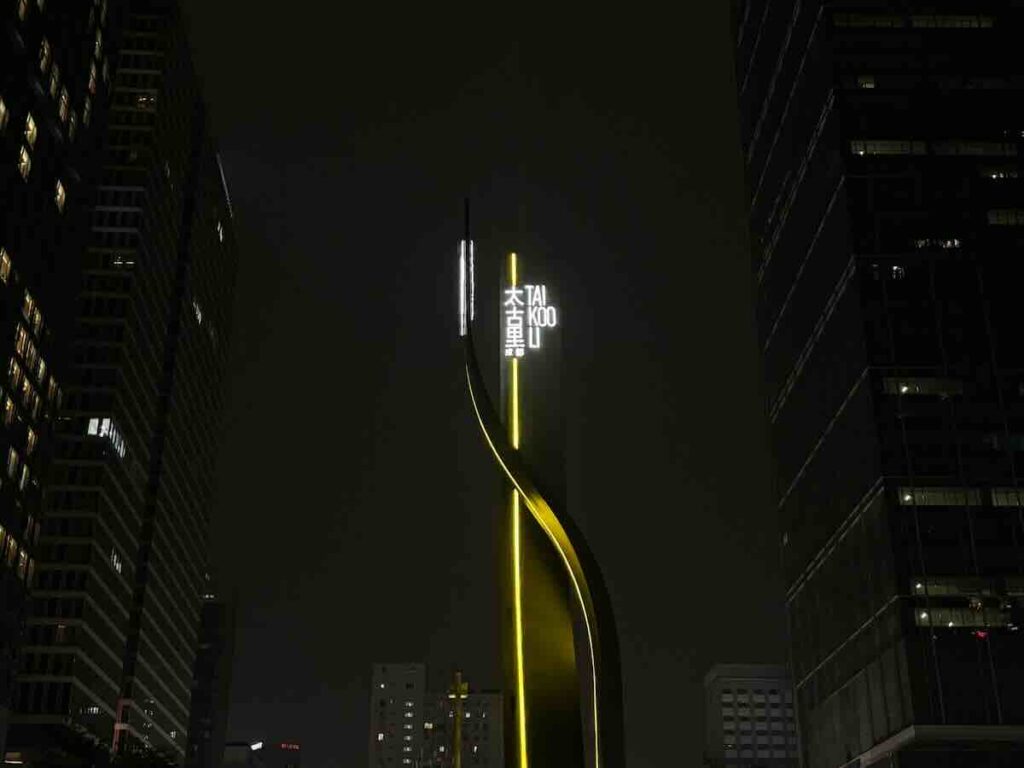
These three sit together around Chunxi Road, Chengdu’s main shopping street. The shops are open 10:00 to 22:00, but the temple shuts at 17:30, so it’s the one to do first. There is some exceptional shopping here if that’s your thing.
Daci Temple
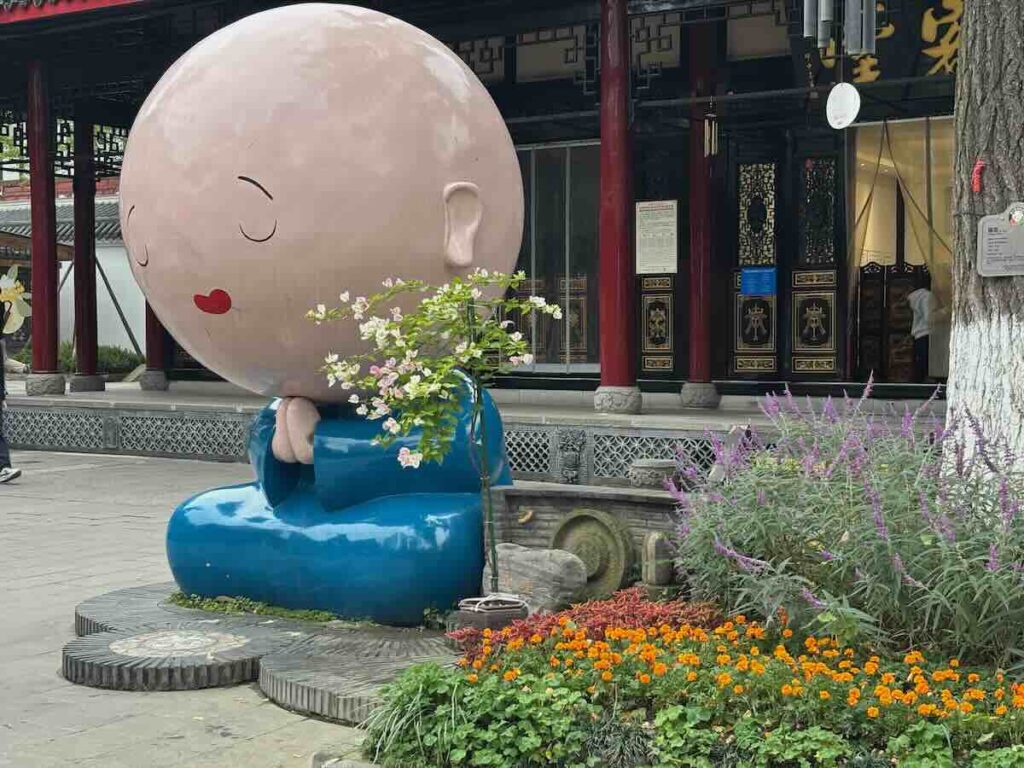
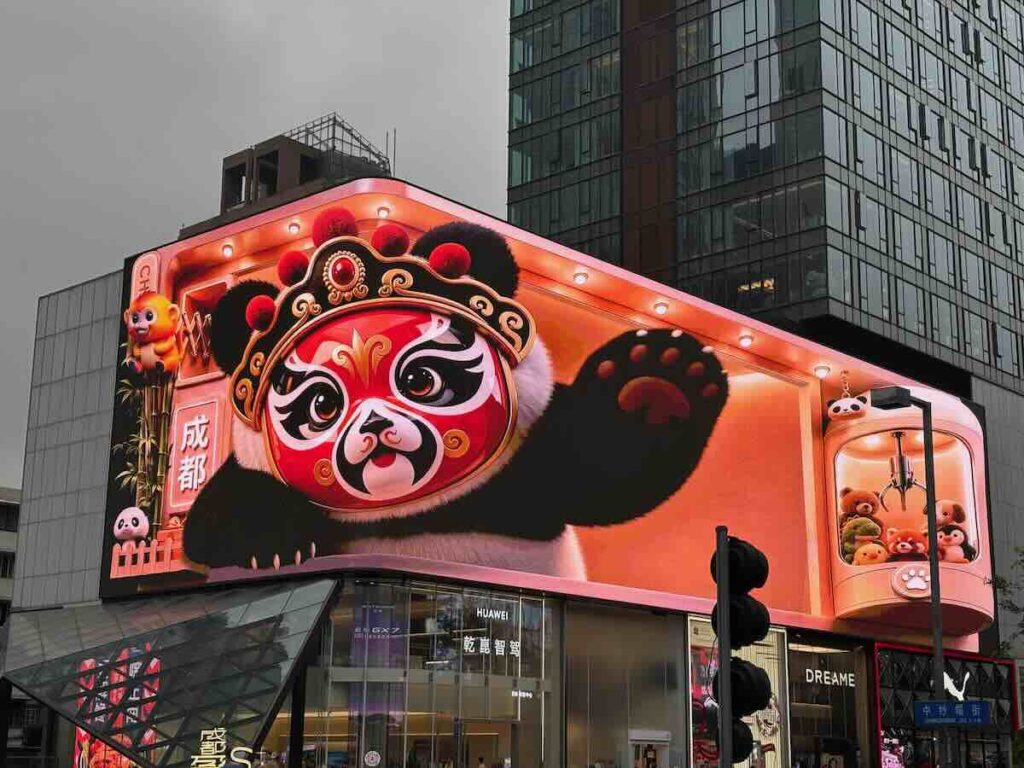
Daci Temple is a Buddhist temple right in the middle of the city’s main shopping area. It’s easy to do if you’re near any of the shopping, because it’s literally next door to Taikoo Li. It won’t be the best temple you see in China, but it’s right there and it’s interesting. The 3D panda billboard is close by too which I recommend as worth a look.
Time about 40 minutes to walk around • Cost Free
Taikoo Li
Taikoo Li is built around Daci Temple, so you walk straight from one into the other. It’s an open-air shopping district of low-rise buildings and lanes, designed as a modern take on traditional Sichuan architecture, with cafés and restaurants mixed in with the shops. I found it impressive, and it’s the one to head for if you’d like to wander outdoors. Chunxi Road metro station, on Lines 2 and 3, is right beside it.
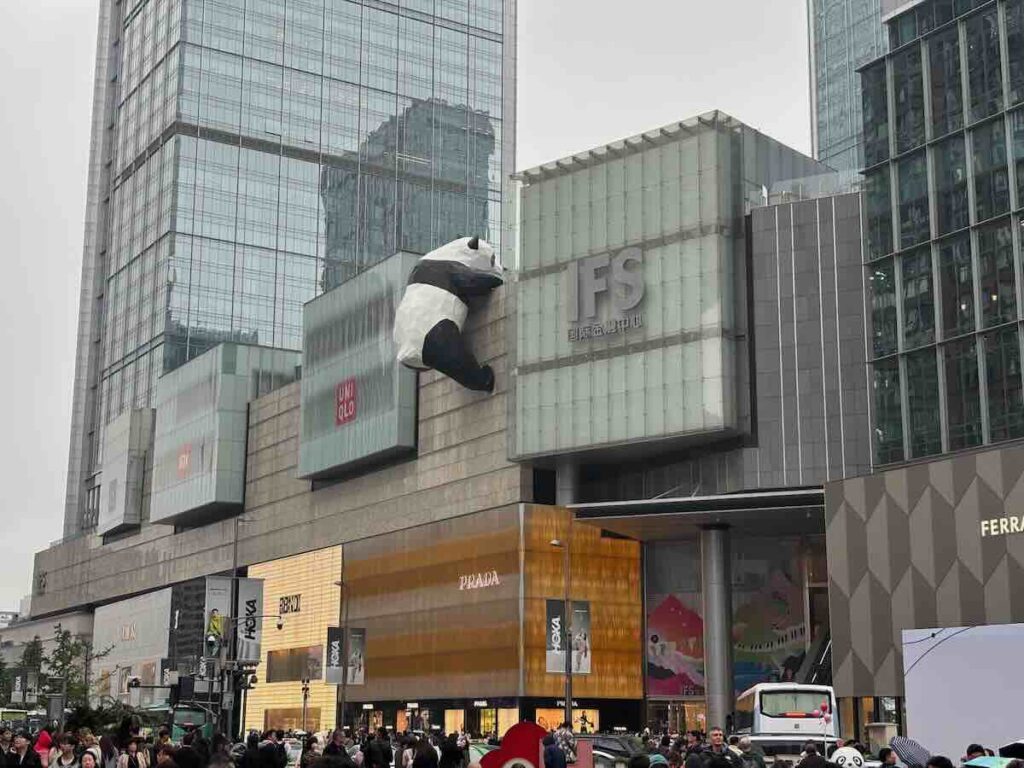
IFS and the climbing panda
IFS is the big indoor mall on Chunxi Road, close to Taikoo Li. It is a pristine shopping centre, but the reason to go even if you’re not shopping is the panda. I Am Here is a 15-metre giant panda sculpture by the artist Lawrence Argent, climbing up the outside of the building. You can see it from the street, and you can get up close to it from the top floor.
The food court is good if you want a quick, simple, tasty lunch, with lots of good options to choose from.
Pandas are everywhere in Chengdu once you start looking: costumes, statues, stickers, signs. It’s fun to spot them.
Where to eat hotpot in Chengdu
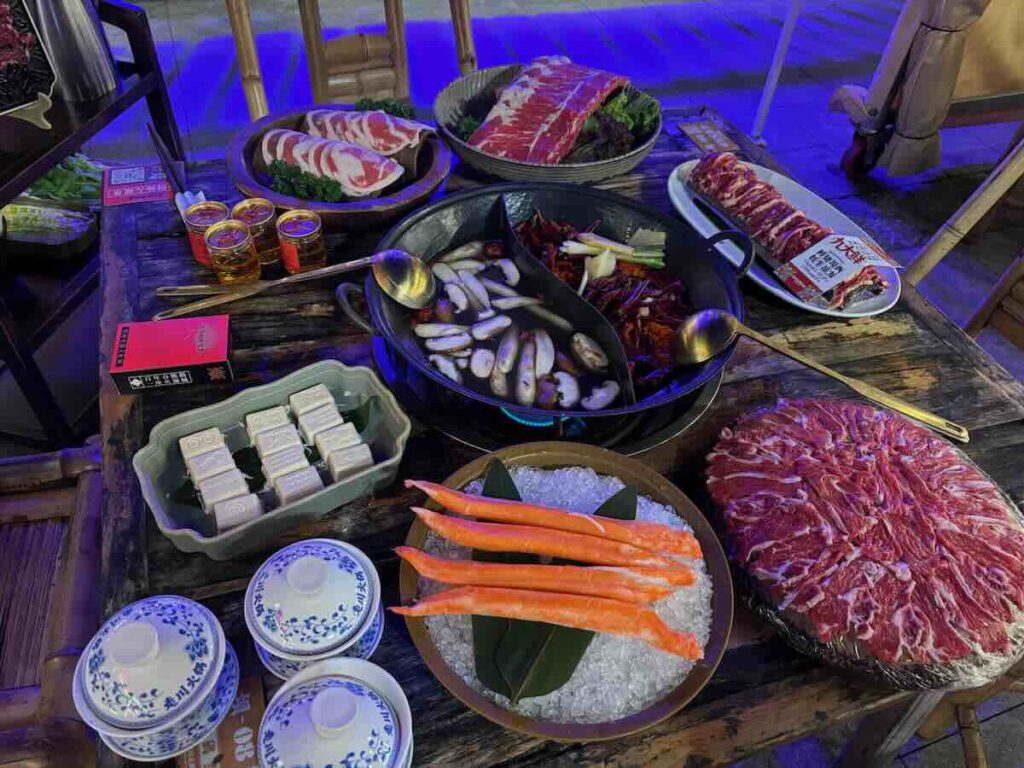
Sichuan hotpot is a pot of simmering broth in the middle of the table that you cook raw meat and vegetables in yourself. I went to Zouchuan (走川), a three-storey Sichuan hotpot restaurant near Taikoo Li, with a friend who lives in Chengdu, and I loved it. We were the only Westerners there and people kept telling us that this was a good one to come to.
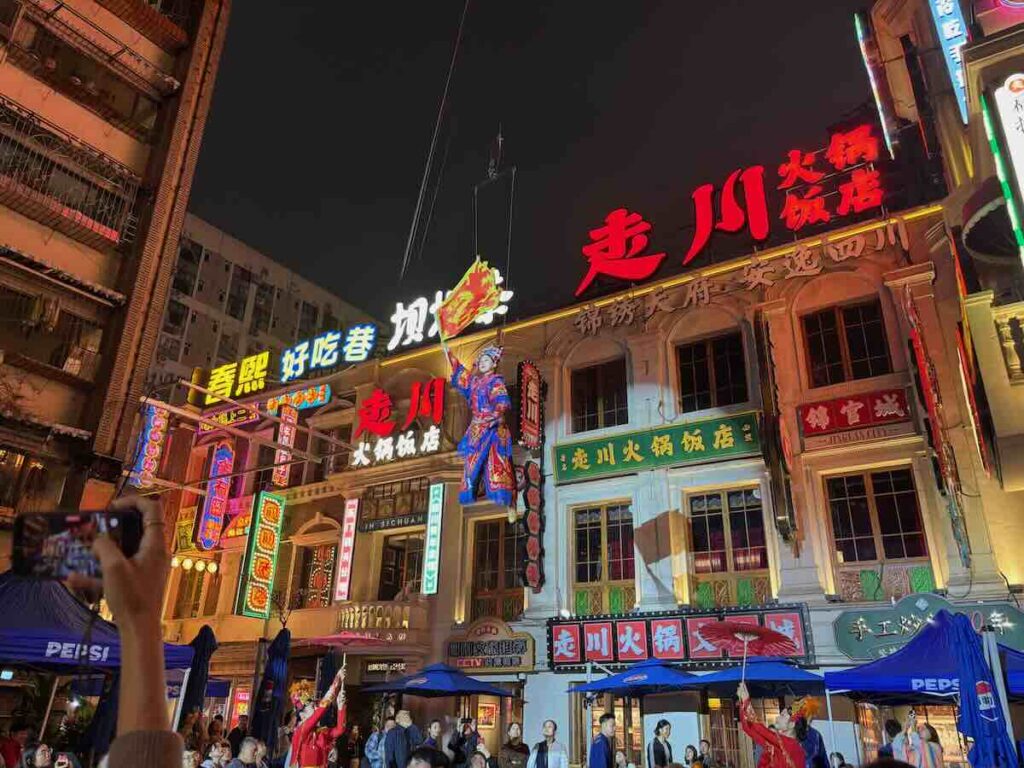
There were performances while we ate, so look out for the many-faced man and the flying lady. If you’re a foodie, this is the one meal I wouldn’t miss, and if a friend asked me for the best hotpot in Chengdu, I’d send them here.
It’s on Trip.com as IN SICHUAN (Zou Chuan), which is the easy way to book a table. Our friend was hosting so managed the table booking, the bill depends on what you order.
Cost about RMB 110 (£12) per person
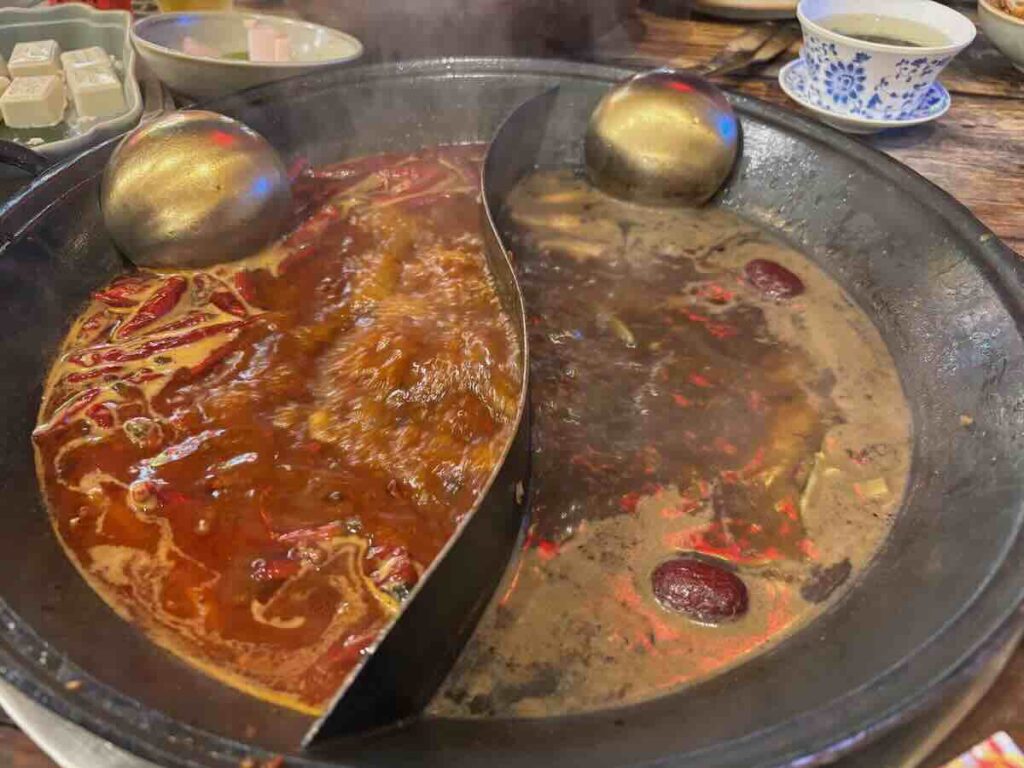
How to order hotpot without speaking Mandarin
- Scan the QR code on your table with WeChat, the Chinese messaging and payment app.
- Let WeChat translate the menu.
- Pick your broth and your dishes, then pay in the app.
Is Chengdu hotpot too spicy?
We had a split pot, with mushroom broth on one side and spicy broth on the other. The mushroom side wasn’t hot at all. The spicy side was spicy but manageable, and it got hotter the longer we sat there, which is worth knowing if you’re near your limit at the start.
It’s a different kind of heat too. Sichuan pepper numbs your mouth, which was very new to me the first time I had it. I loved the whole experience and left very happy and very full!
What else to eat in Chengdu
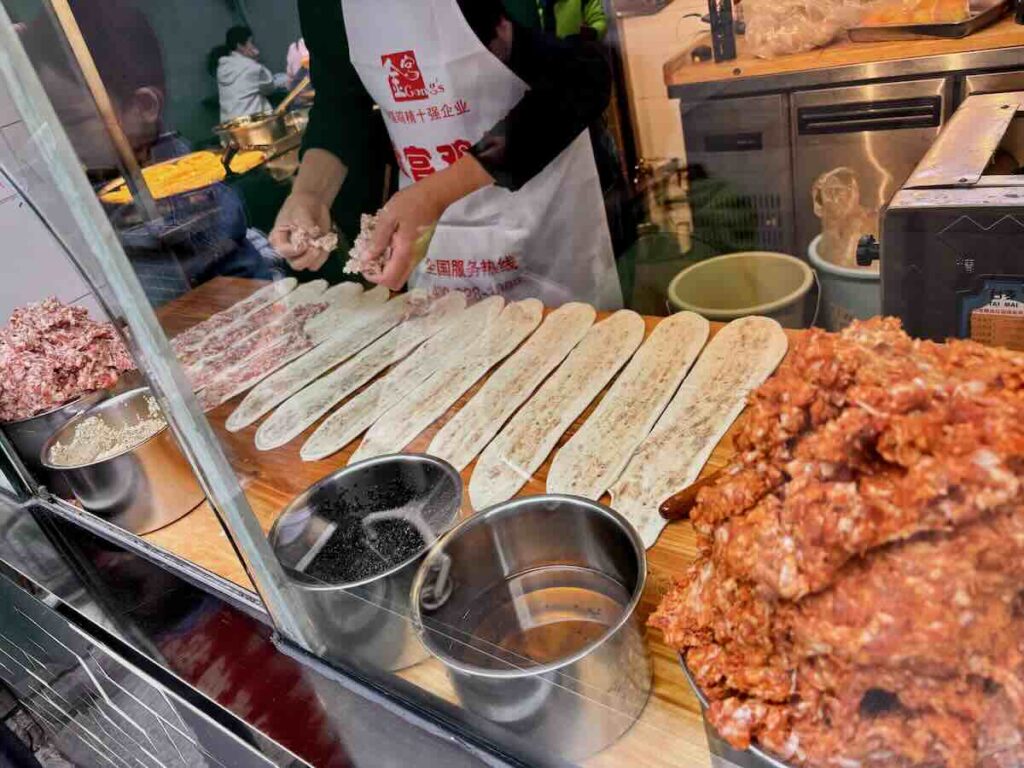
These are my favourite dishes I ate beyond hotpot and would recommend for trying. The Chinese names are there so you can match them on a menu or show them to staff.
- Guokui (锅盔): a stuffed flatbread, and my favourite find. I stumbled across a small shop on Shamao Street South, near IFS, where they were making it by hand.
- Dan dan noodles (担担面): noodles with a spicy sauce at the bottom of the bowl that you stir through.
- Kung pao chicken (宫保鸡丁): I didn’t realise it was authentic Chinese, and I was very pleased to find out it’s a Sichuan classic. Delicious.
- Chao shou (抄手): the Sichuan name for wontons, served in a clear soup or in red chilli oil.
- Zhong dumplings (钟水饺): pork dumplings in a sweet and spicy chilli oil.
Two more Chengdu dishes worth looking out for are mapo tofu (麻婆豆腐), tofu in a spicy sauce, and sweet water noodles (甜水面), thick noodles in a sweet soy and chilli sauce.
See a tea house show or a dinner show
Both of these are in Dongjiao Memory, and they’re very different. Shuyanfu is a full evening with dinner, and the Grand Stage is a casual tea house in the daytime. With one slot to spare, I’d go to Shuyanfu.
Shuyanfu show and dinner
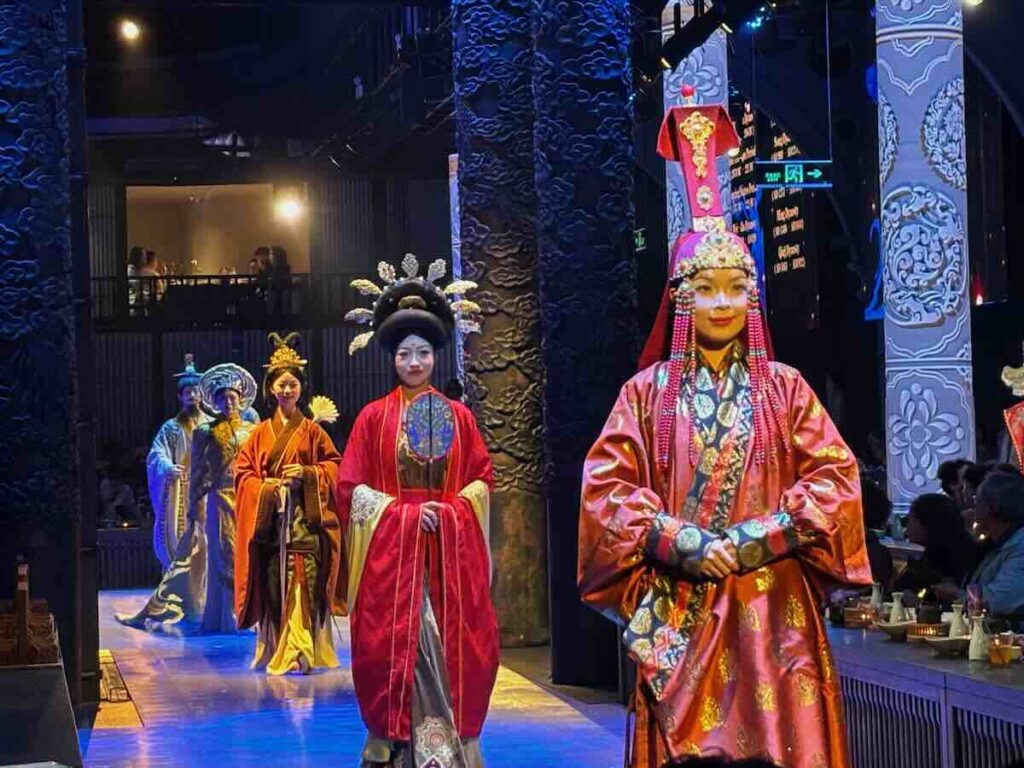
Shuyanfu is a dinner show where the courses are paired with music and dance, taking you through different periods of Chinese history. It’s performed in English and Chinese with plenty of crowd interaction. The lighting and costumes were West End level, and I enjoyed the novelty of a show going on between courses and while you’re eating.
The food is several courses, elaborate and very authentic. If you’re a little nervous about what you’ll be served and normally like to pick what you eat, the vegetarian option is a safe bet. My partner went for it.
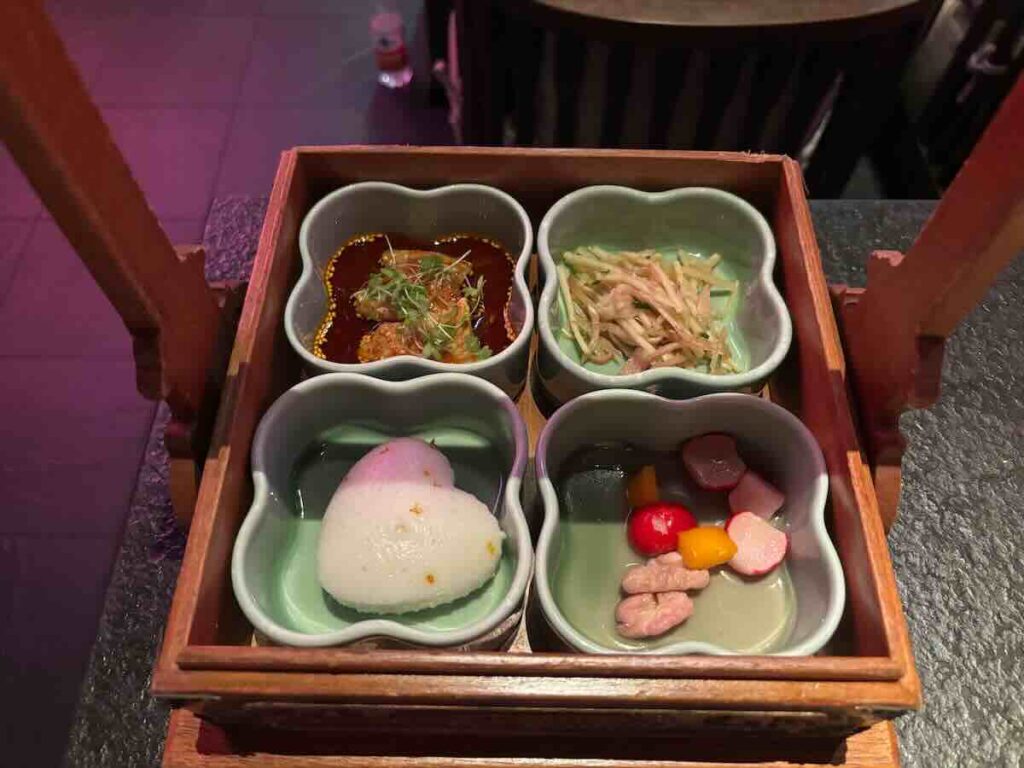
You can dress up first, with about 20 costumes for men and 100 for women, plus full make-up and styling as a paid extra. I didn’t, because I spent the afternoon wandering, but half our group did and really enjoyed it, my partner included. You need a slot for it, and it takes 30 to 60 minutes.
Book two or three days ahead, because it sold out on the day. There are three sittings a day, starting at 12:30, 18:30 (mine) and 21:00, and check-in opens half an hour before. It’s by the South Gate of Dongjiao Memory, and I booked through Trip.com.
Time about 2 hours • Cost about RMB 498 (£56) Book in advance here
The Grand Stage tea house
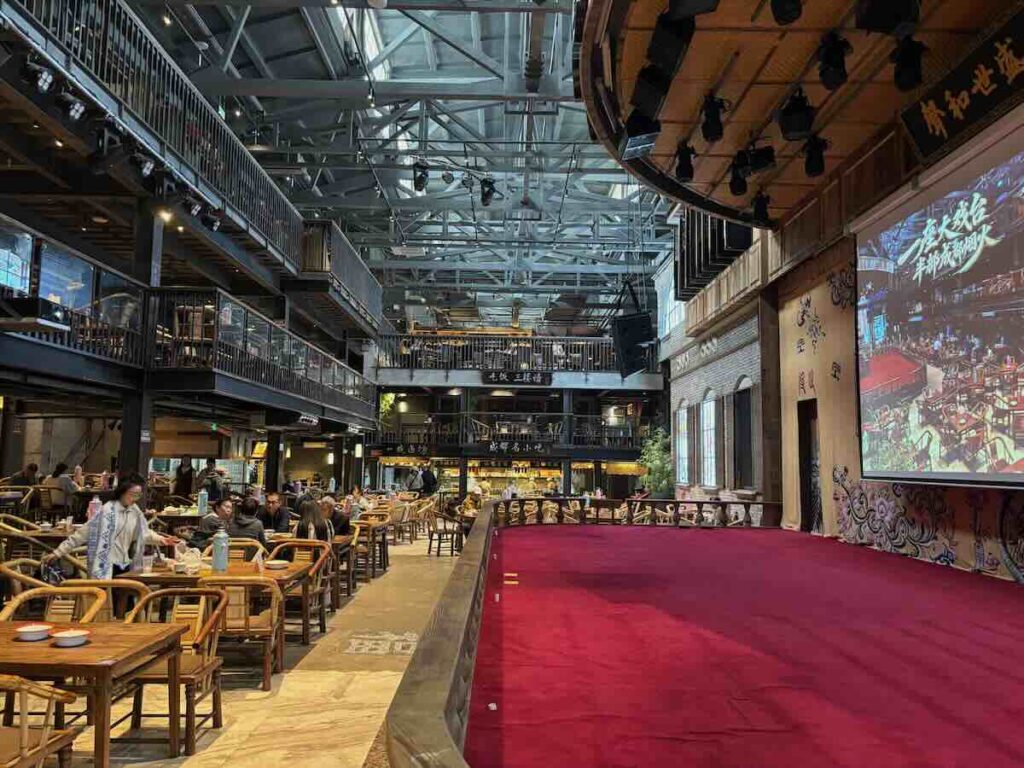
The Grand Stage is a tea house serving traditional tea and snacks with a short show. It’s the more casual of the two, and it was OK. The tea and all the snacks were interesting to see, and the show was like the one at the hotpot, a man changing faces again and again. Pick it if you’d like a cheaper daytime option.
Time 2–3 hours • Cost about RMB 120 (£13)
Explore Dongjiao Memory
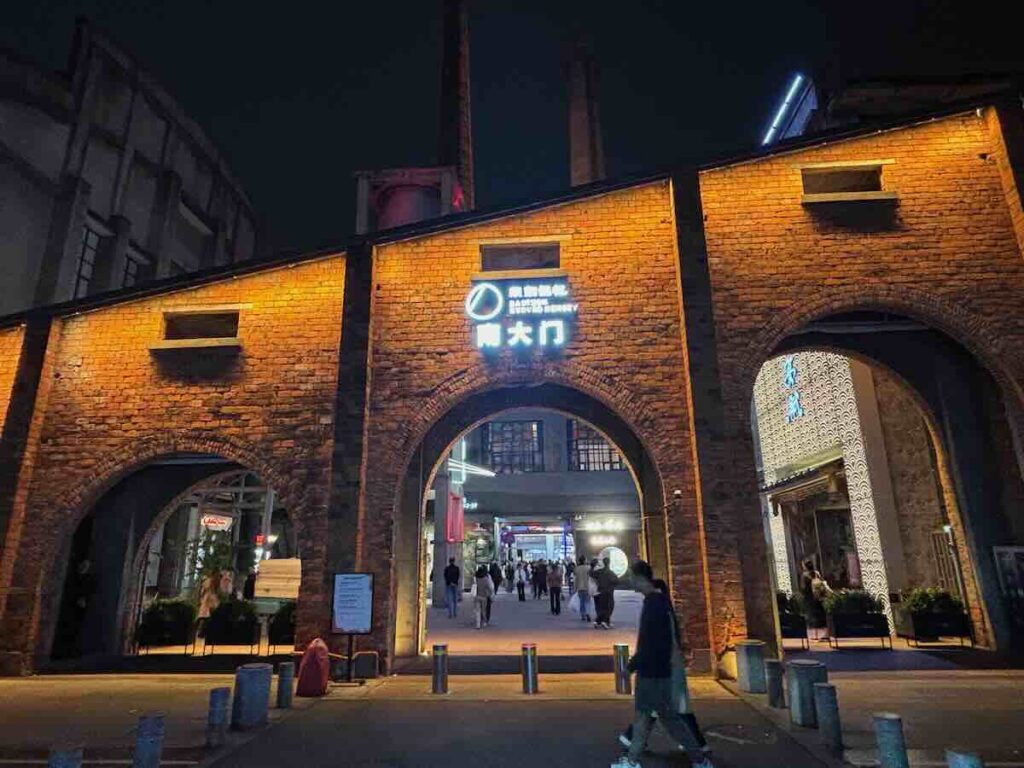
Dongjiao Memory is an old electronics factory on the east side of the city that’s been turned into a trendy neighbourhood of cafés, galleries and shops, and it’s very cool. I’d definitely tell you to have a walk around. The Grand Stage and Shuyanfu are both here, so a show and a walk fit into one visit. Metro Line 8 stops at Dongjiao Memory station.
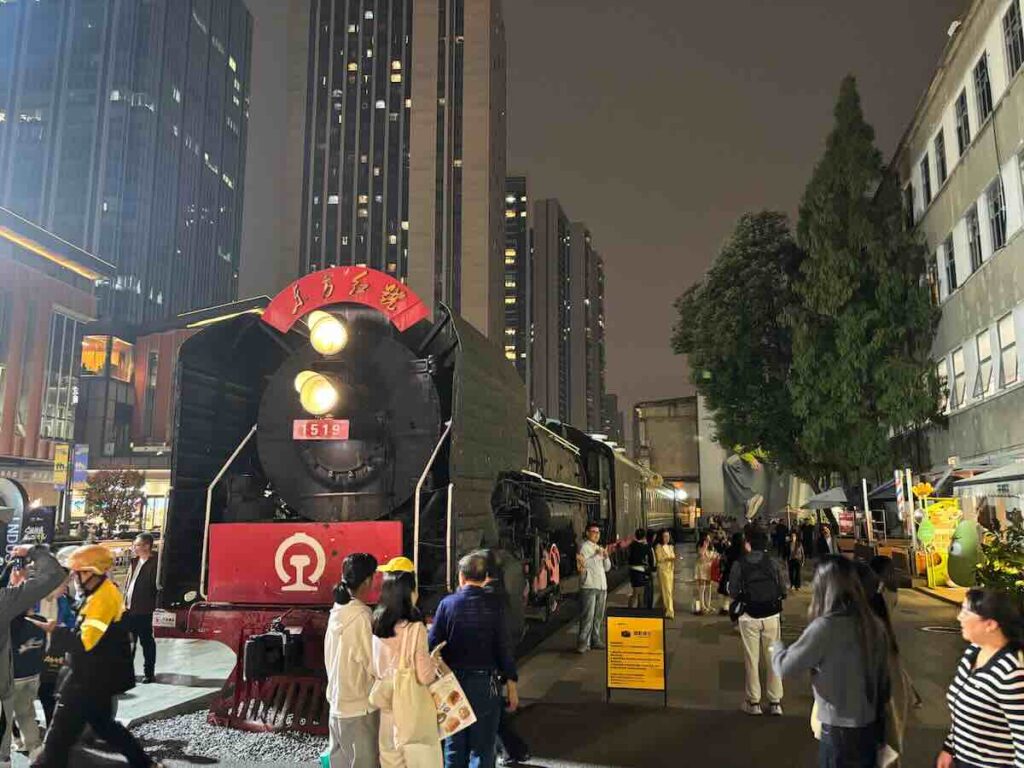
Close by is Locomotive Square, where a train has been turned into a café beside a skate park. The architecture around Zhongyang Boulevard is interesting too.
Time 1.5–3 hours • Cost Free
Things to do in Chengdu at night
If you’re in the mood for a night out, Chengdu is a very good one.
Anshun Bridge and the river at night
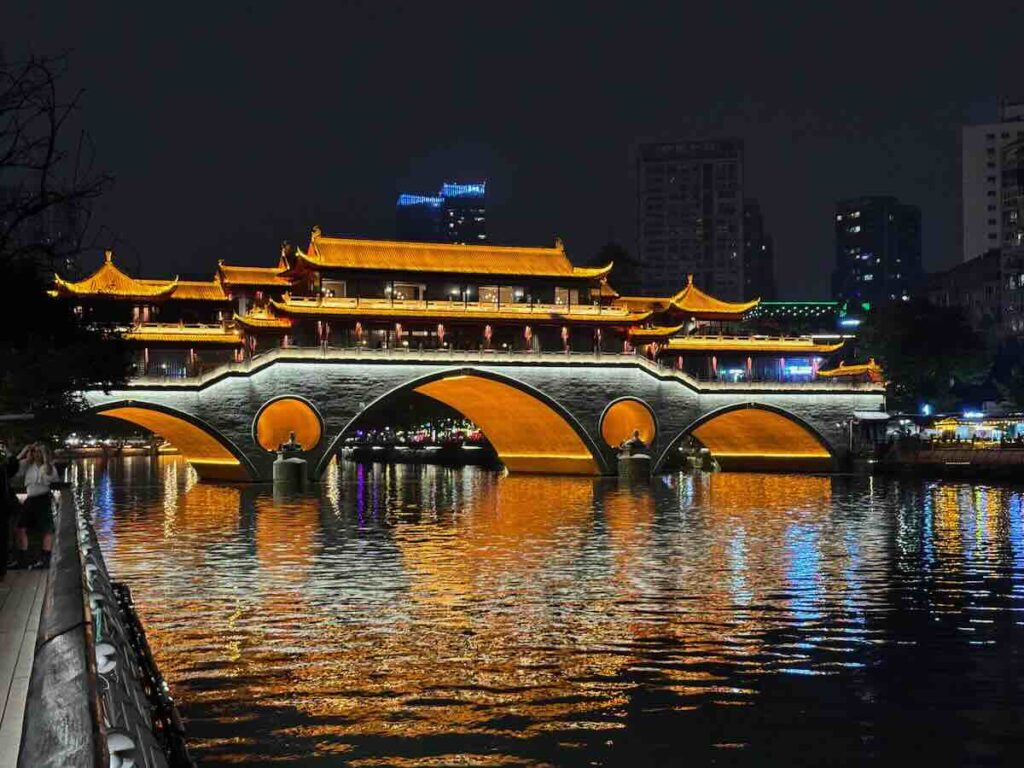
Jiuyanqiao is a street of bars along the river that leads to Anshun Bridge, and the whole stretch is lit up at night. The best view is from the north bank at Hejiang Pavilion (合江亭), where the Fu and Nan rivers meet.
Cocktail bars
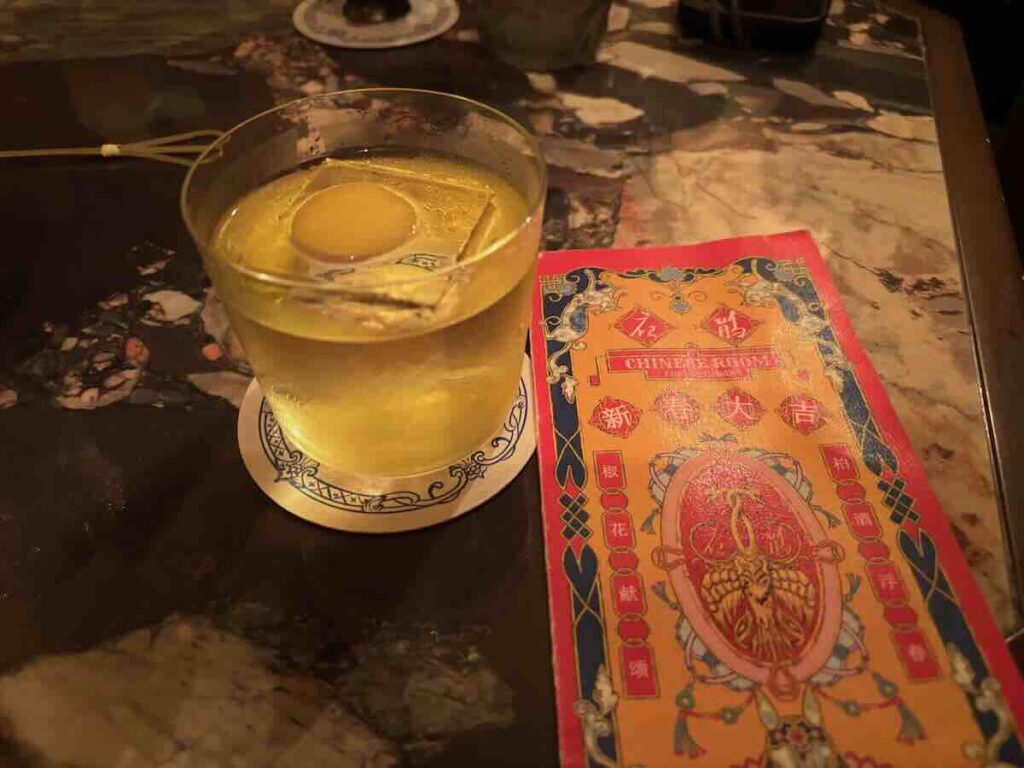
I went to six and they were all excellent, which makes picking one tough. Chinese Room or Re-Social were probably my favourites overall. Chinese Room is the owner’s take on how the West imagines China, and it’s very popular. Re-Social is the most experimental and theatrical: one drink came with a lightning effect that follows your finger, another with a cicada you look at under a microscope, then eat.
Junky’s Garage was the coolest because it’s so different inside, but it’s more rough and ready and smoking is allowed indoors. The best drink I had was at The Common Measure, which is the most like a normal cocktail bar. Get a seat at the bar.
Cost about RMB 80–140 (£9–£16) per drink
Visit a 24 hour spa
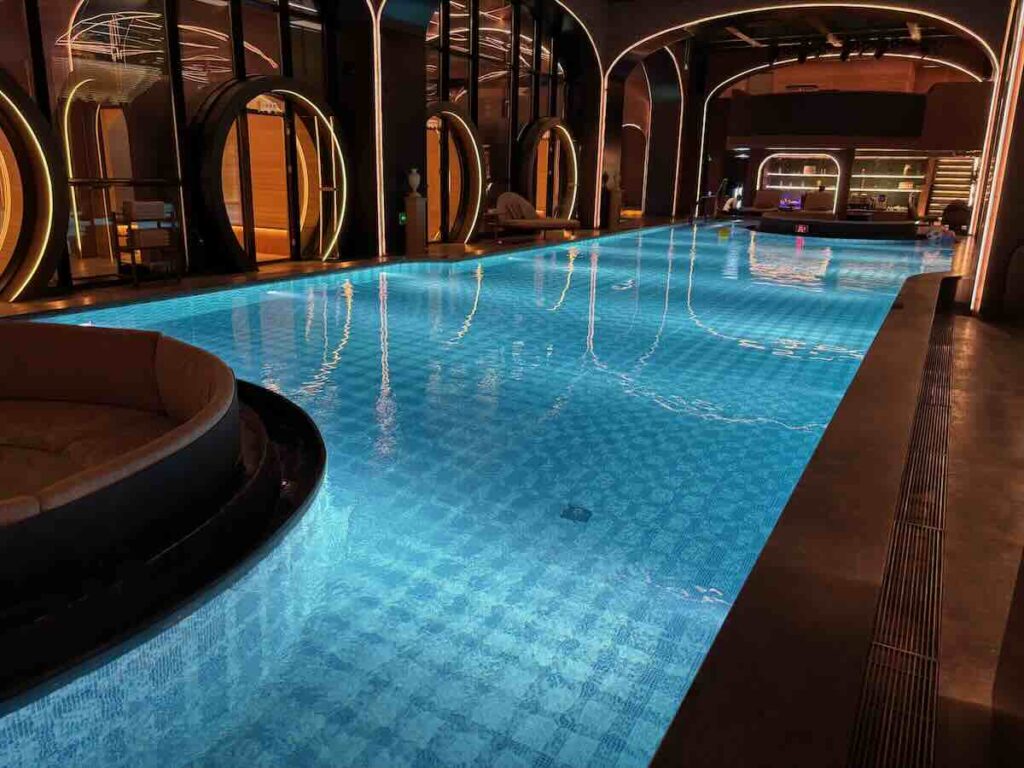
Cheersum is the spa I’d send you to. It’s in the High-tech Zone in the south of the city, a DiDi ride from the centre, and the easiest way to find it is to search its Chinese name, 浅深 or book directly through Trip. They take your shoes and socks at reception, hand you flip flops and pyjamas, and treatments are charged to a wristband.
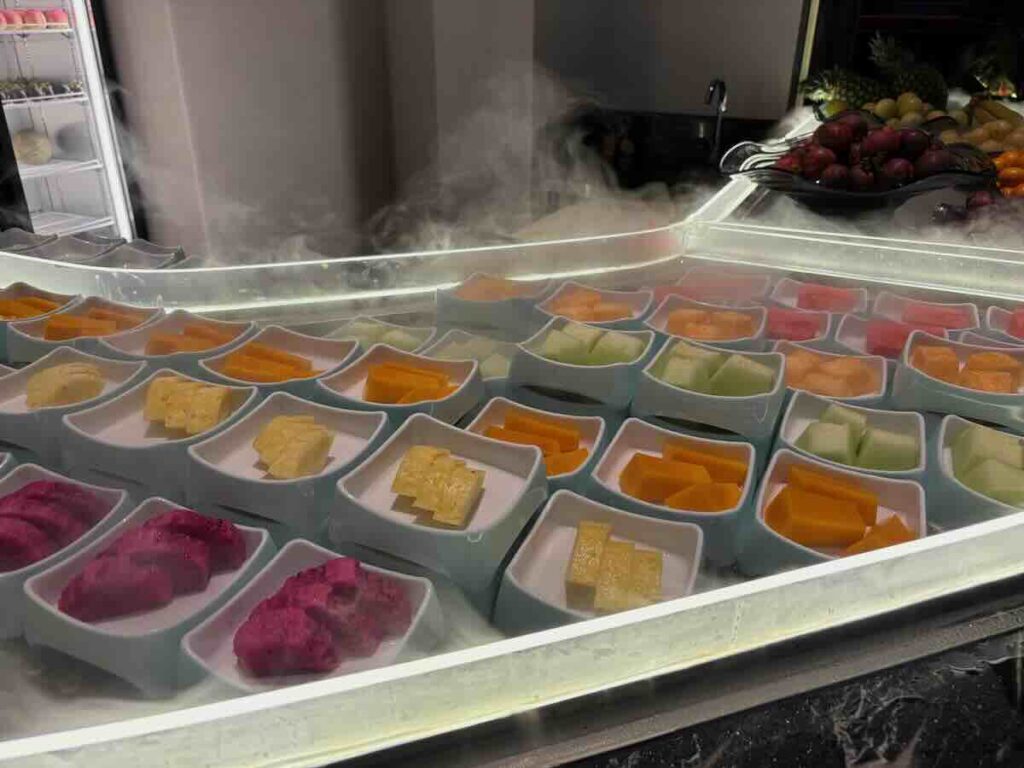
Entry and food are charged separately. All-inclusive food for 24hrs is RMB 199 (£22), buffet and à la carte, served at set meal times. Spend RMB 400 (£45) or more on treatments and the food charge is waived, which is what we did, so we ate free the whole time. You order the Chinese food by QR code at the table, with pictures, and there’s a Japanese teppanyaki floor too. Fresh juice was the only extra cost I saw.
It’s worth checking the packages there before you go. Some bundle entry with food and treatments, and they can be better value than paying for each at the door.
Some people use it instead of a hotel for the night, which I thought was smart. There are rest pods with TV screens, and at 6ft 2 I could lie out comfortably. The top bunks are quieter and darker but smaller, and light sleepers will want earplugs. Arrive just before lunch and you get several meals, a night’s sleep, and a DJ and singer later on.
It’s unreal value and ideal if you need a rest day. There are several 24hr spas in Chengdu and they aren’t all created equal, so make sure you do a good one like this.
Time up to 24 hours • Cost about RMB 298 (£33) check for packages before you book.
More classic Chengdu sights to consider
People’s Park
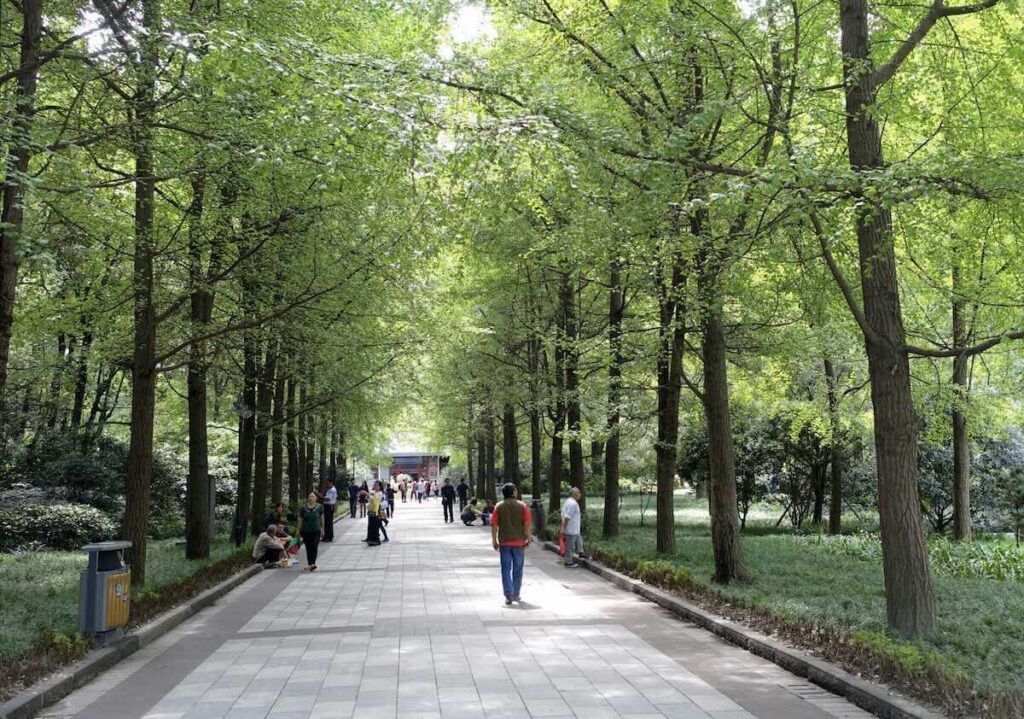
A city-centre park where locals drink tea, play cards, dance and have their ears cleaned (yep, that’s a thing!). Heming Tea House, inside the park, is the well-known place to sit with a cup of tea.
Time 1–2 hours • Cost Free
Kuanzhai Alley
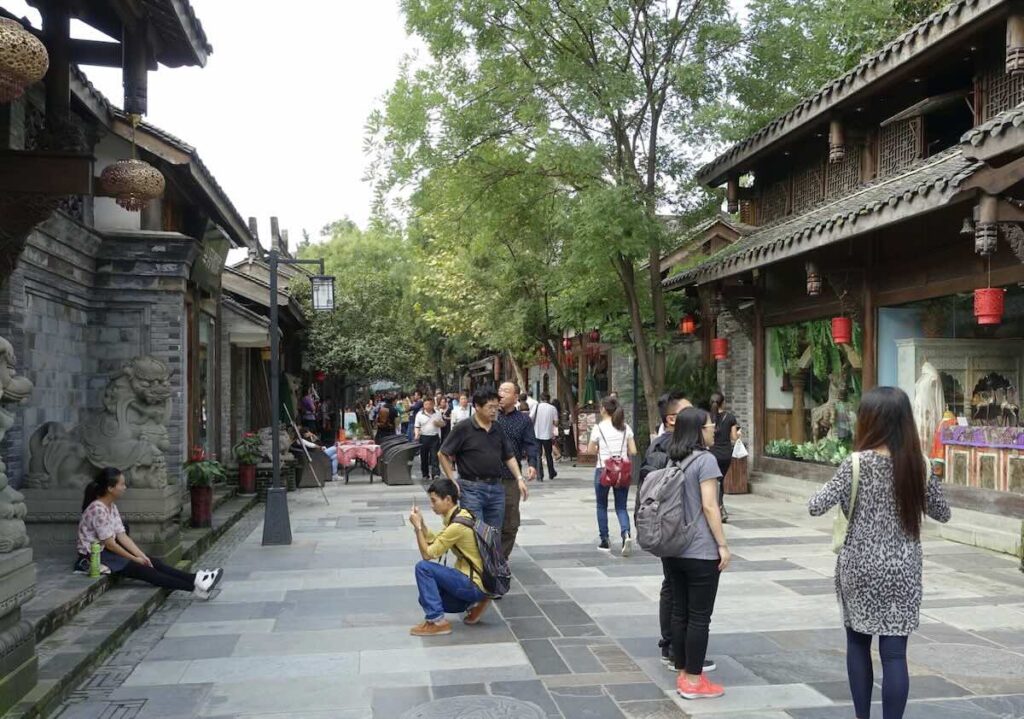
Three parallel lanes dating from the Qing dynasty: Wide Alley, Narrow Alley and Well Alley. They’re lined with shops, snack stalls and tea houses.
Time 1.5–3 hours • Cost Free
Wuhou Shrine and Jinli Street
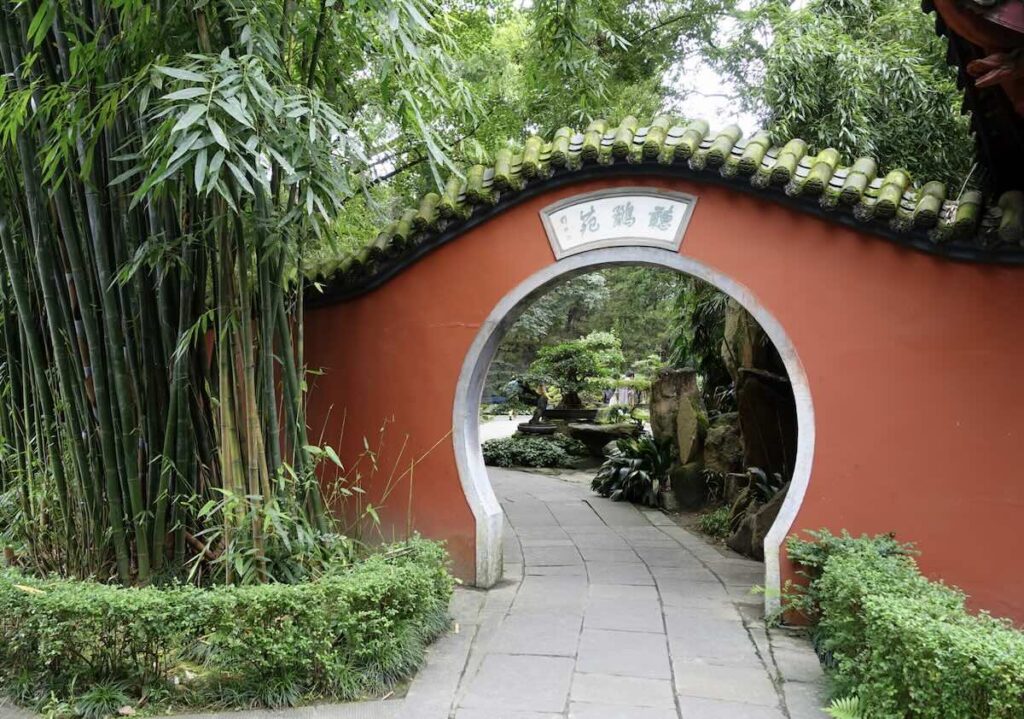
A temple and museum to Zhuge Liang and Liu Bei, two figures from China’s Three Kingdoms period. Tickets are sold online up to 14 days ahead, and you book with your passport. It’s open 09:00 to 19:00 with last entry at 18:00. Jinli Street next door is a pedestrian street of snack stalls and souvenir shops, with no entry fee.
Time 2–3 hours • Cost about RMB 50 (£6) Get your ticket in advance
Wenshu Monastery
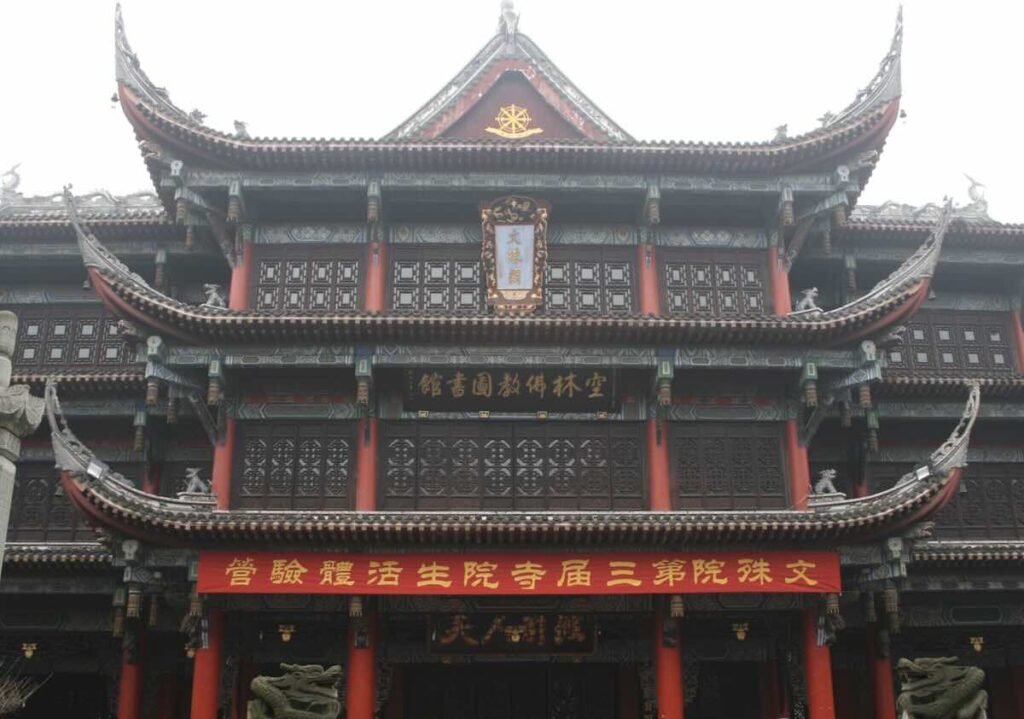
A working Buddhist monastery in the city centre, with gardens and a tea house. It’s open 08:00 to 17:00.
Time about 2 hours • Cost Free
Leshan Giant Buddha
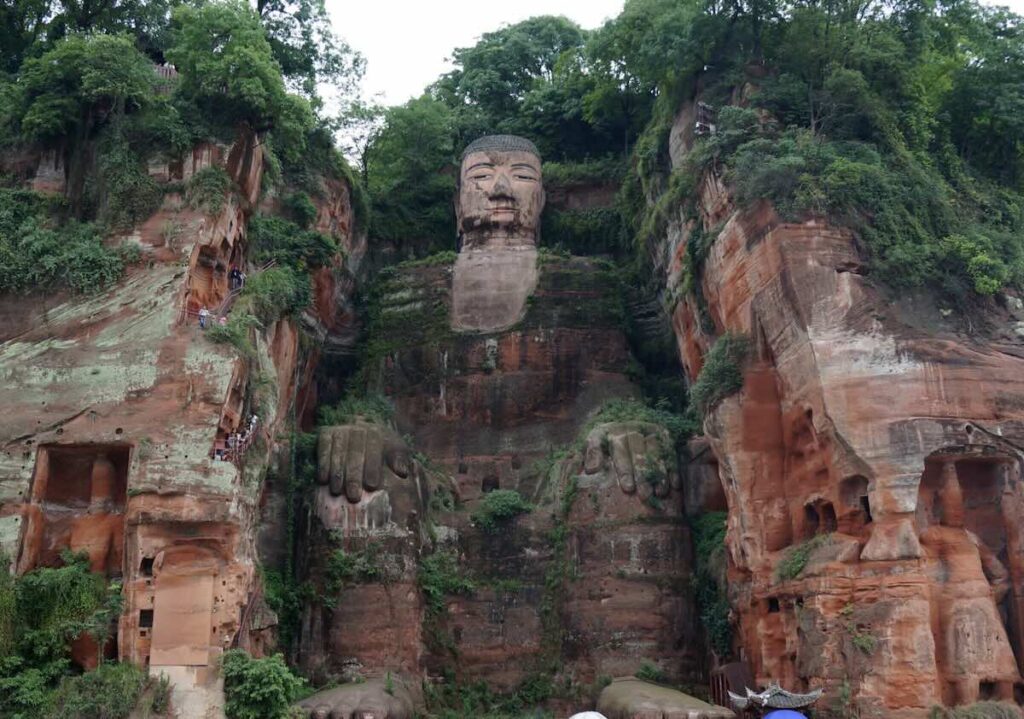
The Leshan Giant Buddha is a 71-metre seated Buddha carved into a cliff during the Tang dynasty, about 140 km south of Chengdu. High-speed trains from Chengdu East reach Leshan station in about an hour and cost about RMB 54 (£6) each way, then it’s a bus or taxi to the Buddha. It’s part of a UNESCO World Heritage Site, and UNESCO’s page on it covers the history.
Time a full day • Cost about RMB 80 (£9) You can get full tours including transport from Chengdu as well.
Getting around and what to carry
Stay within the first ring road if you can, which is the loop around the city centre. Most of what you’ll want is inside it and will be walkable, or a simple short taxi.
Uber doesn’t work here, so DiDi is what you’ll use, and it’s simple. Fares are very cheap, even if you pick a nicer class of car. Some quite long journeys across the city cost me about RMB 25 to 55 (£3 to £6), and our 1 hour 30 airport transfer in an executive car with space for all our luggage was RMB 237 (£27). I had to turn my VPN off for DiDi to work.
Set up DiDi before you fly, along with WeChat Pay and Alipay on your UK card. Both payment apps worked everywhere for me.
Carry your passport every day, because it acts as your ticket at most attractions. Keep your hotel’s name and address in Chinese on your phone too, to show people.
Chengdu FAQs
Is Chengdu worth visiting?
Yes, 100%, no question. The pandas alone make it worth the trip, and that’s before you count the hotpot, a very good night out and a spa you can sleep in. Is there anything I’d tell you to skip? No.
What is Chengdu known for?
Chengdu is the capital of Sichuan province in south-west China, and it’s best known for giant pandas. It’s also famous for Sichuan food, especially hotpot and the mouth-numbing Sichuan pepper, and for its tea houses and face-changing shows.
How many days do you need in Chengdu?
Two or three days covers the highlights in this guide, starting with the pandas. I had four nights, which was enough to do everything here without rushing, including a night at the spa.
When is the best time to visit Chengdu?
Spring (March to May) and autumn (September to November) are the best times, with mild temperatures. July and August are the hottest and wettest months, and winter is cold, damp and grey. I went in late October and it was dry and in the high teens, good for exploring. Avoid the Golden Week holiday in the first week of October, when the city is far busier.
Do people speak English in Chengdu?
Not much. Outside hotels and the busier tourist spots, English is limited, and menus and signs are often only in Chinese. Staff at a couple of the cocktail bars I went to spoke good English, and translation in WeChat covered almost everything else.
Is Chengdu safe for tourists?
Yes. Violent crime against tourists is rare, and the city centre is busy and well lit at night. The main thing to watch for is the tea house scam, where a friendly stranger invites you for tea or a drink and you’re left with a huge bill, stick to things you’ve booked.
Can you hold a panda in Chengdu?
No. The paid panda-holding programmes at the bases have ended, so you can only watch them. Any offer near a panda base to let you hold one is a scam.