
Barcelona or Madrid is a question I get asked a lot. I’ve been to Barcelona five times and it’s still one of my favourite cities anywhere, so the very short answer for a first trip to Spain, if you forced me to pick, that’s where I’d point you.
Madrid genuinely surprised me on my first visit though, so this is closer than you might expect. You’ll have a brilliant trip in either. I break down my choice and why below.
This isn’t a case of one great city and one letdown. It comes down to what you want from the trip, and that’s what the rest of my guide sorts out. I compare them on food, cost, days and day trips, with a clear verdict on which to visit first.
More of my Spain guides to help plan your trip
- What to do in Granada: A full guide to the best sights, restaurants and view points
- Where to stay in Granada: Advice on the best areas to stay, some great hotels and why
- What to do in Madrid: A guide to the best things to see and do all plotted on a free map
- Where to stay in Barcelona: Neighbourhood comparisons and best hotels by budget
- How many days in Seville: A first timers guide to the best of Seville
- 2 week Spain itinerary from Barcelona: A full road or train trip from Barcelona
- Pintxos in San Sebastián: 17 bars I ate at, with the best dish to order.
- How to spend 2 days in San Sebastián: My exact route, day by day, and what to cut if it rains
Barcelona Vs Madrid at a glance
| Barcelona | Madrid | |
|---|---|---|
| Best for | Beaches, Gaudí, everything in one place | A more local, classic Spanish feel |
| Overall feel | Coastal, busy day and night, changes by area | Grander, more traditional, easy to feel local |
| Minimum Days needed | 3 to do it properly, 2 at a push | 2 to 3 |
| Food | Outstanding seafood, strong tapas | Classic Spanish tapas, great value |
| Day trips | Montserrat, a half-day out | Toledo and Segovia, quick by train |
| Nightlife | Bars, clubs, everything you could want. Late and full-on | Busy, fun, bars, Malasaña especially |
| Rough cost | Mid-range, headline sights pricier | Mid-range, better value on culture |
The two cities sit about 2.5 to 3 hours apart by high-speed train, so picking one isn’t always necessary. More on that next.
Disclaimer: This article may feature affiliate links. If you click these links, and choose to book with that hotel or company, I will earn a small commission at no extra cost to you. I appreciate the support that allows me to continue providing this information
Do you have to choose?
Often, no. If you’ve got around 7 days, I’d do both. They’re an easy trip apart on Spain’s high-speed trains (the AVE is the flagship fast service, run by Renfe, with cheaper operators Avlo and Ouigo on the same route), and each gives you something different.
The best way to make this happen is open-jaw flights, where you fly into one city and out of the other. No backtracking, no wasted day returning to your start point. For a first visit I’d split it 4 nights in Barcelona and 3 in Madrid. That gives you a real taste of both without either feeling rushed.
If you leave the train ticket until the day of travel, you’ll usually pay a lot more, sometimes double. Book a week or two ahead instead and it’s cheap for the distance.
Time about 2.5 hours (up to 3 on the slower stopping trains) • Cost typically €40 to €60 (£34 to £51) one way booked ahead
My Top Tip! Check the budget operators, Avlo and Ouigo, alongside the AVE when you book. Same route, fares from around €20 (£17) if you book early, and for a 2.5 hour daytime ride the drop in comfort is minor.
How many days you need in each
For either city I’d say 3 days is the number that lets you do it properly, tick off the main sights and still get a feel for a few different areas. You can see the headlines of Barcelona in 2 days if you’re tight, and Madrid works well in 2 to 3. You could easily spend longer in both and have plenty to see and do.
The bit people often get wrong is giving either city a single day and treating it like a checklist. I highly recommend against doing this.
For the detail, I’ve laid Barcelona out day by day in my 3 days in Barcelona itinerary, and both where to stay in Barcelona and where to stay in Madrid break down which area suits which kind of trip.
How the two cities feel
Barcelona
Barcelona barely sleeps. There’s something going on at nearly every hour, and it changes character depending on where you are. I love the big sights even though they’re touristy, but my favourite thing is wandering the narrow streets of El Born with no real plan. Add several good sunset spots and some of the best food in Europe, and it’s easy to see why it keeps pulling me back. It’s also a great place to catch a game of football. The Camp Nou is iconic and tickets are comparatively easy to get, just make sure you use trusted resellers.
My one piece of advice is avoid spending lots of time around Las Ramblas, though. You’ll end up on the most crowded, most pickpocketed strip in the city, paying over the odds for average food. The better option is to pick the two or three famous sights you’re genuinely excited about, see them, then get into the quieter streets as fast as you can. Bouncing from one tapas bar to the next is a lovely way to do exactly that.
My Top Tip! Pickpocketing in Barcelona caught me off guard on my first visit, nobody had warned me. I’ve not been caught myself but I’ve watched it happen to several people, usually on the metro and around Las Ramblas. Keep your phone and wallet in a front pocket or a zipped bag and you remove most of the risk.
Madrid
Madrid felt more local to me, and I really enjoyed that. The big sights are grand and worth your time. Retiro park is huge and great for a lazy afternoon, and the Prado is genuinely world class, one of the best art museums in Europe and reason enough on its own for some people to pick Madrid.
But what I liked most was how easy it is to step off the tourist trail. I fell for Malasaña in the evenings, an area full of busy bars with good food, drinks and live music. It took less effort to dodge the traps and find something authentic than it does in Barcelona. The one thing Madrid can’t match is the coast, and for me that beach access is what keeps Barcelona just ahead. There’s more on the sights in my what to do in Madrid guide.
There’s more on the sights in my what to do in Madrid guide.

Food and tapas compared
You’ll eat brilliantly in both cities, that I can guarantee. Madrid is more traditional and classic Spanish. Barcelona has the coast, and it shows, so for me it edges the food contest on the wide array of outstanding seafood alone.
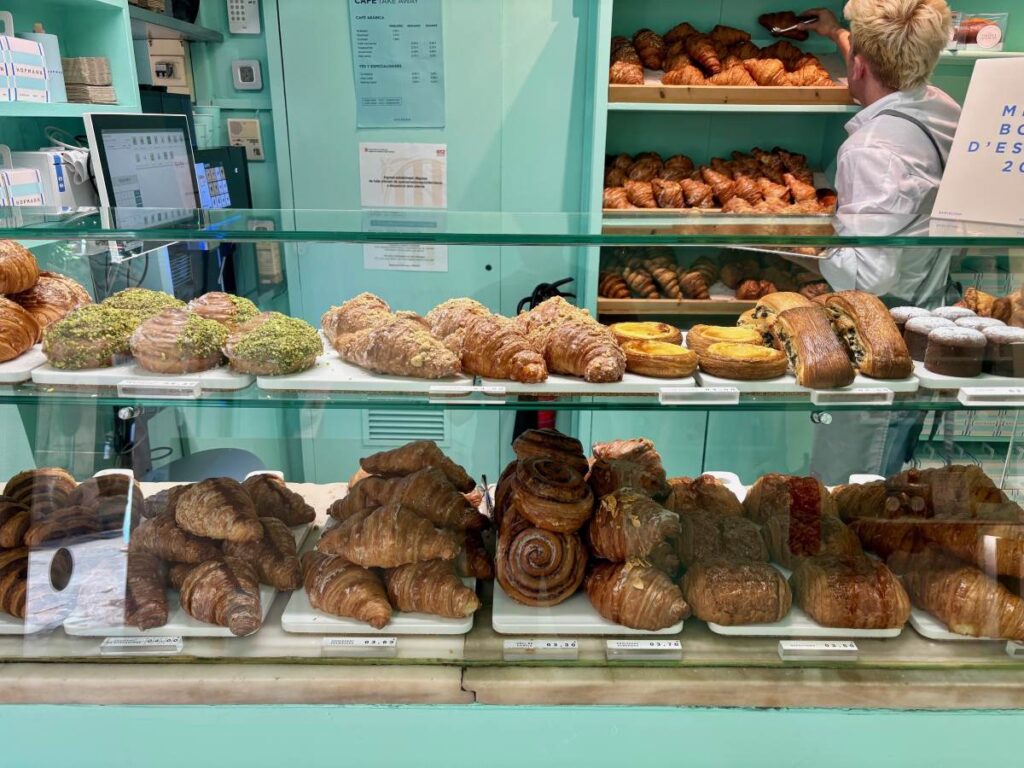
In Barcelona I’d point you to El Xampanyet in El Born, a standing-room cava and tapas bar that’s lively and usually has a queue at peak times. Right next door, Bodega La Puntual is easier to get a table, and my pick there is the tuna belly with tomato salad. Carrer de Blai is the street for cheap pintxos, and if you like a pastry, Pastelería Hofmann is my favourite baker in the city (I got through four pastries in three days on my recent trip, no regrets).
In Madrid, Malasaña is where I’d send you for a tapas crawl. Pick three or four rather than all: Casa Julio for croquetas, Casa Camacho for the Yayo cocktail, Bodega de la Ardosa for tortilla, then La Colmada, my favourite, for something a bit different. Add San Ginés for churros con chocolate and Casa Alberto in Las Letras for vermouth on tap.
Watch out for the tables right on the main tourist squares in both cities. Instead, walk two or three streets back and you’ll usually eat better for less.

Day trips from each city
This is where Madrid wins in my opinion. As Spain’s main rail hub, it gets you to some brilliant day trips fast. It’s also the better base if you’re carrying on to southern Spain afterwards, with quick trains down to Seville and on to Granada for the Alhambra.
If Andalusia is your focus, my Seville or Granada guide helps you pick between the two.
From Madrid
Toledo is the standout option, a dense old city of layered history that rewards slow wandering and an easy guided day trip from Madrid if you’d rather travel with a group. Segovia is more of a single wow, built around a huge Roman aqueduct, and it’s compact and easy, though there’s a little less to fill a day than Toledo.
Toledo: Time about 35 minutes each way • Cost train typically €30 to €55 (£26 to £47) return
Segovia: Time about 25 minutes each way • Cost train typically €18 to €40 (£15 to £34) return
From Barcelona
Barcelona’s best day out is Montserrat, a mountain and hilltop monastery with big views and easy walks. It’s the one I’d pick if you want a break from the city. Tibidabo, a small hilltop theme park with wide views, is a fun family half-day but less of a draw for most first-timers. You can do it yourself by train, or book a guided Montserrat day trip if you’d rather not sort the connections.
Montserrat: Time allow a half-day, 5 to 7 hours • Cost typically €30 to €45 (£26 to £38) doing it yourself
A day trip eats a big chunk of a short stay, so if you’ve only got two days in a city I’d keep them for the city itself and save the day trip for a longer visit.
Which city is cheaper?
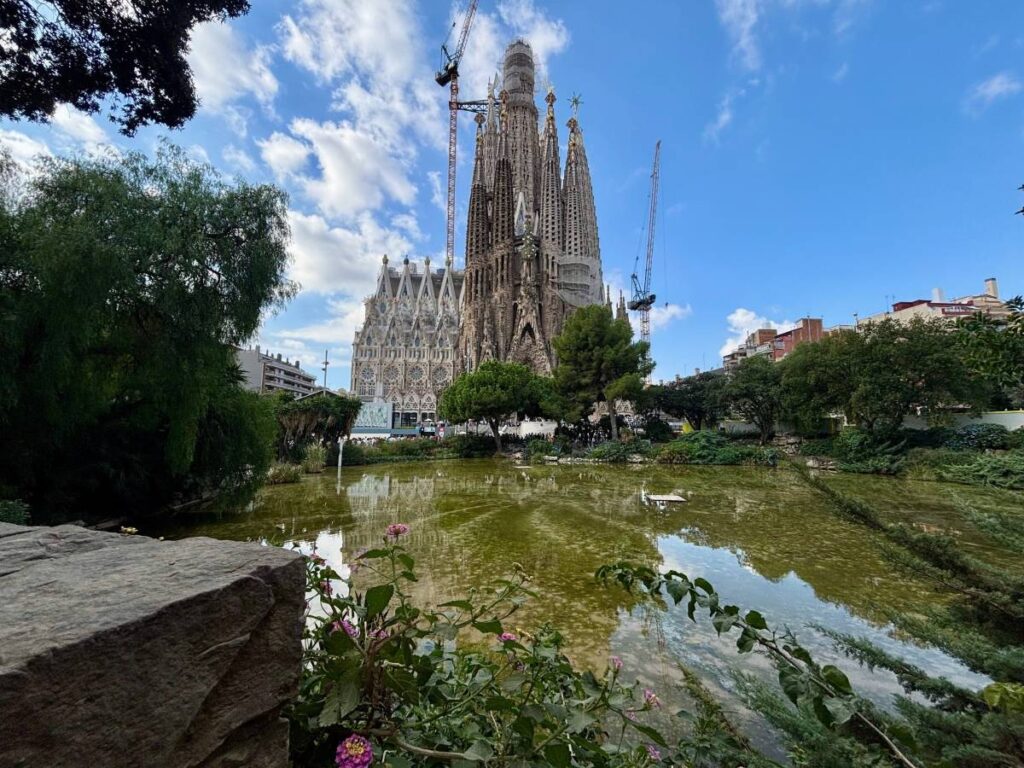
Both are mid-range for a big European city, and day to day the gap is small. Where Madrid sneaks ahead is culture, and it stretched my money further on the things I most wanted to see. The Prado, its headline museum, is €15 (£13) and free for the last two hours every day. Barcelona’s most famous sight, the Sagrada Família, starts at about €26 (£22) for basic entry, with a small extra charge running through late 2026 for the centenary. It sells out, so book a slot well ahead.
Food, hotels and transport are very similar in both. For detailed hotel prices by area, my two guides on where to stay above have the current figures and hotels for all budgets.
The best time to visit each
For both cities, spring (April to June) and autumn (September to October) are the sweet spots. Warm enough to be out all day, without the peak crowds or the worst heat.
Madrid’s summer is the one to watch out for of the two. It’s inland and gets very hot and dry, often into the mid to high 30s, and a lot of the city clears out in August. Barcelona is milder year-round thanks to the sea, but summer there is hot, humid and very busy, with the beaches at their best from June to September.
If you’re set on beach time, aim for late spring or early autumn in Barcelona. If you’re heading to Madrid, I’d steer clear of high summer unless heat genuinely doesn’t bother you.
My verdict: Barcelona or Madrid
For a first trip to Spain, Barcelona is my pick. It gives you the most in one place, and after five visits I still find new reasons to go back.
Madrid is well worth a visit and somewhere I will be returning to, so this is close, and the right answer is the one that fits your trip.
Pick Barcelona if you want beaches, the big architecture, some of the best seafood in Europe, an easy match day and everything within reach of each other.
Pick Madrid if you want a more local, classically Spanish city that’s easier to feel part of without much effort, world-class museums and great value on culture, and quick day trips out.
And if you’ve got a week, do both. The train makes it easy, and you’ll come home having seen two of Europe’s best cities rather than wondering about the one you skipped. If you’ve got longer, my 2-week Spain road trip from Barcelona strings the two together with Valencia and a few more stops.
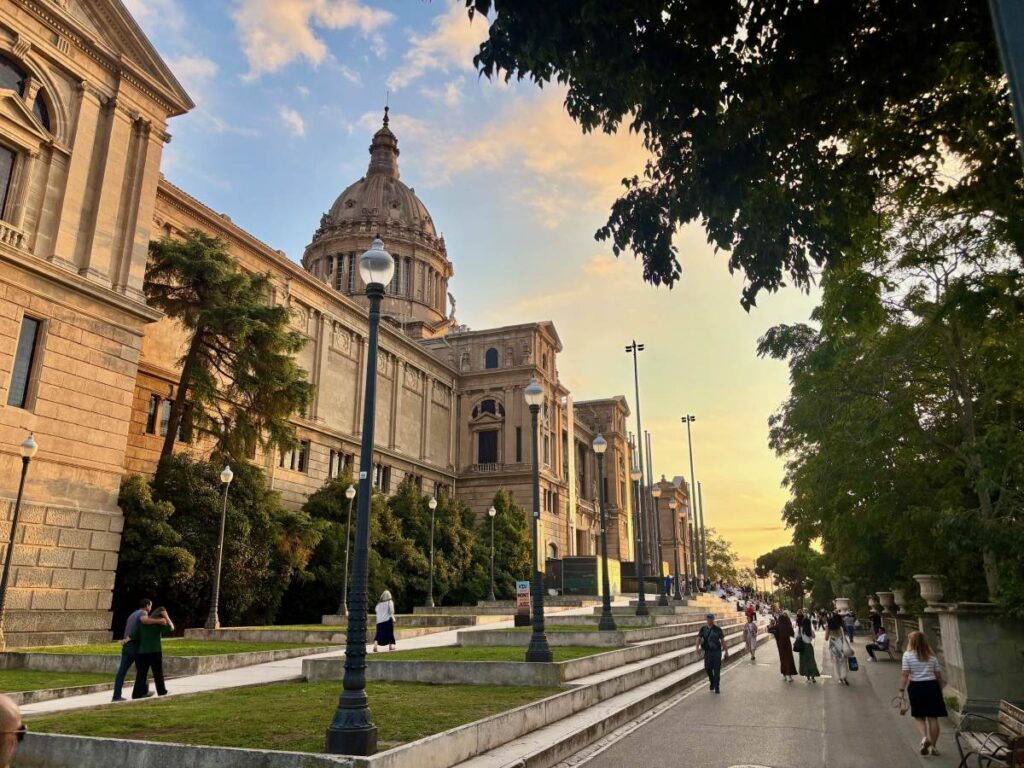
One of my favourite evenings in each sums them up. In Barcelona it was sunset at the MNAC steps, a street performer playing to a happy crowd as the light went. In Madrid it was the rooftop at Círculo de Bellas Artes, an absolutely stunning spot where my other half and I marked a birthday over a drink with music and a special sunset. Two different cities, two brilliant nights. You really can’t go too far wrong.
Barcelona or Madrid FAQ
About 500km apart, or roughly 2.5 hours on the fastest high-speed trains. That’s why doing both on one trip is straightforward.
Barcelona, mainly for the beach. Kids can break up the sightseeing with time on the sand, and Tibidabo, a little hilltop funfair above the city, makes an easy family half-day. Madrid works well too, with big parks like Retiro and a compact centre you can cover on foot, but it can’t offer the seaside.
Both are late nights out, but they feel different. Barcelona can be full-on and touristy, with big clubs near the beach. Madrid is more of a bar city, and Malasaña in particular is where I’d spend an evening, busy bars with good food, drinks and live music.
Enough to get by easily in both, especially in hotels, restaurants and the main sights. A few words of Spanish are appreciated, and in Barcelona you’ll also see Catalan on signs alongside Spanish.
It comes down to who you’d rather watch. I went to an FC Barcelona home game and found tickets comparatively easy to get, with a great match-day feel. Madrid has Real Madrid at the Santiago Bernabéu, El Clásico, one of the biggest fixtures in world football, can be seen in both cities, but tickets for that are much harder to come by.




10 Comments
Comments are closed.