
Most 7 days in Costa Rica itineraries try to fit in San José sightseeing, Monteverde cloud forest, Arenal volcano, and a beach. You’ll spend half the week in transfers and feel exhausted by Day 5.
This guide covers the route I followed across two regions, La Fortuna/Arenal and Manuel Antonio, with proper time in each and zero filler.
You’ll get rainforest hikes, hanging bridges, sloths, a Pacific beach with a national park attached, and at least one excellent waterfall tour, with realistic costs and honest trade-offs from my own trip.
More of my Costa Rica guides to help plan your trip
- Is Manuel Antonio National Park Worth It?: tips on tickets, timing and when to skip it
- Things to Do in Manuel Antonio, Costa Rica: The best activities ranked and what to book ahead
- Where to Stay in Manuel Antonio: Which area to pick, what each one costs and where I stayed
- Things to Do in La Fortuna, Costa Rica: My guide to what’s worth your time and what to skip
- Where to Stay in La Fortuna: The hotels with hot springs, what they cost and if it’s worth it
- La Fortuna to Manuel Antonio: The four ways to travel it, costs and comparison
- Hotels Near San Jose Airport: Best airport hotels to make your arrival and departure easy
TL;DR. 7 days in Costa Rica itinerary at a glance
The whole plan in one screen, in case you don’t have time to read my full guide right now. Everything is covered in detail further down, including my top tips and the bits I’d do differently.
- Day 1. Arrive into San José, overnight near the airport
- Day 2. Private transfer to Arenal (about 3 hours), arrive early afternoon, Bogarín Trail sloth walk
- Day 3. Mistico Hanging Bridges at opening, La Fortuna Waterfall after lunch, optional Arenal Oasis night walk
- Day 4. Safari Float on the Río Peñas Blancas, short Arenal Volcano National Park walk in the afternoon
- Day 5. Early transfer to Manuel Antonio (about 5 hours), free Scarlet Macaw reserve walk at 4pm
- Day 6. Manuel Antonio National Park guided tour, beach time
- Day 7. Rainmaker ATV and waterfall tour (or alternatives), evening transfer back to San José
Who this itinerary is best for
This plan suits first-time travellers who want a manageable mix of rainforest, wildlife and beach. It works for couples, friends and families who are happy with active days but don’t want to be on the road every other morning.
If you only enjoy resort lounging, this won’t be the right fit.
Disclaimer: This article may feature affiliate links. If you click these links, and choose to book with that hotel or company, I will earn a small commission at no extra cost to you. I appreciate the support that allows me to continue providing this information.
Is 7 days in Costa Rica enough?
Honestly? Seven days is enough for two regions, not more. That sounds limiting until you remember that internal travel days in Costa Rica are slow. The roads wind, speed limits are low, and a 200km transfer can take five hours.
I stuck to La Fortuna/Arenal and Manuel Antonio because they cover the two things most first-timers want: rainforest wildlife and a Pacific beach with a national park attached. Between them, you get volcano views, hanging bridges, a waterfall, sloths, monkeys, beach swims and at least one boat trip. That’s a lot for a week.
What 7 days realistically covers
You get six active days and two travel days (Day 1 arrival, Day 7 evening transfer back to San José for your flight home). Your exact split depends on your flight times.
If you land mid-morning, you can get straight to Arenal and gain half a day. If you land in the evening, an airport-area hotel saves you the stress of driving in the dark, which is what we did.
The bit people get wrong is trying to squeeze Monteverde into a 7-day plan as well. You can technically do it, but you’ll spend a full day getting from Arenal to Monteverde and another half day getting from Monteverde to the coast. That’s a day and a half of activities lost to transfers, in my opinion it’s not worth the impact it has on your enjoyment.
Why we skipped Monteverde (and when to add it)
Monteverde is the famous cloud forest people picture when they think of Costa Rica, and it’s lovely. With only a week, the trade-off isn’t worth it.
If you have 10 days, add it. Two nights in Monteverde between Arenal and Manuel Antonio works well, and I’ve covered how to slot it in further down.
When to go: dry vs green season
The dry season runs roughly mid-December to April. March and April are the sweet spot. Sunshine, lower humidity, and the wildlife is easier to spot because animals come to water sources.
May to mid-November is the green season. It rains daily, often heavily, but usually in concentrated afternoon bursts rather than all day. Prices drop, crowds thin, and the rainforest looks its best. The downside: muddy trails, choppier seas, occasional tour cancellations.
I recommend January through April if you can make it work.
Before you book: flights, airport choice and key reservations
A few decisions are worth getting right before you spend money on flights or hotels. Not exciting, but they save you from the common first-timer headaches.
Which airport to fly into
Costa Rica has two international airports: San José (SJO) in the central valley, and Liberia (LIR) up in Guanacaste. For this itinerary, fly in and out of SJO. It’s central to both Arenal and Manuel Antonio, and you avoid extra driving.
Fly into Liberia only if you swap Manuel Antonio for a Guanacaste beach base like Tamarindo or Sámara. I cover that swap further down.
Sights and tours to book before you fly
Two things are worth pre-booking from the UK because they sell out or have ticket caps. Full Time and Cost detail sits in the day-by-day section later.
- Manuel Antonio National Park entry. Daily visitor cap, sold online only through the official SINAC site, closed Tuesdays. If you book a guided tour, the operator handles tickets for you. For a deeper look at whether the park is worth your time, see my full Manuel Antonio National Park guide.
- Mistico Hanging Bridges. Early morning slots fill in dry season, and the 6am opening is significantly better for wildlife and crowds.
My Top Tip! The official SINAC site for Manuel Antonio tickets is genuinely clunky and has been known to crash during peak booking windows. If you can’t get through, book a guided tour instead, the operator handles the entry tickets and you skip the SINAC headache entirely. We did this.
Getting around Costa Rica: self-drive vs private transfer vs Uber
This is the single biggest first-timer decision, and the answer isn’t the same for everyone.
Private transfers (what we used)
A private transfer is a pre-booked car or minivan with a driver who picks you up at your hotel and takes you door-to-door to the next one. We used them for every leg of our trip, and honestly it was the best logistics decision we made.
We compared prices against Uber for the long transfers, and private transfers worked out similar, with much better vehicles. Cleaner cars, working air-con, drivers who knew the routes, and the option to stop along the way. For a long winding drive after a 10-hour flight, my view is it’s well worth the small premium.
Self-driving in Costa Rica
Hiring a car gives you total flexibility. You can stop wherever you want and explore between regions. The downsides: roads are unpredictable, signage is patchy, some routes are unpaved, and parking at popular sights can be a hassle. I also recommend you consider a 4WD hire car if you do consider self driving.
If you’re a confident driver who’s done long-haul road trips before, self-drive can be brilliant. If this is your first time outside Europe driving a hire car, I’d skip it.
Uber, taxis and shared shuttles
Uber works well in San José and parts of Manuel Antonio, less so in remote areas like rural Arenal. Shared shuttles (Interbus, Gray Line) are cheap but slow because they make multiple stops, and luggage space can be tight.
For a week-long first trip, private transfers between regions and Uber for short trips is the best option, if you aren’t on a very tight budget.
| Option | Best for | Watch out for | Typical SJO to Arenal cost |
|---|---|---|---|
| Private transfer | First-timers, couples, anyone with luggage | Slightly higher per-person cost for solo travellers | About $130–$180 (£103–£143) per vehicle |
| Uber | Short city hops, Manuel Antonio | Patchy in rural areas, no driver vetting on long routes | About $130–$170 (£103–£135) per vehicle |
| Self-drive (4WD) | Confident drivers wanting flexibility | Road conditions, parking, navigation | About $50–$90 (£40–£71) per day plus fuel |
Below are the three main transfers on this route, with realistic times and costs.
San Jose to La Fortuna transfer
The drive crosses the central valley, climbs into an almost alpine landscape, then drops into La Fortuna. Most drivers stop once for coffee and views, which is genuinely nice rather than a sales tactic.
Time 3–3.5 hours • Cost typical $130–$180 (£103–£143) per vehicle
You can book through GetYourGuide, Viator or try emailing your hotel directly.
La Fortuna to Manuel Antonio transfer
The long one, it takes most of your day to travel. The route goes back south past the San José area before turning west to the Pacific. There aren’t many great food stops, so eat a proper breakfast before you leave and bring snacks. I have written a detailed guide on the best ways to transfer from La Fortuna.
Time 4–5 hours • Cost typical $250–$340 (£185–£252) per vehicle
You can book through GetYourGuide, Viator or try emailing your hotel directly.
Manuel Antonio to San José / SJO transfer
If your flight is mid-morning the next day, transfer to a hotel near SJO airport the evening before. Trying to drive from Manuel Antonio to the airport on the morning of your flight is risky, traffic into San José can add an hour without warning, we found this out the hard way!
Time 3–3.5 hours • Cost typical $150–$200 (£119–£159) per vehicle
You can book through GetYourGuide, Viator or this leg Uber is more of an option.
My Top Tip! Book all three transfers with the same operator at the start of your trip and you’ll often get a small discount. We did this and it removed a lot of admin from our week.
The 7 days in Costa Rica itinerary, day by day
Each day is built around what we actually did, with realistic timings and the swaps I’d make differently next time.
A quick mindset recommendation before you start: think of Costa Rica’s wildlife like an African safari. With a guide and binoculars you’ll see ten times more than you would alone, especially sloths, smaller birds and frogs.
I cover this properly in the wildlife section further down, but it’s worth knowing now because it changes how you book your tours.
Day 1: Arrival in San José
A lot of flights land late, stay in San José for a night rather than pushing straight to Arenal in the dark. The roads aren’t great after sunset and transfers cost more at night.
There’s not much to do in San José for a first-timer in one evening, so grab a meal at the hotel, get a good night’s sleep, and be on the road early as possible on Day 2.
Day 2: Transfer to Arenal + Bogarín sloth walk
Leave San José by 8am and you’ll be in La Fortuna for lunch. Drop your bags at your hotel, eat something, then head out for the afternoon’s main activity.
There are loads of great options to consider, I’ve put the full list in my things to do in La Fortuna guide.
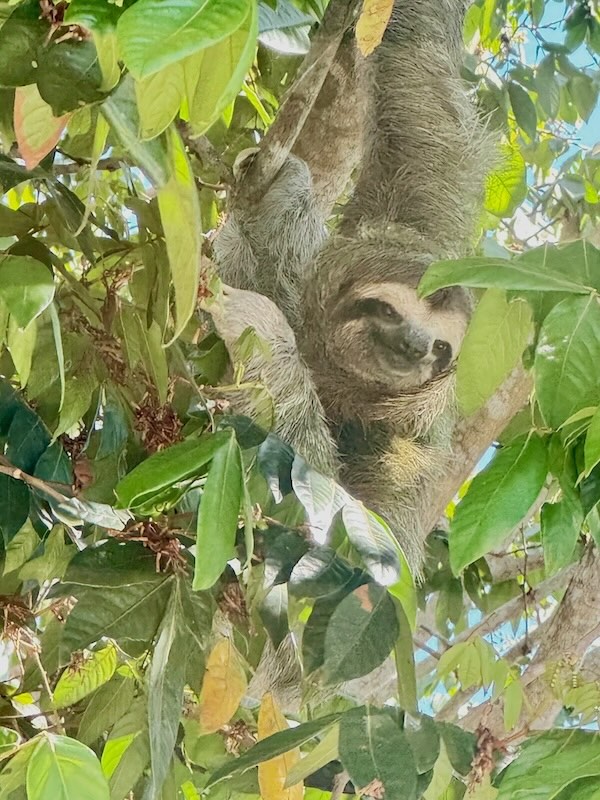
Bogarín Trail guided sloth walk
Bogarín is a small reserve right on the edge of La Fortuna town, set up specifically to rehabilitate the local rainforest. Sloths have moved back in numbers, along with toucans, frogs, and coatis. The afternoon departures (around 3pm to 4pm) suit an arrival day perfectly because you don’t have to rush from the transfer.
Time 2 hours • Cost typical $30–$45 per person (£24–£36) BOOK HERE
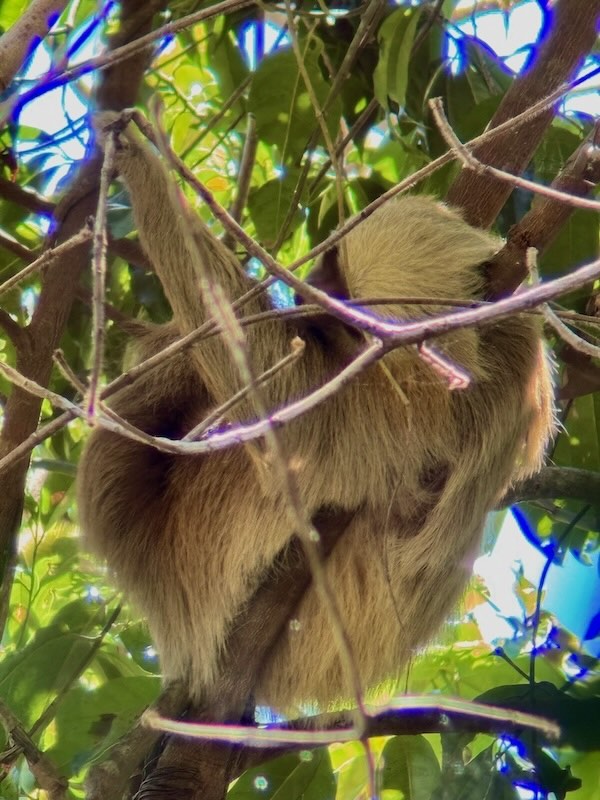
My Top Tip! A guide is essential here, unless you just want a walk. Sloths blend into the canopy beautifully, and without someone who knows where to look (and a scope or binoculars), you’ll walk past most of them. Our guide spotted three sloths in two hours, plus a sleeping owl and a tree frog the size of a fingernail.
After the walk, head back to your hotel and use the thermal pools or just enjoy dinner with a view of Arenal Volcano. Save energy for Day 3.
Day 3: Mistico Hanging Bridges, La Fortuna Waterfall and night walk
Your first big rainforest day, the earlier start the better.
Mistico Hanging Bridges
Mistico is a 3.2km loop trail through primary rainforest, with sixteen bridges (six of them suspended) that take you up into the canopy. It’s the headline rainforest experience near Arenal and the views from the longest bridges are genuinely impressive.
Time 2–3 hours • Cost about $32 (£25) self-guided entry. Official site or tickets, guide and transport options
My Top Tip! Go at opening (6am) if you possibly can. We did, and it worked perfectly with jet lag. We had most of the trail to ourselves until around 7.30am, when the day-trip groups started arriving. By mid-morning it gets considerably busier.
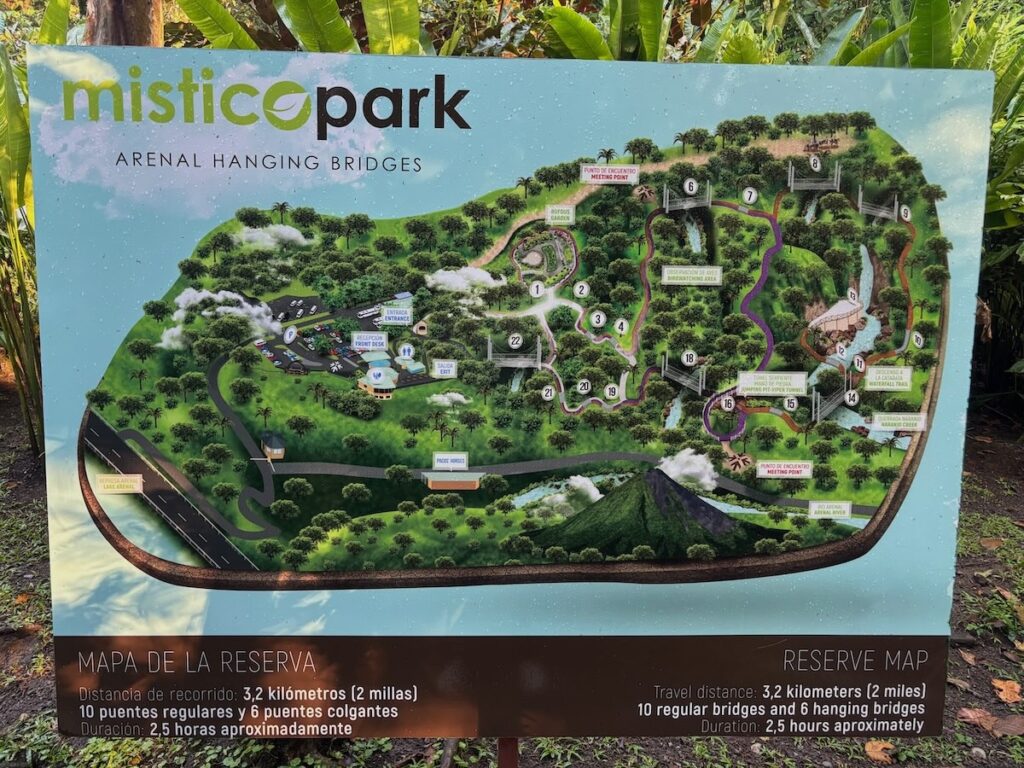
You can do Mistico self-guided, but a guide will significantly improve what you see. If you’ve already paid for a guide on the Bogarín walk and feel confident, self-guided is fine here. The walk itself is beautiful, even if you get unlucky with your animal sightings.
After Mistico, head back to La Fortuna for a proper lunch. Soda Viquez is a local favourite for casados (the traditional rice, beans, plantain and protein plate) at a fair price.
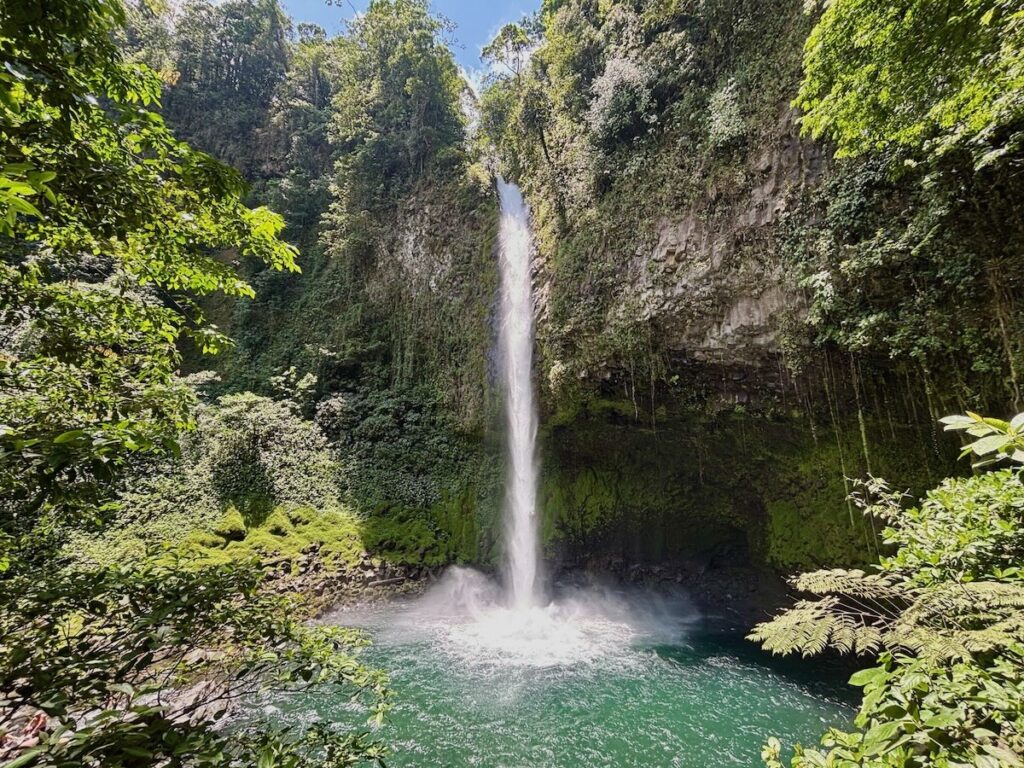
La Fortuna Waterfall
A 70-metre cascade in a jungle gorge, reached by a steep staircase down (and back up). The pool at the bottom is nice for a quick swim. There are two areas to swim, the main pool with the falls has a strong current, so don’t go in too far. It’s self-guided and easy to slot in after lunch.
Time 1.5–2 hours • Cost about $20 (£16) entry. You can skip the line by booking online
The 500-odd steps each way are no joke. If anyone in your group has dodgy knees or you’ve already done a big hike, it’s a fair one to skip. There’s a viewpoint over the falls from the top without descending, but I would say it’s only worth the trip if you go down to the pools. The falls open at 7am if you want to start your day earlier.
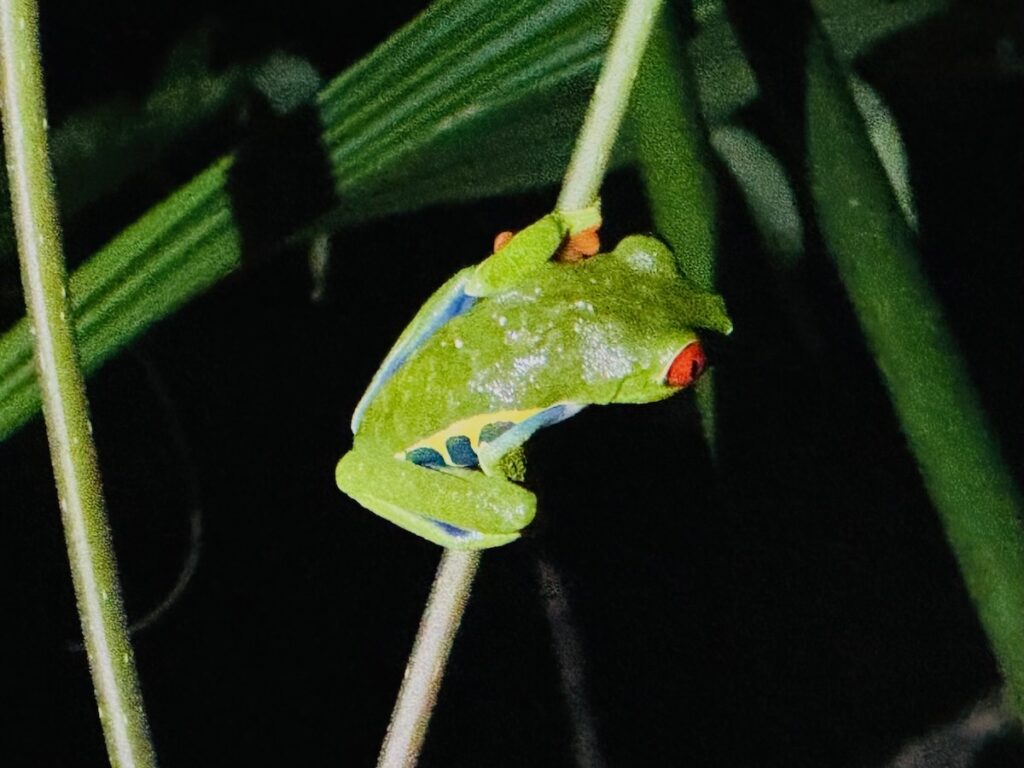
Arenal Oasis night safari
If you’ve still got energy after the waterfall, the Arenal Oasis night walk is genuinely one of the best wildlife experiences of the trip. Lots of Costa Rica’s rainforest wildlife is nocturnal, and a 2-hour torch-lit walk through the Oasis reserve gets you frogs, snakes, sleeping sloths, kinkajous, and tarantulas you’d never see in the day. It feels like a completely different country at night.
Time 2 hours • Cost typical $40–$60 per person (£32–£48) BOOK HERE
Day 4: Safari Float and Arenal Volcano National Park
Today combines a relaxing morning on the water with a shorter afternoon hike. A reasonably gentle day after the Day 3 schedule, especially if you did the night walk.
Safari Float on the Río Peñas Blancas
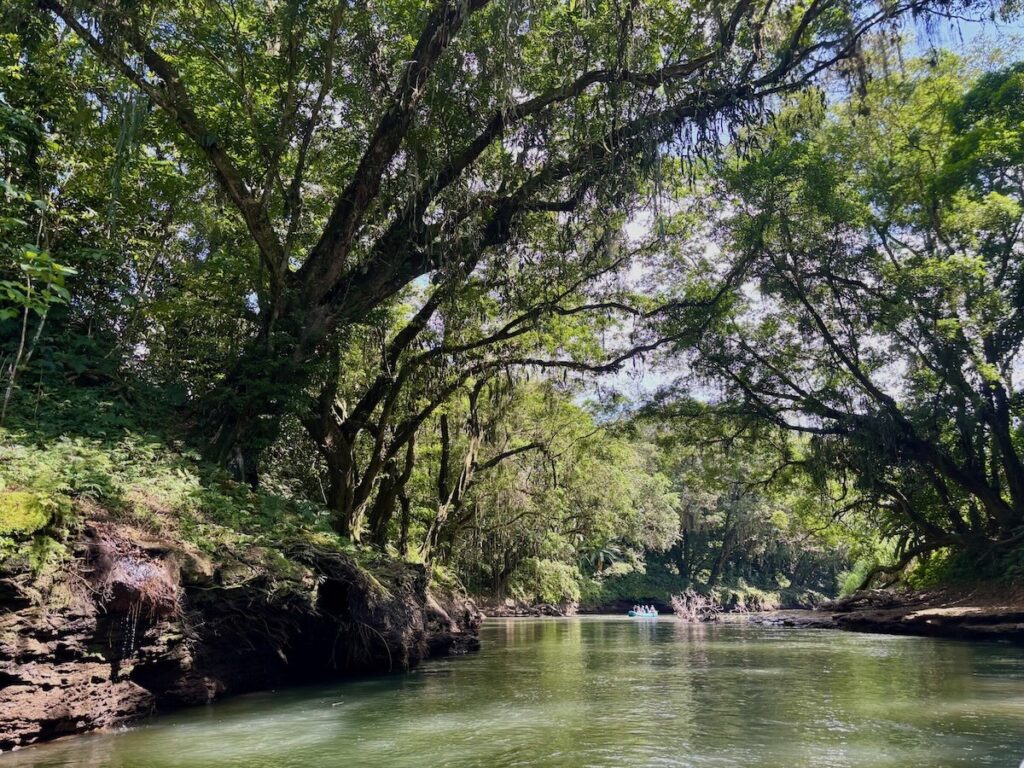
Exactly what it sounds like. A gentle two-hour drift down the Río Peñas Blancas in a stable raft, looking out for wildlife on the banks. No rapids, and only a little paddling required.
You’ll usually see howler monkeys, basilisk lizards, kingfishers and herons, and if you’re lucky, sloths and caimans. The full excursion runs about five hours including transport from your hotel and lunch.
Time 5 hours total (2 hours on water) • Cost typical $80–$110 per person (£64–£87) BOOK HERE
It’s calm enough for kids, older travellers and anyone who’s not sure about a more adventurous river trip. We did the morning departure at 7.50am and were back at the hotel by mid-afternoon.
Arenal Volcano National Park hike
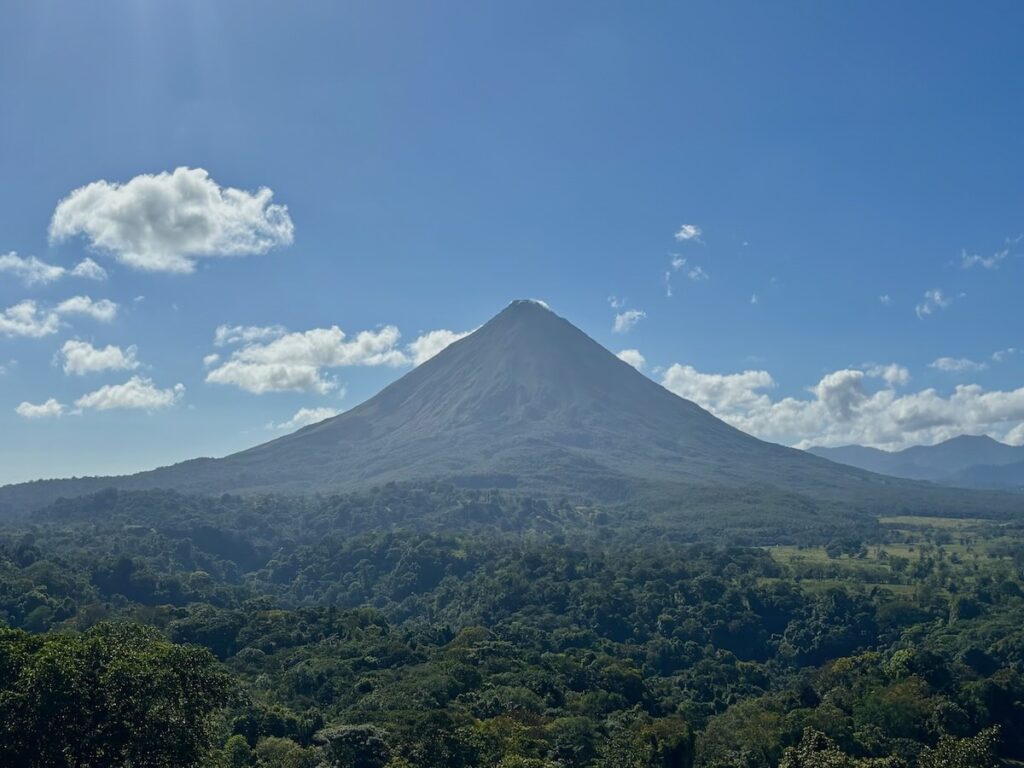
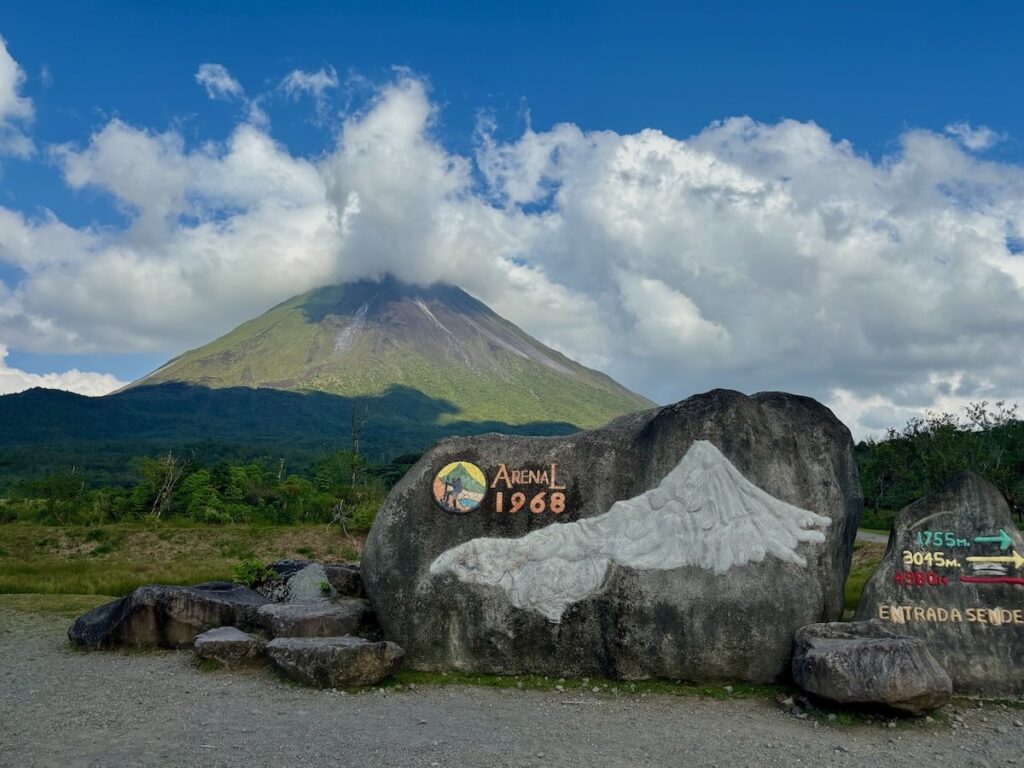
The park has several trails, all relatively flat and easy. You won’t summit the volcano (climbing is forbidden), but the trails take you across old lava fields with great views of the cone.
Time 1.5–3 hours • Cost about $17 (£14) entry including tax BOOK HERE
The park is open 8am to 4pm, last entry 2.30pm, and tickets are sold at the visitor centre. With a guide you’ll spot more wildlife. Without one, you’ll still get the volcano views, which are the main draw.
If you’ve done the Safari Float in the morning, keep this to a single shorter trail rather than the full combined route. You’ll be glad you did when you sit down for dinner.
Other things to do in La Fortuna
If you’ve got more time, a rainy morning, or want to tweak this section, the most popular alternatives are:
- Zip-lining / canopy tour. Operators include Sky Adventures, Los Cañones and Ecoglide, typically $60–$100 per person
- Dedicated hot springs. Tabacón (about $99 a day pass) is the famous option; EcoTermales and Paradise are smaller and quieter. See my detailed guide to hotels and hot spring day passes in La Fortuna
- Chocolate and coffee tour. Hands-on and genuinely interesting; typically $35–$55 per person
- Rio Celeste day trip. The bright blue river inside Tenorio National Park, about 2.5 hours each way; worth it if you’re here four nights rather than three
- Horseback riding. Usually combined with the waterfall, typically $70–$95 per person
Day 5: Transfer to Manuel Antonio + Scarlet Macaw reserve walk
Leave La Fortuna early (7am to 8am ideally) to give yourself the afternoon at the coast. The drive takes 4 to 5 hours depending on traffic around San José. You can then choose how to spend your afternoon
Gaia Scarlet Macaw reserve walk
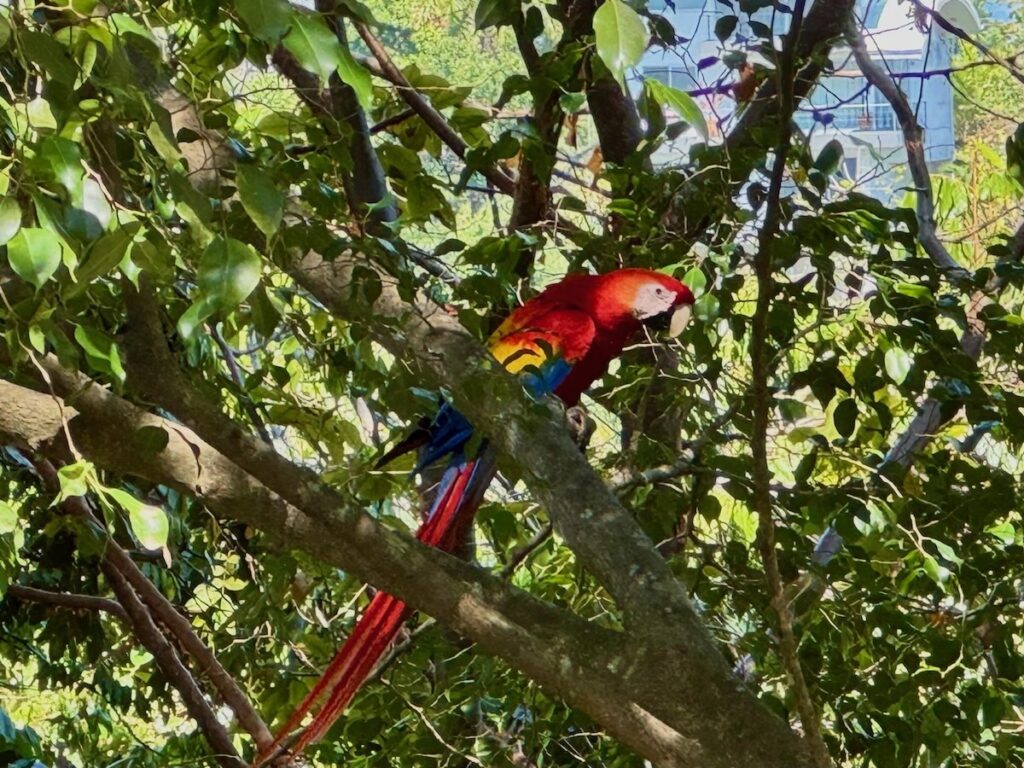
We stayed at the Gaia Hotel, which runs a free 1.5-hour guided walk through its private reserve at 4pm, Wednesday to Monday, for hotel guests only.
Cost Free for guests
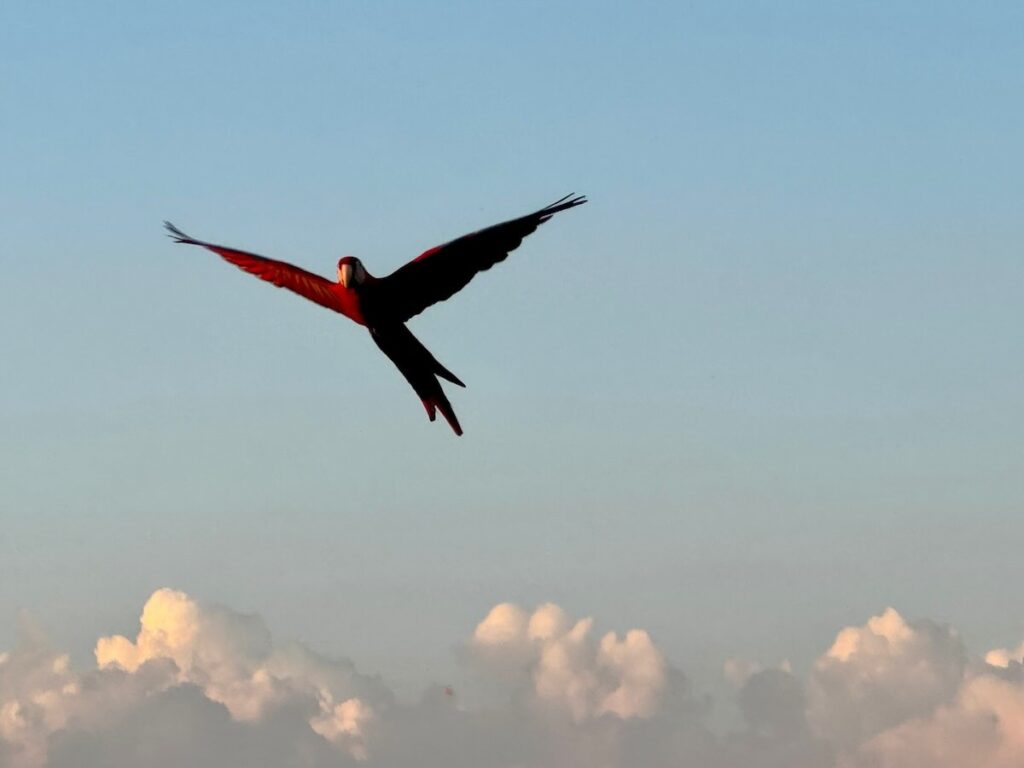
My Top Tip! Book the Macaw walk by contacting the hotel before you arrive. Spaces are limited to hotel guests and they do fill up. We saw scarlet macaws within ten minutes of starting the walk, plus a three-toed sloth on the way back.
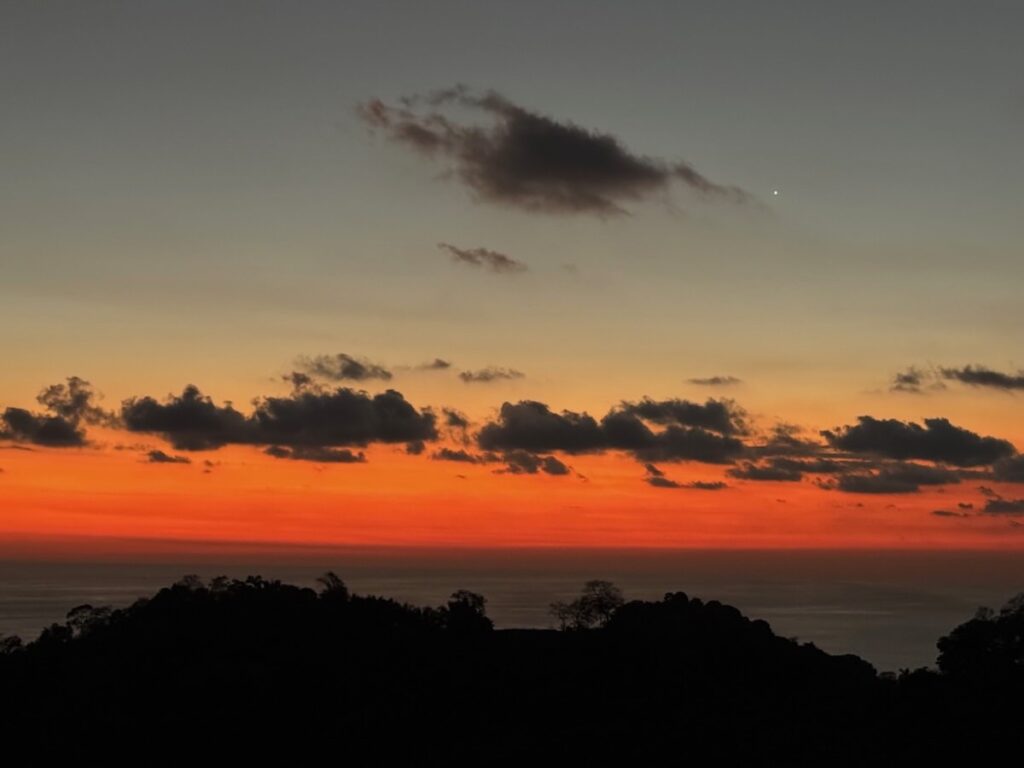
If you’re not staying at Gaia, a sunset walk on Espadilla Beach (the main public beach just outside the park) is the easiest alternative. Get a fresh juice or beer from one of the beach bars and relax. The Pacific sunsets here are reliably excellent.
Day 6: Manuel Antonio National Park
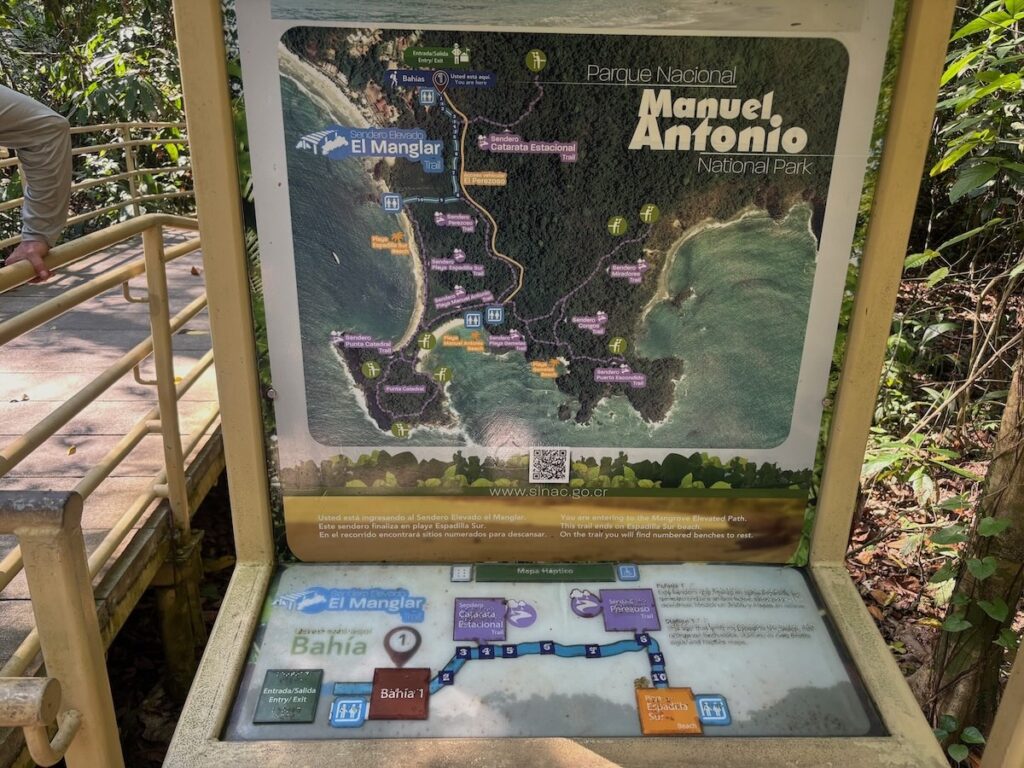
The big day on the coast. The cost below covers park entry only; guided tours add a guide fee on top but are well worth it in my opinion. If you want a full breakdown on whether the park is worth your time, the parking scam to avoid, and what we actually saw, read my Manuel Antonio National Park guide before you book.
Manuel Antonio National Park guided tour
Manuel Antonio is one of Costa Rica’s smallest national parks, but the wildlife is packed in across several different types of habitat.
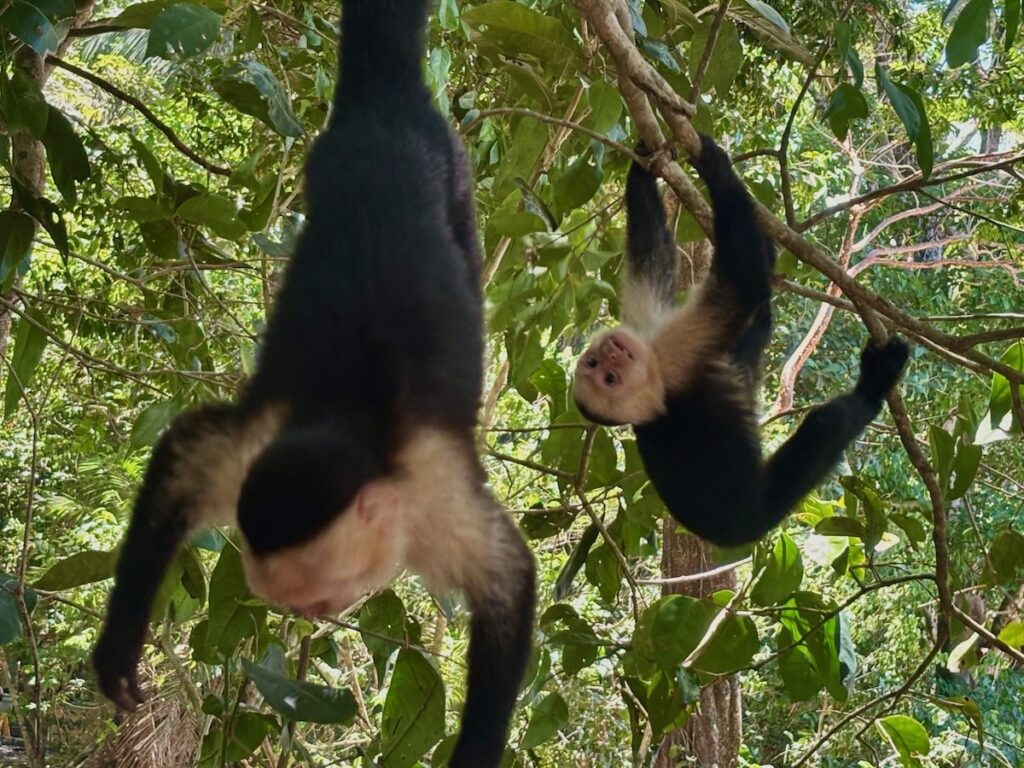
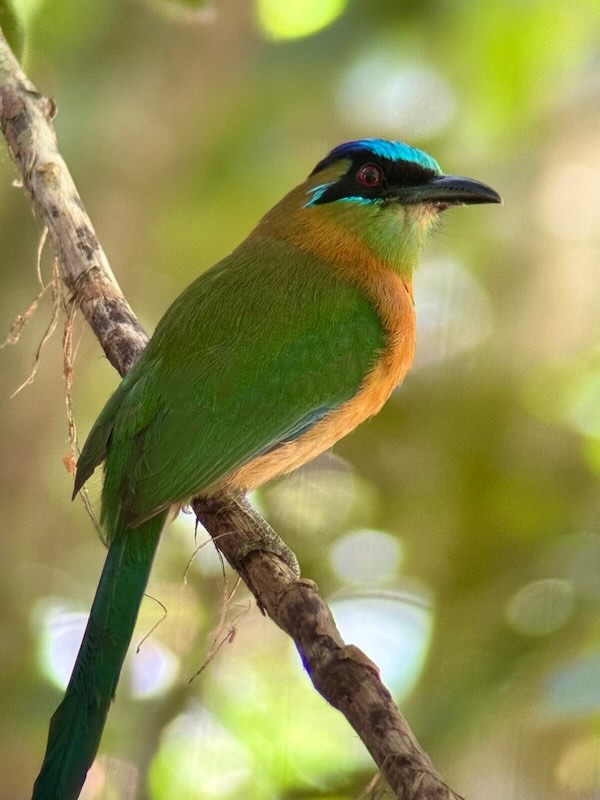
You walk through coastal rainforest on a relatively flat trail that opens out onto a few stunning small beaches inside the park, where you can swim. Wildlife is the main reason to go: sloths, three species of monkey, iguanas, agoutis, toucans and a huge variety of smaller creatures.
Time 3–4 hours • Cost about $18 (£15) park entry; guided tours typically $55–$85 per person (£44–£67)
Book your tickets and/or guide here
A guide is genuinely worth it. The park is famous for its smaller animals (frogs, snakes, insects, sleeping bats) that you simply will not see on your own. Our guide carried a powerful scope and pointed out things we’d have walked straight past.
My Top Tip! Get there for opening (7am). Wildlife is more active, the temperature is bearable, and you’ll have the trails to yourself for the first hour. The park is closed Tuesdays, and although it shuts at 4pm the beaches are cleared from 3pm, so treat 3pm as your effective finish.
There’s a strict no single-use plastics rule at the gate. Suncream and bug spray are the only exceptions, and water has to be in reusable bottles. Bring a refillable bottle from home or buy one in town the day before.
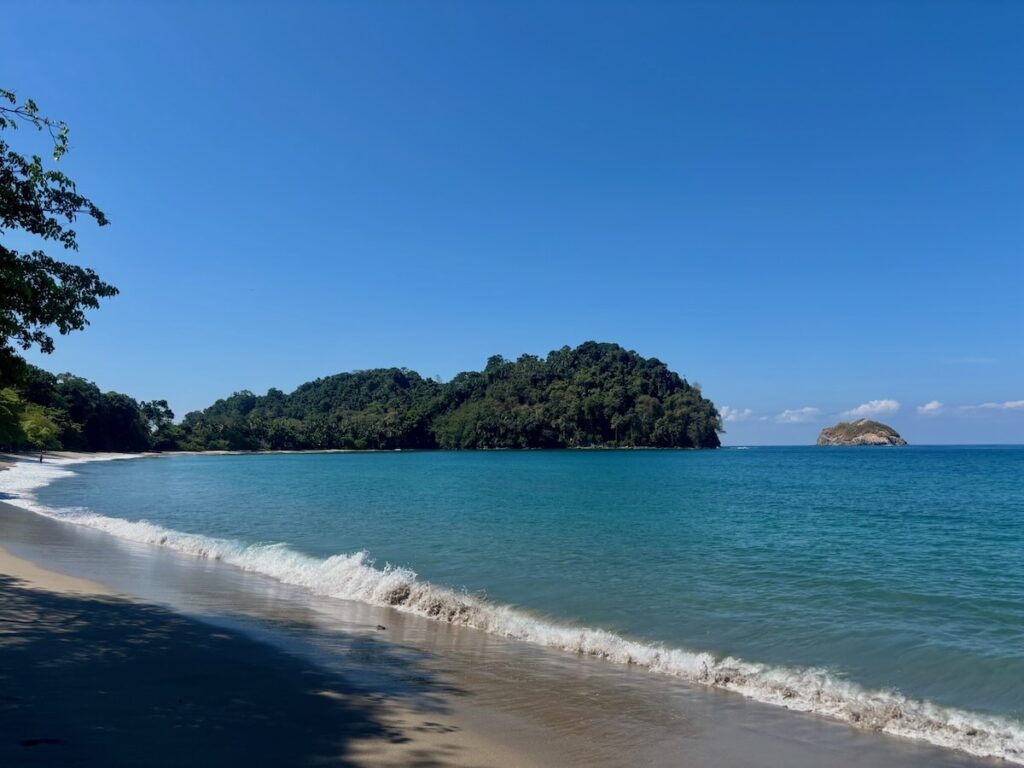
After the park, head back to the hotel for lunch and an afternoon by the pool, or back to one of the beaches outside the park for a longer swim. Espadilla Sur and Playa Biesanz are both lovely and quieter than the main park beach.
Day 7: Rainmaker ATV tour and evening transfer to San José
Your last full day. This works best as a morning activity, then a return to the hotel for lunch before the afternoon transfer.
Rainmaker ATV + waterfall tour
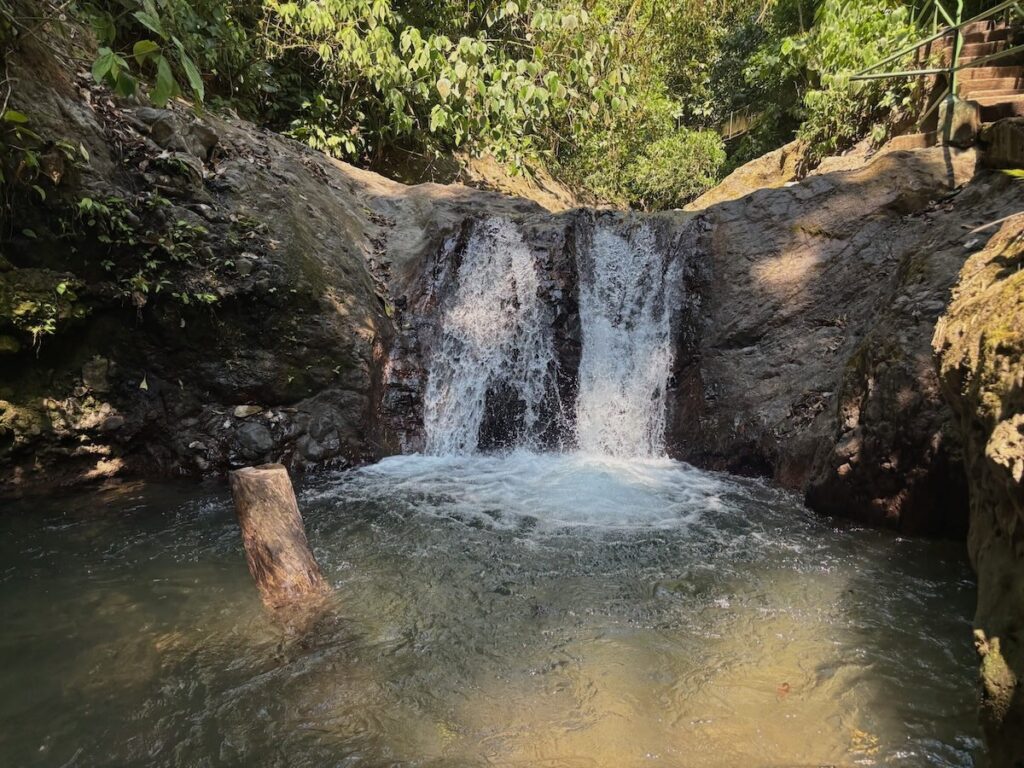
Rainmaker is a private rainforest reserve about 30 minutes north of Manuel Antonio. The tour combines an ATV ride through farm tracks and forest, a guided walk on suspension bridges, a swim in a waterfall, and lunch, all packaged into a single 3.5–4 hour outing with hotel transfers included.
Time 3.5–4 hours • Cost typical $130–$180 per person (£103–£143) BOOK HERE
Great mix-and-match day because you get rainforest, adventure and a swim without committing to a long hike. The waterfall pool after a dusty ride is genuinely one of the best swims of the whole week. The ATVs are easy to ride. Full instruction is given, and you don’t need any experience.
My Top Tip! Book the earliest morning departure, not the latest one. It gets you back at the hotel by lunchtime with plenty of buffer.
After lunch, transfer to San José (3 to 3.5 hours). Stay near the airport for an early-morning flight rather than trying to drive in on departure morning. We used 1915 Hotel, which is close to SJO and made the morning flight easy.
Other things to do in Manuel Antonio
ATVs aren’t everyone’s thing, and you may want a second activity alongside the park day. Well-reviewed alternatives:
- Sunset catamaran cruise. A 3 to 4 hour coastal sail with snorkelling, open bar and food; typical $85–$100 per person, a popular relaxed option for Day 7 if you don’t fancy ATVs
- Damas Island mangrove boat tour. Quiet mangrove channels with crocodiles, monkeys, and herons. Relaxed, good for families and older travellers; typical $70–$90 per person. They also offer kayaking.
I’ve since written up everything worth doing in Manuel Antonio in full, with prices, timings and which ones need booking ahead.
Where to stay for this itinerary
I’ve kept this short on purpose, as it’s not a hotel round-up. A handful of great options by area.
San José (arrival and departure nights)
San José is a transit base for this itinerary, not a destination. Pick somewhere close to the airport with a good shuttle.
Studio Hotel Boutique (where we stayed on arrival).
Art-focused boutique hotel in Santa Ana with a rooftop pool and proper restaurant. Pleasant first-night welcome to the country, and an easy transfer pickup point in the morning. Rating 8.9.
Cost typical $180–$280 (£143–£222) per night BOOK HERE
1915 Hotel (where we stayed on departure).
A charming colonial-era guesthouse in Alajuela, five minutes from SJO airport, with warm service, a decent breakfast and quiet rooms. Brilliant for early-morning flights. Rating 8.8.
Cost typical $60–$95 (£48–£75) per night BOOK HERE
Arenal / La Fortuna
My Top Tip! Stay in the hills outside La Fortuna town rather than in town itself. The views are better, the surroundings are more atmospheric, and most hotels in the hills include thermal pools, which saves you the cost of a separate hot springs visit. For the full picture, including the luxury options and which hotels have private thermal pools, see my guide to where to stay in La Fortuna and the best hotels with hot springs.
Volcano Lodge (where we stayed).
Mid-range hotel with direct volcano views, thermal pools on site, lush gardens, and a good restaurant. Excellent base for this itinerary, with their own tour desk for the Safari Float and other activities. Rating 8.8.
Cost typical $120–$200 (£95–£159) per night BOOK HERE
Nayara Springs (special stay).
Adults-only luxury resort with private plunge pools fed by natural hot springs, outstanding food, and standout service. If you’re celebrating something or want a proper splurge, this is the one. Rating 9.9.
Cost typical $600–$900 (£450–£675) per night BOOK HERE
Manuel Antonio
Manuel Antonio isn’t really a town. It’s one 6km road running between Quepos and the national park entrance, with almost every hotel on it. Stay along this road for the easiest access to the park and the beaches, and check whether your hotel runs a free shuttle, because several do and it saves you taxis. I’ve compared the main areas, with prices and honest downsides, in my guide to where to stay in Manuel Antonio.
Gaia Hotel & Reserve (where we stayed).
Adults-only boutique hotel with a private reserve, a multi-level pool, an excellent on-site restaurant (La Luna), and one of the best service teams I’ve experienced in any hotel. The free 7-minute shuttle to the national park/beach and the free Scarlet Macaw walk make it ideal for this itinerary. Rating 8.9
Cost typically around $290 (£229) per night BOOK HERE
Hotel La Mariposa (mid-range alternative). A long-standing Manuel Antonio favourite with cliff-top panoramic views over the Pacific, multiple pools and a good restaurant. Older property than the newer luxury options but the views are world-class for the price. Rating 8.5.
Cost typically around $260 (£205) per night BOOK HERE
What this 7 days in Costa Rica itinerary actually costs
Costa Rica costs more than first-timers expect. It’s not South-East Asia. Tours, national parks and decent hotels add up quickly, and Arenal is the priciest region for accommodation.
Budget, mid-range and comfort weekly costs
These are per-person estimates for the week, excluding international flights from the UK. They assume two people sharing a room.
| Style | What this looks like | Per person, week |
|---|---|---|
| Budget | Simple guesthouses, shared shuttles, two paid tours, mostly local sodas for food | $900–$1,300 (£715–£1,030) |
| Mid-range | Mid-tier hotels, private transfers, four guided tours, mix of restaurants | $1,800–$2,600 (£1,430–£2,065) |
| Comfort | Upper-tier hotels, all private transfers, all guided tours, hotel restaurants | $3,500–$5,500 (£2,780–£4,365) |
Cards, cash and tipping
Cards work almost everywhere, including small operators and most beach bars. ATMs are easy in San José, La Fortuna and Quepos. US dollars are widely accepted alongside the local currency (Costa Rican colón), and you’ll often see prices quoted in both.
A 10% service charge is added to most restaurant bills automatically, so additional tipping isn’t expected unless service was exceptional. For tour guides, $10 to $20 per person for a half-day is standard and appreciated.
Watch out for paying local soda restaurants by card. Many smaller spots are cash only. Keep around $50 in small notes for daily expenses.
Wildlife in Costa Rica: why a guide is worth it
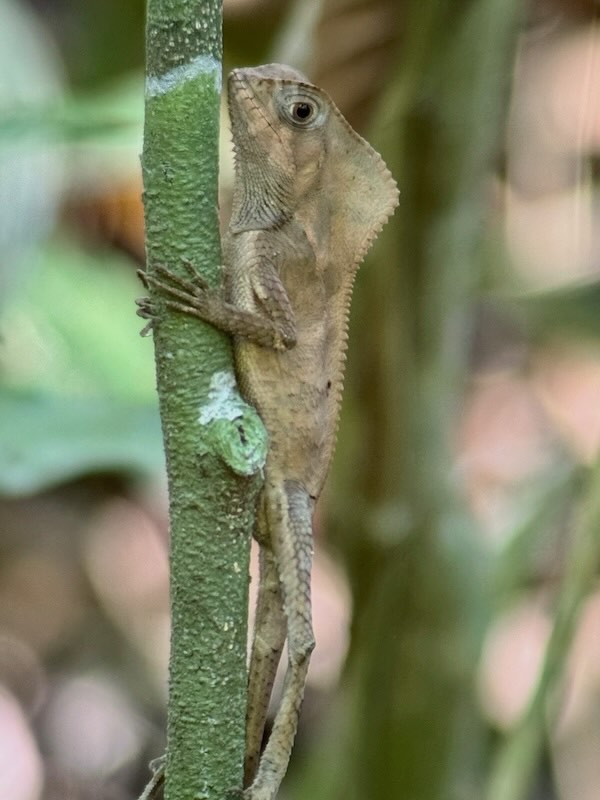
Costa Rica holds nearly 5% of the world’s biodiversity in a country smaller than Scotland. The variety is staggering: sloths, monkeys, hundreds of bird species, frogs the size of your thumbnail, and snakes that look like jewellery.
The catch: most of it is camouflaged, small, or high in the canopy. My honest mindset shift on this trip was to treat Costa Rica’s wildlife days like an African safari. With a trained eye and a scope, you’ll see ten times what you’d find alone.
My Top Tip! A small pair of binoculars is the cheapest upgrade you can make to your trip. We bought a basic pair for £30 before flying out and used them every single day, on guided walks, from the hotel pool, even from the breakfast table.
If you have a bit more time: swaps and add-ons
If you’ve got a bit more time or want to tweak this route, here are the most worthwhile changes.
Add Monteverde (10 days total)
The natural extension is two nights in Monteverde between Arenal and Manuel Antonio. Different ecosystem to lowland rainforest: cooler weather, and the famous Monteverde Cloud Forest Reserve. Add a half-day at Selvatura Park for ziplining and the Santa Elena Reserve for a quieter cloud forest hike.
Watch out for the road from Arenal to Monteverde. It’s mostly unpaved, slow, and tough on standard hire cars. Either book a private transfer or use the popular jeep-boat-jeep service across Lake Arenal, which is more scenic than the road and roughly the same time (3 to 4 hours).
Swap Manuel Antonio for a Guanacaste beach base
If you prefer pure beach time over a national park, swap Manuel Antonio for Tamarindo (lively surf town with bars and restaurants), Sámara (quieter, family-friendly with calm swimming), or Playa Hermosa in Guanacaste (resort-style with snorkelling). All three are reached more easily from Liberia airport (LIR) than San José.
You lose the national park wildlife but gain reliably sunny weather (Guanacaste has the country’s driest climate) and proper Pacific sunsets without the rainforest backdrop.
Swap Arenal for the Caribbean coast
For a quieter, less touristy feel, swap the Arenal nights for the Caribbean coast. Tortuguero (remote jungle canals with turtle nesting in season) or Puerto Viejo (Afro-Caribbean culture, chilled beach towns, great food). You give up the volcano and hanging bridges, but the wildlife on the Caribbean side is just as good and the atmosphere is completely different.
Travel times are longer, so this works best on an 8 to 10 day trip rather than a tight 7.
Add a Rio Celeste day trip from Arenal
If you already have four nights in Arenal (not three), a day trip to Rio Celeste inside Tenorio National Park is a lovely option. It’s the famous bright blue river created by a natural mineral reaction. The drive is about 2.5 hours each way, so it’s a full day out, but the colour of the water is worth it alone.
Practical tips for a first trip to Costa Rica
The small details that catch first-timers out.
What to pack
- Light rain jacket. Costa Rica’s weather flips fast.
- Reef-safe sun cream. Better for the wildlife everywhere
- Reusable water bottle. Essential for Manuel Antonio National Park, where single-use plastics aren’t allowed at the gate
- Walking shoes with grip. Trainers are fine, but they’ll get muddy. A pair you don’t mind getting wet
- Insect repellent with DEET. Mosquitoes get serious in rainforest and at dusk
- Binoculars. Even a cheap pair transforms wildlife spotting
- Quick-dry travel towel. Useful for waterfalls and impromptu swims
- Small daypack for tour days
Safety and language
Costa Rica is one of the safest countries in Central America for tourists. I had no issues anywhere, and the country has a long-standing focus on tourism that shows in how welcoming people are. Standard travel sense applies: don’t leave bags on car seats, don’t flash valuables on the beach, use Uber or hotel taxis at night.
English is widely spoken in tourist areas, hotels, restaurants and on tours. Outside of those, basic Spanish (hello, please, thank you, the bill) goes a long way and is appreciated. “Pura vida” is the all-purpose phrase you’ll hear constantly. It means hello, goodbye, no worries, and pretty much anything positive.
FAQs about a 7 days in Costa Rica itinerary
Yes, for two regions. Pair Arenal with either Manuel Antonio (this itinerary) or a Guanacaste beach. Trying to fit in three regions in a week leaves you with a day and a half lost to transfers. If you want Monteverde as well, plan for 10 days minimum.
Only if you’re self-driving and adding Monteverde or visiting remote beaches. For this Arenal to Manuel Antonio route on private transfers, you don’t need to think about it.
Yes, easily. Private transfers between regions and hotel-arranged tours within each region cover everything in this guide. I didn’t drive myself once and never felt limited.
Manuel Antonio is better if you want a national park, wildlife and proper jungle-meets-beach scenery. Tamarindo is better for a pure beach holiday: bars, surf lessons, sunset sailing. For a first trip with a mix of activities, Manuel Antonio wins. For more on the park itself, see my is Manuel Antonio National Park worth it guide.
If you can only do one, Arenal. You get hanging bridges, rainforest hikes, a volcano view, hot springs and easier transfers. Monteverde is more specifically about cloud forest, which is similar but distinct, and the road in is genuinely tough.
Yes. Costa Rica is one of the safer countries in the Americas for tourists. Standard precautions apply but I never felt uncomfortable anywhere.
Anywhere on the western side of the city or in Alajuela (which is closer to SJO than central San José). For an early flight, an Alajuela airport hotel with a free shuttle is the easiest option.




7 Comments
Comments are closed.