
Planning what to do in Granada can feel like a lot when you only have a short stay. If you have 2 days in Granada, you need to work out how to fit in the Alhambra, Albaicín and Sacromonte, riverside walks and tapas without turning the trip into a rush.
This travel guide sets out a straightforward 2-day Granada itinerary built specifically for first-time visitors. I have planned out a simple day-by-day plan, time and cost estimates for key sights, all plotted on a free downloadable Google map.
I also cover Alhambra ticket advice, ideas on where to stay and eat, suggestions on what to do if you have extra days, and notes to help families and older travellers handle the hills. By the end of this you will be fully prepared to make the most of your trip.
More of my Spain guides to help plan your trip
- Alhambra Palace Granada Guide: An easy to follow route, tips and photo spots
- Where to stay in Granada: Advice on the best areas to stay, some great hotels and why
- What to do in Madrid: A guide to the best things to see and do all plotted on a free map
- Where to stay in Madrid: The best areas and hotels to make the most of your trip
- How many days in Seville: A first timers guide to the best of Seville
- 3 days in Barcelona: My favourite route and tips for first time visitors
- Where to stay in Barcelona: Neighbourhood comparisons and best hotels by budget
Why visit Granada and how many days you really need?
Granada is a stunning,compact and walkable city in the south of Spain, with plenty to offer, and possibly the most generous free tapas in Spain!
I have shared travel tips and recommended Granada to so many people and everyone comes back a huge fan. I was lucky enough to spend 5 days there, but with a little planning you can see a lot in a short time without feeling rushed.
For most first-time visitors, 2 days in Granada is enough to see the Alhambra properly, explore Albaicín and Sacromonte, wander the historic centre and enjoy a couple of relaxed tapas evenings. In my opinion, a day trip tends to feel rushed. Three days or more is fantastic if your itinerary allows, and lets you add a hike or experience some of the beatiful.
A simple way to think about it is:
- Day 1: Centro and riverside, with an easy first taste of the hills.
- Day 2: Alhambra, Albaicín and main viewpoints.
- Extra time: hikes, gardens and the Sierra Nevada.
My Top Tip! Granada’s hills and cobbles are part of the charm, but they do mean you notice what shoes you are wearing. Good trainers or light walking shoes make the days more manageable, especially if it has rained. Expect to get a great step count in!
Disclaimer: This article may feature affiliate links. If you click these links, and choose to book with that hotel or company, I will earn a small commission at no extra cost to you. I appreciate the support that allows me to continue providing this information
Downloadable map of my Granada recommendations
My 2 day Granada itinerary: Day 1
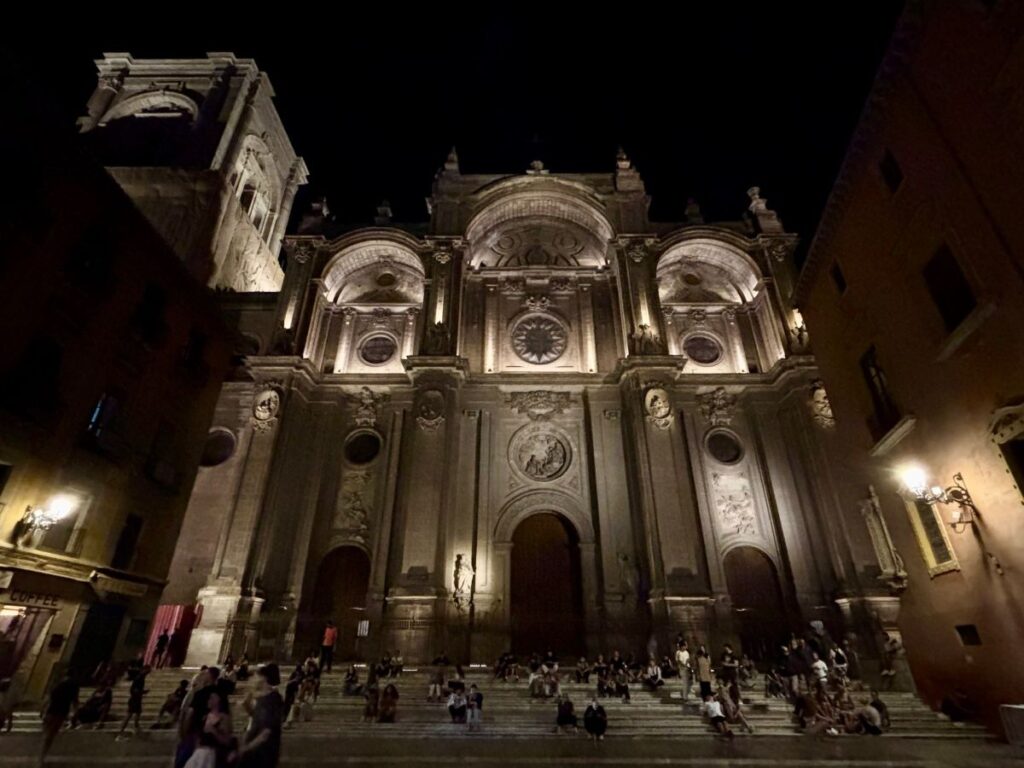
Granada Cathedral
The Cathedral sits right in the middle of the city and shows the Catholic side that followed the Reconquista. Inside you’ll find bright stone, high ceilings and chapels that contrast sharply with the Moorish architecture you see later.
Time 45–60 minutes • Cost about €7
Royal Chapel
The Royal Chapel is next to the cathedral and holds the tombs of Ferdinand and Isabella, along with a small museum. A nice addition if you enjoy history, but optional for those who aren’t.
Time 30–45 minutes • Cost about €5–€6
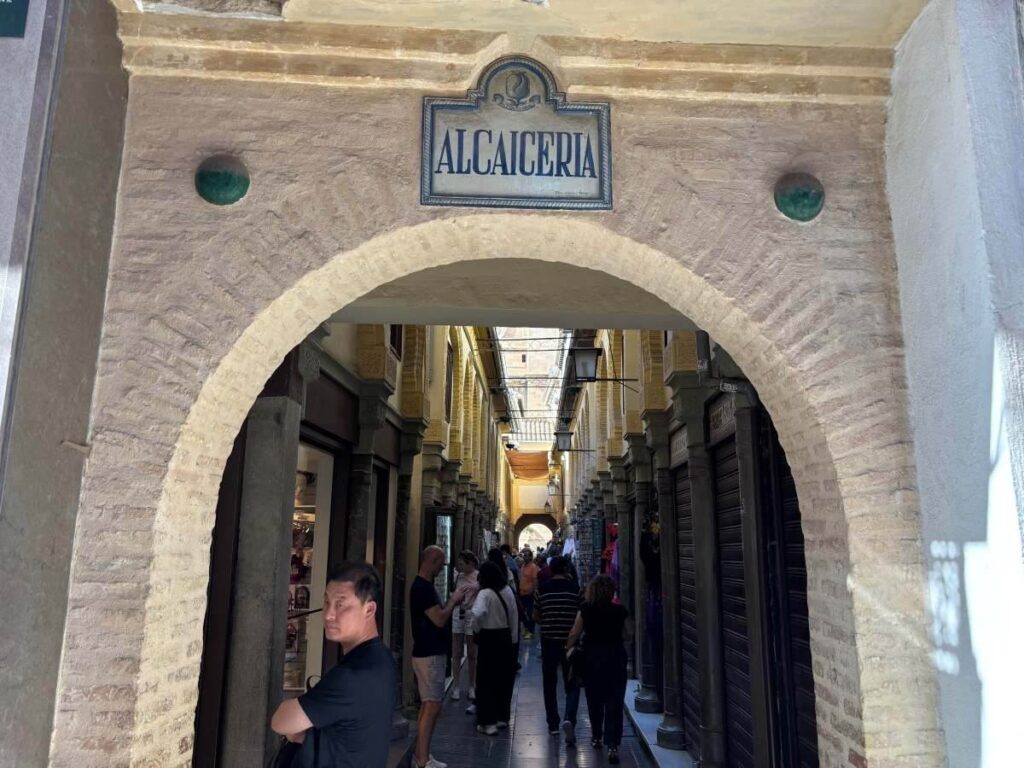
Alcaicería
Alcaicería is a small warren of lanes built on the site of the old Moorish silk market. Today it is mostly souvenir stalls, but the narrow passages and archways still hint at the city’s trading past. It’s also a great spot to pick up some souveneirs and take some photos.
Time 20–30 minutes • Cost Free
Corral del Carbón
Corral del Carbón is a 14th-century Nasrid inn and warehouse tucked behind a pointed arch off the main street. Step through and you find a quiet courtyard with galleries around it. It’s right next to Alcaiceria, so easy to see both.
Time 10 minutes • Cost Free
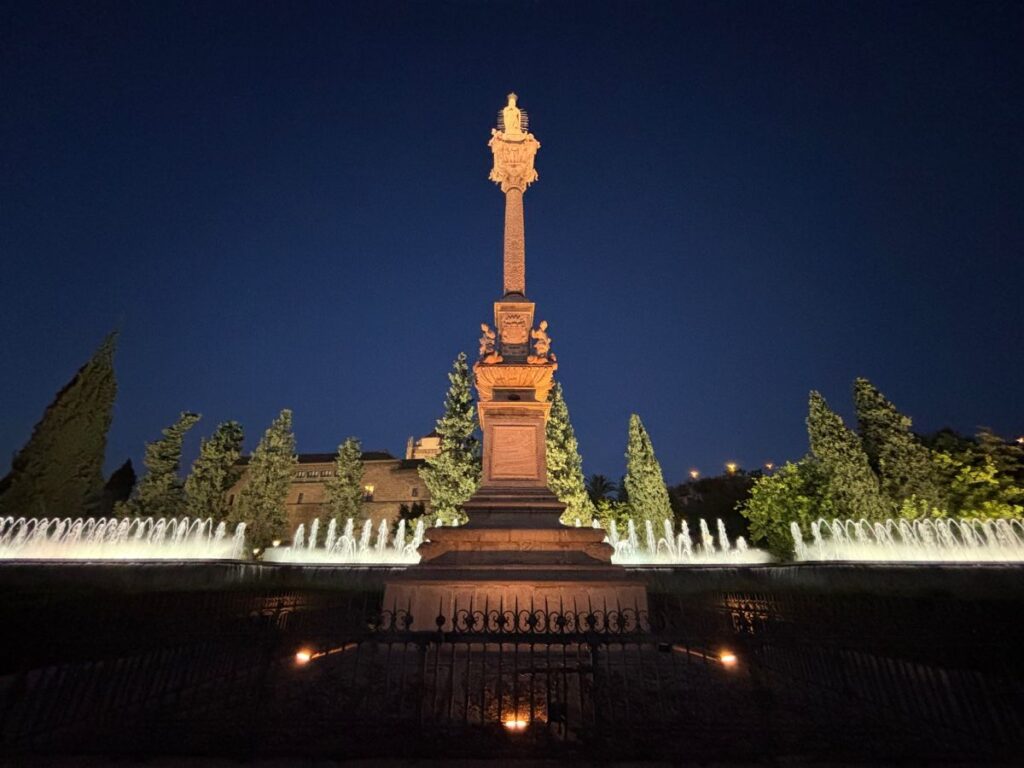
Jardines del Triunfo
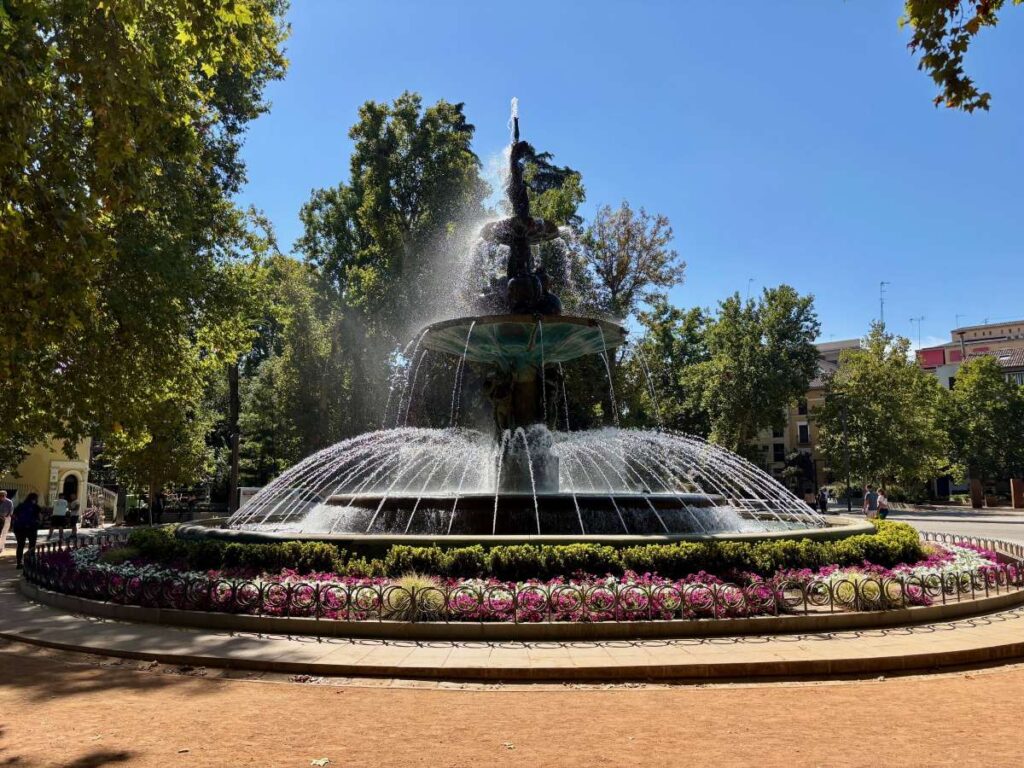
Jardines del Triunfo is a park with impressive fountains and trees on the edge of the centre. It is not a headline sight, but it is a handy place for a pause between visits or a bit of space for children to run around. I also enjoyed seeing it at night, as they light up the fountains.
Time 20 minutes • Cost Free
This whole Centro loop works well as a relaxed first half-day, with a simple lunch near the cathedral before heading towards the river.
Carrera del Darro and Paseo de los Tristes
Carrera del Darro and Paseo de los Tristes follow the river below the Alhambra walls, with stone bridges, lamps and reflections in the water. I loved this part of the town, very picturesque and perfect for a stroll. We visitied several times during our trip.
Start near Plaza Nueva and walk upstream towards Casa de las Chirimías for classic views of the palace on its ridge.
Time 45–60 minutes • Cost Free
My Top Tip! The cobbles can be slick after rain, so smooth-soled shoes are best avoided. It is a good place to slow down as the light softens in late afternoon and take some photos or grab a snack/coffee.
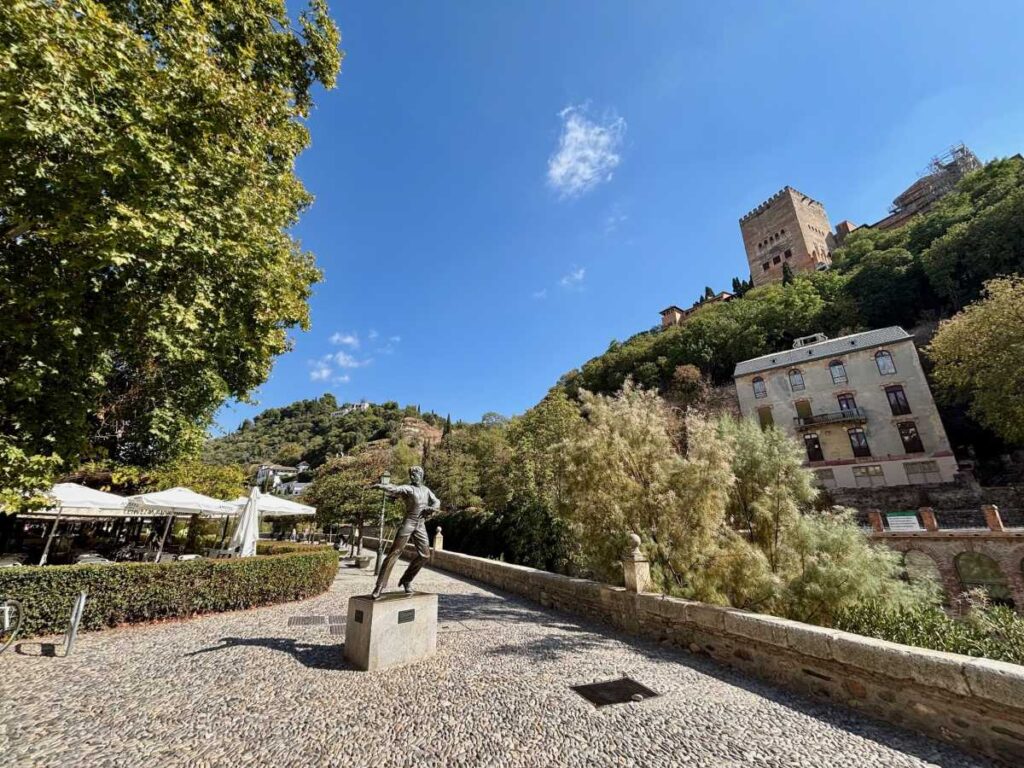
Mirador de San Nicolás at sunset
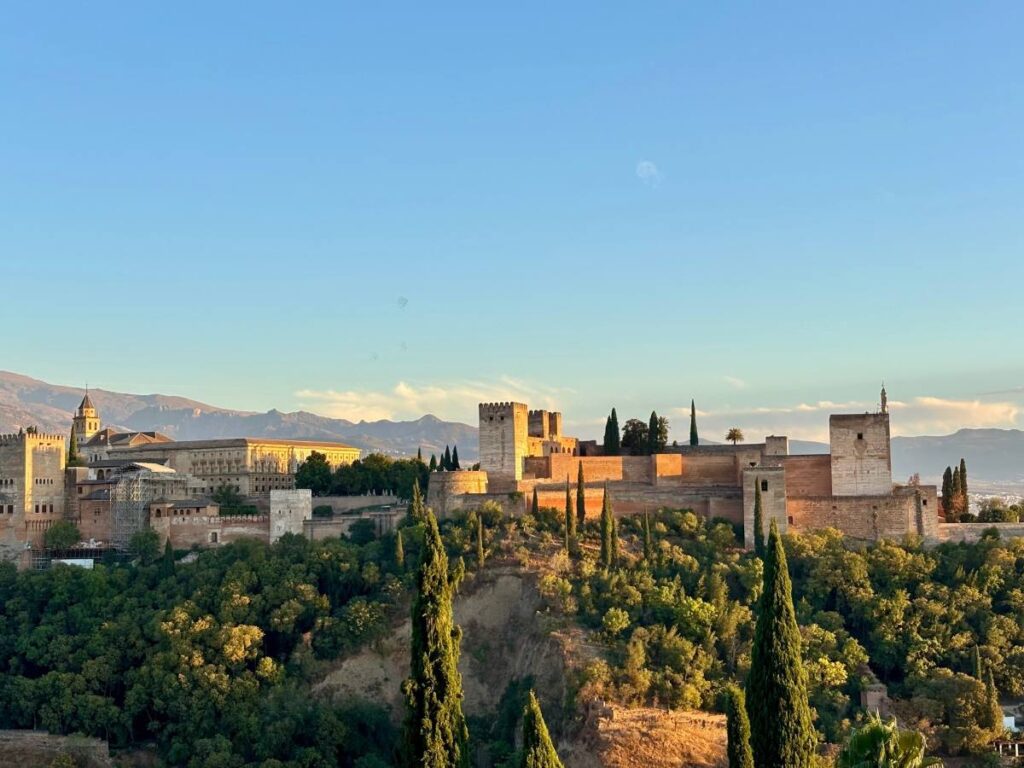
Mirador de San Nicolás is the classic viewpoint with a full view of the Alhambra and, on clear days, the Sierra Nevada behind.
It is atmospheric but busy, with buskers and plenty of cameras, so arriving early, enjoying the view and then moving on to a quieter corner once the main crowd builds often works best.
My Top Tip! You need to arrive at least 45 minutes before sunset to get a good view. I enjoyed the spot for the Alhambra views, photo opp and the beautiful light, but it was very busy. If you don’t like the crowds, I recommend a couple of different options
Alternative quiet miradors: Placeta Cristo de las Azucenas and Placeta de la Lomilla
Both of these locations offer sunset views of the Alhambra, but without the crowds. The views aren’t quite as good, but we found the experience much more pleasant to sit and relax.
These small squares are tucked into the lower Albaicín and are easy to find, both are plotted on my map above. Great alternatives to Miarador de San Nicolas
Time 20–40 minutes • Cost Free
My Top Tip! Around 30–45 minutes before sunset often gives the nicest light for photos, watching the Alhambra change colour is pretty spectacular.
Tapas crawl in the Centro
Granada is known for free tapas, one of the few remaining places I found doing this consistently on my latest Spain roadtrip.
Yes, some places still do it in the big cities, but we had this everywhere in Granada, it’s a fantastic, and cheap, city to eat in.
What this means: in many bars, a small plate comes with each drink. Rather than booking a big dinner, it often works better to drift between a few places, ordering a drink, seeing what comes and moving on after a round or two. It’s one of my favourite ways to eat.
Time 1.5–3 hours • Cost typically €15–€30 per person
My Top Tip! On the first night it helps to keep things flexible. Pick a bar that is busy, ideally with lots of locals. If you’re someone who likes to plan, I share some of my favourite spots later.
Day 2 in Granada: Alhambra, Albaicín and Sacromonte
Day 2 is your main sightseeing day. Aim for a morning or late-morning Alhambra visit, this is going to be the key point of your day, I have then suggested some options to fit around your timeslot.

Alhambra visit
The Alhambra is a walled complex of palaces, fortress and gardens on a hill above Granada. It is the city’s headline sight and deserves a good half-day so you are not rushing through the Nasrid Palaces.
You will have a timeslot with your ticket, once you have this, plan the rest of your day around it.
I give a more detailed breakdown on how to tackle the Alhambra below.
My Top Tip! You MUST book tickets in advance for the Alhambra, it is incredibly popular and sells out. Visitor numbers are up their competing with Basílica de la Sagrada Família and the Royal Alcázarr in Seville.
I have written a detailed Alhambra Palace Guide, that walks you through everything you need for your visit.
Time 4–5 hours • Cost about €22
Carmen de los Mártires
Carmen de los Mártires is a romantic garden on the slopes above Realejo, with terraces, a small lake, peacocks and wide views over the city. It is usually quieter than the main viewpoints and makes a peaceful late-afternoon stroll.
My Top Tip! It is also a nice spot for sunset from the top of the park, quieter and overlooking the southern part of the city
Time 1–1.5 hours • Cost Free
Cuesta del Rey Chico
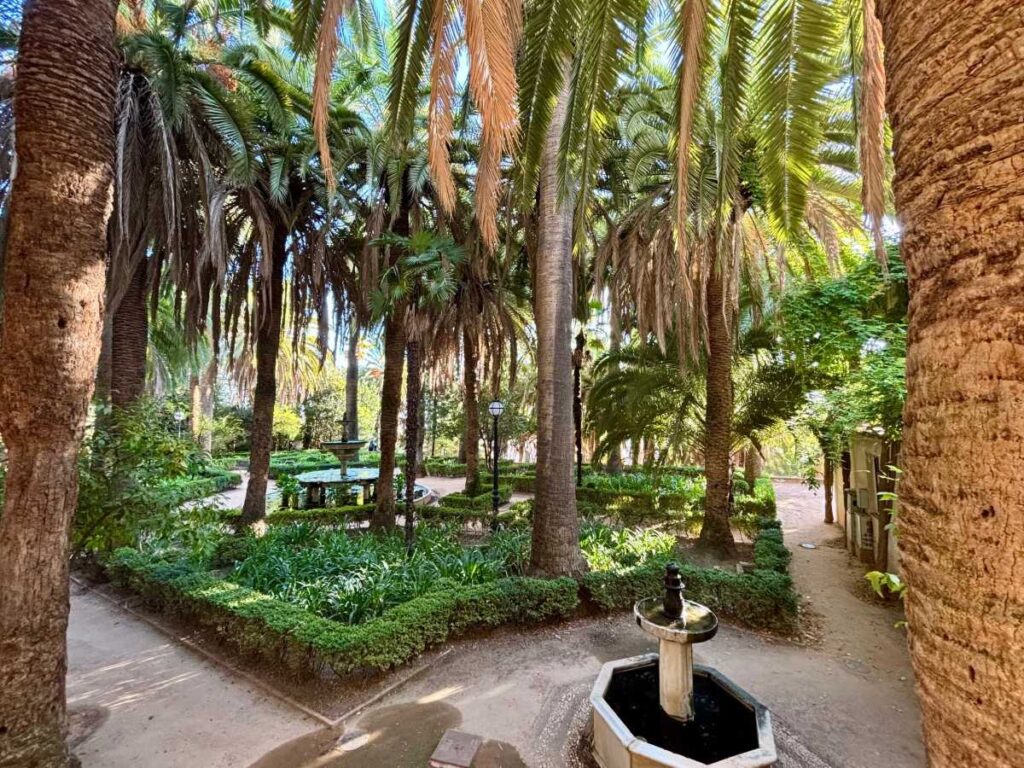
Cuesta del Rey Chico is a shaded path running below the Alhambra walls, linking the riverside area with the upper hillside neighbourhoods. It feels like a wooded lane, with glimpses of stone walls above and trees on either side. There are also some nice photo opportunities of the Alhambra and the Albaicín opposite.
Time 30–45 minutes • Cost Free
My Top Tip! Walking it downhill after the heat of the day keeps the effort levels lower, and the light through the trees is often soft and pleasant.
Museo Cuevas del Sacromonte and flamenco
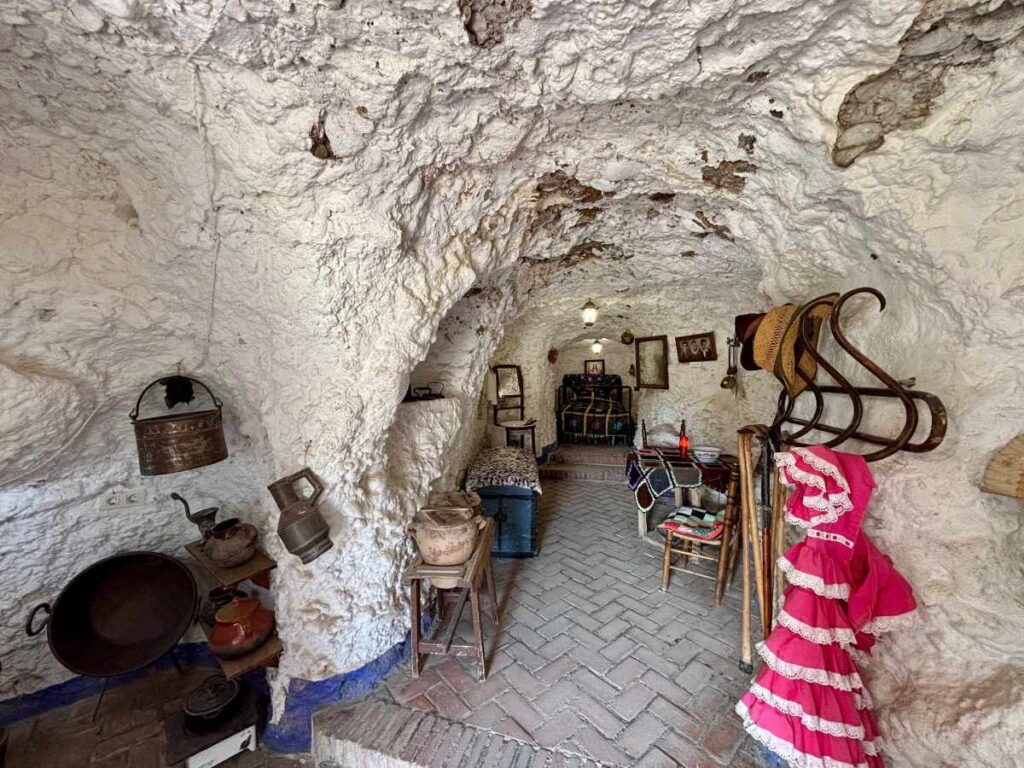
Sacromonte lies on the ridge beyond the Albaicín and is famous for its cave houses dug into the hillside.
Museo Cuevas del Sacromonte is an open-air museum showcasing the inside of a series of cave homes. Each cave shows a different part of everyday life, from kitchens to tools, and the terraces between them offer some of the best Alhambra views in the district – another altenative for quieter, yet spectacular sunset views
Time 1–1.5 hours • Cost about €5–€7 for Museum only €20–€35 for flamenco
My Top Tip! The Museo also hosts flamenco, check in advance if there is a show on. Pre-book an evening performance take your time on the way up, enjoy the sunset and then stroll back down through quiet streets after the show.
Detailed guide to visiting the Alhambra
Alhambra at a glance
Granada’s most famous sight and top 3 in Spain for visitor numbers (nearly 3 million a year). The Alhambra is a hilltop complex of palaces, fortress and gardens that was once the seat of the Nasrid rulers. Later additions by the Catholic monarchs mean you see several eras of architecture in one place.
My Top Tip! A guided tour can be helpful on a first visit because it untangles the stories and explains what you are looking at. It is also a way of getting tickets if you struggle through the official website
If you want more detail I have written an Alhambra Palace Guide, with my best tips and photo spots
How do I get a ticket to the Alhambra?
For first time visitors (myself included) most confusion comes from the ticket system and the timed entry for the Nasrid Palaces. Once you understand that part, the visit becomes much easier to plan.
What should I look for?: The standard daytime ticket that includes Nasrid Palaces, Alcazaba and Generalife is the right choice, you will want to visit it all.
Night visits and garden-only tickets are optional extras if you have more time.
Buy your tickets at the official site, there are no official ticket offices to visit and buy from.
When booking, pay attention to:
- The Nasrid Palaces time slot.
- Whether you need to collect physical tickets or can go straight in with a code.
- Where to meet if you are on a guided tour.
- Having your ID. You will need your passport when you enter, no entry without it.
I cannot overstate this enough, Booking well in advance for busy seasons is crucial.

Alhambra tickets are sold out what can I do?
This is what happened to us on our first visit to Granada. If online tickets are sold out, you have 3 options:
- Check with local tour companies as they may have tickets available
- Check with your hotel, as some hotels buy and hold tickets
- Book a guided tour, we did this through getyourguide (although Klook and Viator also have options).
- It meant we paid about €40 rather than €22 but we got a time slot we wanted
- We also got talked through the intricate history and really enjoyed it
My Top Tip! If you don’t like tours and all you want is the ticket, you can leave the tour and continue around the grounds on your own once inside. I would recommend trying it though, I’m not a tour person and really enjoyed it.

The main areas: Nasrid Palaces, Alcazaba and Generalife
Nasrid Palaces
The Nasrid Palaces are the most ornate part of the Alhambra, with carved stucco, courtyards, arches and reflecting pools, beautiful photography is guaranteed! This section works on a strict timed entry: your ticket has a 30-minute slot, and you must be at the palace gate during that window.
Time 60–90 minutes
My Top Tip! Planning everything else around this time and staying fairly close in the hour beforehand removes most of the stress.
Alcazaba
The Alcazaba is the fortress section, with thick walls and towers overlooking Granada. Climbing the Torre de la Vela gives you one of the broadest views of the city, we would have loved to be here for sunset.
Time 45–60 minutes

Generalife
The Generalife is the summer palace and garden complex slightly away from the main palaces. It is a relaxed area with terraced gardens, water channels and views back to the Alhambra and the mountains, I personally think this may have been my favourite part. The gardens and the views were spectacular
Time 60–90 minutes
Suggested Alhambra route and timing
A simple route that works for most people is:
- Enter the complex and make your way towards the Generalife
- Explore the Alcazaba.
- Take a short break for a drink or snack.
- Visit the Nasrid Palaces for your time slot and then enjoy their gardens to finish
For a first visit, 4–5 hours with one proper break usually feels comfortable. Trying to squeeze everything into less than three hours tends to feel rushed and tiring.
Alhambra tips for families and mobility issues
Paths inside the Alhambra are uneven in places and there are steps between sections. Buggies are possible but awkward on stairs; a carrier can be easier for small children. For anyone with limited mobility, it helps to:
- Use a bus or taxi from town instead of walking up the hill.
- Take regular breaks in shaded spots, there are a lot, with benches too.
- Prioritise the Nasrid Palaces and one other area instead of trying to cover every corner.

Neighbourhoods and where to stay in Granada
I have written a detailed guide on where to stay in Granada, outlining the best areas, some key tips and hand-picked hotels across all budget ranges. For a brief view, read on below.
Centro (historic centre)
The Centro around the cathedral and Plaza Nueva is flat, busy and convenient. Staying here keeps you close to shops, bars, buses and most of the sights in this guide.
For first-timers, this is usually the least stressful base, I always recommend it. You can decide day by day how much hill-walking you want.
Albaicín
The Albaicín is the whitewashed quarter on the hill facing the Alhambra. Its narrow lanes and small squares are very atmospheric, with some guesthouses and apartments offering direct views of the palace.
It is beautiful but steep, so it suits visitors who are comfortable with daily climbs and steps.
Realejo
Realejo is the old Jewish quarter below the Alhambra, now a mix of residential streets, street art and local bars. It feels less touristy than the very centre but is still within walking distance of most sights.
Sacromonte
Sacromonte is the cave district along the ridge beyond the Albaicín. Some cave houses are now guesthouses with unusual rooms cut into the rock.
In my opinion, Sacromonte works best as a short “special stay” for those with more days in Granda, rather than your only base. The hills and steps can be demanding, especially after dark, and you have further to travel to all the main sights.
Tapas, cafés and churros: where to eat and drink in Granada
Let me assure you in advance, you will not go hungry in Granada. The food is excellent, people are welcoming and it is some of the best value I have found in Spain.
How free tapas works in Granada
In many Granada bars, a tapa is included with each drink. Often you cannot choose the first plate, but some places give you a list for later rounds. Portions in student areas can be large and simple, while central bars may serve smaller but more refined tapas.
Mixing both styles works well: one or two relaxed local bars and then a place that does something a bit different.
My favourites places to try near the centre
La Trastienda 1836 (Plaza de Cuchilleros)
La Trastienda 1836 looks like a charcuterie shop at first glance, but there is a tiny bar behind the counter. Inside you get hanging hams, wine and generous tapas in a cosy, old-fashioned setting, with jamón and other cured meats as the main draw rather than full restaurant dishes.
Cost typical €10–€20 per person
Bar Poë
The lively Bar Poë serves tapas with flavours from around the world, from African-inspired stews to spiced meats. You choose your tapa from a small list with each drink, which is part of the fun and makes it easy to try a few different things.
If you like a lively atmosphere, I recommend considering this one later in the evening, the hosts are amazing and you will have a great time.
Cost typical €12–€20 per person
Oum Kalsum
Oum Kalsum offers tapas with a Moroccan twist in a colourful, slightly bohemian space. Expect warm spices, couscous-style dishes and a friendly, mixed crowd. We stumbled across it and were blow away, very friendly staff and unbelievable value.
This is a great option for vegetarians too, they have a lot on their menu.
Cost typical €10–€18 per person
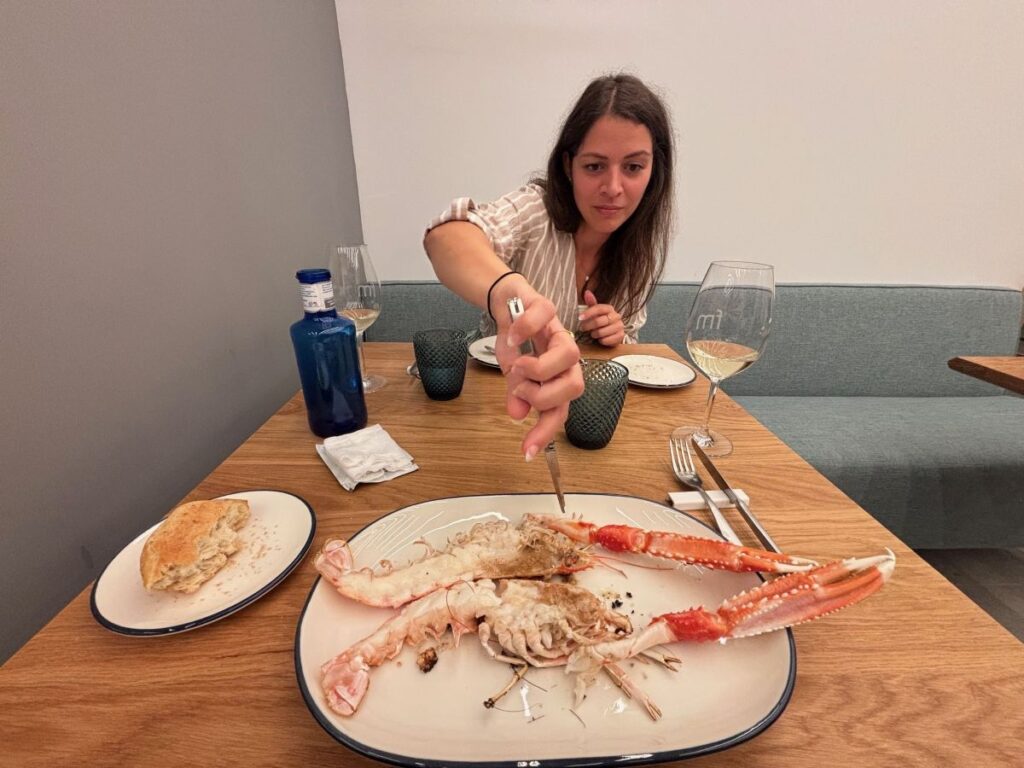
Bar FM
“This neighbourhood bar is famous in Spain and beyond for the quality of its food”. Thats the opening line in it’s Michelin review and it doesn’t disappoint. Some of the best seafood i’ve had in Spain and rightly a pilgramage for a lot of top chefs
A little outside the centre it is high-quality seafood without much fuss. One to plan and book, rather than just drop into and if you are a big seafood fan, you will want to increase your budget as I did.
Cost typical €35–€100 per person
Restaurante Chikito
Restaurante Chikito is a traditional Granadan restaurant with classic regional dishes. It works well if you want a sit-down meal rather than only bar-hopping.
Cost typical €25–€40 per person
GULA Supreme Burgers
I wanted to include a non tapas option and GULA Supreme Burgers had to be it. An excellent smash-burger place on a central shopping street. Ideal for something familiar in a casual setting, or for those with fussy eaters. Also a good lunch option, but ensure you check their opening times.
Cost typical €12–€18 per person

Casa Isla / Casa Ysla
For those fancying something sweet, Casa Isla (or Casa Ysla) is a local bakery and café chain best known for piononos. Small syrup-soaked pastries from nearby Santa Fe. Branches are handy for breakfast or a mid-morning break with coffee, pastries and tostadas, and some also serve churros.
Cost typical €4–€8 per person
Getting to Granada and getting around
Flying to Granada (GRX)
Granada’s airport is Federico García Lorca Granada–Jaén (GRX), about 15–17 km west of the city. There are regular flights from Spanish hubs such as Madrid and Barcelona.
From the UK and many other countries there are patchy at best year-round direct flights to Granada. Most people either connect via Madrid/Barcelona or fly into Málaga and continue by bus or hire car to Granada
Getting to Granada from major Spanish cities
Granada is easy to reach from other popular Spanish cities.
- From Madrid: high-speed and long-distance trains take about 3.5–4.5 hours, depending on the service.
- From Seville: long-distance buses are usually simplest and take about 3 hours. Or you can bus to Cordoba and get the train into Santa Justa to save time.
- From Málaga, buses or a hire car will get you to Granada in roughly 1.5–2 hours.
Local transport in Granada
The central area is compact and we walked everywhere, but small red minibuses are useful for reaching the Albaicín and Sacromonte. There are also buses up to the Alhambra if you prefer not to walk uphill.
Taxis are straightforward to use and fairly priced over short distances, we also used Uber without issue. For steep climbs or after a long day of walking, taking a taxi up and walking back down is often the least effort.
Options to do if you have more time in Granada
Parque de las Ciencias (great bad weather option)
Parque de las Ciencias is a hands-on science museum and park a short distance from the centre. It has interactive exhibits, outdoor areas and family-friendly displays, and works well as a half-day if the weather is poor or you want a break from churches and palaces.
Time 2–3 hours • Cost about €10–€15
Arab baths and spa options
Modern hammams in Granada offer hot pools and short massages in spaces styled after traditional Arab baths. They are not historic sites, but they are a relaxing way to end a day of walking, especially in the cooler months.
Time 1.5–2 hours • Cost typical €30–€45
Los Cahorros de Monachil (hike)
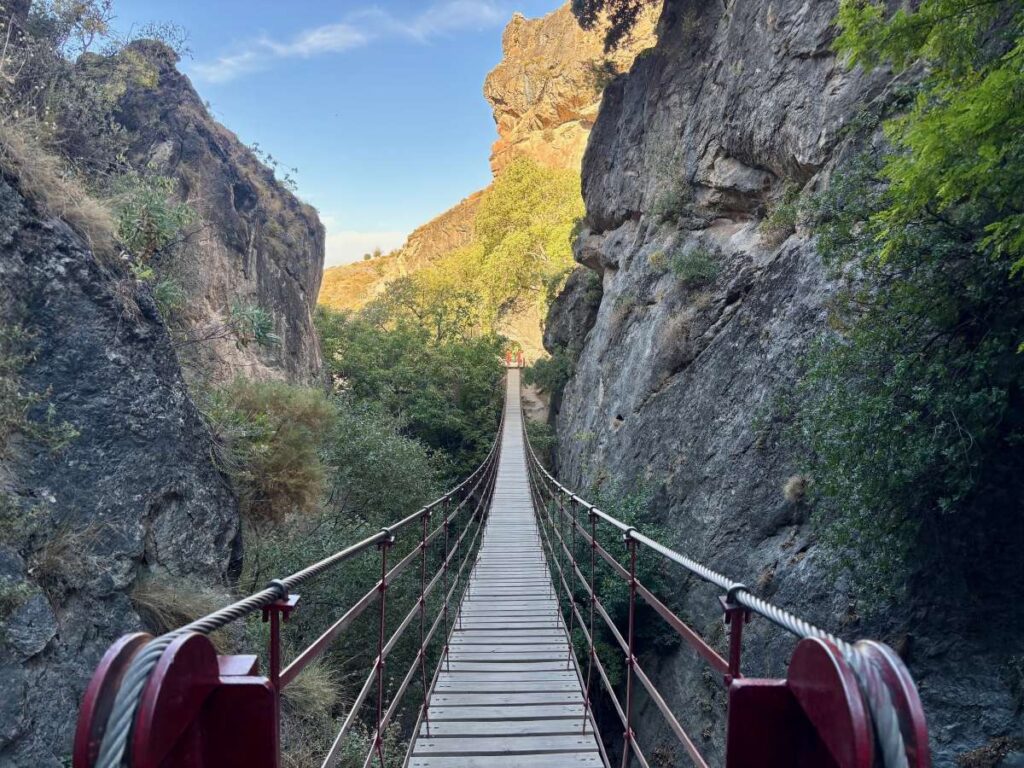
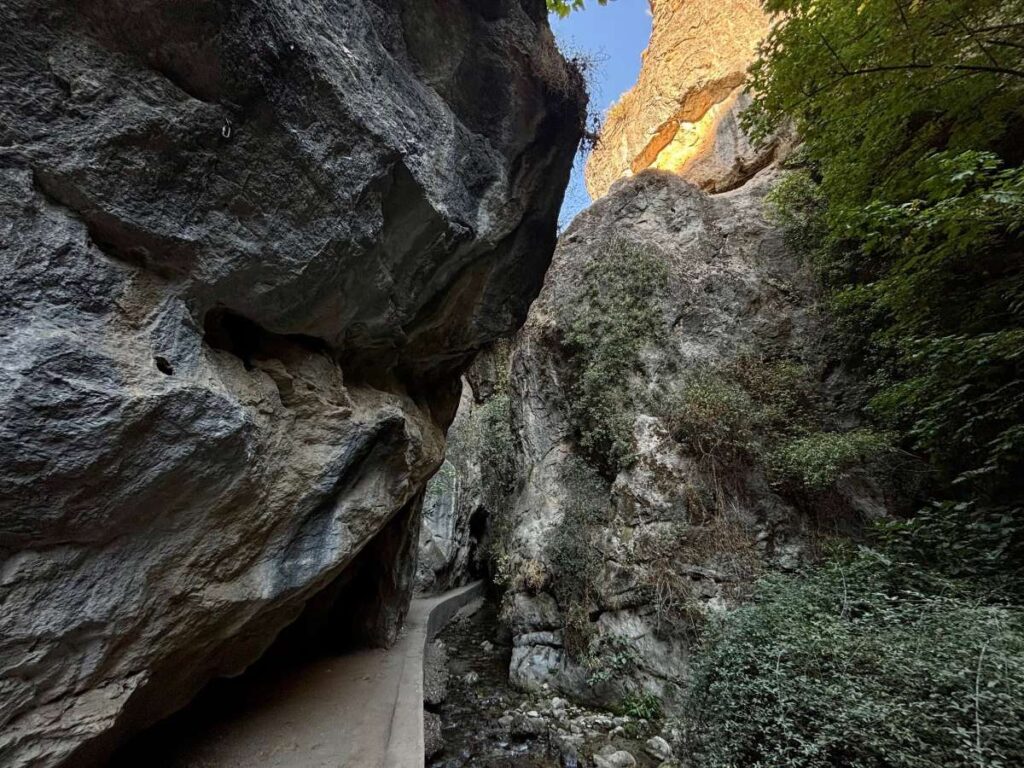
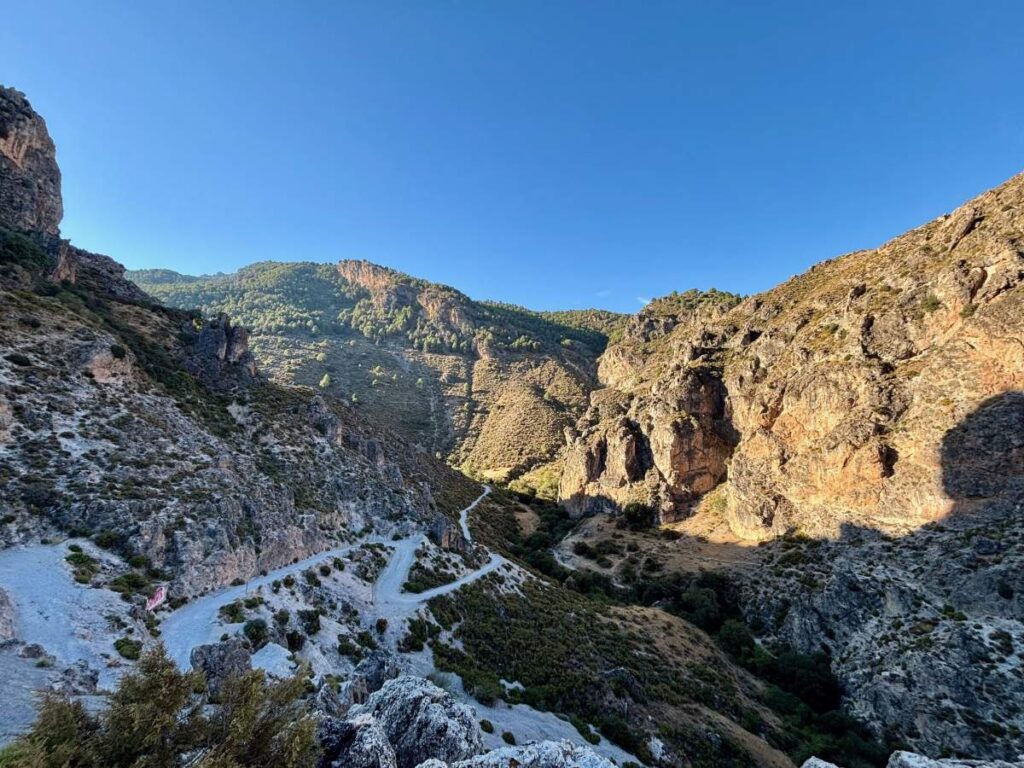
Los Cahorros is a river-gorge hike near the village of Monachil, just outside Granada. The loop takes you over 4 suspension bridges (the longest of which is 63m), under rock overhangs and along narrow ledges with chains for support, with plenty of photo stops along the way. I loved this hike, easy to do and with some spectacular views and fun additions.
Distance Typical loop 6-8k with optional additions
Time 2-3 hours walking dependent on pace • Cost Free (excluding transport)
My Top Tip! We did the route ourselves, but Guided tours start from about €15–€20 per person if you prefer to join a group rather than hike alone.
How to get to and from Los Cahorros
The simplest option is a taxi from Granada to El Puntarrón restaurant at the top of Monachil, where you can join the loop. If you prefer public transport, take the 183 bus from Paseo de los Basilios to Monachil and walk up through the village to the start of the trail.
My Top Tip! Starting with the steeper climb, which is the reverse of the more common direction, means you tackle the exposed section while it is still cool and keep fresher legs for the river and bridge sections.
We used AllTrails to follow the route. Make sure you bring at least 1–1.5 litres of water and wearing grippy shoes.
Mirador de San Miguel Alto
Mirador de San Miguel Alto is a high viewpoint above the Albaicín with a broad panorama over Granada and the Alhambra. It feels more open and less polished than San Nicolás and is popular with locals in the evenings.
Time 1.5–2 hours including walk down • Cost Free
Granada with kids, older travellers and limited mobility
Granada works well for families if you plan days in short blocks. Combine one main sight with a park, café or churros stop, then finish with an early tapas round before crowds build. Parque de las Ciencias is a particularly good option with children.
Older travellers or anyone with knee or balance issues are usually happiest based in the Centro or lower Realejo where you are close to the majority of sights and it’s flat.
You don’t need to miss out though, as taxis or minibuses for the steepest climbs are widely available, both up and down, either through tours, booked transport or Uber.
FAQs about Granada
The best area to stay in Granada for first-time visitors is usually the Centro around the cathedral and Plaza Nueva, because it is central, fairly flat and close to most sights and tapas bars. The Albaicín is more atmospheric with views but very hilly, while Realejo offers a quieter, local feel within walking distance of the centre.
The best time to visit Granada is in spring (April–June) and early autumn (September–October), when days are warm but not too hot. July and August are busier and very hot, while winter is quieter with cooler days and a chance of snow on the Sierra Nevada.
Two days in Granada is enough to see the Alhambra, explore the Albaicín and Sacromonte, walk the historic centre and enjoy at least one tapas evening. A third day gives you time for gardens, museums or a hike like Los Cahorros, but most first-time visitors are happy with a well-planned 2-day stay.
You can visit Granada as a day trip from places like Málaga or some Costa del Sol resorts, but it is rushed and you can’t experience everything. A day trip works best if you focus on either the Alhambra or the city centre and riverside, not both, which is why staying at least one night is usually more relaxed.
Granada is safe for tourists, with low violent crime and a busy, walkable centre. Any issues are minor, such as pickpocketing in crowded streets, so keep valuables close and zipped. Although nothing like you experience in places like Barcelona.
In Granada, Spain you can visit the Alhambra and Generalife, explore the Albaicín and Sacromonte hills, and walk the riverside along Carrera del Darro. You can also see the cathedral and relax in gardens such as Carmen de los Mártires, visit Arab baths and museums, and hike nearby routes like Los Cahorros in Monachil.
You can safely drink the tap water in Granada; it meets EU quality standards and is what locals use at home.




9 Comments
Comments are closed.