
Half a day covers the main trail on the Brazilian side of Iguazu Falls, so the real questions are what it costs, when to arrive and what to do with the time you’ve got. This guide covers it all, with what I learned on my trip the hard way.
I turned up at 10.30 and didn’t get a photo of the falls until eleven, most of which I spent in a queue I could have avoided. I had at least read up on the walk beforehand, so I rode the bus to the far end and worked back against everyone else, which was the best decision I made all day.
More of my Brazil guides to help plan your trip
- Where to Stay in Iguazu Falls – Brazil or Argentina, nine hotels compared
- Where to Stay in Rio de Janeiro – The best areas and hotels for first-timers at every budget
- Things to Do in Rio de Janeiro – Best sights, prices, and a 5-day plan map for your phone
- Ilha Grande Travel Guide – How to get there, what to do and where to eat
- Paraty Brazil Travel Guide – The best activities, things to see and how to get there
- Restaurants in Paraty – My favourite restaurants in Paraty across different budgets
- Ilha Grande Hikes – The best hikes on the island, distance, time and top tips to enjoy
- One day in Sao Paulo — A first-timer friendly guide with tips and a downloadable map
What you see on the Brazilian side
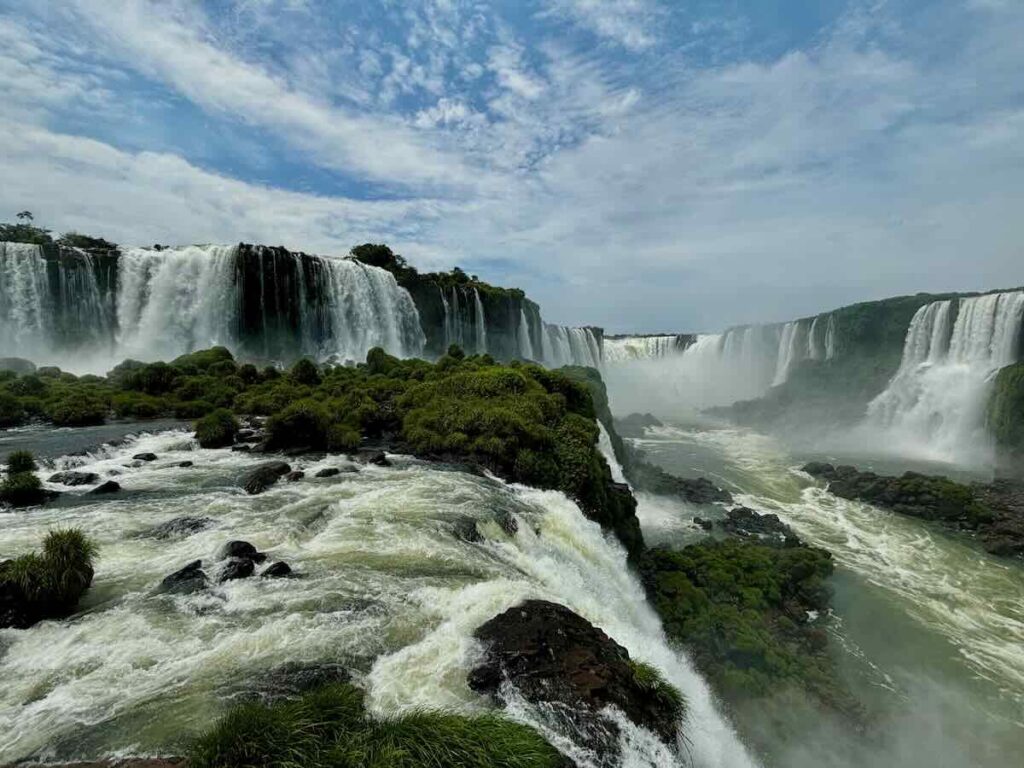
Iguazu Falls sits on the river border between Brazil and Argentina, and most of the falls are on the Argentinian side. Which is exactly why the Brazilian side is worth your time. You’re on the outside of the horseshoe looking in, so you get the whole thing, all 2.7km of it, in front of you at once.
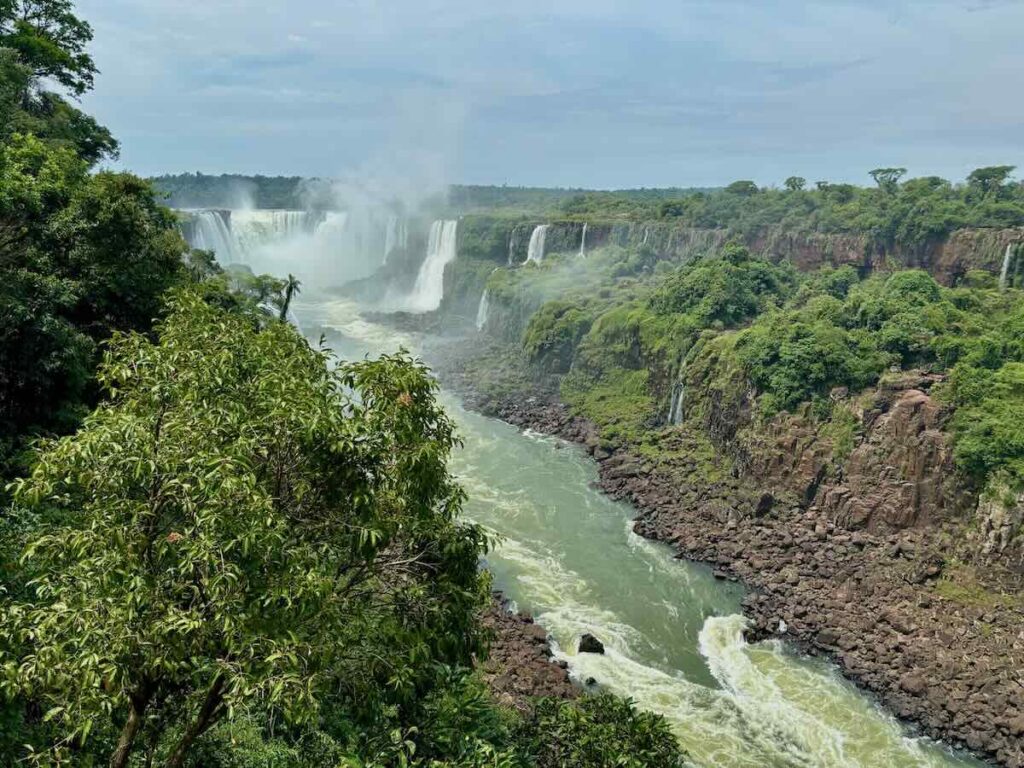
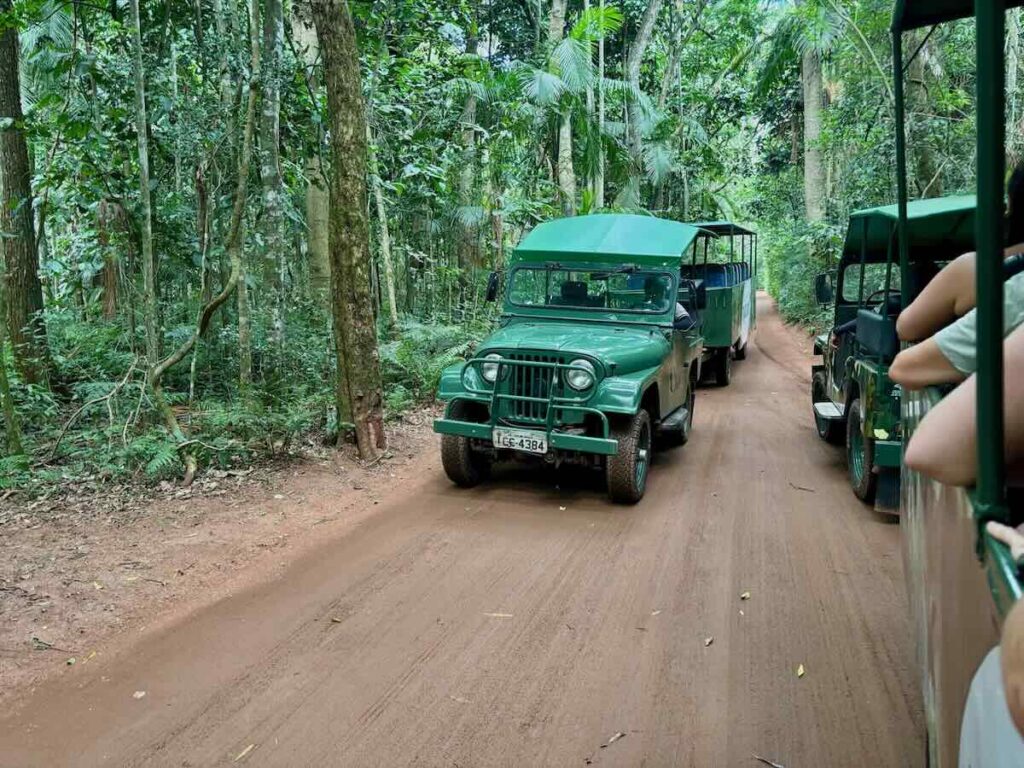
The Brazilian park is Parque Nacional do Iguaçu, and the town you’ll be based in is Foz do Iguaçu. The visit is simpler than people expect. You arrive at the Visitor Centre, get on a park bus, and it runs along one road with a handful of stops. A single trail follows the canyon with the falls on your right, and you’re looking across at them for most of it, until the walkway at the end takes you out towards the Devil’s Throat and into the spray.
Disclaimer: This article may feature affiliate links. If you click these links, and choose to book with that hotel or company, I will earn a small commission at no extra cost to you. I appreciate the support that allows me to continue providing this information
Is the Brazilian side worth it?
Yes, and I’d go back. It’s one of the most impressive waterfalls I’ve ever seen.
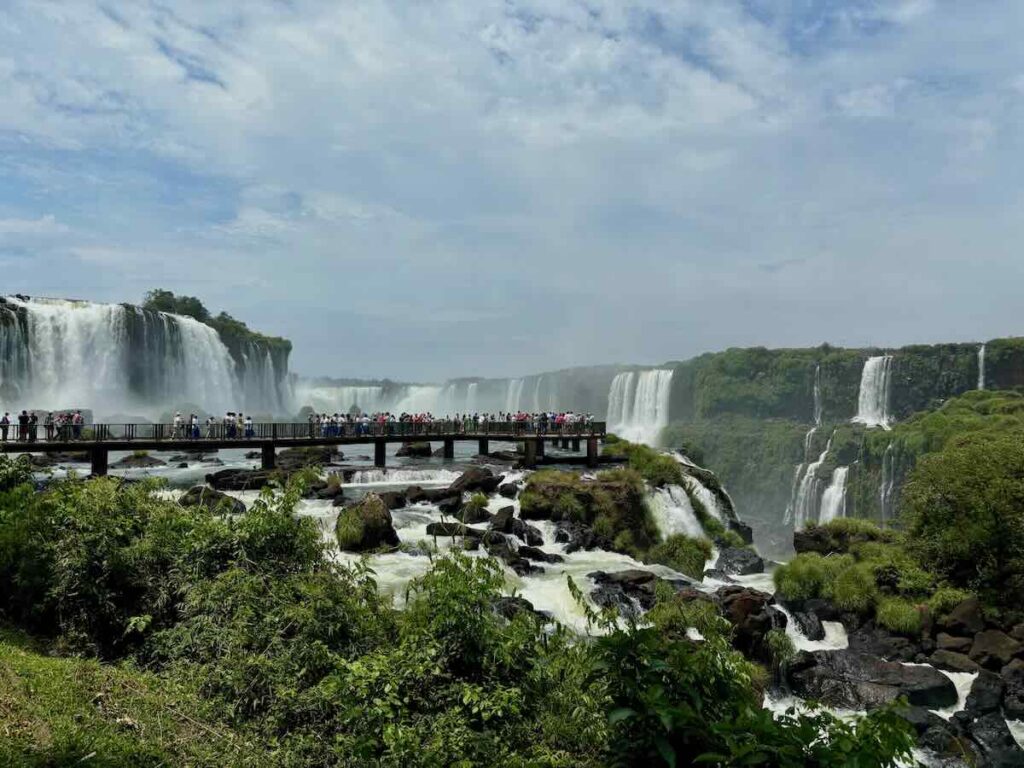
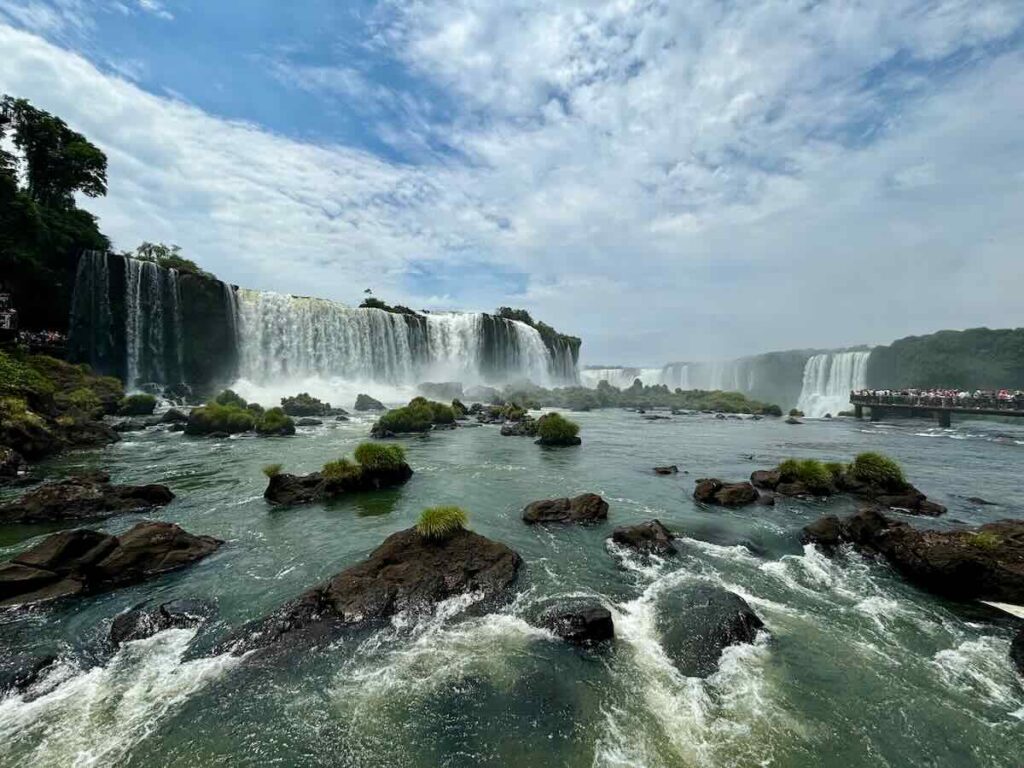
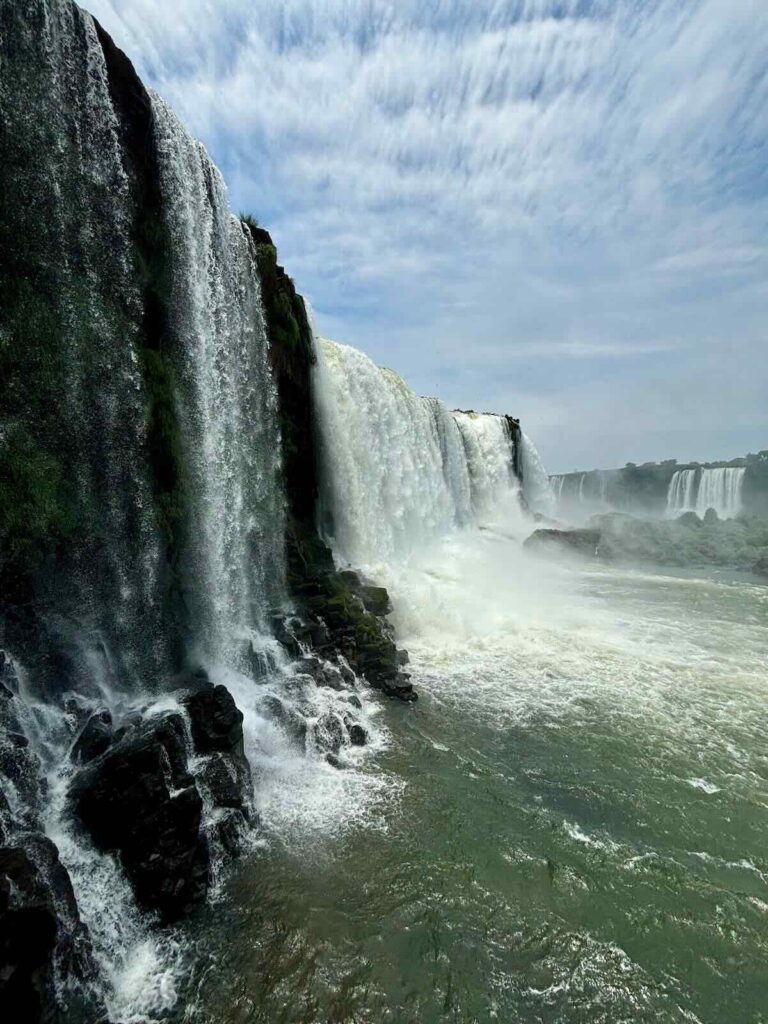
What struck me was how many separate waterfalls there are. It’s much wider and more layered than other falls I’ve seen, with different levels to it rather than one focal point to aim a camera at. The viewing deck at the end is the best of it. It almost puts you in the middle of three parts of the falls at once, which isn’t a view you get anywhere else.
For me, the most impressive bit was the sound. It’s thunderous, especially at the top end, and it tells you how powerful the water is better than looking at it does. You need to raise your voice to speak to people, which gives you some idea. Add the mist and spray coming up off the gorge and it’s impressive to hear and feel, not just to look at.
It won’t suit everyone, though. If waterfalls, wildlife and big natural sights aren’t your thing generally, this won’t convert you, I’d recommend you spend more time elsewhere.
Tickets, opening hours and what it costs
| Adult ticket | R$134 (about £20) |
| Brazil and Mercosur | R$121 (about £18) |
| Under sixes | Free |
| Monday to Friday | 9am to 4pm |
| Weekends | 8.30am to 4pm |
| Park closes | 5.30pm |
Prices and hours are the park’s official site. The entry price is adjusted every December against Brazilian inflation, so expect a new figure each year, and hours get extended in peak periods, so check before you travel.
The time on your ticket is your entry slot, not your exit. Once you’re in you can stay until the park closes at 5.30pm, which is an hour and a half after the gates stop admitting people.
Your ticket also covers more than most people expect: the internal bus both ways, the trail, the lifts, the walkway and the viewpoints, plus the park’s other open trails. Private cars can’t go past the Visitor Centre because this is a fully protected conservation area, which is why the transport is included rather than sold separately.
You can buy on the day at self-service machines, or online with a chosen date and entry time.
My Top Tip! Book online before you go. I turned up at 10.30am, queued for the self-service machines, needed a member of staff to help me work one out, then waited another fifteen minutes for a bus. Booking ahead means you walk straight to the bus queue and is a lot easier.
How to walk it, and the order I’d do it in
The bus leaves from the Visitor Centre and stops at a few points along one road. The ones that matter are Macuco Safari for the boat trip, Trilha das Cataratas where the main trail starts and the hotel inside the park sits, and Porto Canoas at the far end with the restaurant and food court.
They fill the first bus right up, because everyone arriving at once wants to get going, but the ones after that were easy to get on. If the queue looks long when you arrive, it does move quickly.
Almost everyone gets off at Trilha das Cataratas. This is my biggest recommendation in the guide, do this instead:
- Stay on past the trail stop and ride to the last stop, Porto Canoas.
- Walk down to the falls and do the walkway first.
- Then work back up the trail, against the direction everyone else is walking.
I had far more people coming towards me than going my way, which is the point. At the top end there were people about but it was manageable, no real queuing, and I could take photos without fighting for space. The main viewing platform was still busy, but nothing like the crowds you see in videos.
My Top Tip! If you really want the falls to yourself, book the first entry slot of the day and walk it in this order. You’ll be ahead of most people all morning.
How long do you need?
The park officially marks the main trail at about 1.5km, and its own estimate for the visit is around two hours. Mine took roughly an hour and a half, though I walked it back to front and stopped constantly. Add the bus, roughly 12km in each direction, and you’ll spend half a day out.
How wet do you get?
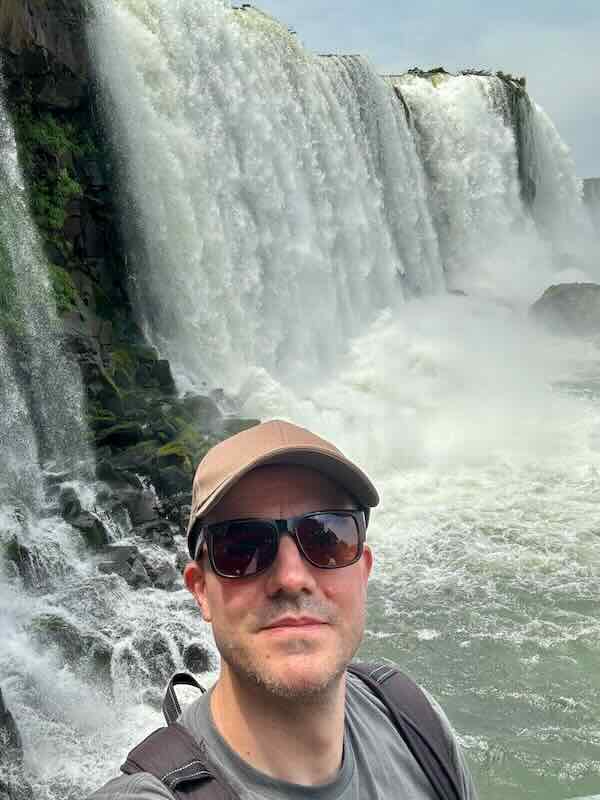
I got sprayed rather than soaked, and given how hot it was, that was quite pleasant. My phone got wet while I was taking photos, so it just meant carrying something to wipe the lens and pocketing it otherwise. A cloth would be enough. I used my t-shirt, and I didn’t need a poncho or a waterproof at any point.
That was one day in November, and I’ve no idea what the river had been doing that week. Flow at the falls varies enormously and depends on rain across the whole Iguazu basin upstream, not the weather where you’re standing, so a much wetter walkway is possible in any month. The park recommends rain protection and that’s the sensible call if you’d rather not gamble.
The lift and the upper viewpoint
At the end of the walkway there’s a lift up to a higher viewpoint. Take it. You’re there anyway, it doesn’t take much time, and it adds another perspective on the view.
Leave the drone at home
Drones are banned in the park. I brought mine hoping for some good aerial shots and it stayed in the bag the whole time. Save yourself the weight.
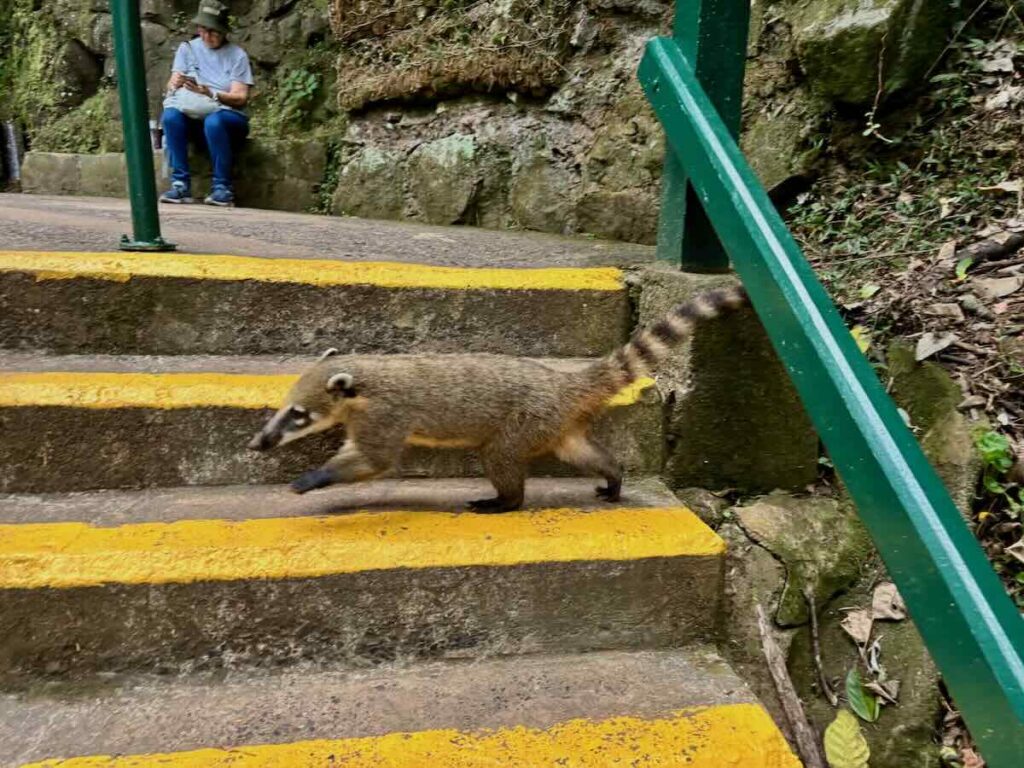
Coatis
Coatis are members of the raccoon family and they’re all over the park. I saw several, a few on their own and one family with young ones, and they were great. Every time, they just wandered onto the path I was walking along, carrying on with their business, relaxed and happy to be watched and photographed.
They can steal food, and the park’s signs tell you not to feed them. Mine simply weren’t bothered about humans. Watch, don’t touch and don’t feed them as there are stories of them being more aggressive when food is around.
Visiting with limited mobility
The park has accessible internal transport and accessible main viewpoints, and conventional wheelchairs are free on request at the Visitor Centre. Parts of the trail have stairs and slopes, so not everyone can do every section, but you can get to the transport and the main viewpoints.
Macuco Safari: the boat trip and what comes with it
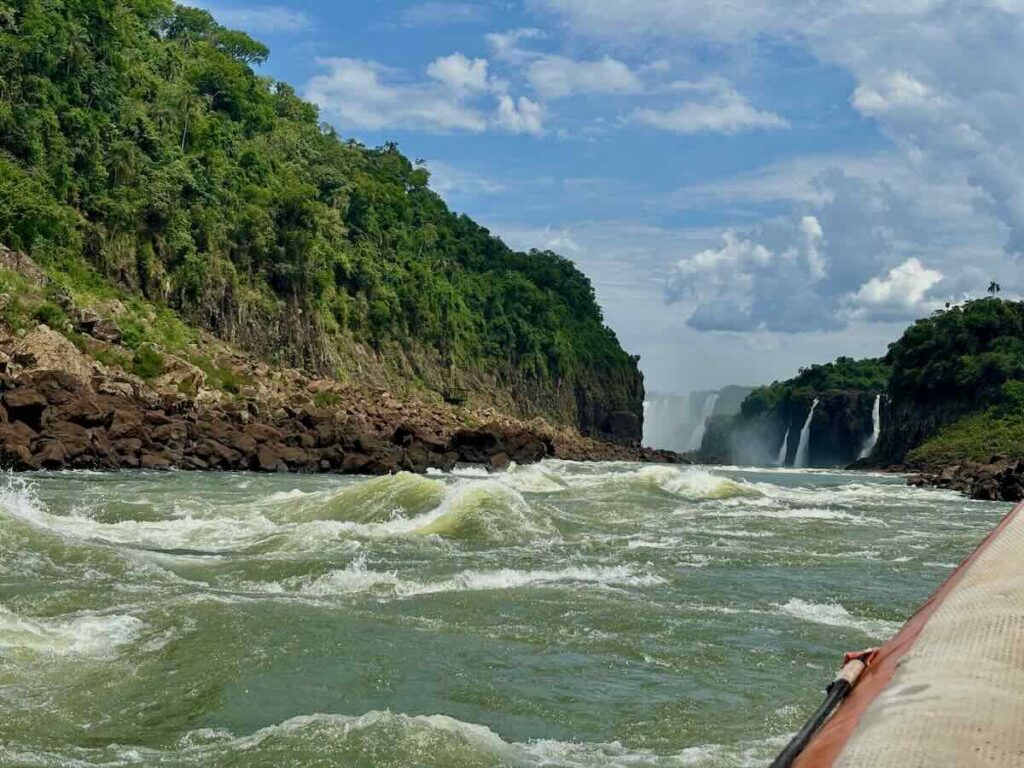
Macuco Safari has its own stop on the park bus, and it’s the only way to get onto the river rather than looking down at it.
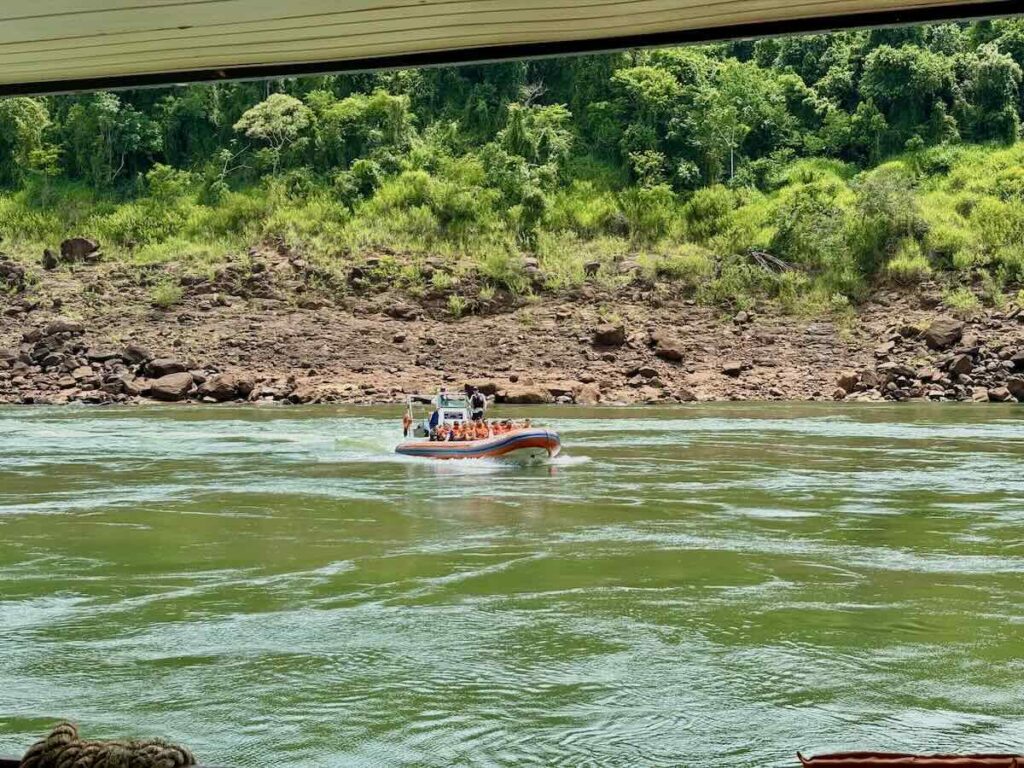
The boat goes up the river, over the white water, and dips you under a couple of the smaller falls. This was the highlight of my day and the thing I’d tell anyone to do. I got properly soaked and it was great fun, so bring a change of clothes. You have to talk louder on the viewing platforms, but under the falls you can’t hear a word anyone says, though most people are shrieking rather than talking by that point.
The trip is sold as three parts: an electric vehicle ride through the forest, a guided walk of around 600 metres, then the boat. The drive and the walk were, honestly, pretty rubbish. And there’s no boat-only ticket, so you buy all three or none. The cheaper option at R$192 (about £28) drops the boat and keeps the jungle section, which is the wrong way round, because the boat is the bit worth paying for.
I still recommend it in spite of the other two elements, because the boat was excellent. Worth knowing that the walk is optional, so if you’d rather not bother you can stay on the vehicle.
You can get tickets on the day or get them in conjunction with your falls ticket. Departures run every 20 minutes from 9am to 5.20pm, though the boat is subject to river conditions.
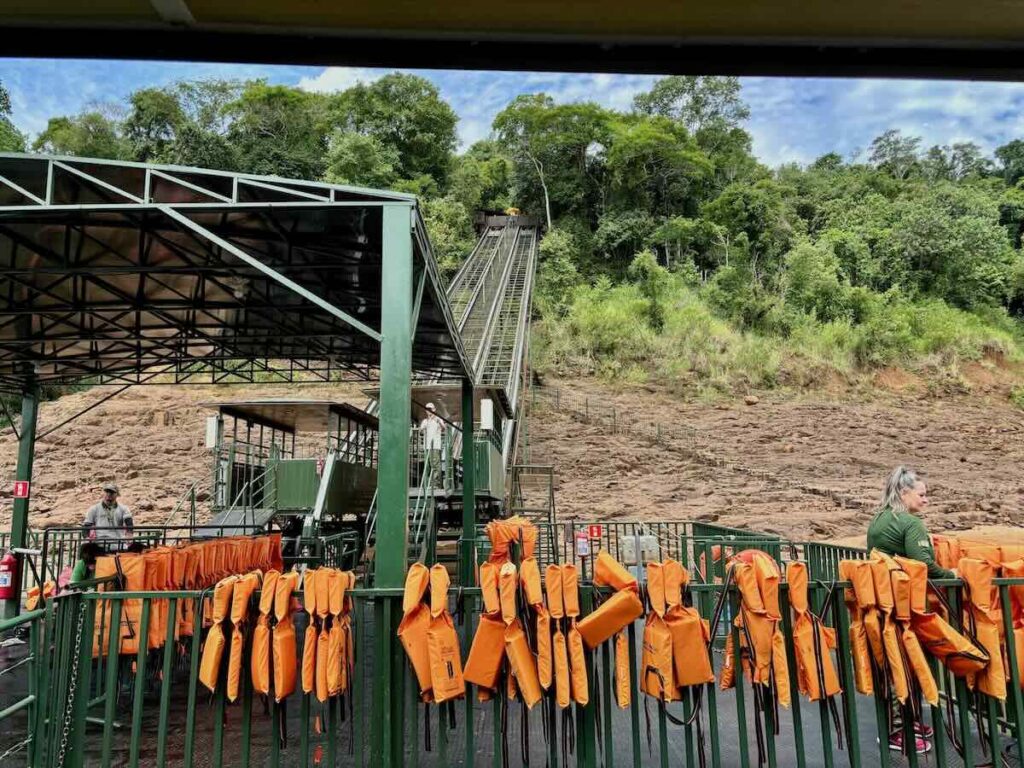
Lockers are available at the deck before you board, which I used.
Time 2–3 hours • Cost R$384 (about £57) per person
Parque das Aves, the bird park across the road
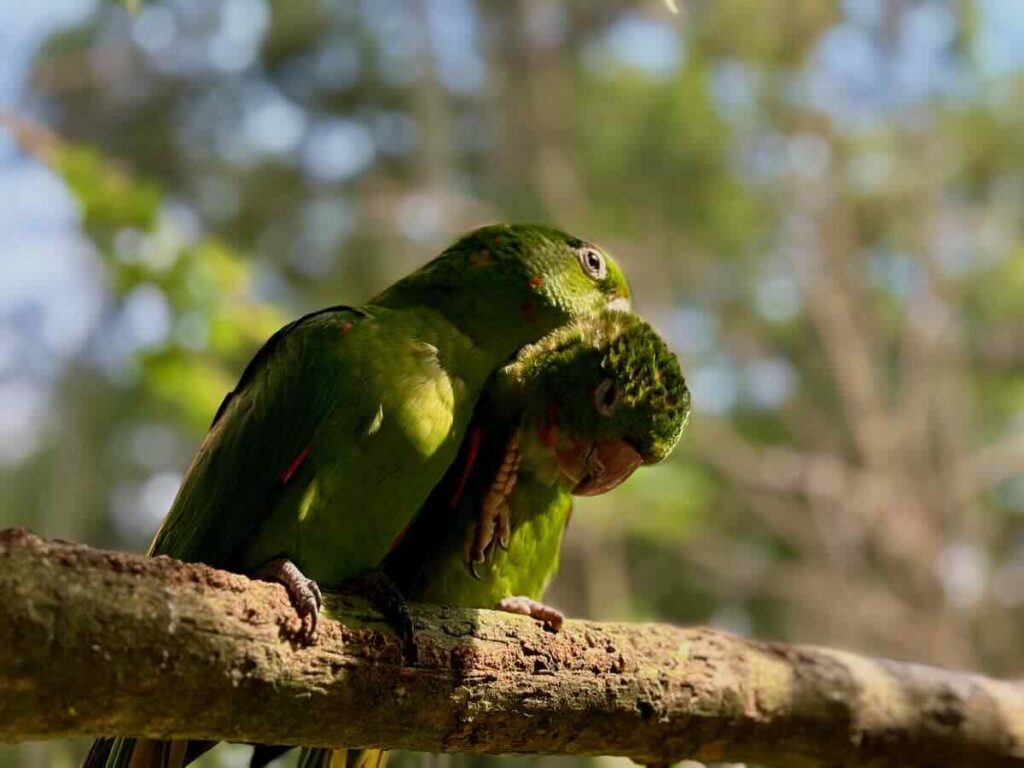
You’ve probably got an afternoon left after the falls, and this is the easiest thing to do with it. Parque das Aves sits directly opposite the national park entrance, so it’s a short walk or a very short drive, and it’s a separate ticket.
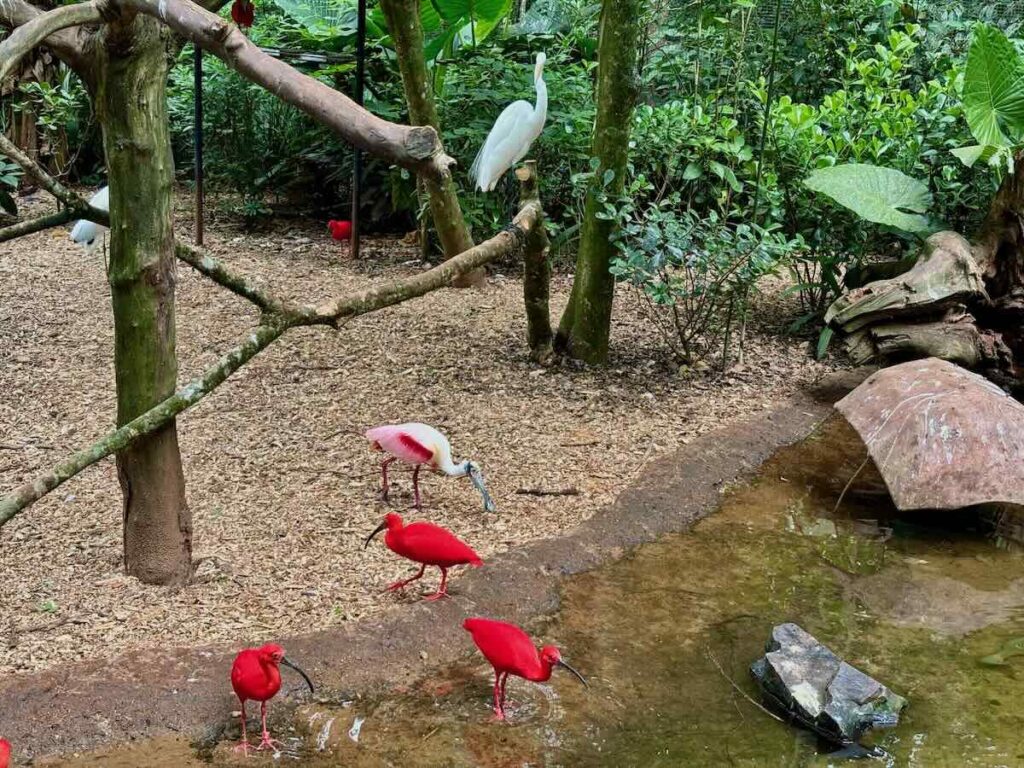
It’s a conservation project rather than a collection of cages, and you get close enough to the birds for proper photographs. I spent about an hour and a half there and I’ve sent several friends since, all of whom enjoyed it.
Time 1.5–2 hours • Cost R$110 (about £16) per person
My Top Tip! I did this first and the falls afterwards, which worked fine, but I’d swap it round if I went again. The falls get busier as the morning goes on and there’s no making that up later, whereas the bird park is the more flexible of the two.
Seeing the falls outside opening hours
You don’t need a room at the hotel inside the park to see the falls when it’s shut to everyone else. The park runs two of its own experiences, and both include full daytime access as well, so they’re an addition to a normal visit rather than a replacement.
| Sunrise | Sunset | |
|---|---|---|
| Access from | 5.30am | 5pm and 5.30pm departures |
| Returns | From 8am | 7.30pm from Porto Canoas |
| Days | Check the calendar, it varies | Tuesdays, Fridays, Saturdays |
| Includes | Breakfast buffet at Porto Canoas, 7.30am to 9.30am | Welcome drink at Espaço Naipi, live music |
Both run in all weather and both have limited places, so book ahead rather than turning up. Prices aren’t published on the park’s information pages, so you’ll see them at checkout. Both can be booked here.
Worth knowing you can start at the Espaço Naipi rather than the trailhead. Lifts take you straight up to the walkway from there, so you get the Devil’s Throat view without walking the whole trail again.
The Belmond, the hotel inside the park, also sells its breakfast to non-guests alongside a trail ticket, on the same before-opening principle. Contact them directly for that one.
One catch: neither ticket covers the boat trip. You’d need a regular park ticket alongside it for that.
Getting there and getting around
Getting to Foz do Iguaçu
I flew in from São Paulo and out to Rio, which saves doubling back and is worth planning that way. Direct flights run from both, and there are long-distance buses if you’d rather save the fare. If you’re passing through either city, I’ve written up one day in São Paulo and things to do in Rio de Janeiro separately.
Getting to the park
I used Uber and it’s what I’d recommend. It cost me R$15 (about £2) from my hotel on Avenida das Cataratas, which is cheap enough that I wouldn’t bother with the bus.
If you’d rather take the bus as it’s cheaper (R$5, 75p), it’s line 120, Parque Nacional. It runs from the TTU, the main urban bus terminal in the centre of town, out along Avenida Jorge Schimmelpfeng and Avenida das Cataratas, and finishes at the Visitor Centre. It calls at the airport on the way, and the same line brings you back.
Where to stay for Iguazu
There are two hotels I want to call out here. One is where I stayed, the other is the only hotel inside the national park. I have also written a more detailed guide on where to stay in Iguazu falls, if you have more time and want more detail.
Mabu Thermas Grand Resort
Is where I stayed, and I’d book it again. It’s on Avenida das Cataratas, the road out to the park, about 9km from the entrance and a minute from a large shopping centre. The water park and thermal pools are what make it worth the money, particularly with children.
Cost typically around $230 (£180) per night CHECK AVAILABILITY
Hotel das Cataratas, a Belmond hotel
The only hotel inside the park boundary, which is the whole proposition. You’re paying for the falls before and after everyone else arrives. Park entry is included in the rate, and you’re given a hotel ID card at check-in so you can come and go through the gate without paying again. It’s expensive but gets excellent reviews and is a real treat. Cars and taxis can’t drive in, so you park at the main gate and a shuttle runs up every 20 minutes, from 7am to midnight.
Cost typically around $885 (£700) per night CHECK AVAILABILITY
Those are the two ends of the scale, and most of Foz do Iguaçu sits well below the first, with rooms across the town averaging around $190 (£150) a night.
My Top Tip! Wherever you book, look at somewhere on or near Avenida das Cataratas or Avenida Jorge Schimmelpfeng. Both head out towards the park, so you’re closer to the entrance than anywhere in the centre of town, and the taxi or Uber costs less each time.
How many days do you need in Foz do Iguaçu?
Two days. I did the falls, the boat trip and the bird park all on my first day, which was full but comfortable, so the second is spare for the town, the dam, or doing nothing much. I had three and spent the extra one at the hotel.
Make it three if you want the Argentinian side too. That’s a day trip from Foz, either on a guided cross-border tour (there are good options on both GetYourGuide and Viator), or by bus to Puerto Iguazú and then a local bus out to the park.
If you are doing it yourself, check your visa position first. Since 10 April 2025, US, Canadian and Australian passport holders need a Brazilian eVisa, applied for online before you fly. It’s multi-entry as standard, so leaving and re-entering Brazil on the same day is fine. British passports don’t need one.
Crossing to Argentina for dinner
We went over to Puerto Iguazú one evening for steak and red wine, which is the obvious thing to do with a spare night. That’s the town, not the Argentinian side of the falls. Take your passport and most hotels can organise this easily.
When to go to Iguazu falls
Any month works. I went in November and got sun and cloud on the day, then biblical rain for the two days after, so I picked my day based on the forecast. Rain doesn’t ruin it either way, but blue skies make for nicer photos. Water levels swing enormously and depend on rain across the whole basin upstream, so there’s no month that reliably gives you more of it.
Cost is the thing worth planning around, and there are two peaks rather than one. December to February is high summer, with the biggest crowds and the highest rates. July is the other one, because it’s the winter school holiday in Brazil and Argentina, and rates sit above the shoulder months. The cheaper dates are either side of that, roughly March to May and August to September.
FAQ about Iguazu falls
Is it Iguazu, Iguaçu or Iguazú?
They’re all the same falls, just spelled differently in different languages. Iguaçu is the Brazilian Portuguese spelling, Iguazú the Argentinian Spanish one, and Iguazu the version English usually settles on. You’ll also see Iguassu on older signs and some hotel names. The Brazilian park is Parque Nacional do Iguaçu and the Argentinian one is Parque Nacional Iguazú, so you can tell which side is being talked about from how it’s spelled.
Which side of Iguazu Falls is better?
Neither, they’re different. Brazil gives you the wide view across the whole system and takes about half a day. Argentina has far more walkway, takes you above and alongside individual falls, and needs a full day. If you’re already in Brazil and only have time for one, the Brazilian side is worth the trip on its own.
Can you see both sides in one day?
Not comfortably. They’re two national parks in two countries with separate tickets and a border crossing between them. Organised cross-border tours do it in about ten hours, but you’re rushing both. Give them a day each.
Do you need to book tickets in advance?
It isn’t required, but do it anyway. You can buy at self-service machines on arrival, which is what I did, and I ended up queuing when I didn’t need to. Booking online lets you pick a date and entry time.
Can you visit the Brazilian side from Puerto Iguazú?
Yes, it’s a common day trip. Allow a full day if you’re using public buses, or half a day with a taxi or private transfer. Take your passport, and check whether you need a visa. Since 10 April 2025, US, Canadian and Australian passport holders need a Brazilian eVisa, which is multi-entry as standard so crossing and coming back is fine. British passports don’t need one.
Should you stay in Brazil or Argentina?
It depends where you’re flying from. I stayed in Foz do Iguaçu because I came in from São Paulo and went on to Rio, so Brazil made sense for the whole trip. If you’re travelling in Argentina, Puerto Iguazú is the more logical base and you can still come over for the Brazilian side as a day trip.




7 Comments
Comments are closed.