
When is the best time to visit the Maldives? I’ve done both the dry season and the shoulder of the wet season, and the short answer is to book the dry season if you can stretch to it.
You’re paying for near-certain sunshine, and sitting in that sun by the water is most of what a Maldives holiday is. By the end of my guide you’ll know which window fits your budget and your trip length, and which part of the year I’d leave alone.
When to visit the Maldives at a glance
- Dry season, January to March: the safest weather of the year and the highest prices. Pay for it if the trip is a one-off.
- The edges, December and April: April is mostly dry, December is still showery, and outside Christmas and Easter this is where I’d look first for good value.
- Wet season, mid-May to November: cheaper, quieter, better for mantas, and a gamble on the weather. Book a week or more if you go.
More of my Maldives guides to help plan your trip
- V Villas Maldives at Mirihi review: One of the best house reefs in the Maldives
- Maldives seaplane transfer: What it costs and what to expect when you fly
Disclaimer: This article may feature affiliate links. If you click these links, and choose to book with that hotel or company, I will earn a small commission at no extra cost to you. I appreciate the support that allows me to continue providing this information
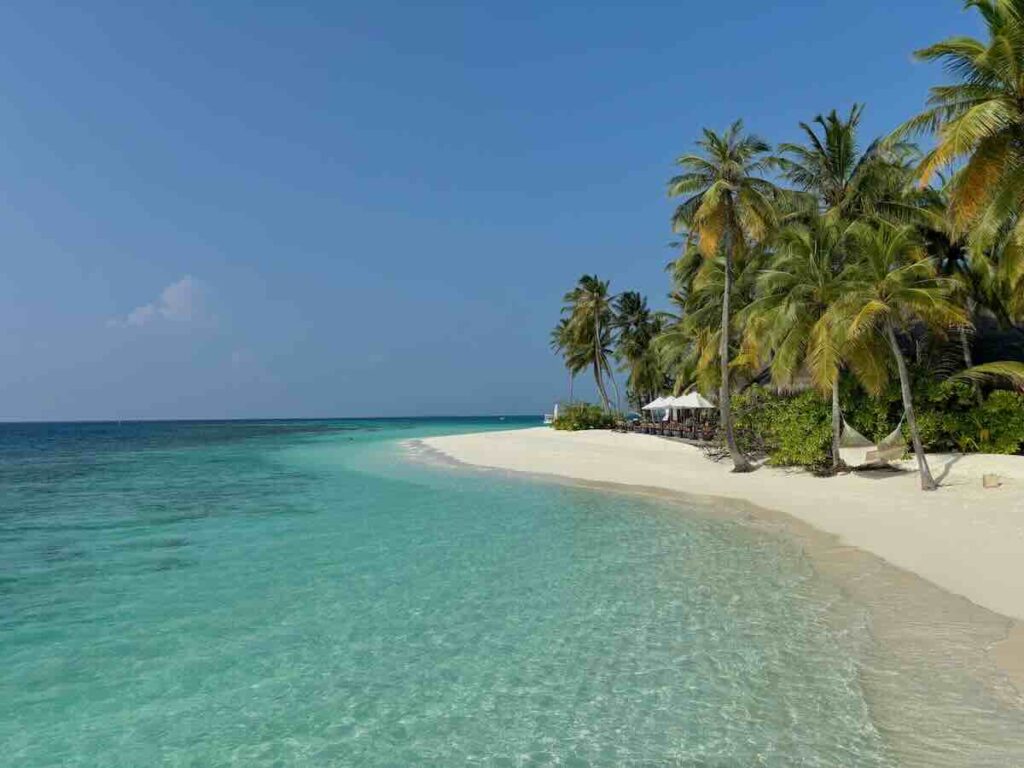
The best time to visit the Maldives
The dry season is January to March. The Maldives Meteorological Service calls it the northeast monsoon, and it’s when the islands get their most sunshine, over 9 hours a day in February and March against about 7 hours for the rest of the year. December and April are the changeover months, and the wet season (the southwest monsoon) normally starts in mid-May and lasts until November. I’ll reference those dates all the way through this guide.
If you’re looking at this for the simplest answer, it’s January to March, with December and April as the backup. The thing to consider is that prices mirror the weather, so there’s a trade off.
If a friend asked me, I’d tell them to go with the guaranteed weather if they can afford to, then hunt for a deal and see what fits the budget.
For most people the real choice is between paying for January to March and taking a smaller gamble on the edges of the season. On our second trip, we took the gamble, in late October, and got excellent weather with no rain.
Best time to visit the Maldives for a honeymoon
If it’s a one-off special trip, don’t gamble. Book the dry season, because if you’ve paid all that money and it rains for most of a fortnight you’d be gutted.
January to March, or the first half of April if Easter falls early, gives you the best odds of the week you’ve pictured. If the price difference is what’s stopping you, pick a cheaper resort before you pick a cheaper month.
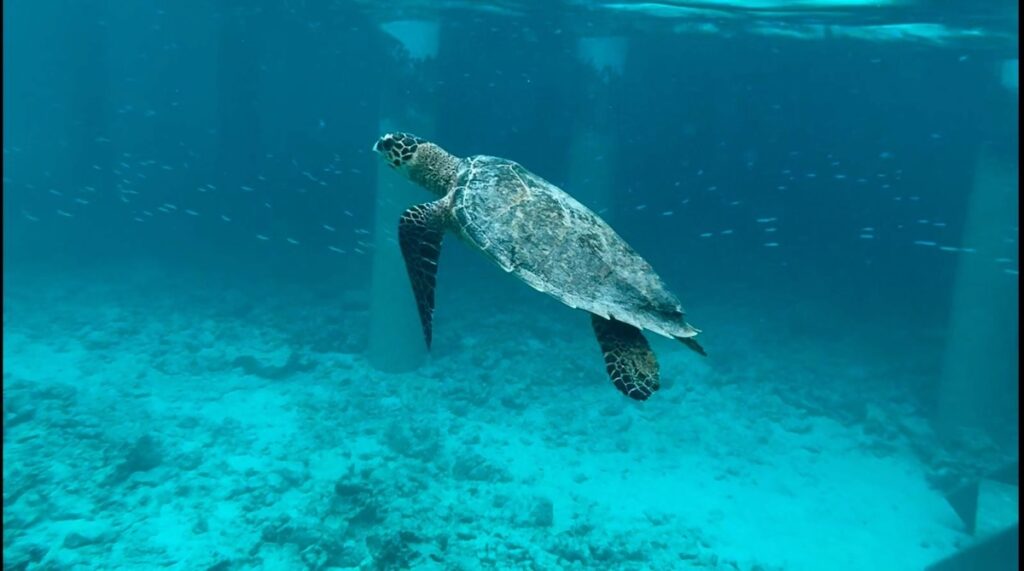
Maldives weather by month
Temperature is the one thing you can ignore. The daily high sits between 30°C and 32°C in every month of the year, March and April are the warmest, and the sea is 28°C to 30°C all year round. What you really need to consider is how many days get rain and how much sun you still get.
The figures below are the 1991 to 2020 averages for Malé from the Maldives Meteorological Service, which is the reference station for the central atolls, where most resorts are. A rain day is a day with at least 1mm.
| Month | Season | Rainfall | Rain days | Sunshine per day | Price level |
|---|---|---|---|---|---|
| January | Dry | 85mm | 6 | 8.3 hours | High |
| February | Dry | 40mm | 3 | 9.4 hours | High (most expensive) |
| March | Dry | 50mm | 5 | 9.3 hours | High |
| April | Changeover | 125mm | 9 | 8.7 hours | Shoulder (check Easter) |
| May | Wet from mid-month | 240mm | 15 | 7.2 hours | Low |
| June | Wet | 145mm | 13 | 7.0 hours | Low |
| July | Wet | 200mm | 14 | 6.9 hours | Low |
| August | Wet | 195mm | 13 | 7.4 hours | Low |
| September | Wet | 215mm | 15 | 6.9 hours | Low (cheapest) |
| October | Wet | 245mm | 15 | 7.4 hours | Low |
| November | Wet, tailing off | 235mm | 14 | 6.8 hours | Shoulder |
| December | Changeover | 210mm | 12 | 6.9 hours | High (Christmas, New Year) |
From May to December the Maldives gets a shower on somewhere between 12 and 15 days a month, and that barely moves from one wet month to the next. Daily sunshine never drops below 6.8 hours, because the rain tends to come in short heavy bursts with sun between them rather than as grey all-day drizzle.
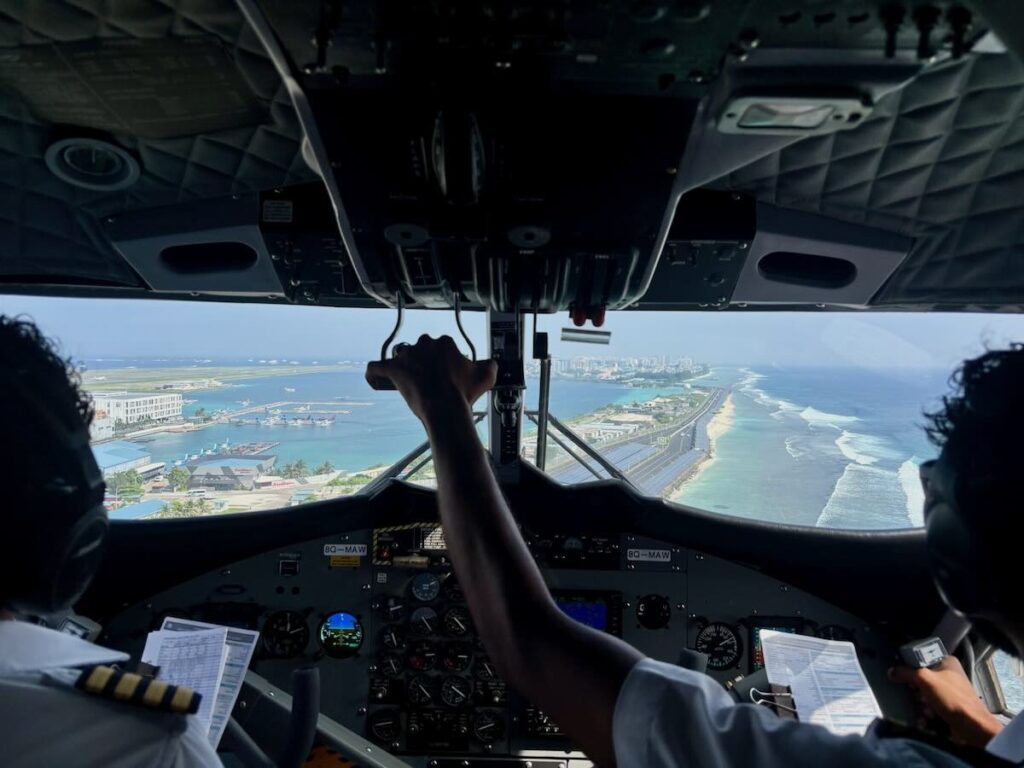
Maldives rainy season
The rainy season is the southwest monsoon, and the Met Service’s own word for the rain is showery: short, heavy and with sun between. The numbers month by month are in the table above.
What the table can’t show is what the monsoon does to the sea. The wind picks up, the water gets choppier and visibility drops, and on a snorkelling holiday that’s something to consider.
Our late October week sat inside the season and gave us one choppy day with a strong current, then calm, and no rain at all, statistically we got a little lucky, but it shows that you can’t guarantee weather.
The other thing the weather can affect is your transfer, since seaplanes fly in daylight only and wait out storms, and I’ve covered what that means for your flight times in my Maldives seaplane transfer guide.
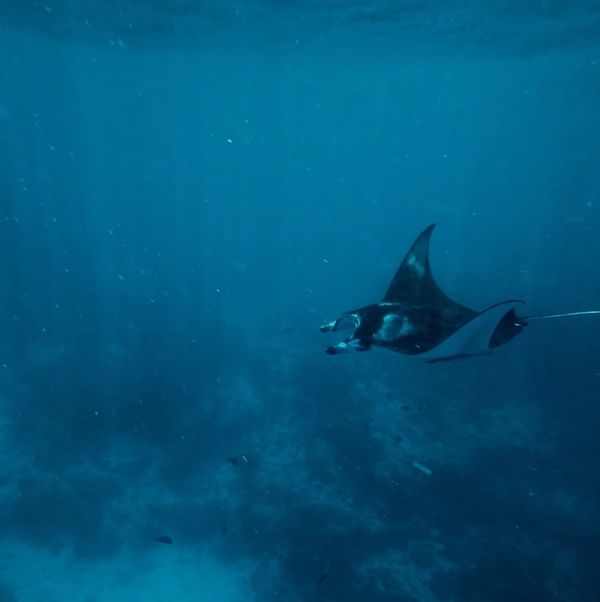
Snorkelling in the rainy season: worse water, better animals
The same wind that roughens the sea is what brings the mantas. Monsoon winds drive currents across the atolls, those currents lift nutrients to the surface, and plankton blooms on the sheltered side of each atoll. Mantas follow it, and the Manta Trust records sightings peaking at the end of the southwest monsoon, in October and November, with a second peak from January to April.
South Ari’s whale sharks are different: the Maldives Whale Shark Research Programme finds no seasonality there at all, so they’re a reason to pick South Ari atoll in any month rather than a reason to pick the wet season.
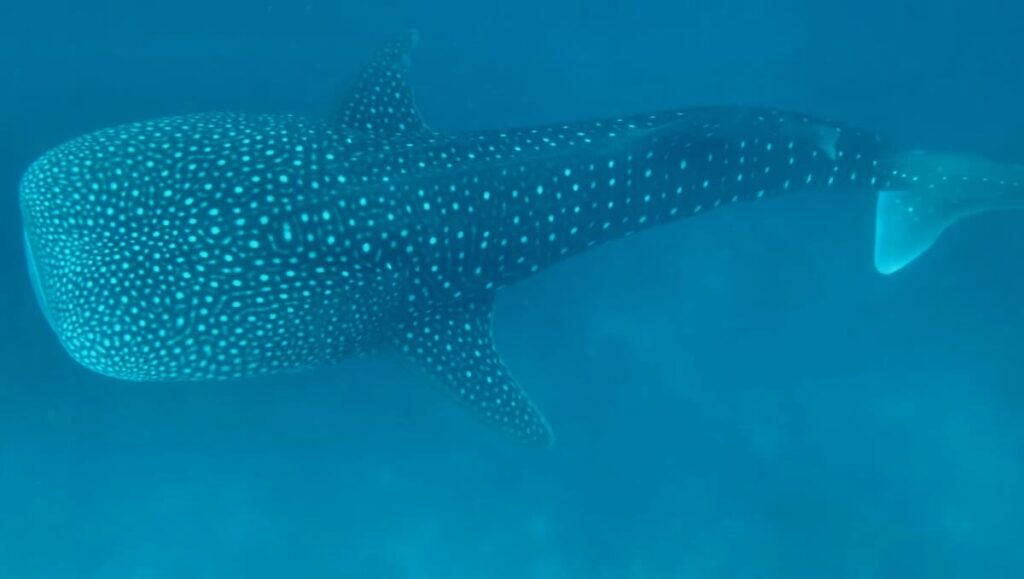
We chose October specifically because it was manta season and on our last snorkel of the week, on the edge of the house reef, a manta passed us. The dive shop said it does happen there, but rarely.
We also did the resort’s Manta Snorkelling boat trip. The cleaning stations were under half an hour’s boat ride away and the crew found mantas at all four places they tried. If mantas are the point of the trip, the back end of the wet season is your window.
The cheapest time to visit the Maldives
September, with August close behind. The gap to high season is big: the South Ari resort I stayed at in March averages $324 (£243) a night in September against $733 (£550) in February, so the same room for less than half the price. I recommend booking around 10 weeks ahead rather than last minute as that tends to be where the best savings are too, the obvious trade off in August and September, the weather!
Dates that can catch you out with price
Christmas and New Year are the obvious ones. The two that UK visitors forget are Chinese New Year, which lands in late January or February and fills resorts from across Asia, and Easter, which can push prices back up just as they’re easing in spring. February half term sits in the most expensive month of the year anyway. Check which of those your week overlaps before you compare quotes.
The worst time to visit the Maldives
November, if you make me pick one. It has the least sun of any month and one of the highest rainfall totals, with October and May close behind. The honest answer is that no single wet season month is much worse than the others, so the thing to avoid is a short trip in any of them. Book a week and you’ll ride out the showers.
Dry season v shoulder season: what my two trips were like
I’ve done one week in each. March at Machchafushi was the postcard: no rain, no wind, a flat sea and clear water every day. Late October at V Villas Maldives at Mirihi was supposed to be the gamble and gave us one choppy day, then the rest was lovely, plus it was manta season. I’ve written the whole stay up in my V Villas Maldives at Mirihi review.
Which would I book again? Both, which isn’t a dodge. The month matters less to me than the resort. A good house reef is non negotiable, and I’d take the right island in October over the wrong one in February. The one thing I’d change isn’t the month at all, it’s making sure the villa is on the better snorkelling side of the island.
Best time to visit the Maldives FAQs
Does Ramadan affect a holiday in the Maldives?
Not at a resort. Resorts carry on as normal through Ramadan, with meals at the usual times and alcohol served as usual. Local islands observe it far more closely, so on a guesthouse stay you’ll find cafés shut during daylight and ferry timetables can change. The dates move each year, so check them if you’re staying on a local island.
How many days do you need in the Maldives?
Seven nights is the right length for a first trip, and it’s what I’d book again. Getting there takes a chunk of each end, because seaplanes only fly in daylight and the flight out to the resort can be half an hour or more, so anything under five nights leaves you very little time on the island. In the wet season, a full week also means one or two showery days don’t cost you much of the holiday.
Does the Maldives get cyclones?
Rarely. Only 11 tropical cyclones crossed the Maldives between 1877 and 2004, mostly in the northern atolls. What you’re more likely to get is the edge of a cyclone forming elsewhere in the Indian Ocean, which brings a few days of heavy rain and strong wind. Thunderstorms can happen in any month and are most frequent in April.
When is surf season in the Maldives?
March to November, with the biggest swells from June to August during the southwest monsoon. December to February is the quiet period, and what swell there is reaches the southern atolls. Resorts near the main breaks arrange boat trips out to them, so check that yours does before you book.
When can you see bioluminescence in the Maldives?
It can appear in any month, but most sightings are in the wet season, roughly June to October, when there’s more plankton in the water. Your best chance is a dark night near a new moon, away from resort lights. Vaadhoo is the best known spot, but it shows up on other islands too and nobody can guarantee it.
Is the Maldives humid?
Yes, all year. Average humidity sits between 76% and 81% in every month, lowest in February and March and highest from May to December. The gap is small enough that humidity shouldn’t decide your month.



2 Comments
Comments are closed.