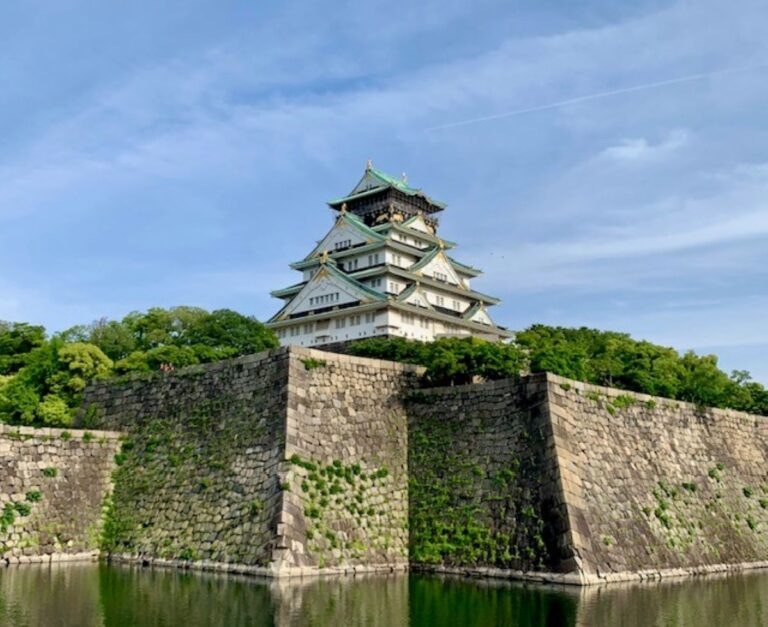
A Kamakura day trip is one of the easiest and most rewarding from Tokyo. It is about an hour south of the city and it was Japan’s political capital from 1185 to 1333, which explains its high concentration of historical sites.
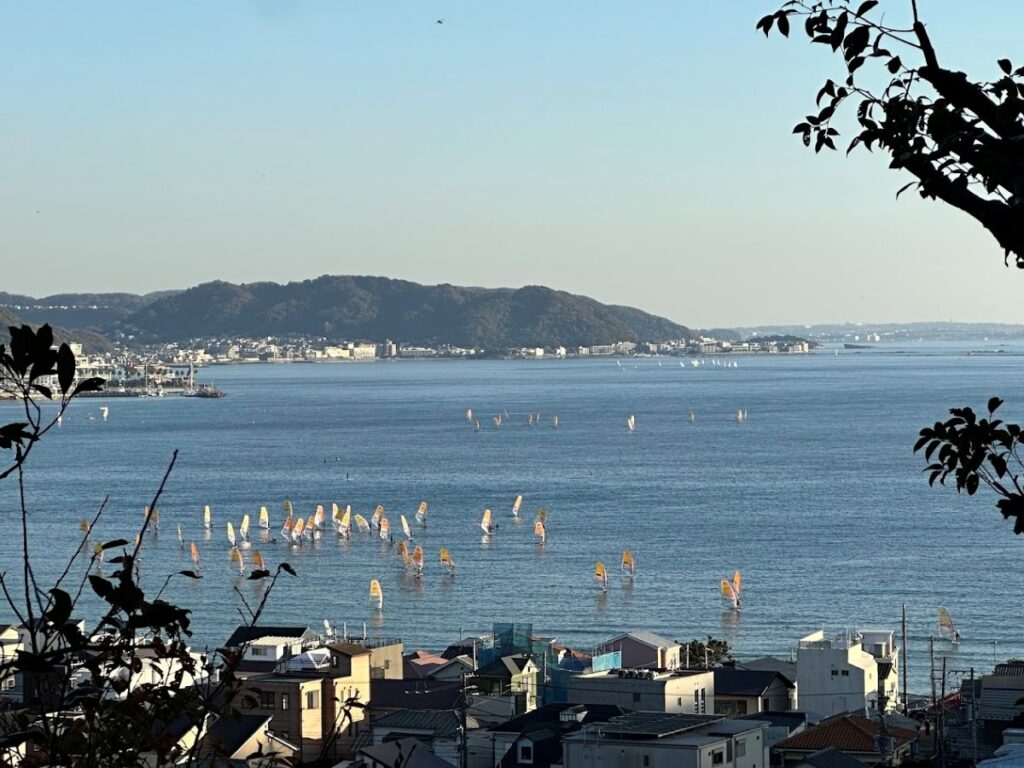
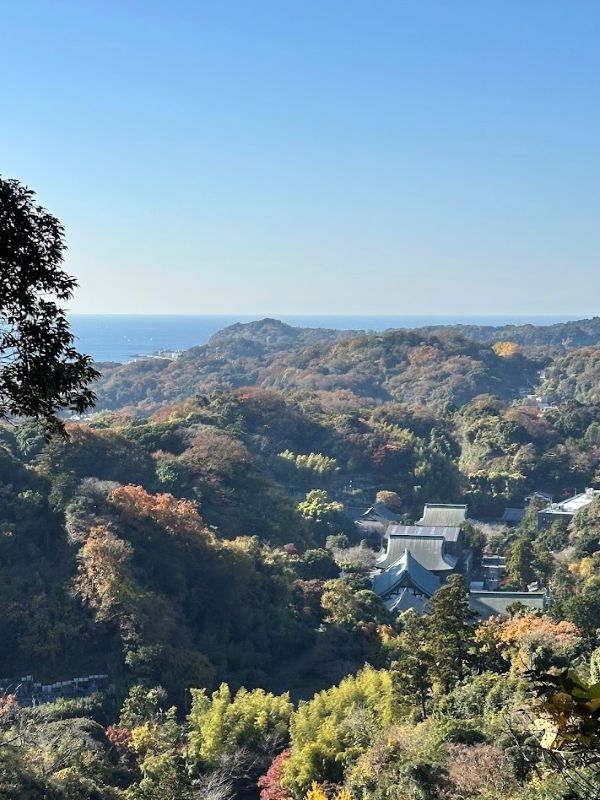
Nowadays, this coastal town is known for its Zen temples, traditional shrines and the famous Great Buddha. Its seaside location also means you get beautiful ocean views, and on clear days you can even spot Mt. Fuji rising beyond the water.
This guide gives you two clear routes. One is temple and history focused. The other starts with Enoshima for coastal views, then covers the Kamakura highlights.
A bit about the guide
This has been written by Sarah Quero in partnership with me. Sarah is a good friend of mine, who I enjoy travelling with. As well as being an avid explorer, she lives in Tokyo and is something of a Japan expert.
TL;DR Which route should you do?
- Option 1 is best if you want temples, history, and the classic Kamakura feel.
- Option 2 is best if you want sea views and the potential to see Fuji, with fewer temples overall.
My Top Tip! Don’t try to do a full temple morning and a full Enoshima loop in the same day, you will be way to rushed and won’t enjoy all the key parts
More of my Japan guides to plan around your Kamakura trip
- Where to stay in Tokyo — Best bases and hotels for first timers visiting Tokyo
- Best Kyoto hotels — Choose the right area and hotels to make the most of your trip
- How many days in Osaka — A ready made itinerary for the best things to see in Osaka
- Tokyo 3 day itinerary — A guide to the best sights and hidden gems.
- Kyoto in 2 Days — A guide to everything you will want to do in Kyoto
- Perfect Hakone Loop — What to do and how to get around when you are in Hakone
- Japan Two-Week Itinerary — How Kamakura fits into a wider route without backtracking.
Disclaimer: This article may feature affiliate links. If you click these links, and choose to book with that hotel or company, I will earn a small commission at no extra cost to you. I appreciate the support that allows me to continue providing this information
Before you go: How to make the day work
- Aim to arrive in Kamakura by 8:30 to 9:00. It helps reduce crowds and many attractions stop entry mid-afternoon.
- Wear comfortable shoes. The walking adds up quickly, even if the map looks short.
- Build in one proper break. Komachi Street is a simple and tasty option
- If you are visiting in autumn, temple gardens can be at their best when the maples change colour.
My Top Tip! Avoid leaving the Hase area until late afternoon. You will likely feel rushed or miss last entry. Put Hase in the early to mid-afternoon instead.
Downloadable Kamakura day trip map
How to get to Kamakura from Tokyo
Easiest option for most people: JR Yokosuka Line → Kamakura
- From Tokyo Station: 1 hour • c.¥950 one-way
- Also direct from Shinagawa and Yokohama on the same line
If you’re starting in West Tokyo: JR Shonan-Shinjuku Line → Kamakura (direct)
- From Shibuya/Shinjuku/Ikebukuro: 50–60 minutes • c.¥950 one-way
Where do you get off the train from Tokyo:
- If you pick Option 1 (Kita-Kamakura first): get off at Kita-Kamakura (one stop before Kamakura) on the same JR line.
- if you pick Option 2 (Enoshima first): go to Kamakura Station, then take the Enoden towards Enoshima.
Do I need a rail pass?
Most people do not need a pass for Kamakura itself. Passes only make sense if you are adding Enoshima and getting the Enoden more than once
Kamakura Day Itinerary Option 1: The classic route
Kita-Kamakura → Nishi-Kamakura → Sunset along the coast
Best for: First-time visitors, temple and history lovers
What it is: A classic day that starts in Kita-Kamakura, then central Kamakura for lunch, then Hase for the Great Buddha, and finishes by the coast. Why it matters. It helps you avoid zig-zagging and keeps Hase earlier in the afternoon.
Morning – Kita-Kamakura temples
Transport: Take the JR line to Kita-Kamakura.
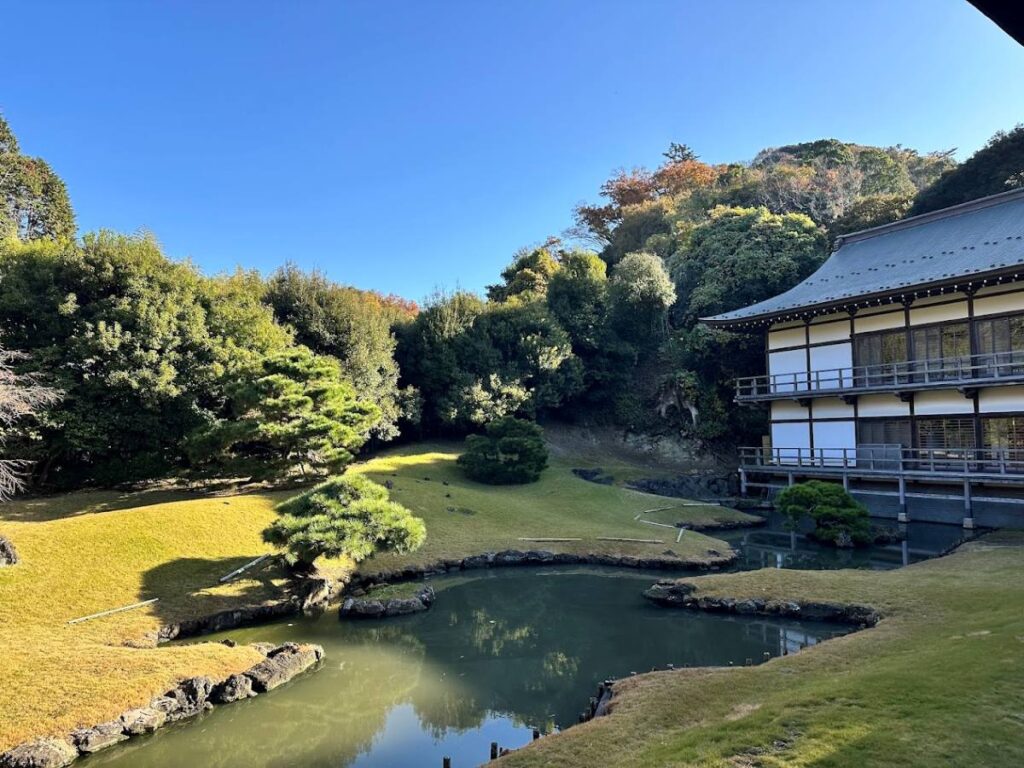
As Kamakura was an old political capital, it developed into one of Japan’s main centres of Zen Buddhism. Zen is a branch of Buddhism that focuses on meditation, simplicity and direct experience rather than ritual. It strongly influenced Japanese culture, from garden design and tea ceremony to calligraphy and martial arts.
Trying to visit every temple in one day is unrealistic and quickly becomes exhausting, so I recommend focusing on 2 to 3 key sites in the morning.
Engaku-ji or Kencho-ji (choose one)
Both are located next to Kita-Kamakura Station and take time to explore, so it’s best to pick just one.
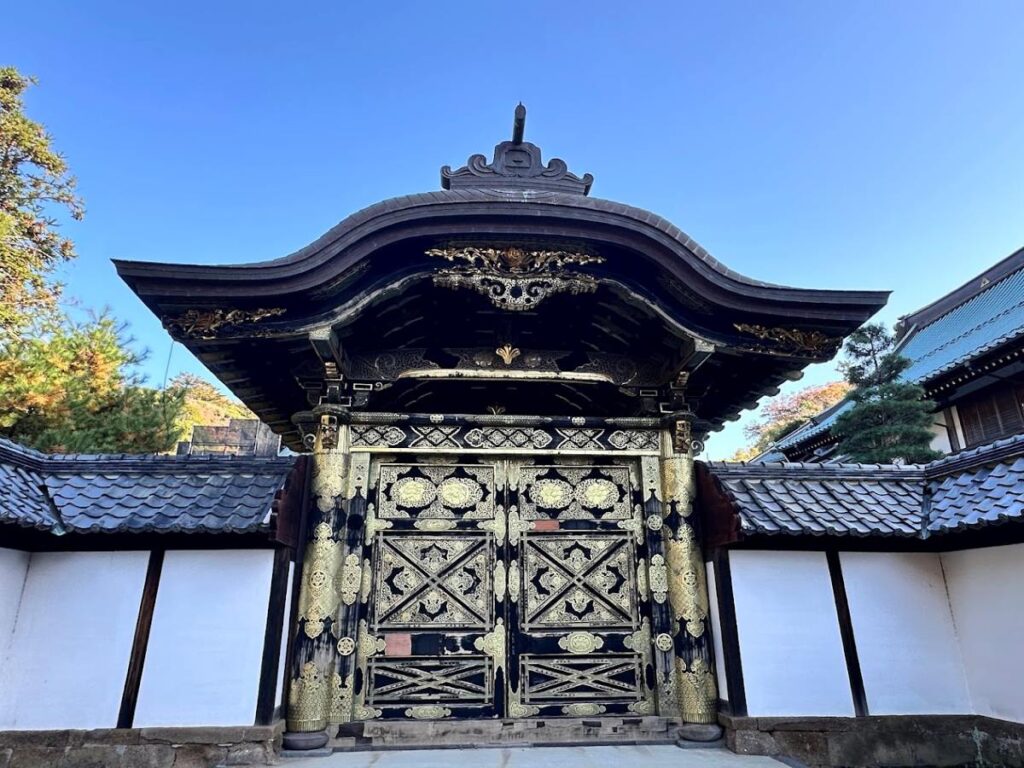
Engaku-ji
Founded in 1282, Engaku-ji is one of the most important Zen temples in Japan. It is located right next to Kita-Kamakura Station, making it the easiest to access.
The grounds are spacious but manageable, with multiple gates, forested paths and classic Zen architecture. It’s the best choice if you want a peaceful atmosphere without spending too much time.
Kencho-ji
Kencho-ji is the oldest Zen training monastery in Japan and the highest-ranked of Kamakura’s Five Great Zen Temples. The complex is much larger, and a full visit can take 1.5 hours or more, especially if you hike up to the viewpoint behind the temple.
From the top, you get a beautiful panoramic view, and on clear days you can even see Mt. Fuji.
Meigetsu-in (optional stop)
A smaller Rinzai Zen temple famous for its round window of enlightenment and hydrangeas in June. In my opinion it’s nice if you haven’t seen Kyoto’s bamboo grove, but it’s a small detour and can be crowded in peak season.
Tsurugaoka Hachimangu
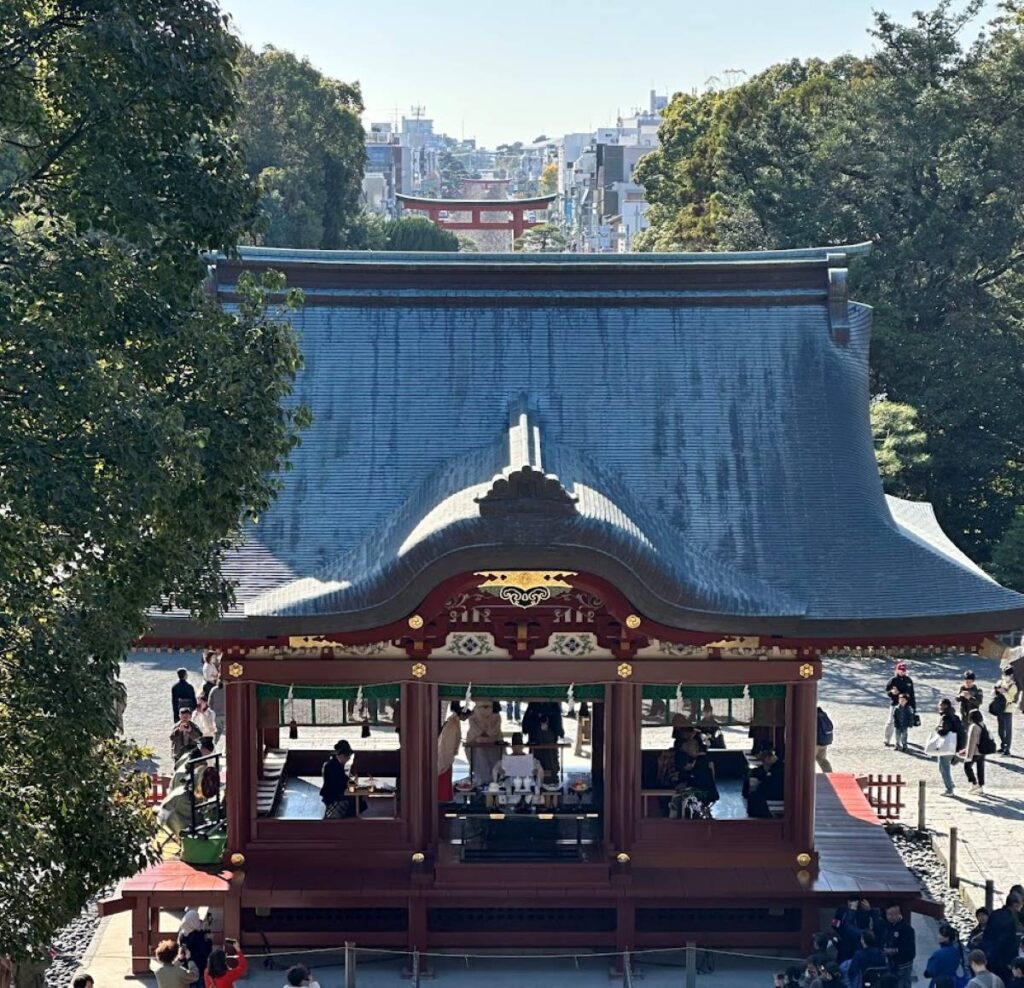
Continue walking toward central Kamakura to Tsurugaoka Hachimangu, the city’s most important Shinto shrine.
There are often events taking place here. On weekends you may see traditional weddings, and families celebrating Shichi-Go-San, a rite of passage for children aged 3, 5 and 7, who come dressed in kimono for blessings and photos.
It’s a lively contrast to the quiet Zen temples and a natural transition toward my favourite lunch stop, Komachi Street.
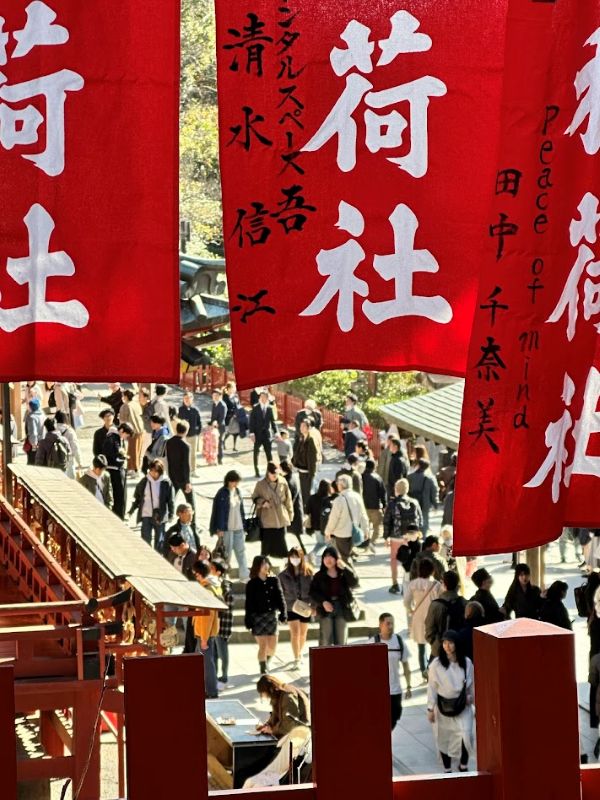
Lunch. Komachi Street
Komachi-dori is the easiest place to eat between sights. It is a short walk from Tsurugaoka Hachimangu and it is packed with quick options and little souvenir shops.
- What it is. The main pedestrian shopping street by Kamakura Station.
- Why it’s good. You can grab lunch fast without planning, then get back to the itinerary.
The street is packed with food stalls where you can try local snacks like seafood skewers, mochi, dango, croquettes, ice cream and takoyaki. It’s ideal if you want to walk and sample a little bit of everything.
If you prefer a quieter and more relaxed lunch, there are lots of restaurants nearby. Last time, I went to Umi Kamakura. They serve beautifully presented organic set meals made with fresh, seasonal ingredients.
Afternoon – Hase and the Great Buddha area
Take the Enoden train toward Hase. This small, old-fashioned train line is part of the experience, it runs past local neighbourhoods and close to the coast, giving you a glimpse of seaside Kamakura.
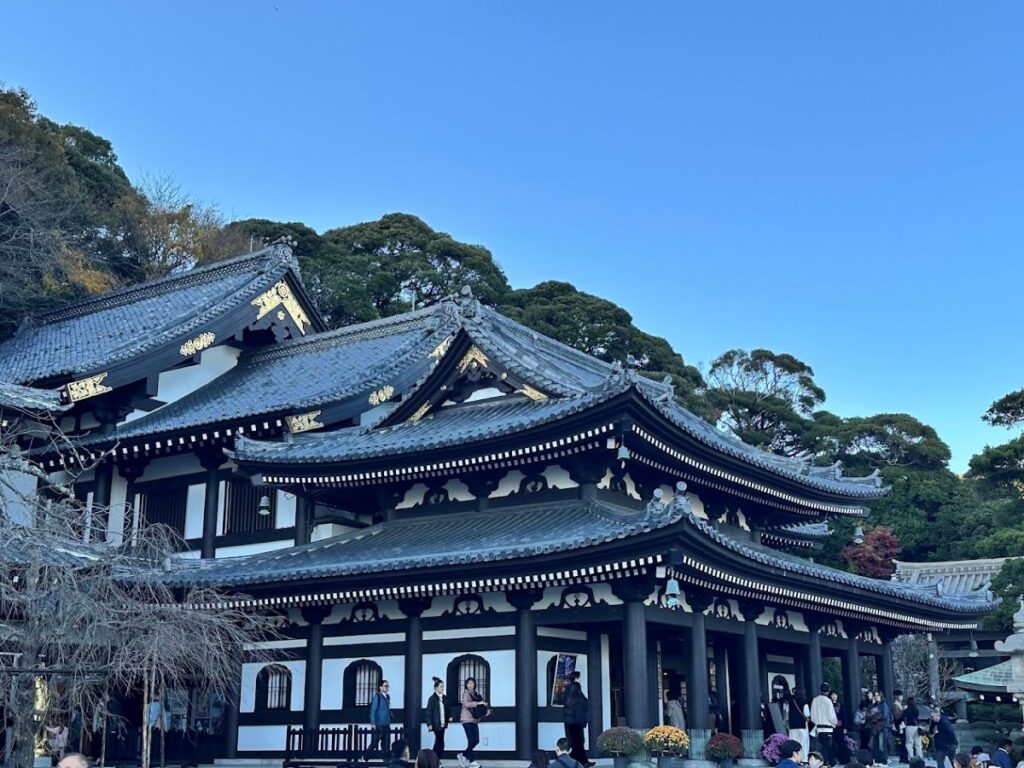
Start at Hase-dera, one of the most scenic temples in the city, known for:
- Ocean views from the terrace
- Seasonal flowers (hydrangeas in June, autumn leaves in November)
- The cave filled with small statues
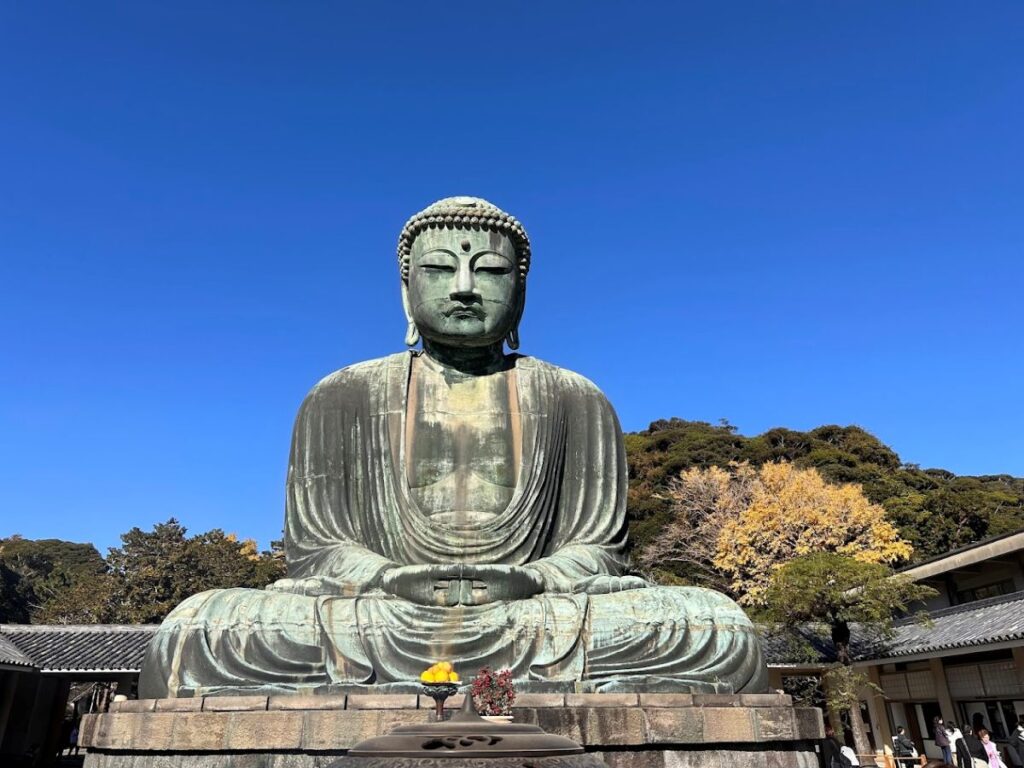
Then walk about 10 minutes to Kotoku-in to see the Great Buddha, Kamakura’s most iconic sight.
Don’t forget that you can go inside the Buddha. There is usually a small queue, but it’s a unique experience and easy to miss if you don’t know about it. I skipped it my first time and regretted it.
Sunset – Enoshima
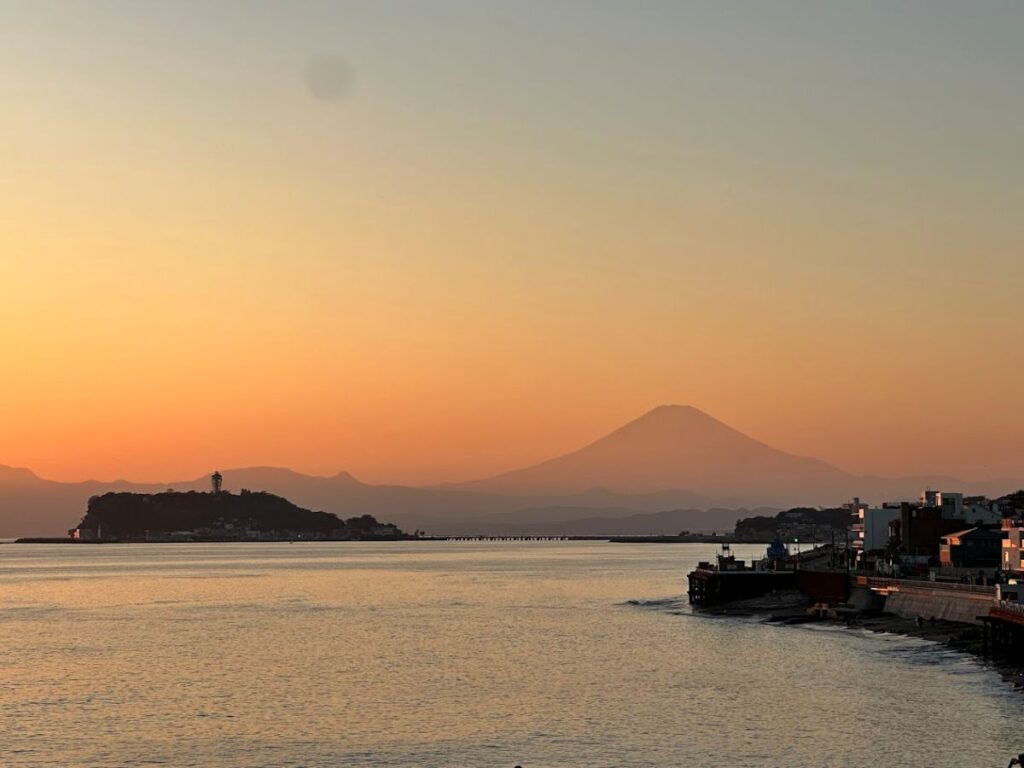
If you still have time before sunset, head to Kamakura Seaside Park for coastal views. On clear days you can see Mt. Fuji, if it decides to show itself.
Alternatively, continue to Enoshima for a more dramatic sunset. Walking across the bridge at golden hour and watching the sun drop behind the sea, with Fuji in the background on clear days, is one of the best ways to end a Kamakura day trip.
TOP TIP! Make sure you are fully prepared with my “First time visitor to Japan starter kit”
BREAK DOWN THE LANGUAGE BARRIER: The key phrases to learn and technology to use to make your first trip to Japan easy
HOW TO STAY CONNECTED ON THE GO: The cheapest data and easiest way to make sure you can access everything you need
HOW TO AVOID CURRENCY FEES LIKE A PRO: The best cards for travel and withdrawing cash
22 SMARTPHONE APPS TO MAKE YOUR TRIP EASIER: The ultimate FREE apps to download before you go
SAVE 30-90 MINUTES AT CUSTOMS AND IMMIGRATION : The simple and FREE QR code to speed you through the airport
ETIQUETTE DO’S AND DON’TS FOR TOURISTS : What you need to be aware of on your first time in Japan
Kamakura Day Trip Itinerary Option 2: Less temples, more seaside
Enoshima island → Hase → Kita-Kamakura
Best for: travellers who are not big on temples
What it is: A coastal day that starts on Enoshima, then focuses on the Hase essentials, then finishes with a short temple stop if you still have energy. It gives you some truly epic sea views without sacrificing the Great Buddha.
My Top Tip! If you are behind schedule, do the Great Buddha and skip extra temple stops.
Morning – Enoshima first
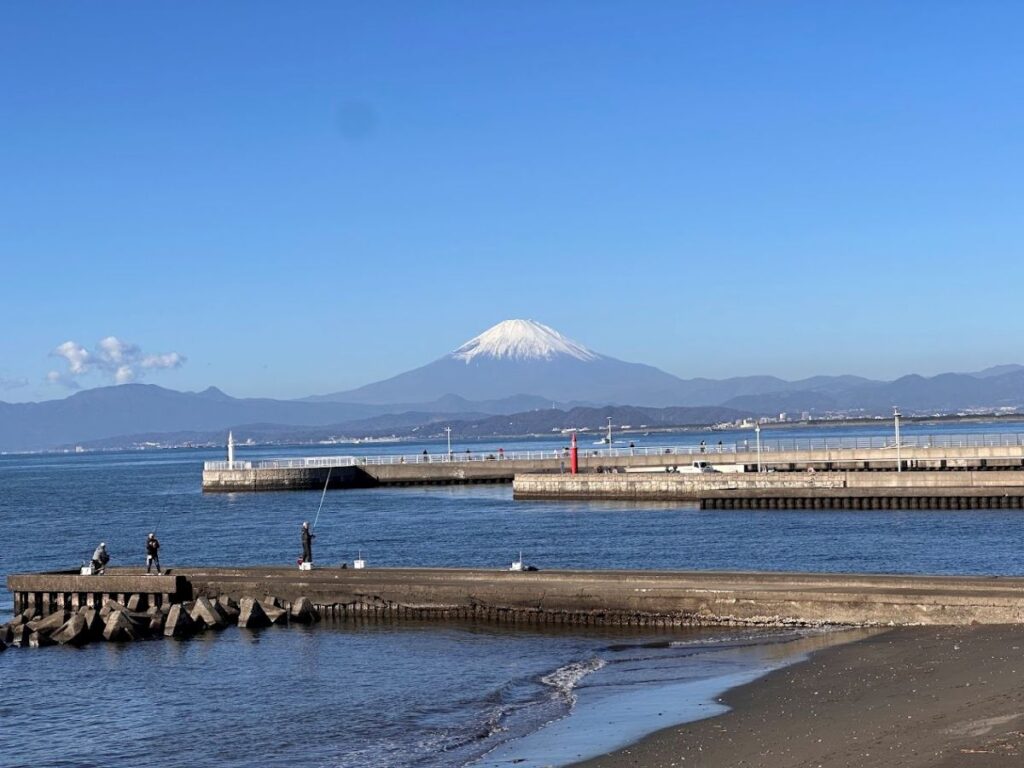
This small island has a very different atmosphere from Kamakura’s temple areas and is ideal if you prefer coastal scenery. You can:
- Walk up through the island shrine complex
- Explore the coastal caves
- Enjoy ocean viewpoints and relaxed seaside cafés
It’s also a great place for lunch. Local restaurants specialise in fresh seafood, especially shirasu (whitebait) bowls, which are the regional specialty.
Afternoon – Highlights in Hase
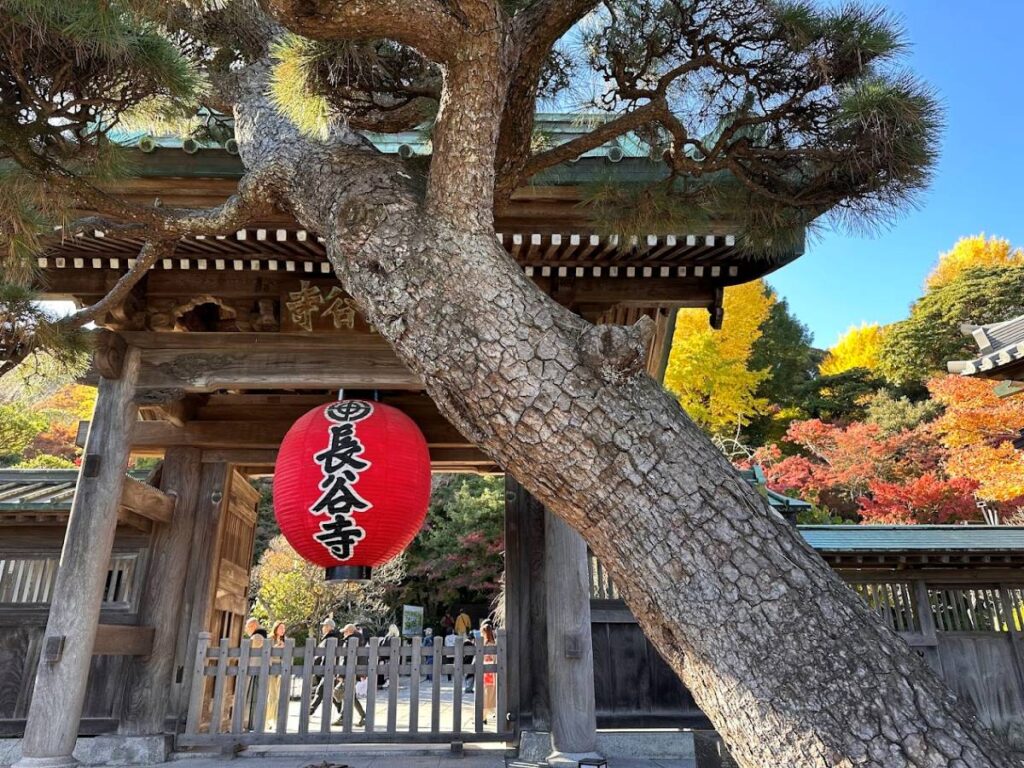
Head back toward Hase for just the essentials. Keep yourself focused so you don’t lose time:
- Kotoku-in (Great Buddha) as the main stop – as I mention above remember you can go inside
- Hase-dera mainly for the terrace view over the coast if you are not doing a full temple visit
My Top Tip! Last entry is often around 16:30 at temples and major sights. Aim to arrive by 15:30 to avoid rushing.
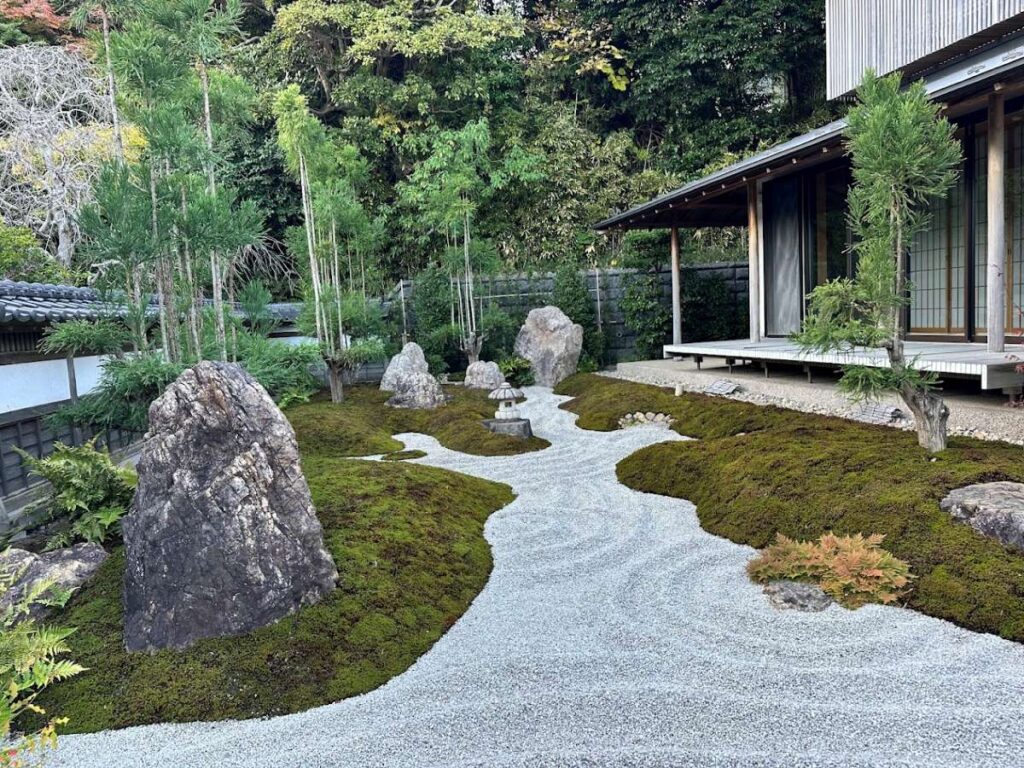
Optional swaps if you want something slightly different and have time
Choose one, and swap it for one of the above. Do not try to add all of them:
- Zeniarai Benzaiten
- What it is. A shrine known for a money-washing ritual. It is a memorable detour that feels different from the temple loop.
- Hokokuji
- What it is. A temple area known for a bamboo grove and a simple tea stop. It’s a good swap if you want a quieter, photo-friendly stop.
- Sasuke Inari
- What it is. A small shrine known for fox statues. Something different and another photo opportunity.
FAQ’s for a Kamakura day trip
Most travellers take about 50–60 minutes by direct JR train, depending on where you start in Tokyo.
Yes. You can see major temples and shrines, the Great Buddha, and the coast in one day without staying overnight.
Aim to arrive in Kamakura by 8:30 to 9:00. Many sights stop entry in the mid-afternoon, so an early start keeps the day relaxed.
They are different. Choose Kamakura for temples, history, and an easy coastal day trip. Choose Hakone for hot springs, Mt Fuji views, and a more resort-style feel.
Yes. It works best if you start with Enoshima in the morning, then do Hase for the Great Buddha in the afternoon.
Yes. An overnight stay suits you if you want a slower pace, early mornings at the big sights, and time for the beach and quieter neighbourhoods.
Try shirasu dishes, especially near Enoshima, and local café lunches around Komachi Street. For snacks, look for sweet treats and street food along Komachi-dori.